
As winter approaches on the coast of British Columbia, Canada, full-time RV living demands preparation to stay warm, dry, and comfortable through the cold, wet months ahead. Whether you’re a seasoned snowbird or new to coastal winter RVing, these videos offer tips to help you (and your rig) survive when the temperature drops.

In this Winter Prep video series, I share practical, real-world steps I’m taking with my fifth-wheel trailer on Vancouver Island, from hooking up a heated fresh water hose and water regulator, to installing reusable EZ Snap RV skirting with a PVC-weighted base, building a protected under-trailer storage shed with a zippered door, and finally optimizing the interior with insulation film, dehumidifiers, safe space-heater strategies, and thermal imaging for spotting heat loss and electrical issues.
Winter Prep Part 1 – Fresh Water Hose Feed
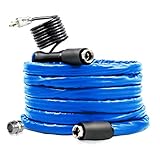
In this part 1 video, I begin a video series detailing my preparations for spending the winter on the coast of British Columbia, Canada. First up is to hook up my automatic heated fresh water hose from Camco. I also attached a water regulator, AC vinyl cover, and set up my sewer hose support. In part 2, I will begin installing my EZ Snap RV skirting.
Winter Prep Part 2 – Attaching the EZ Snap RV Winter Skirting
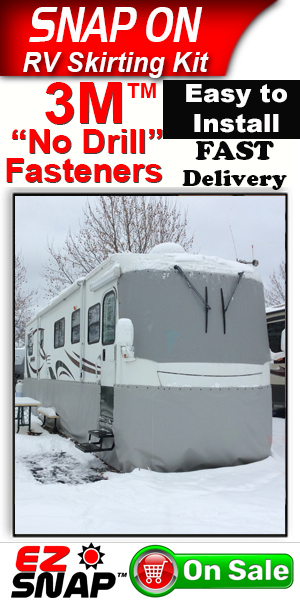
In part 2 of my winter prep series here on Vancouver Island, I show how I set up my skirting. I use EZ Snap skirting. The first time I used it, I needed to attach all the snaps and cut the material to fit, but now that it’s done, attaching was a snap! To hold the bottom of the skirting in place, it gets tucked under a grid of connected PVC irrigation piping.

Winter Prep Part 3 – Built Skirted Shed under the Fifth Wheel
In Part 3 of my wintering in an RV on the BC coast series, I show how I built a small shed under the front overhang of the fifth wheel trailer. I first built a custom frame out of 2×2 lumber screwed together. Then I installed the special EZ Snap kit that comes with a zippered door. (See product page) After the build, I give you a look inside the enclosure and provide a tip on using 3M No-Residue Tape to seal the top of the skirting.
Winter Prep Part 4 – Inside the RV Living Space
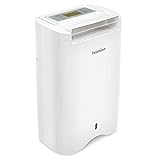
In part 4 of my prep series for a winter RV stay on the BC coast, we go inside our rig for more tips and advice. Included are window film, rugs, a dehumidifier, heaters, vent cushions, etc. A primary safety concern is overloading AC outlets with space heaters. Our RV has a max 30-amp service, but it’s not designed for a constant 30-amp load. So I show how I spread out the load using different circuits.
To increase safety, I don’t use the space heater on high (1500 watts); instead, I use the lower 800-1000W setting. I find another handy tool is my thermal imaging camera. With it, I can spot overheated electrical circuits or cold air leaking into the RV.
If you like the website content, be sure to sign up for my *free* monthly newsletter. In it, I share a little more personal information about our journey as full time RV/Boaters, links to the latest Love Your RV and Boat! posts/videos, and some other helpful bits and pieces.