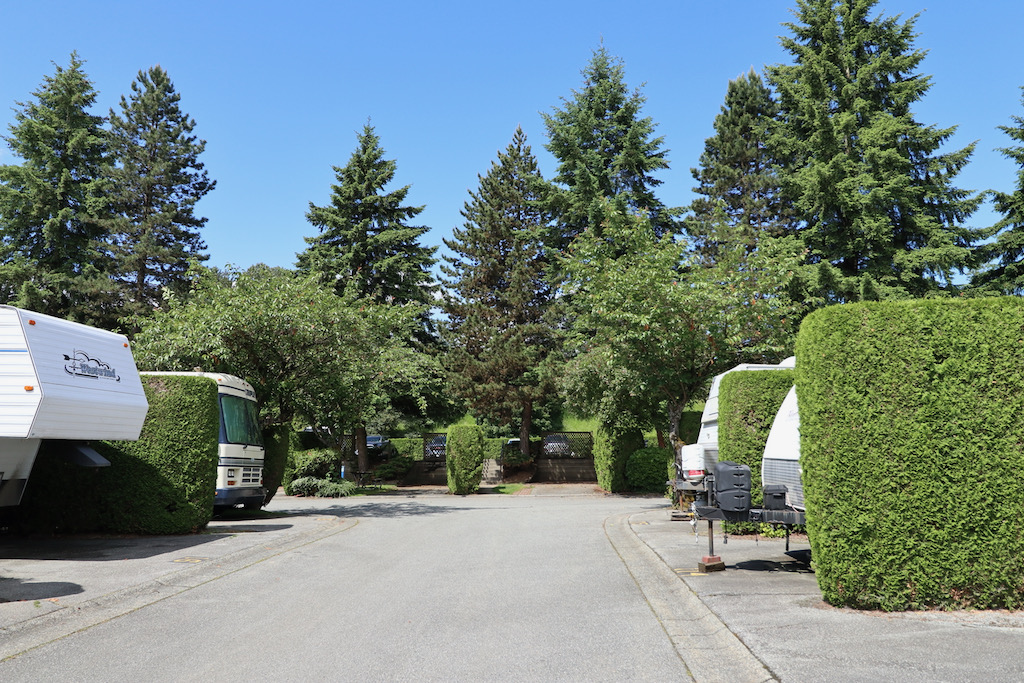
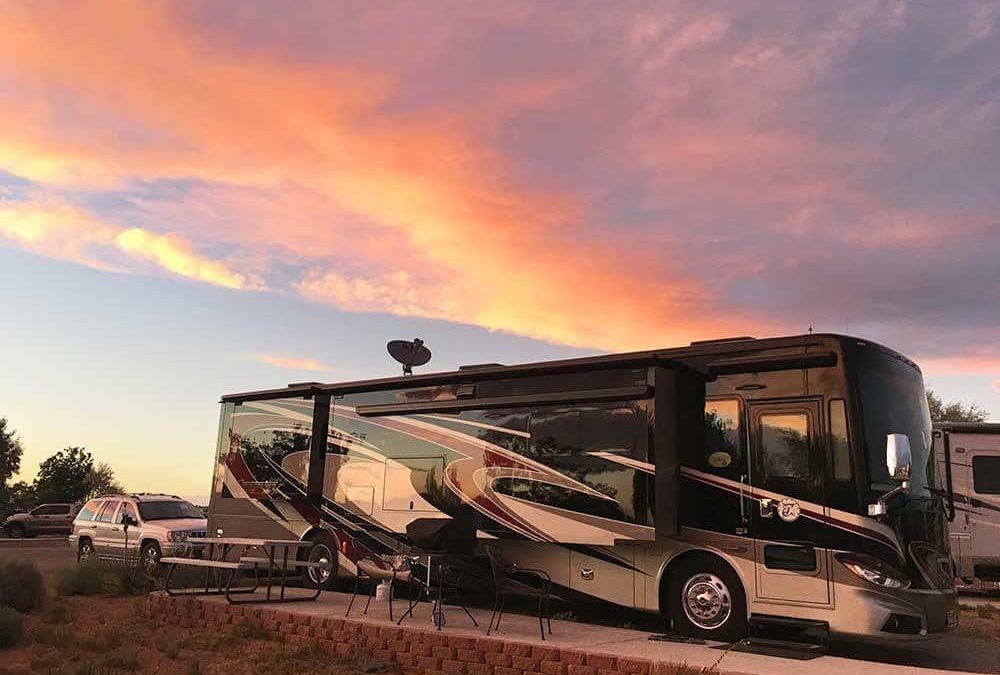
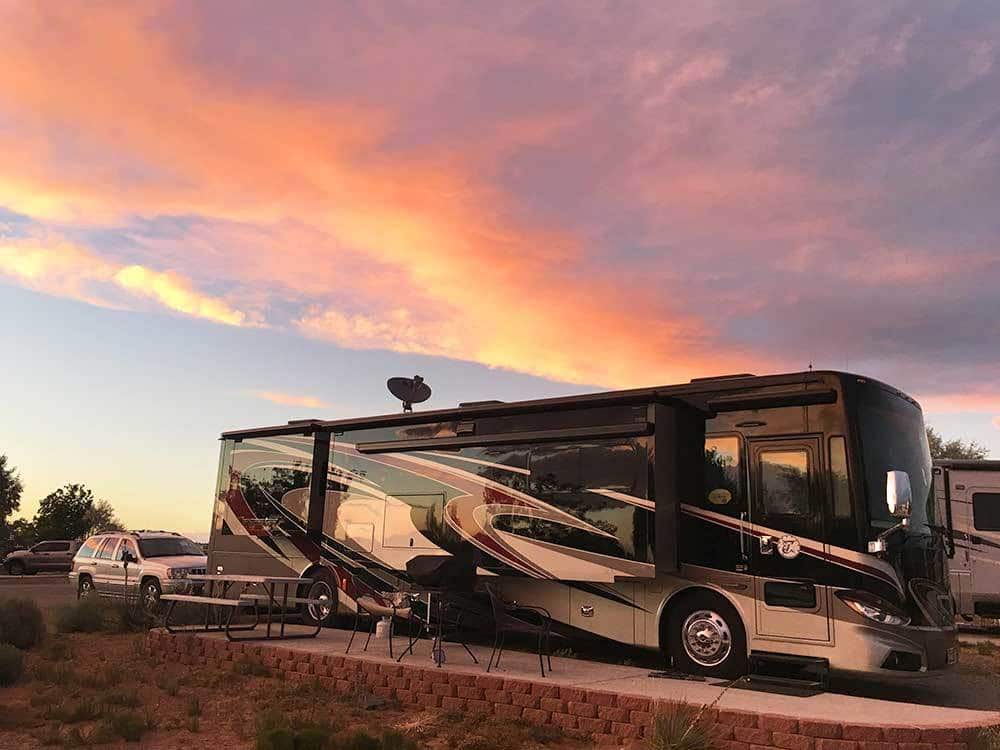
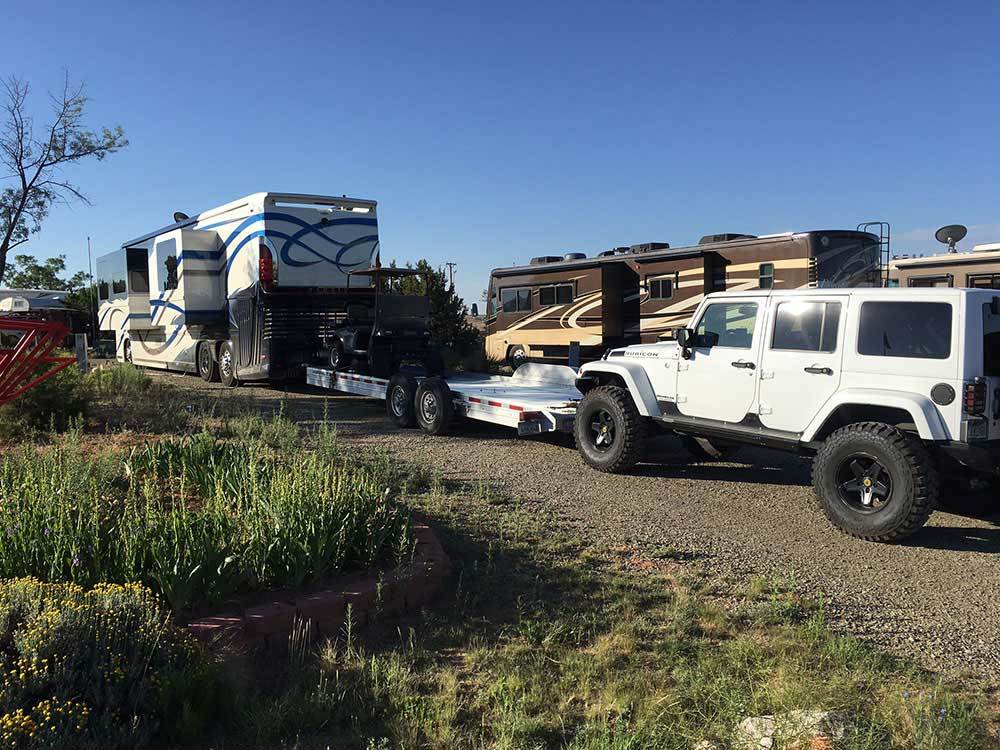
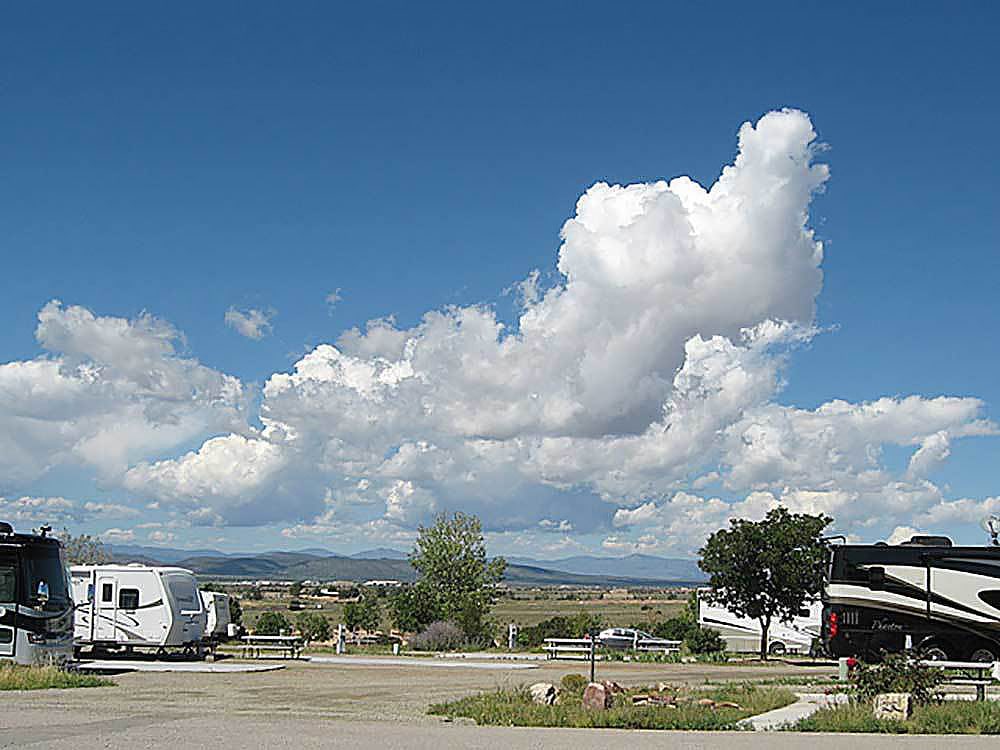
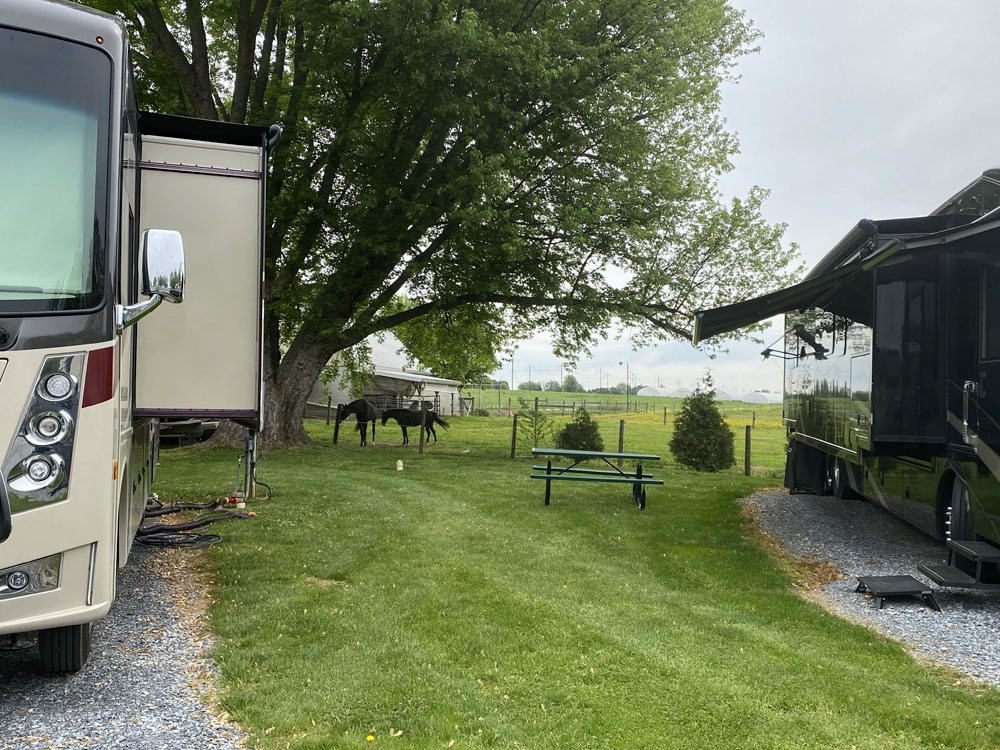
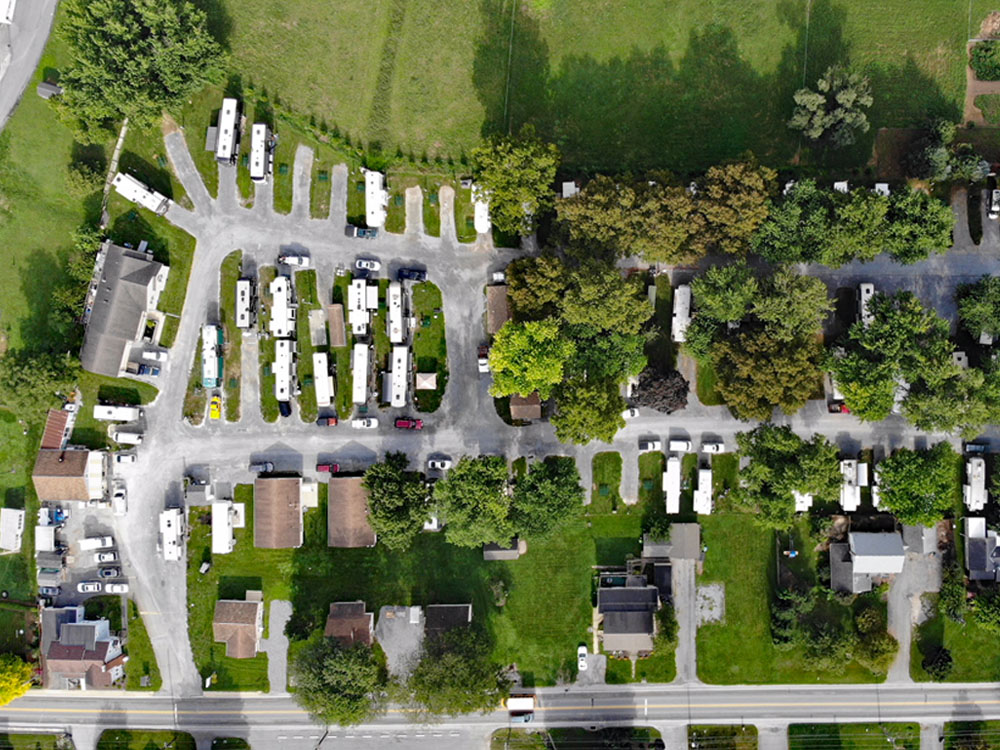
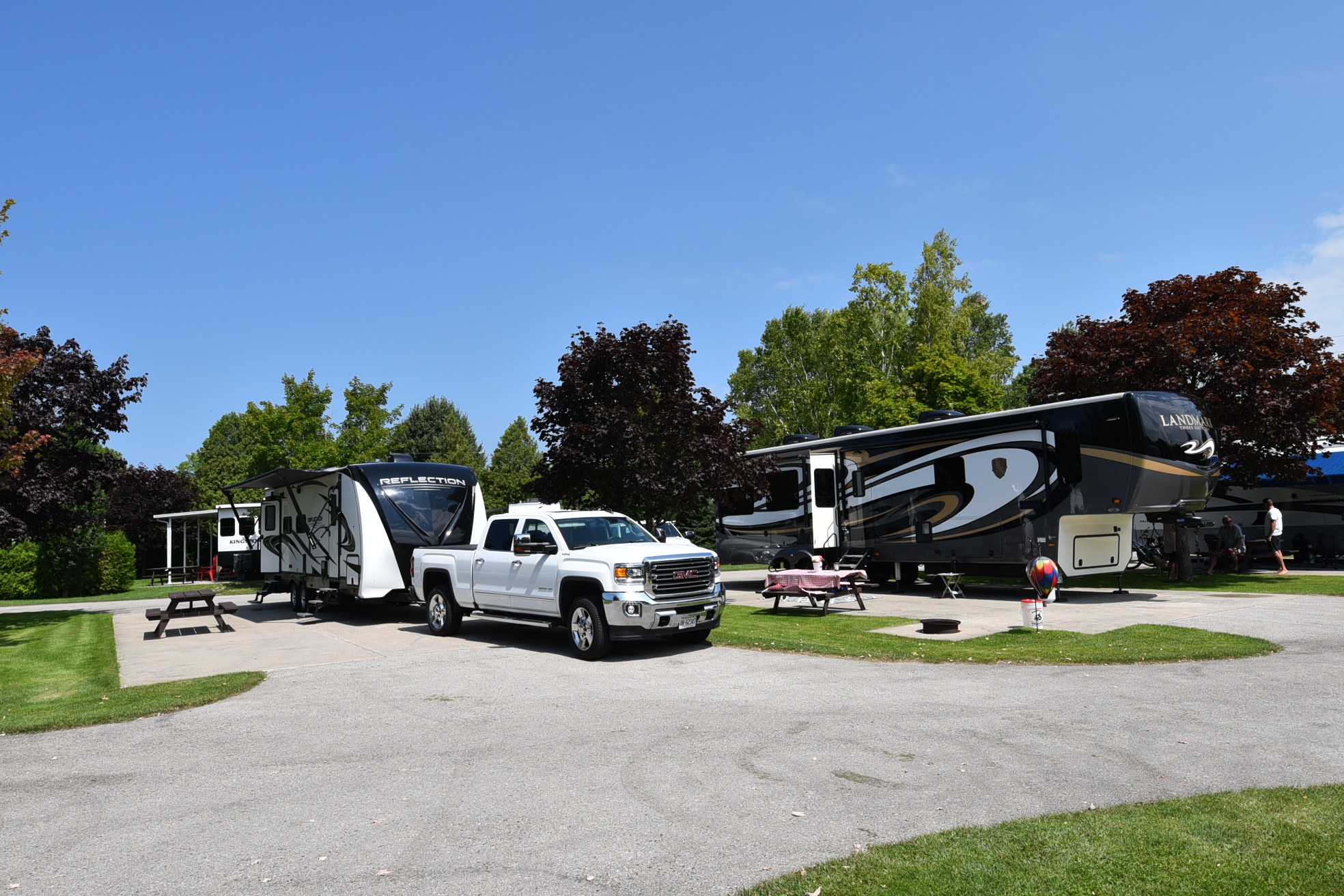
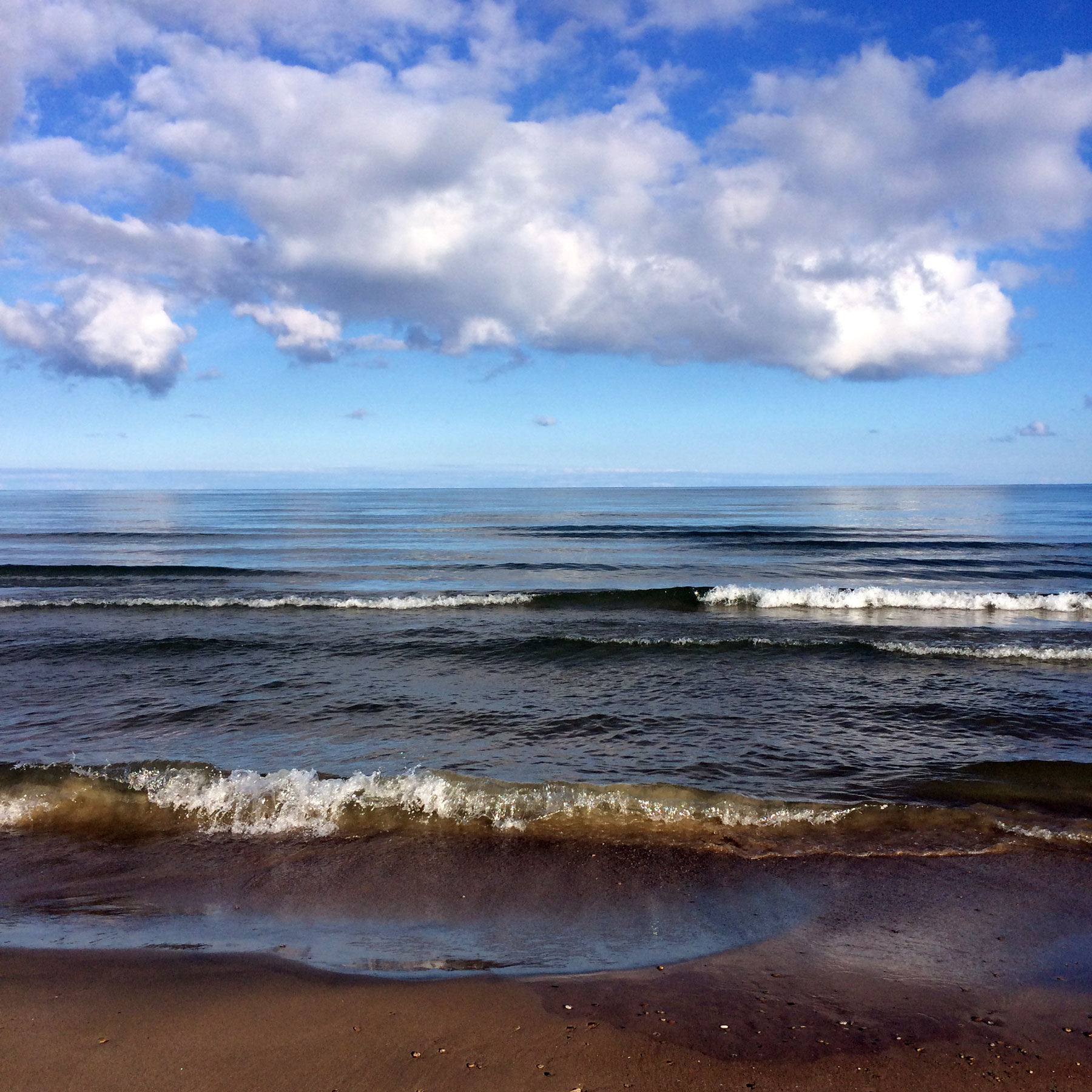
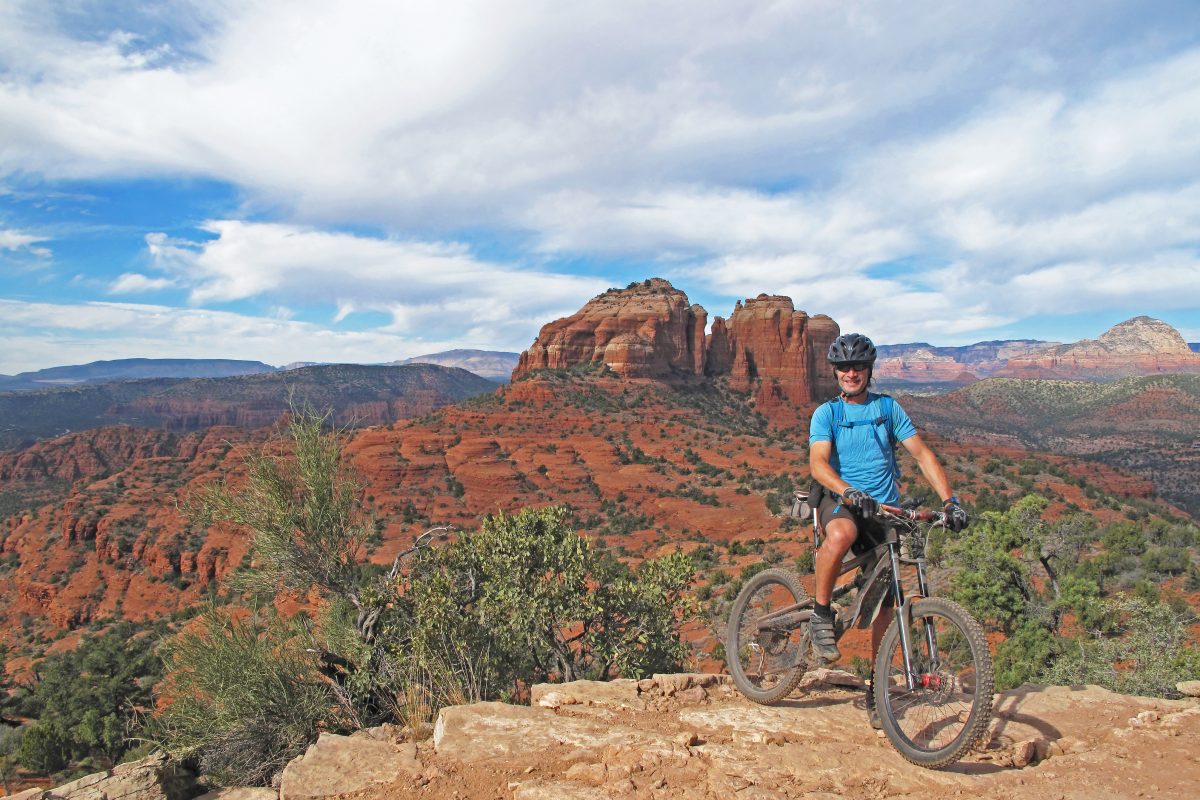
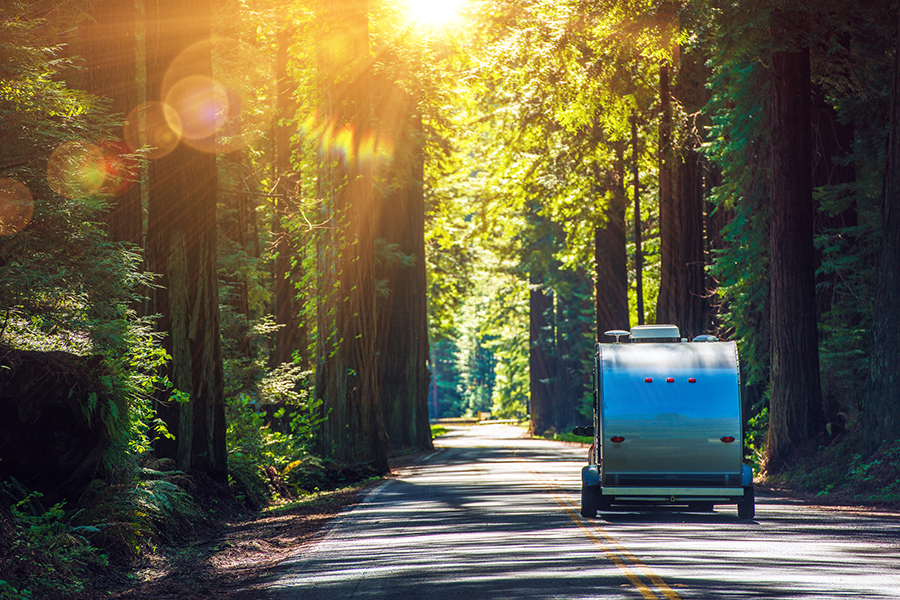
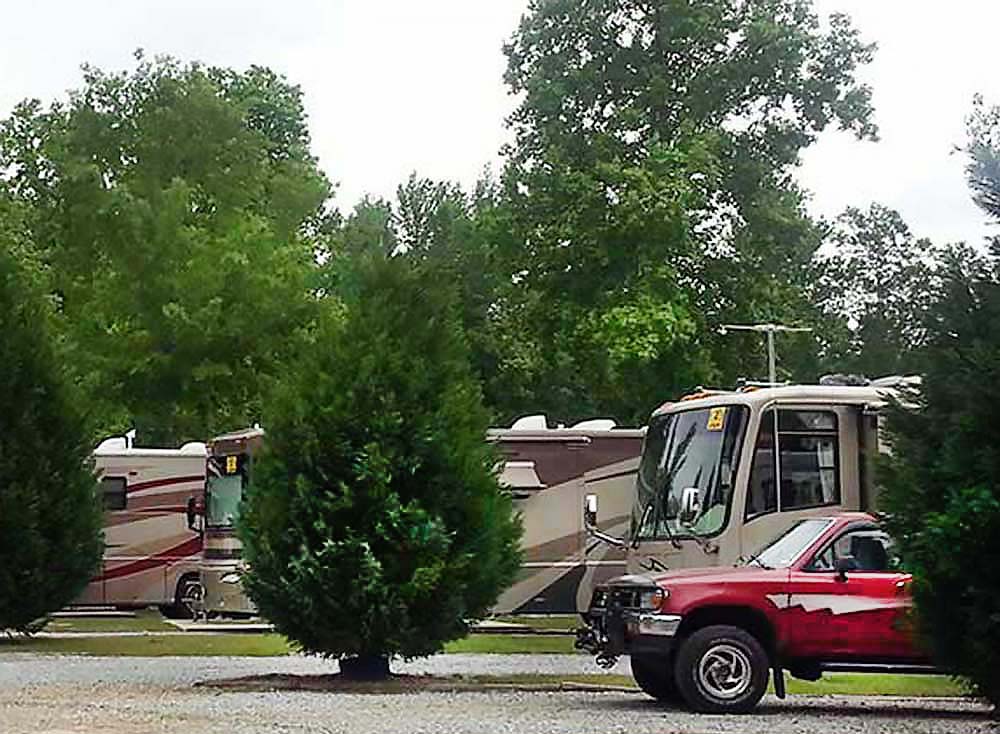
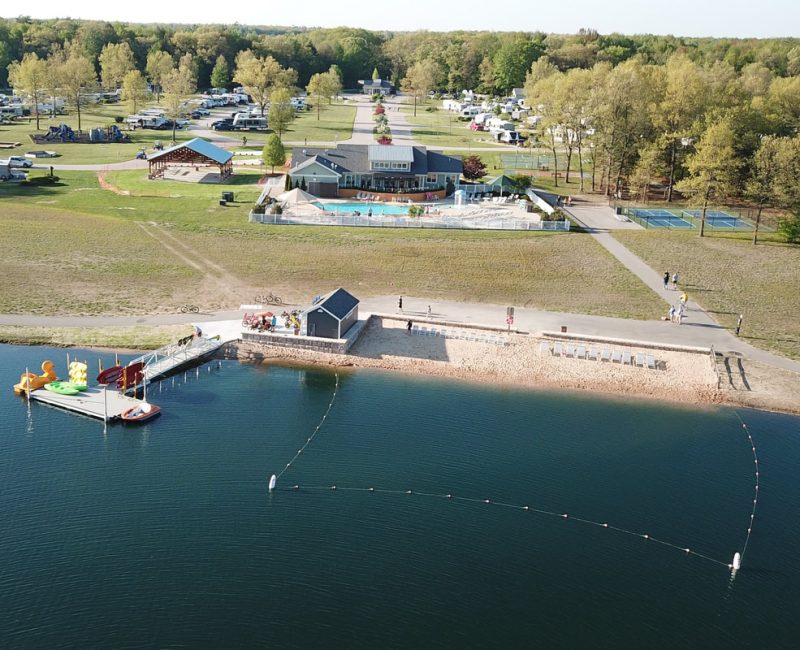
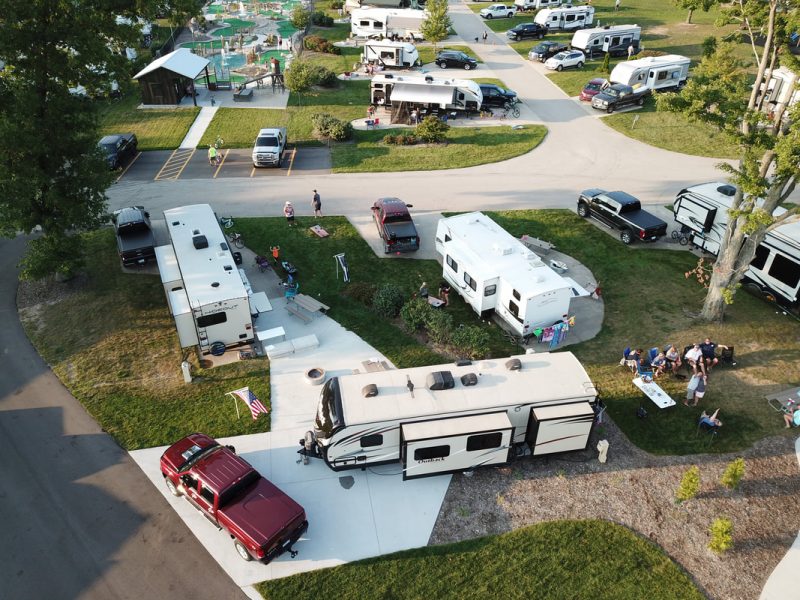
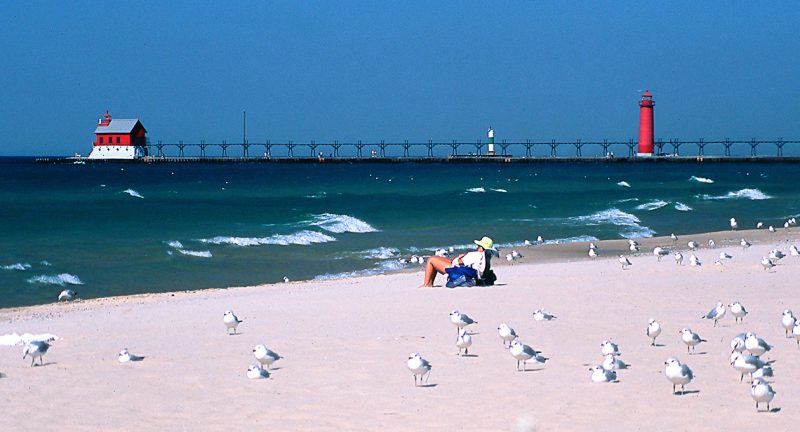
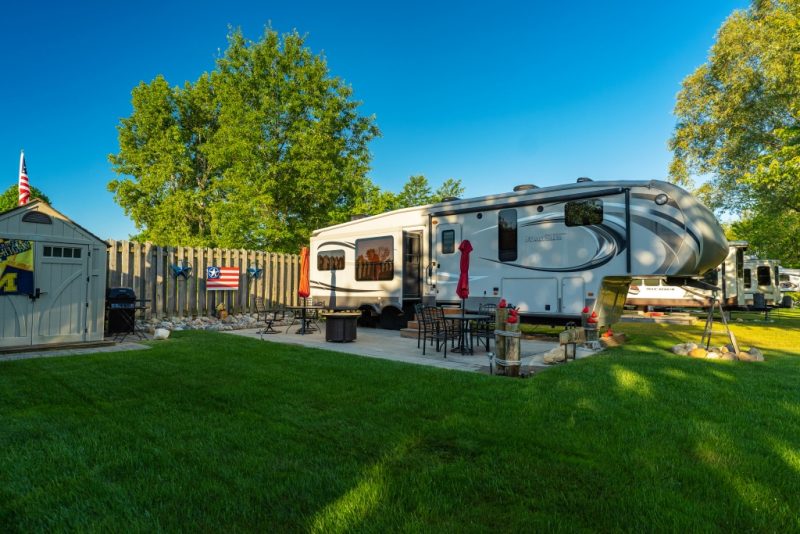
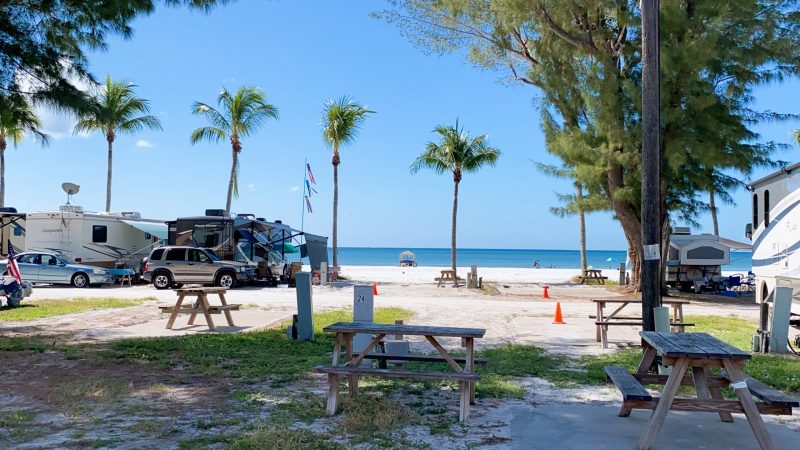
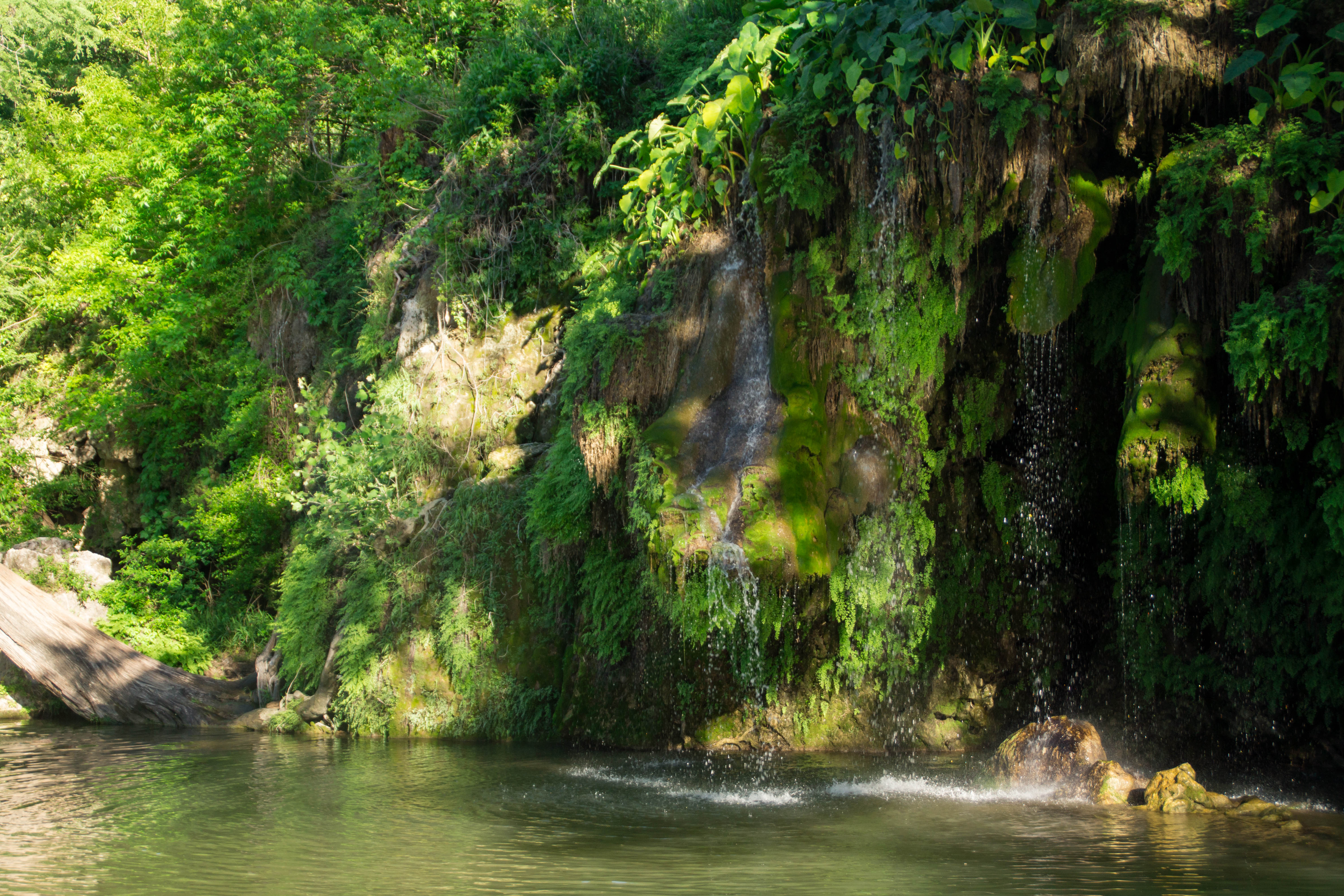
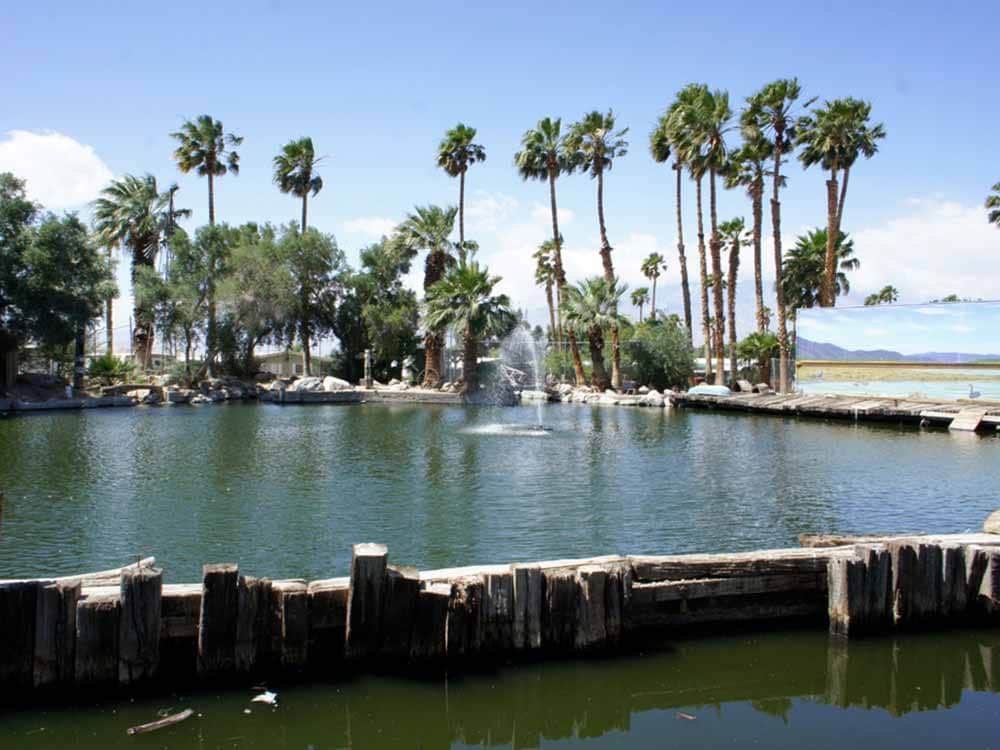
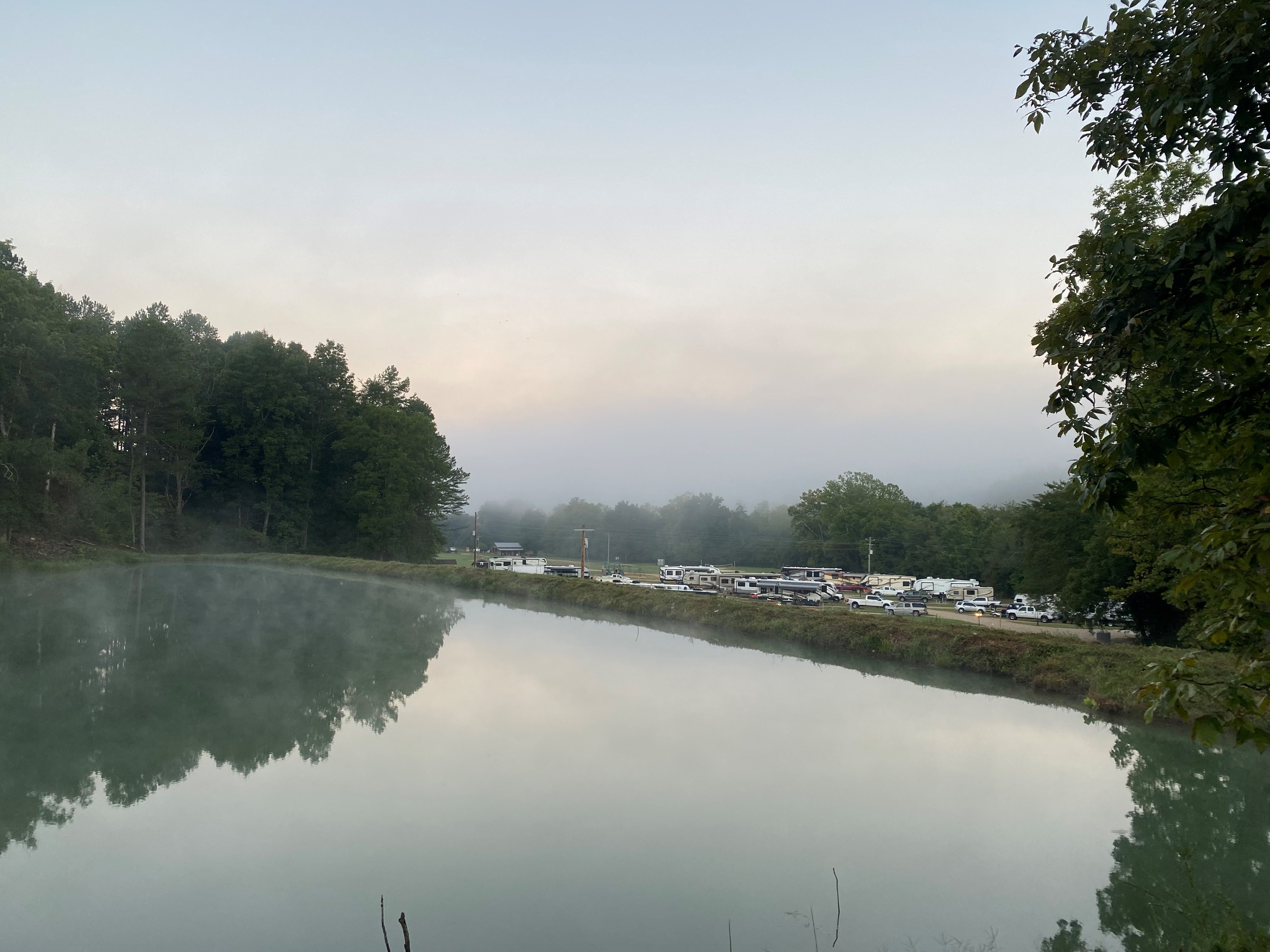
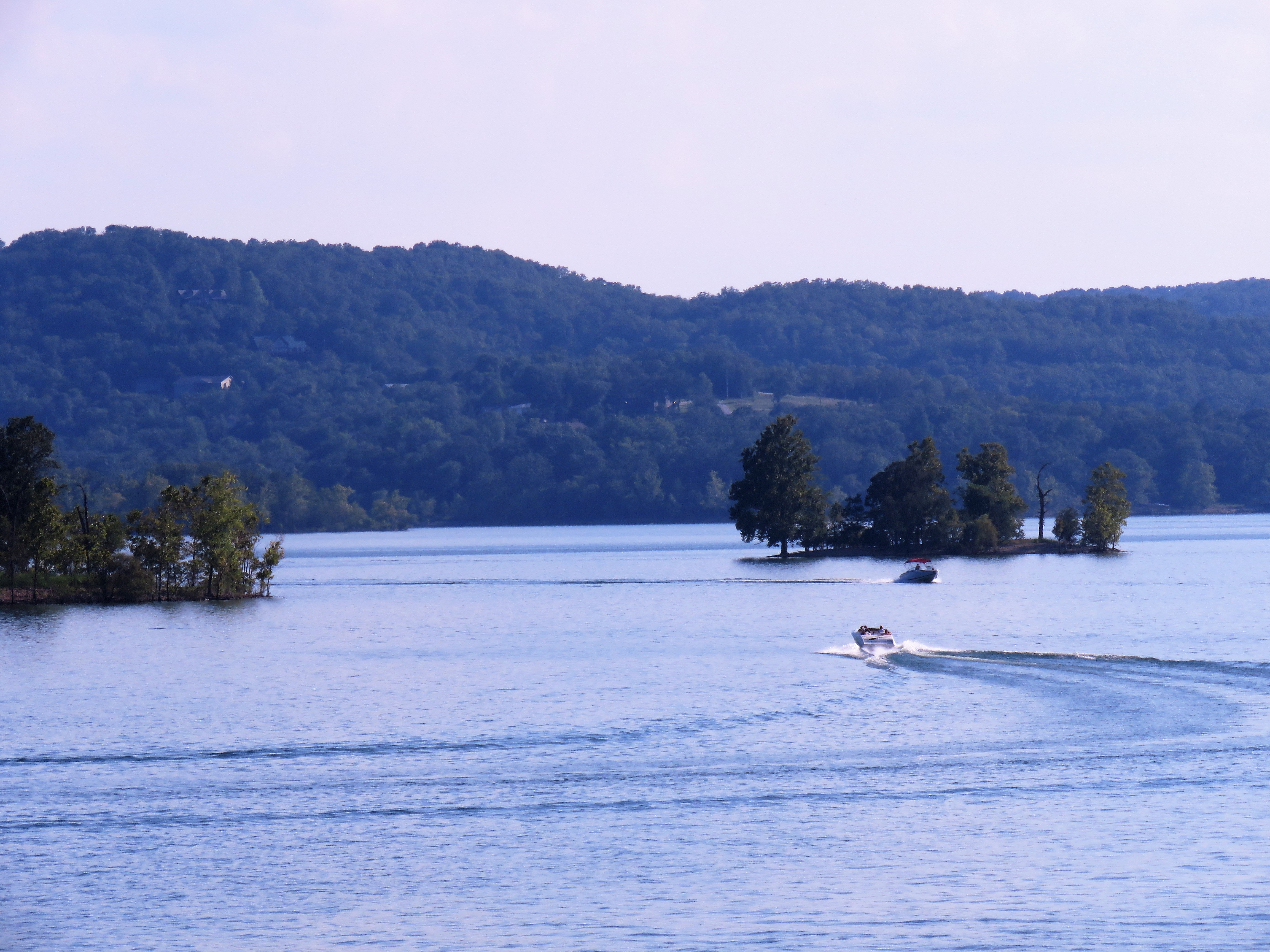
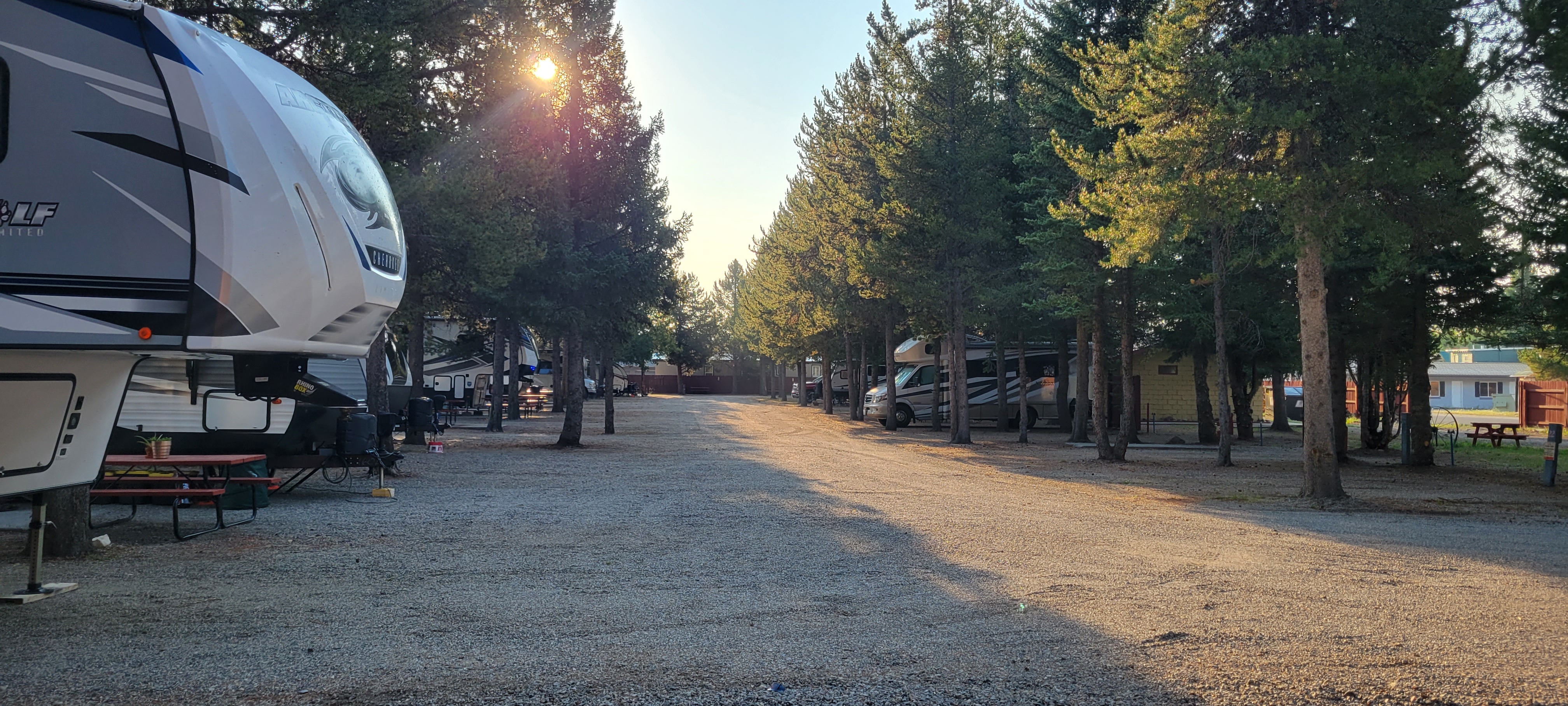
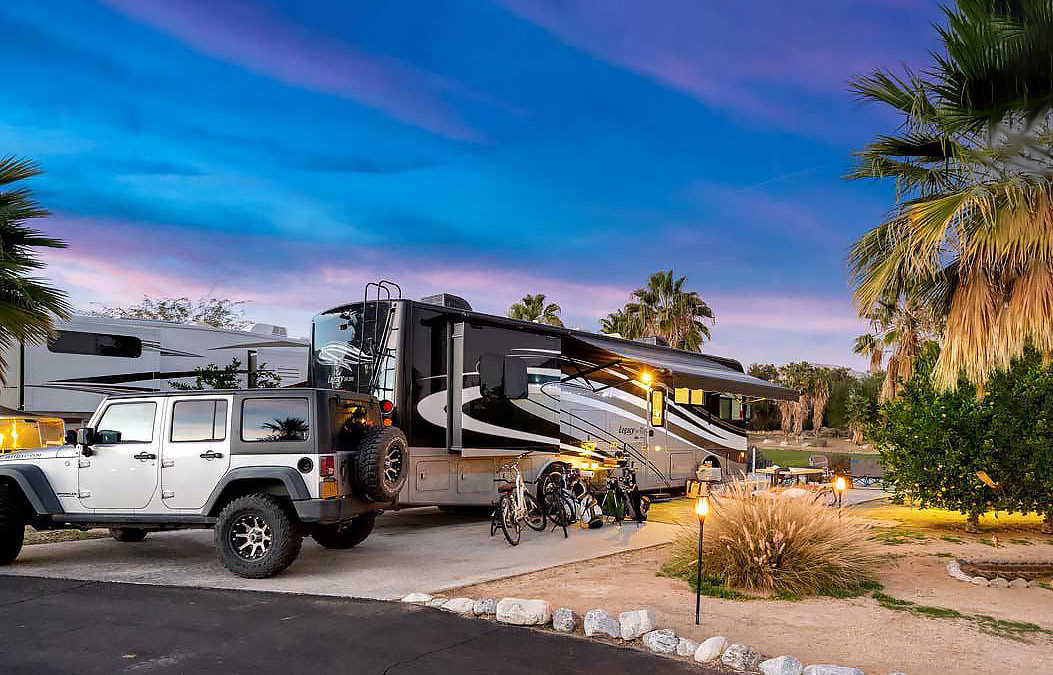
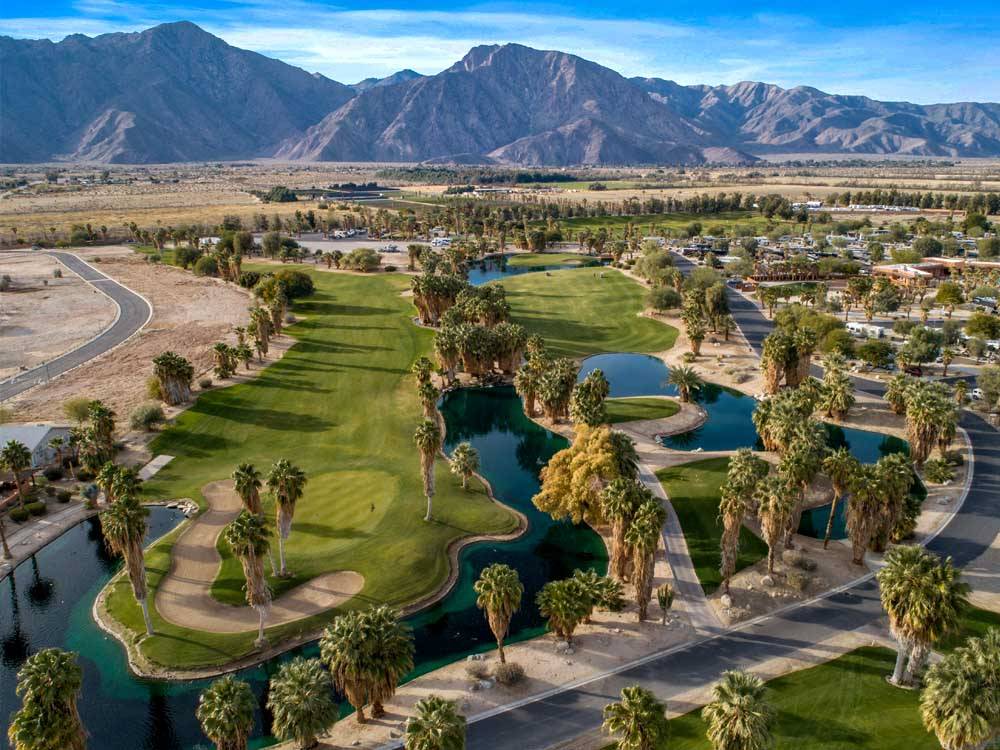
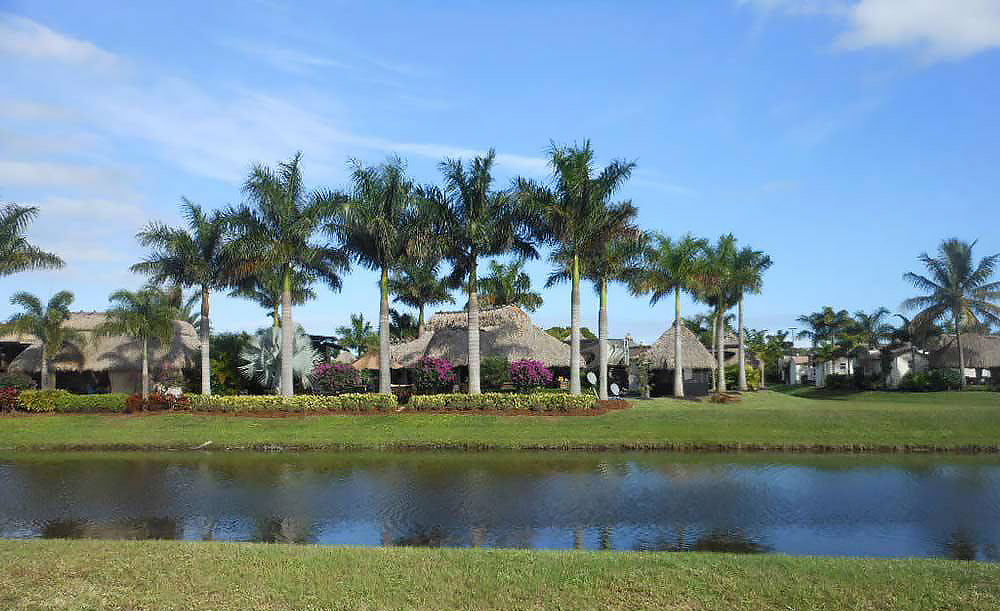
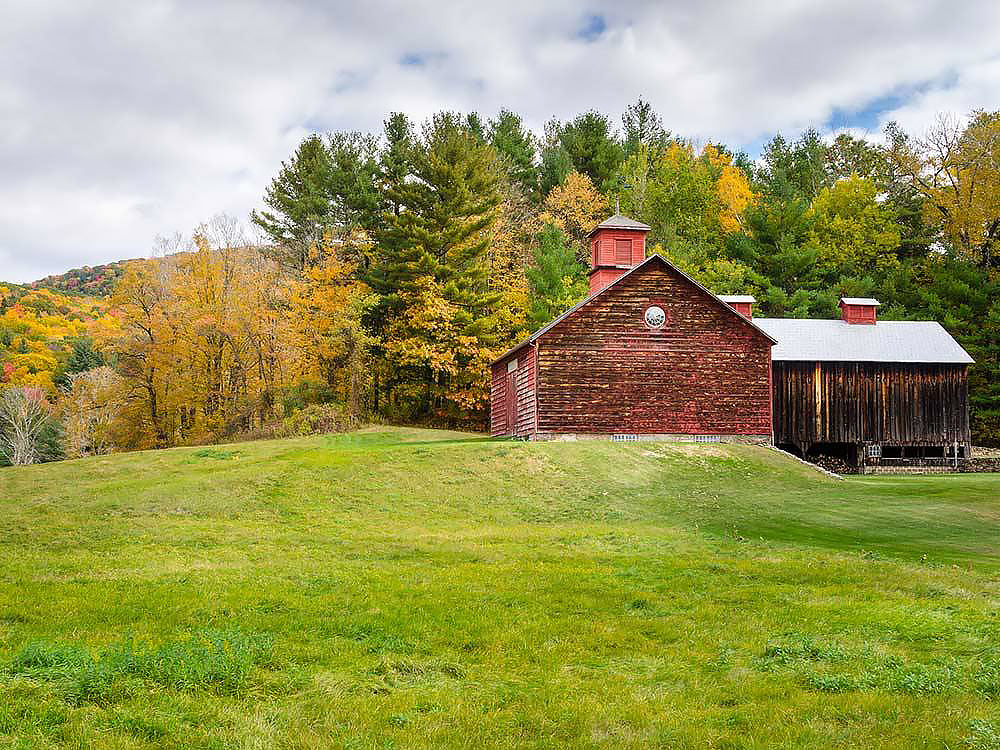
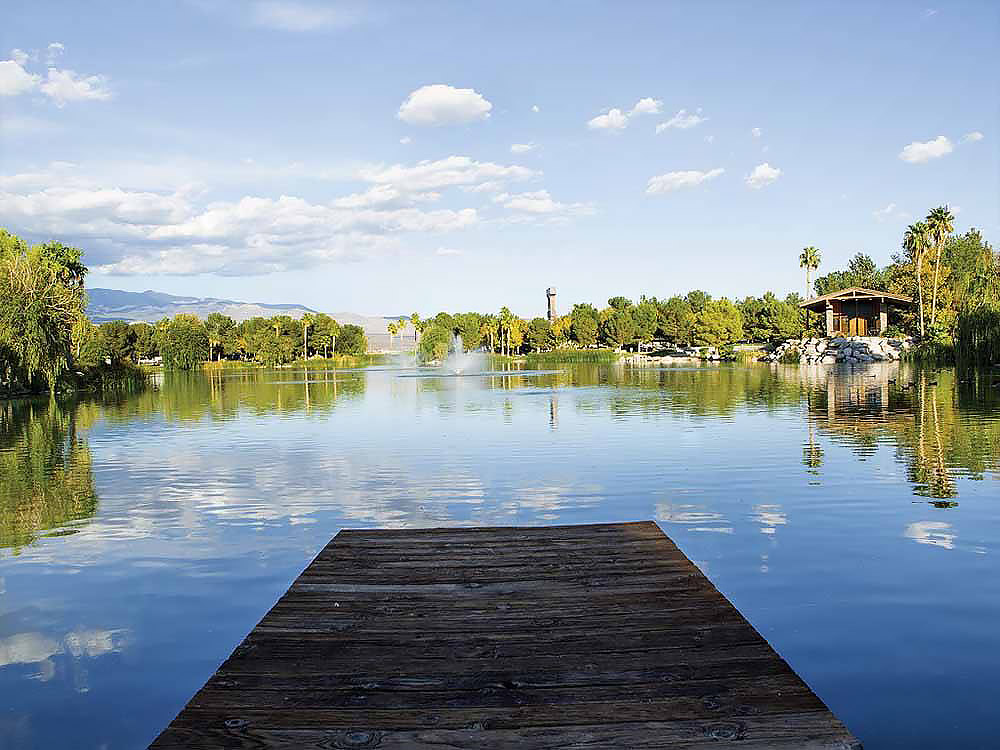
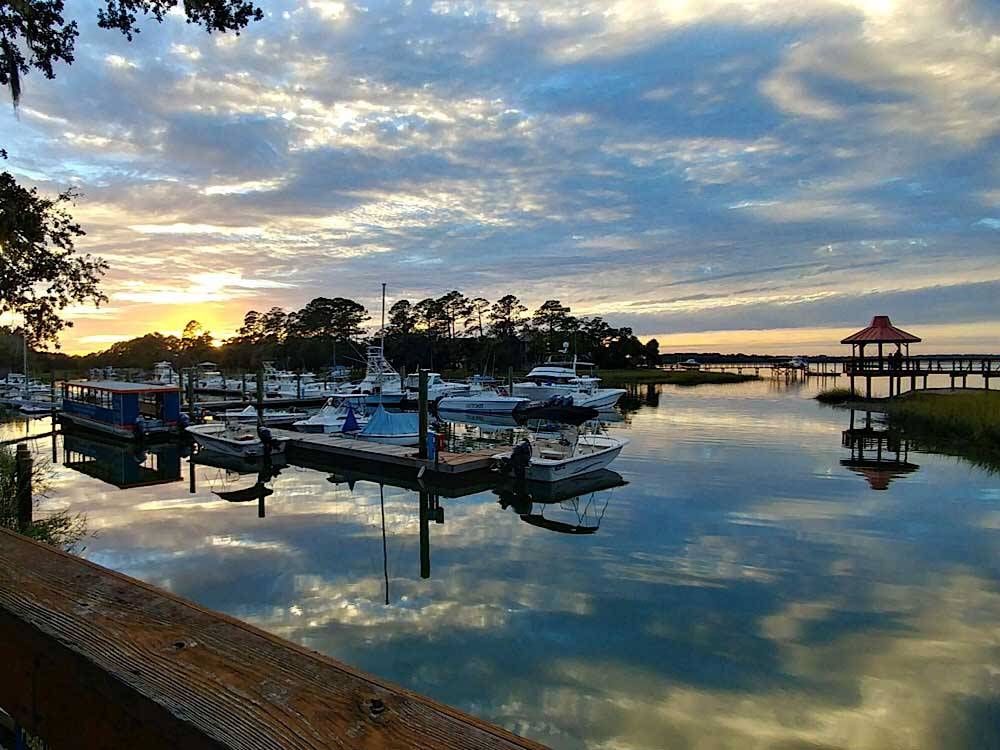
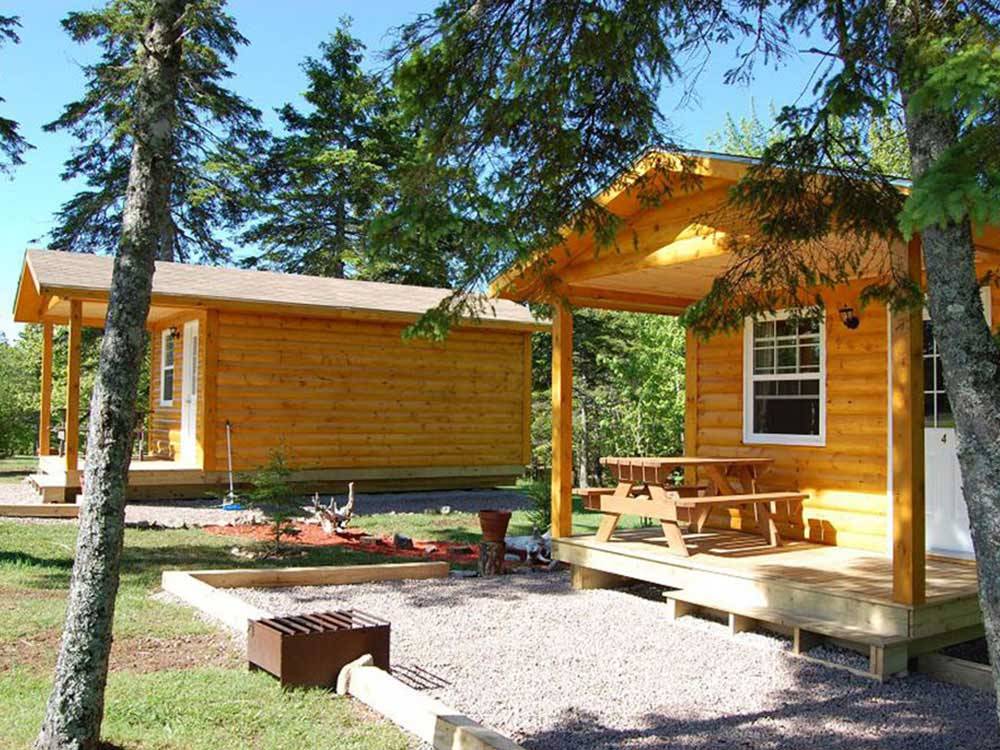
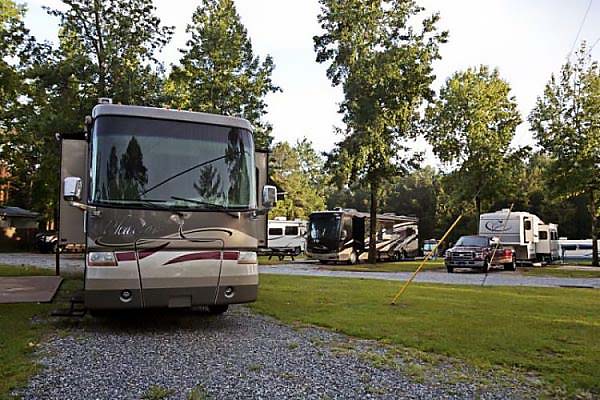
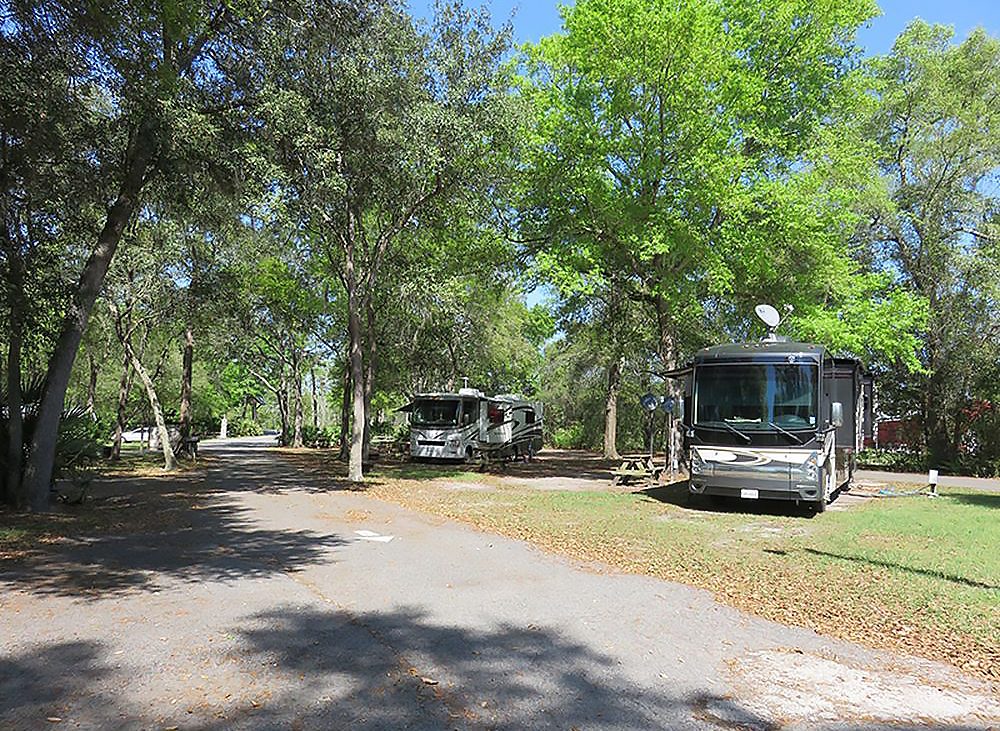
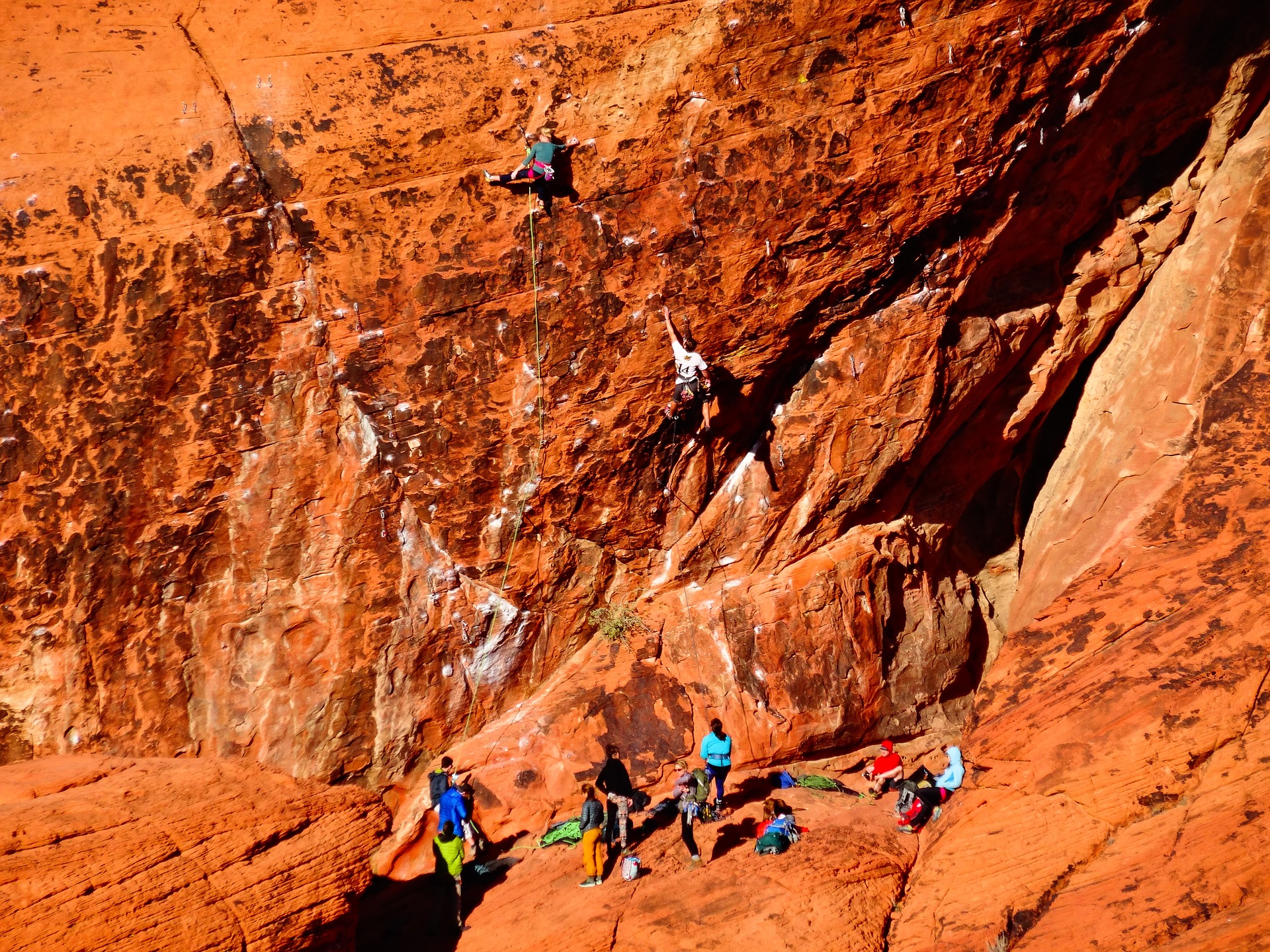
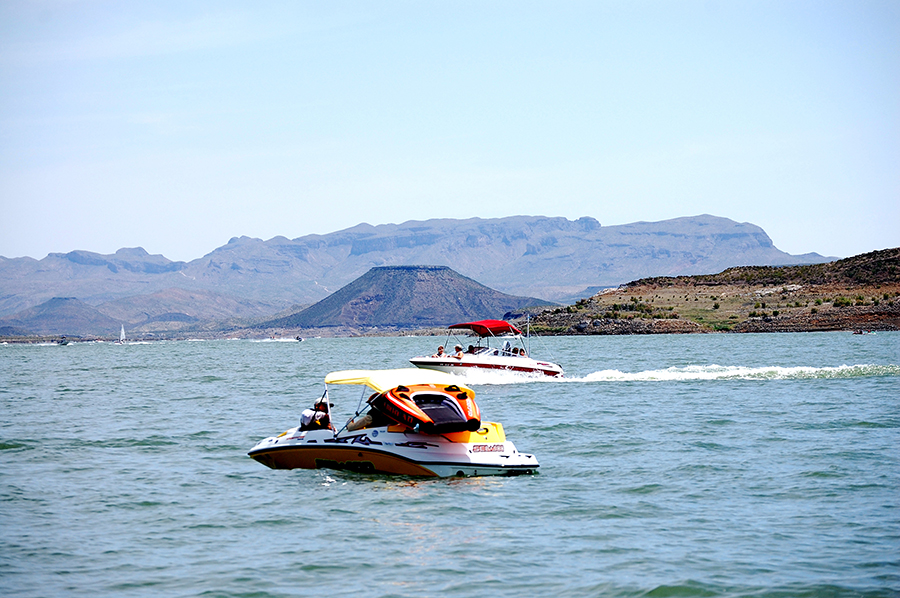
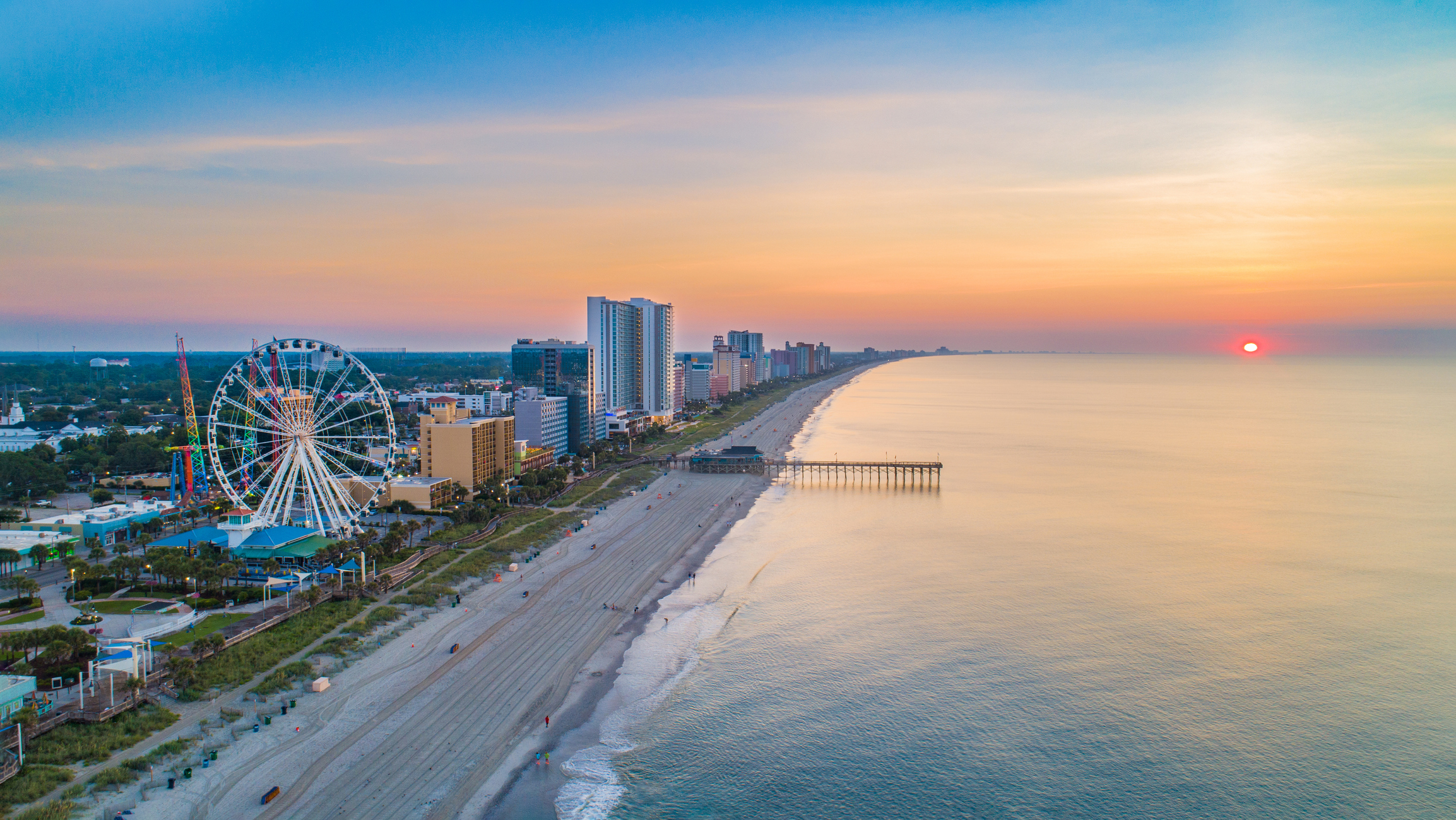
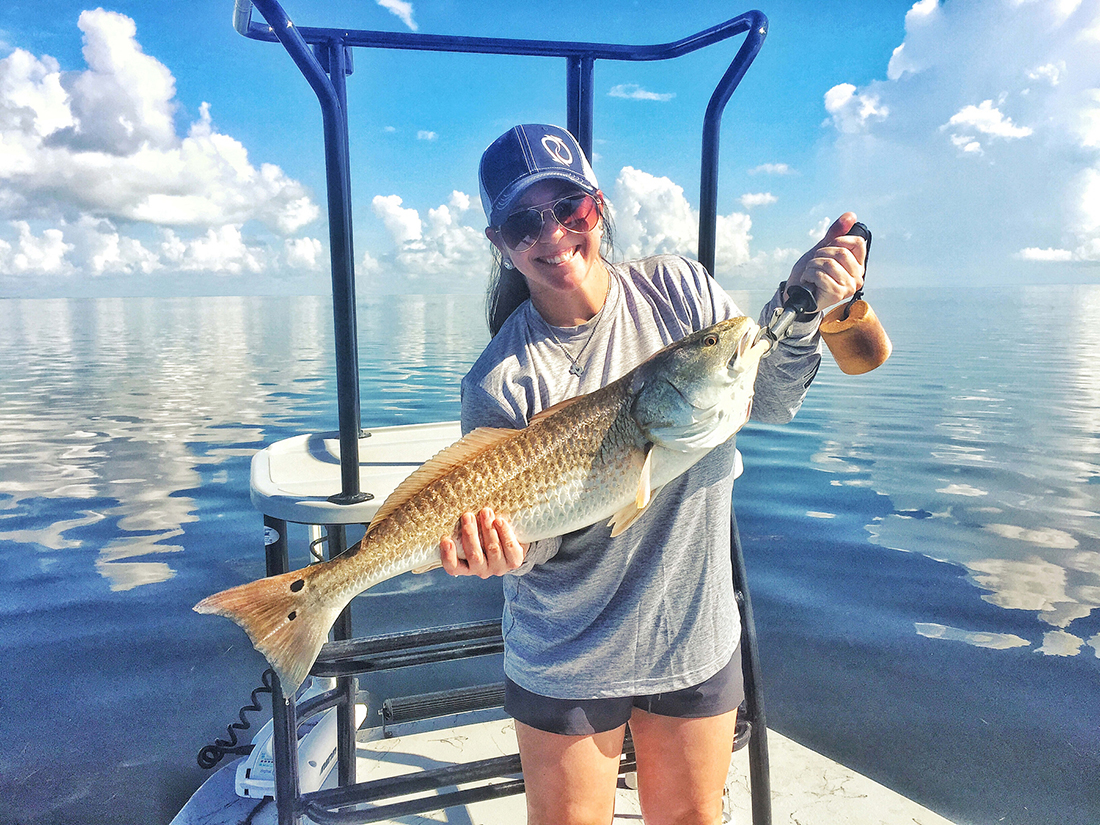
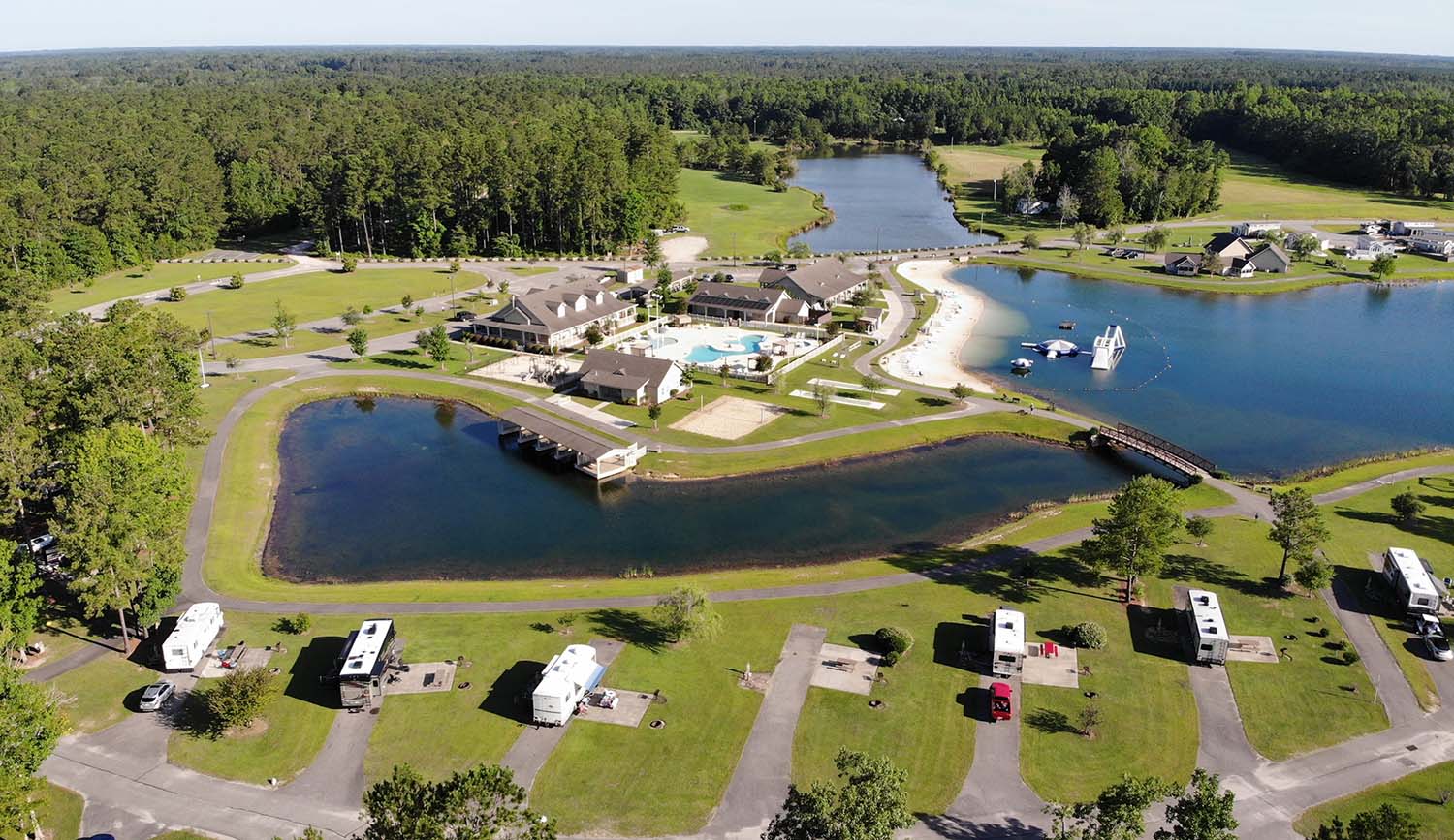
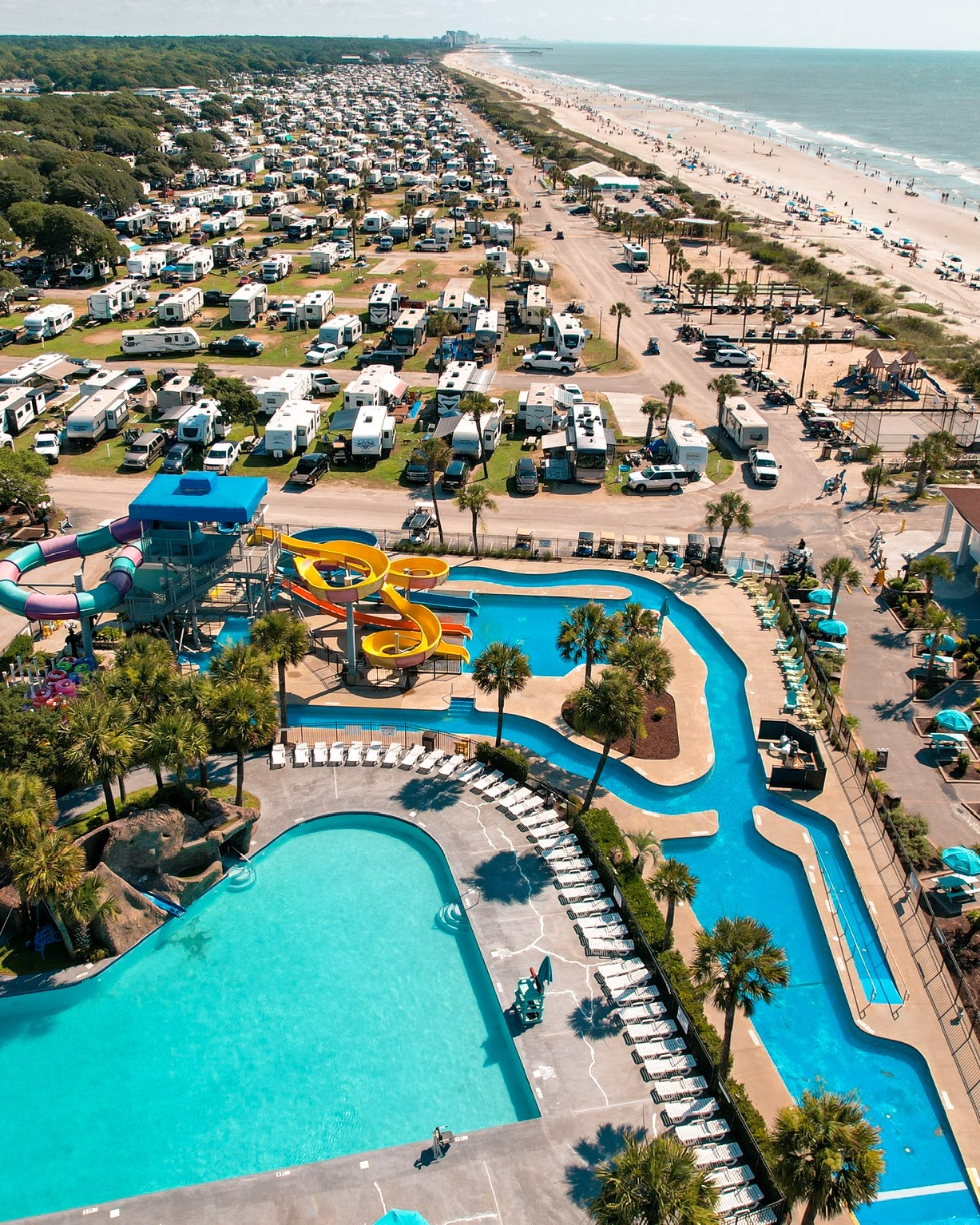
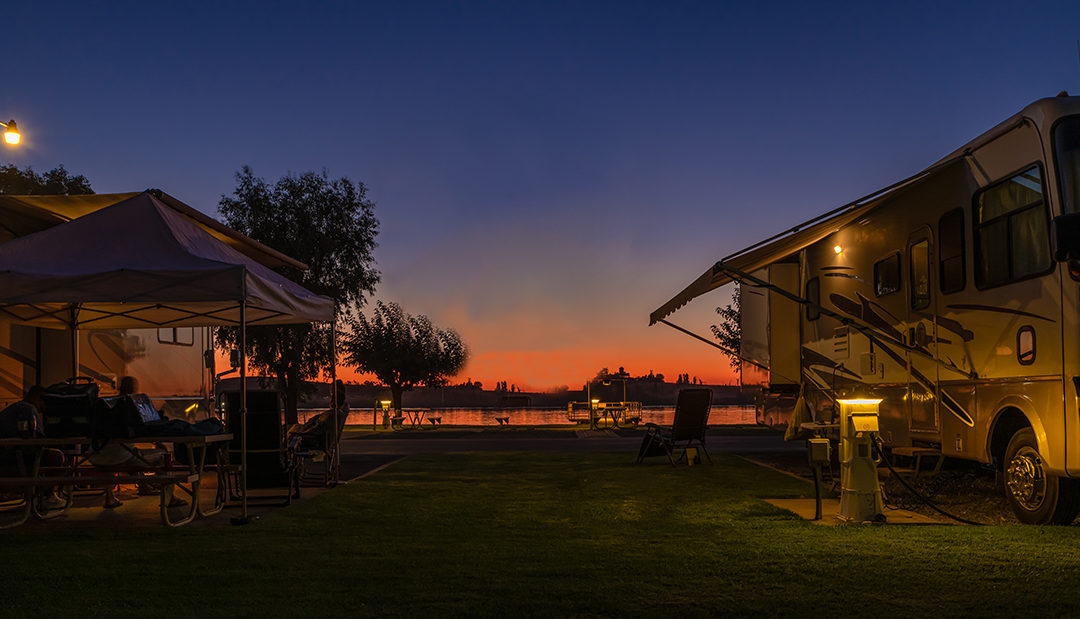
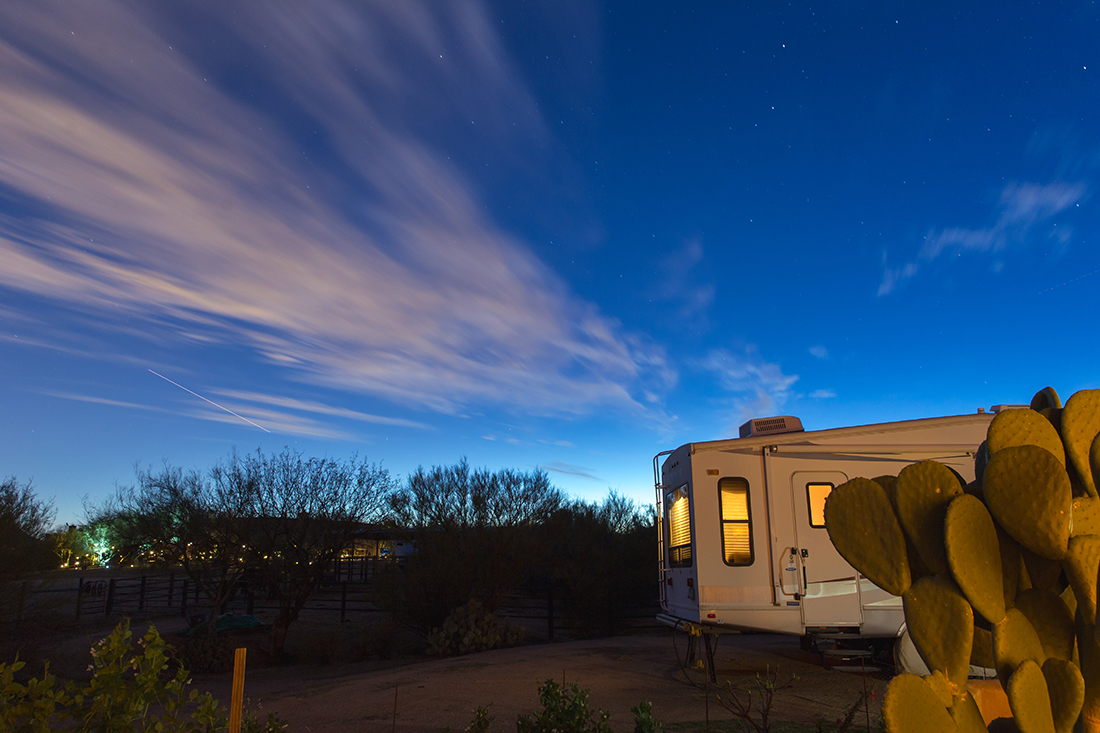
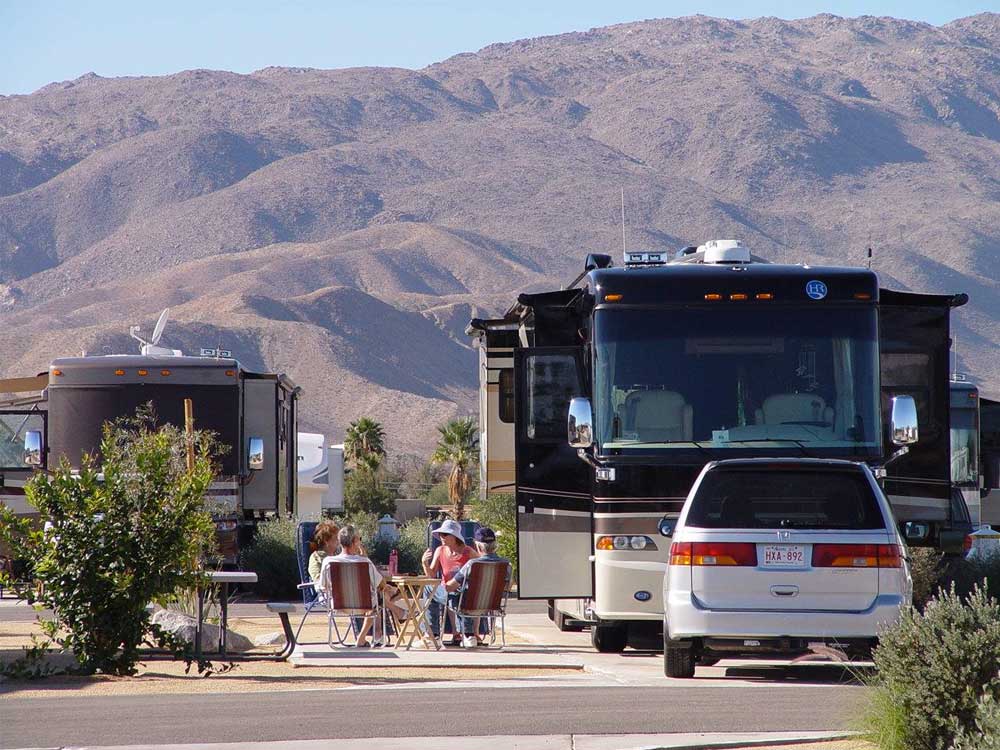
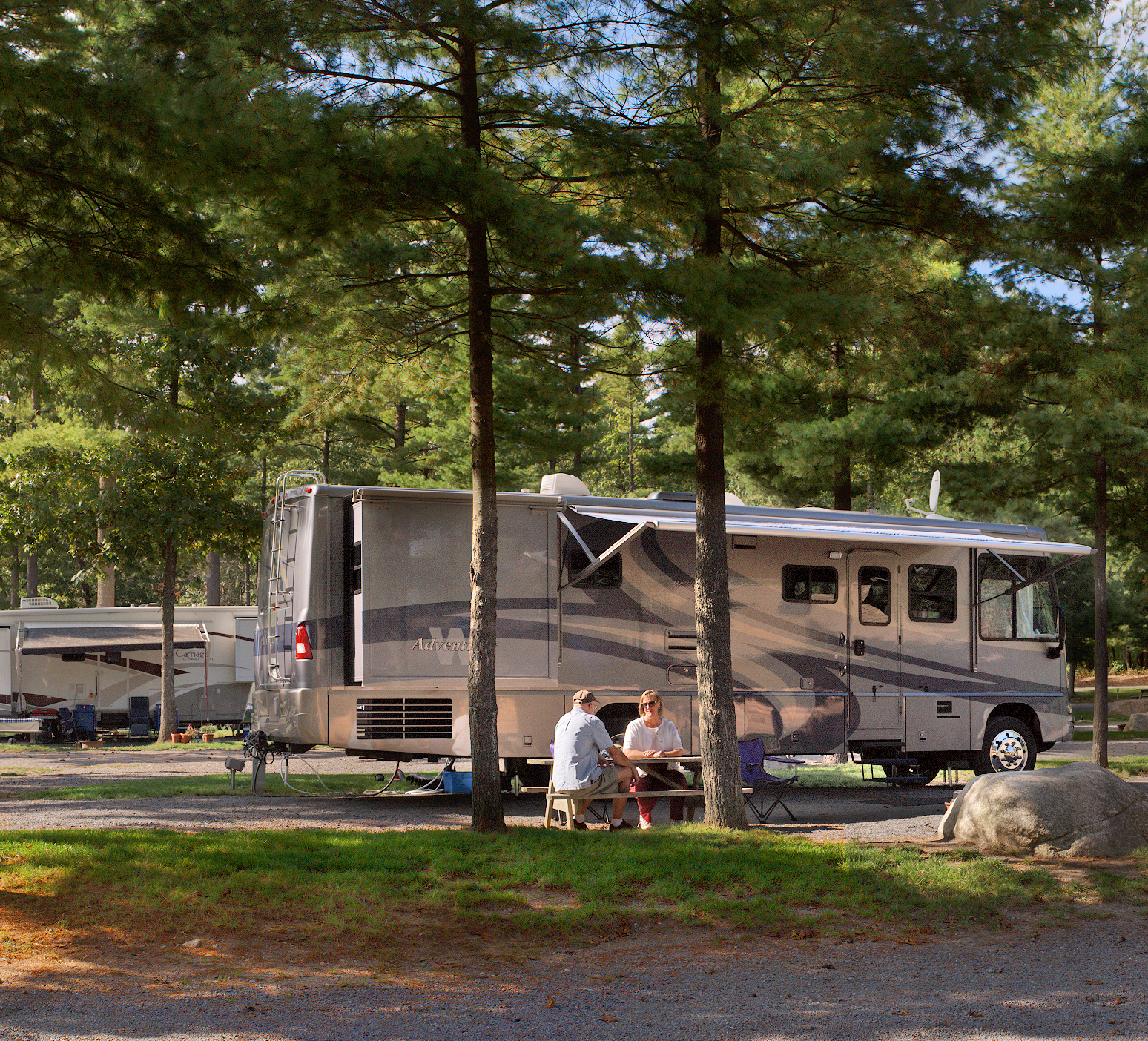
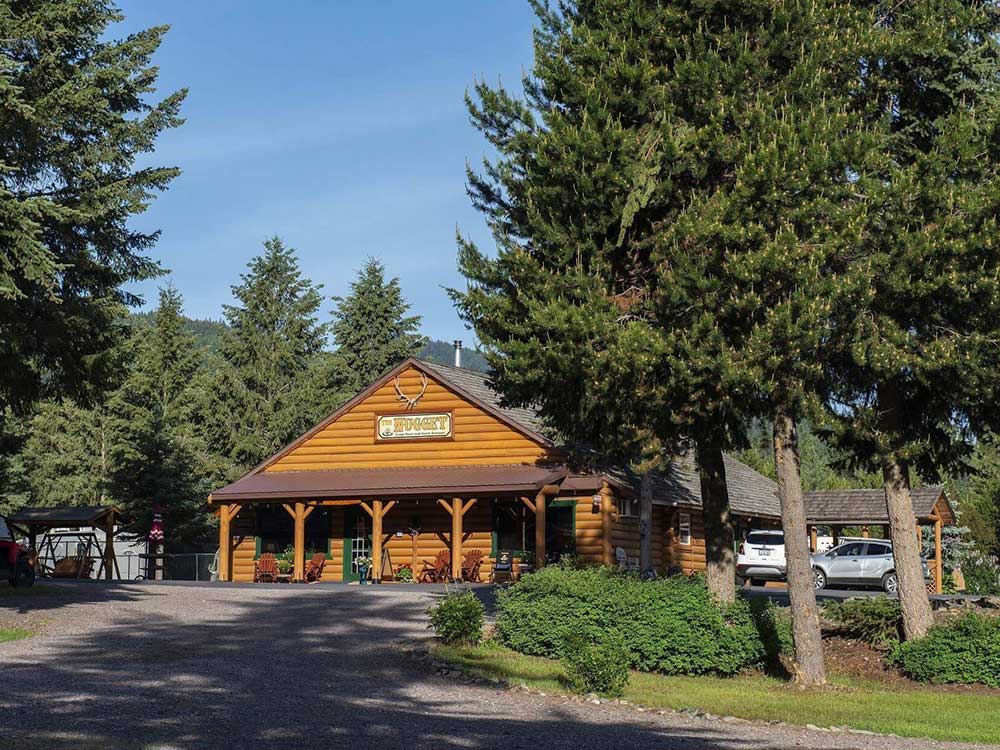
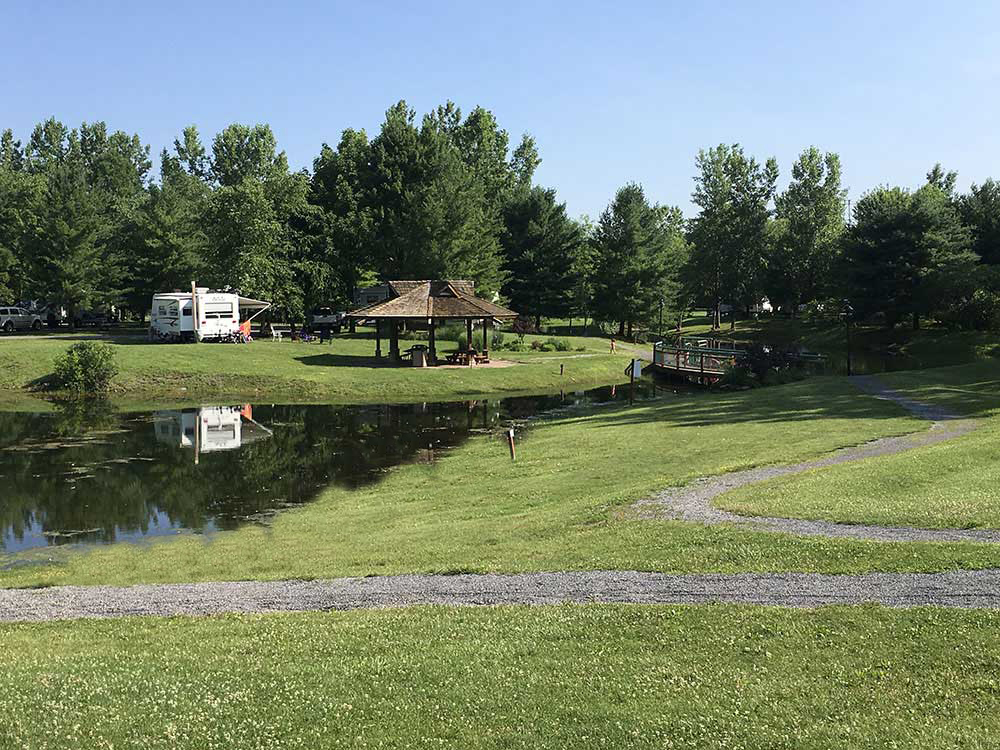
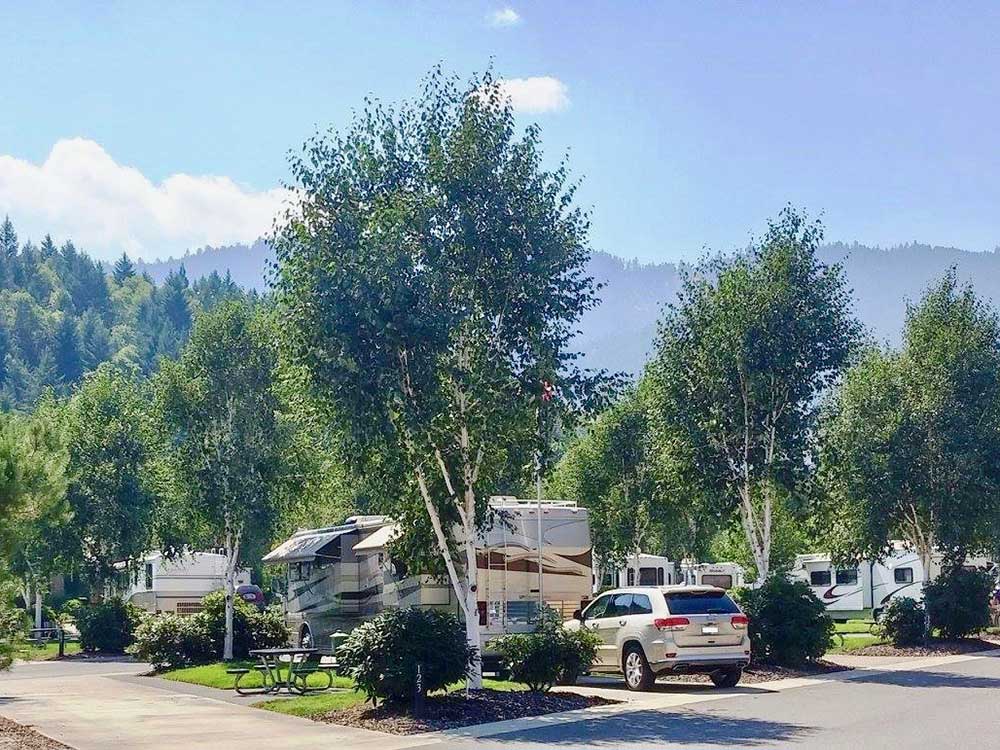
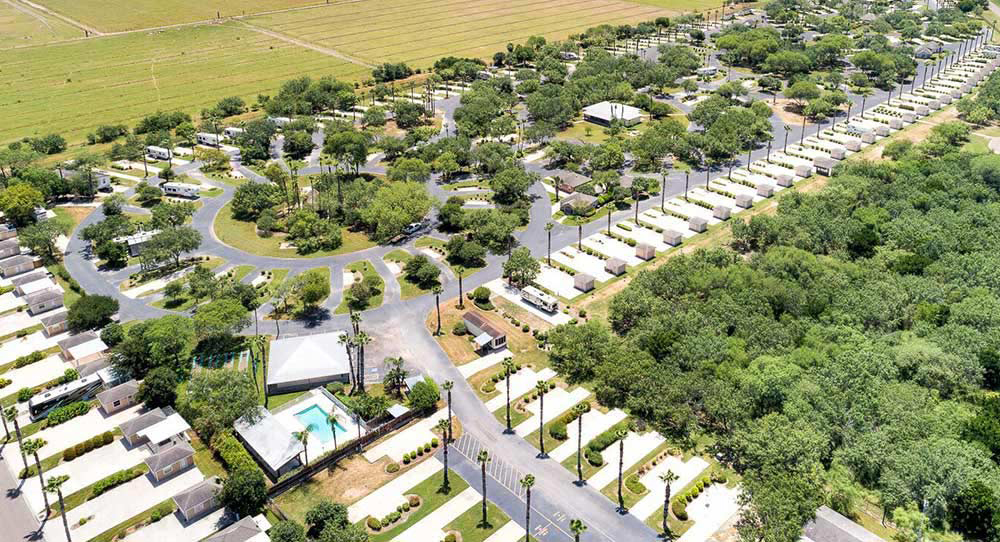
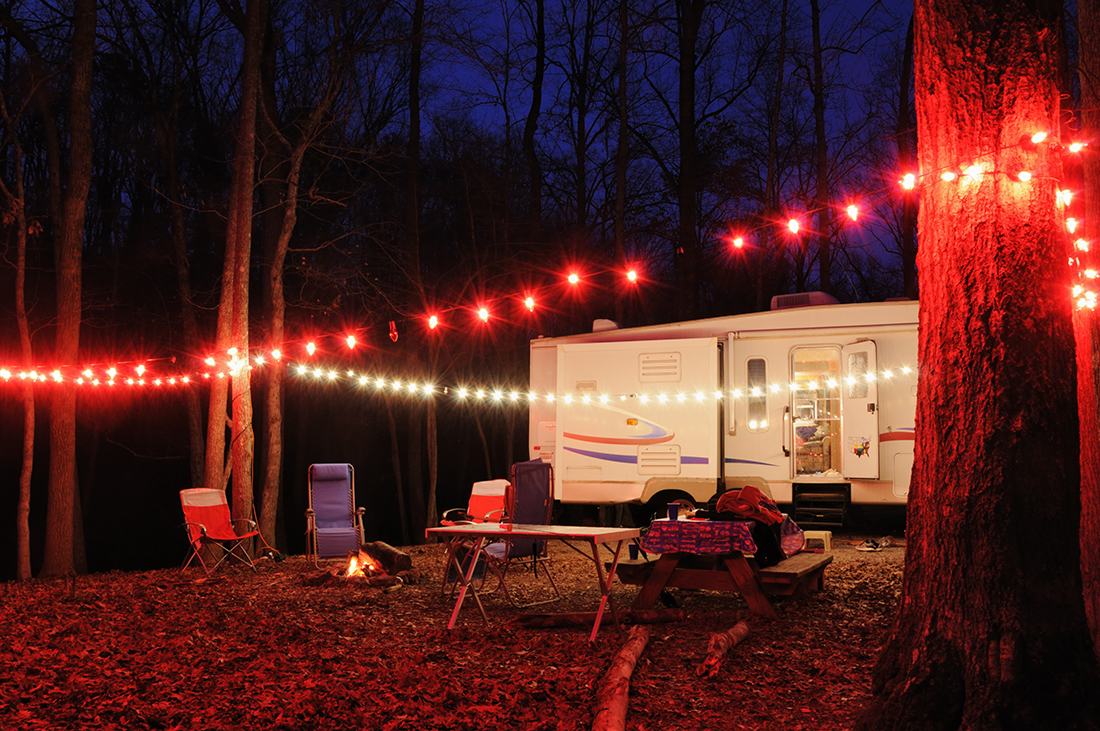
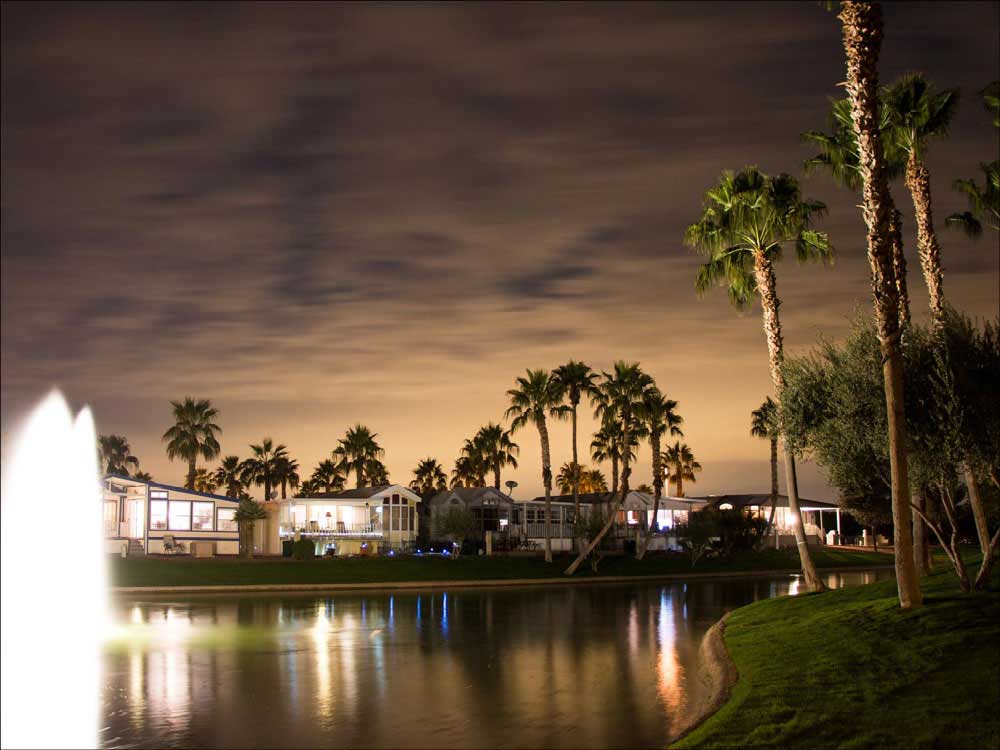
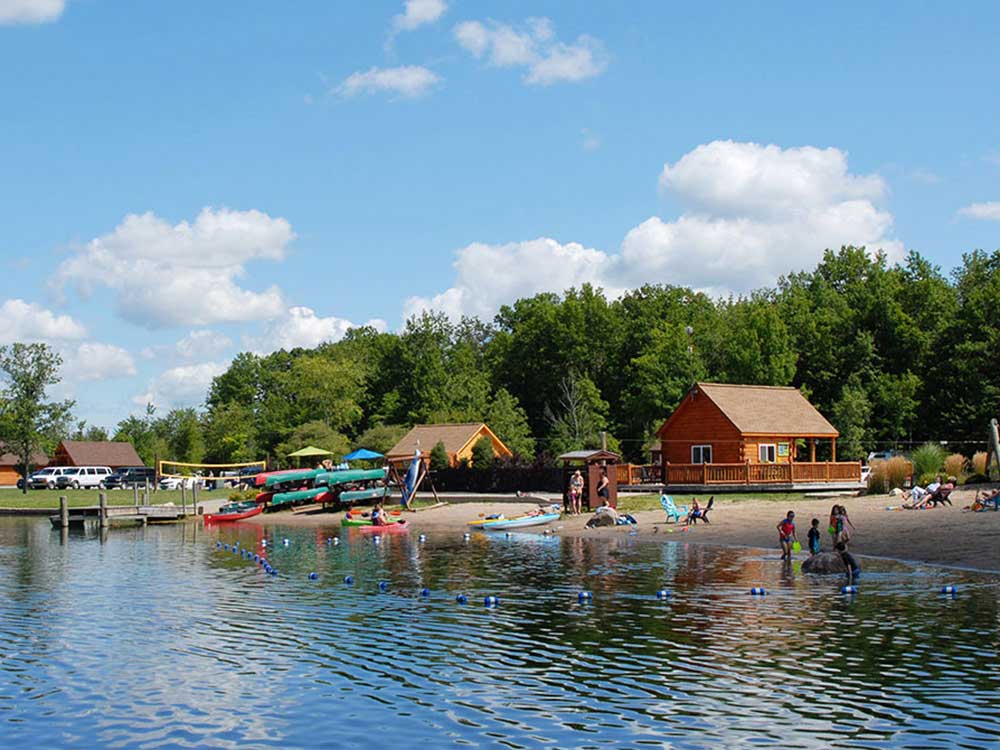
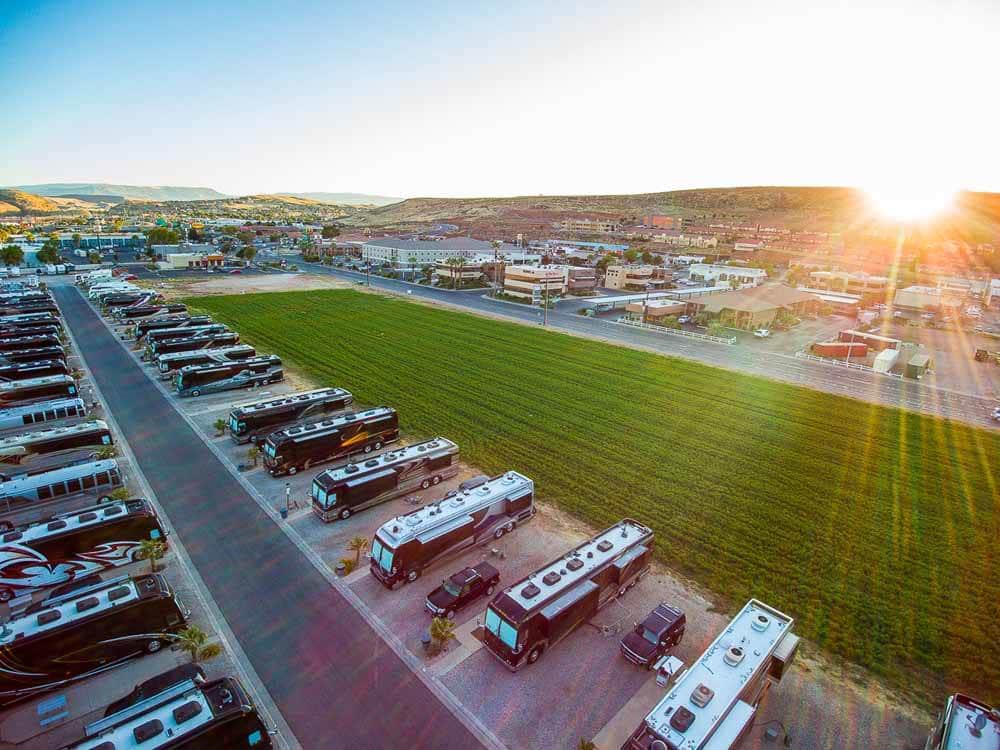
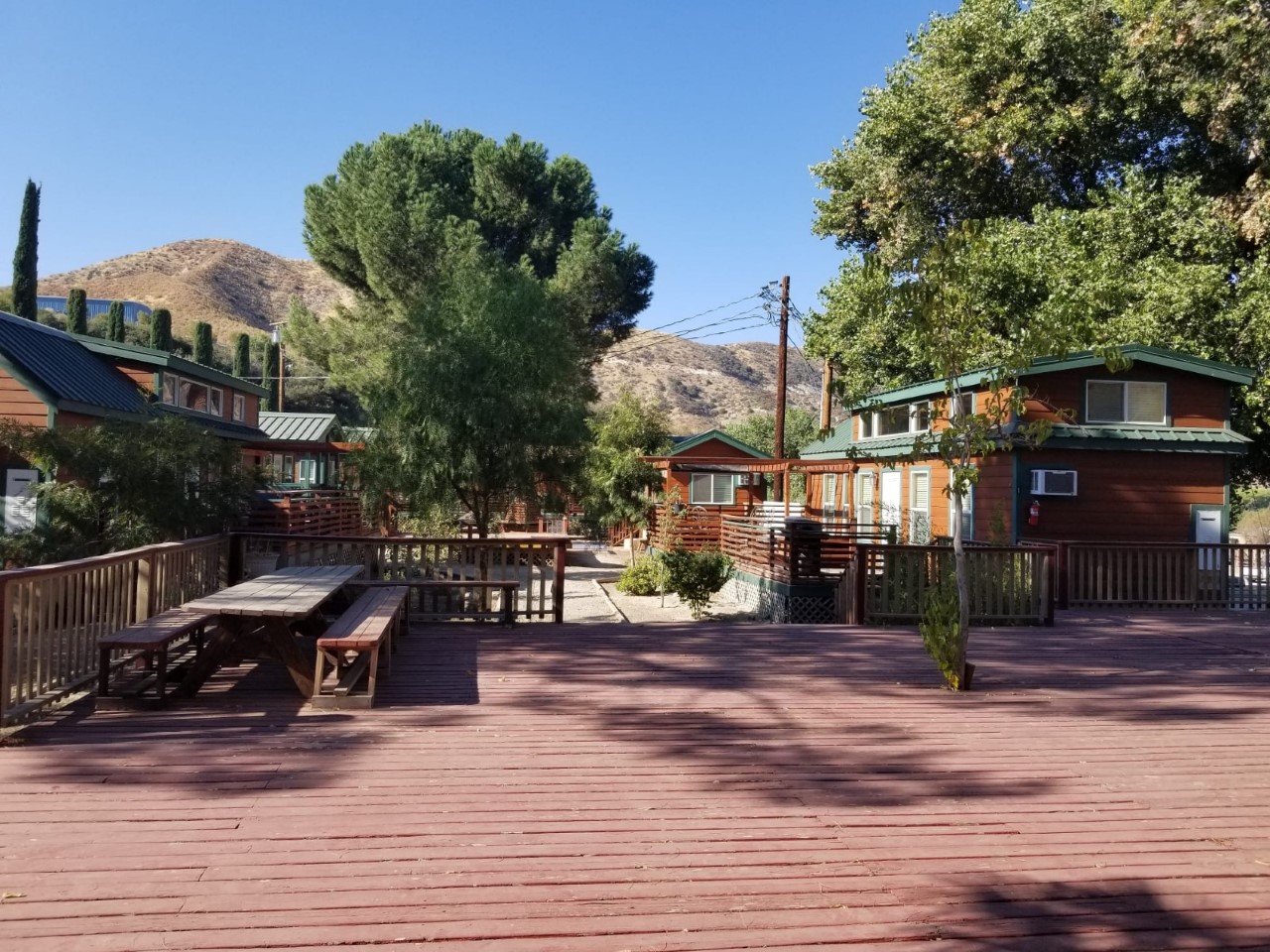
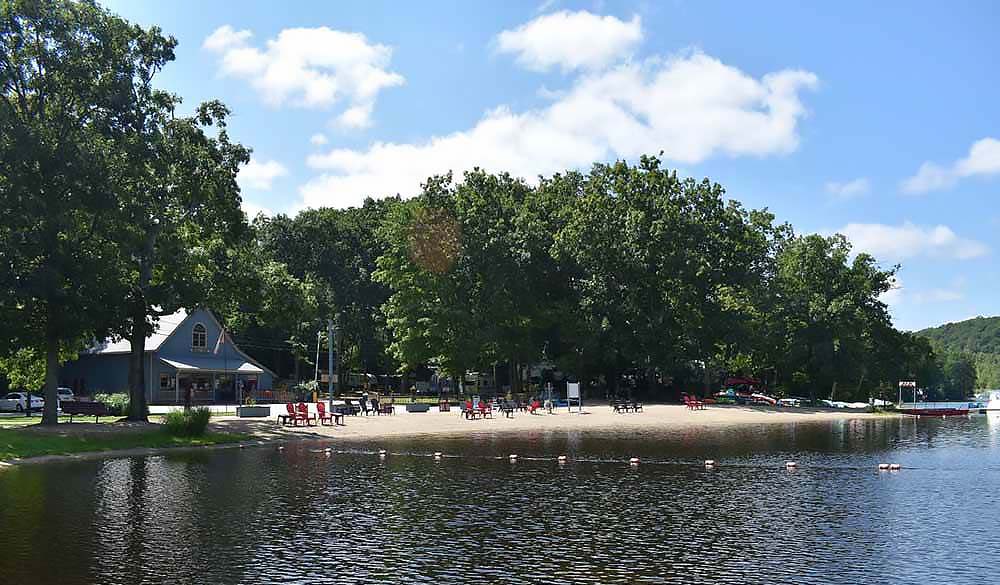
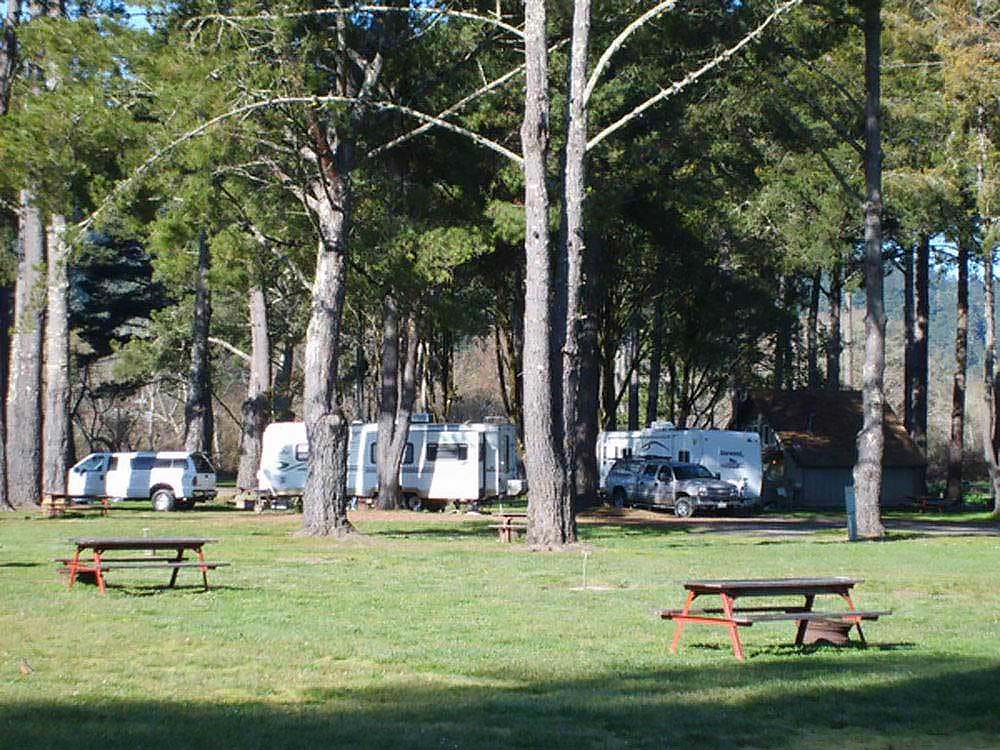
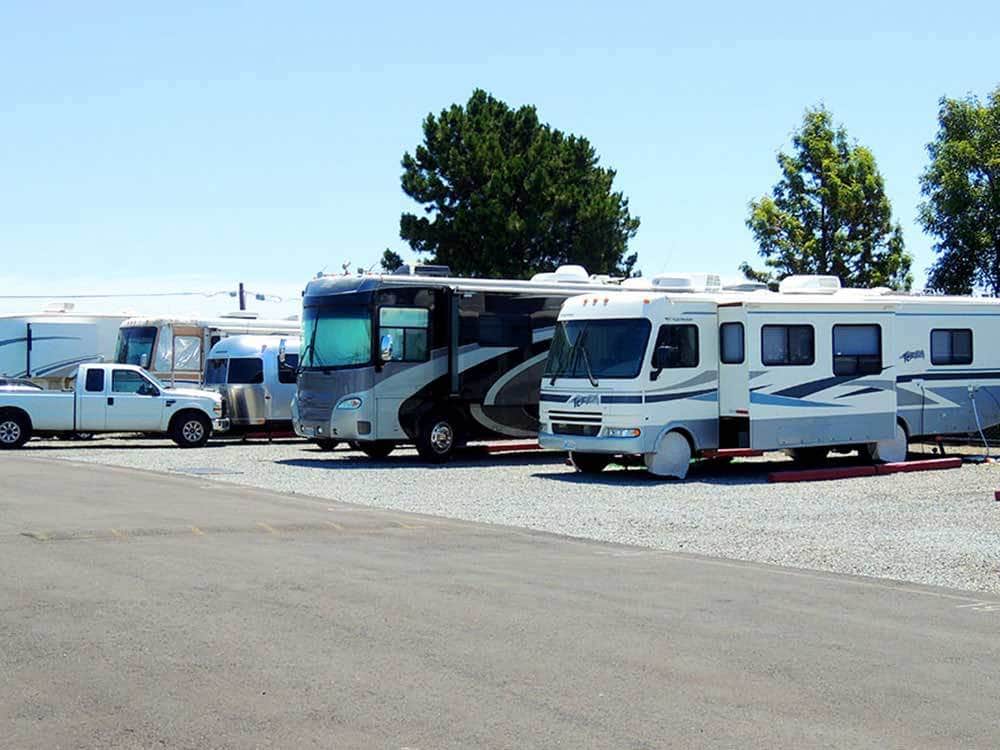
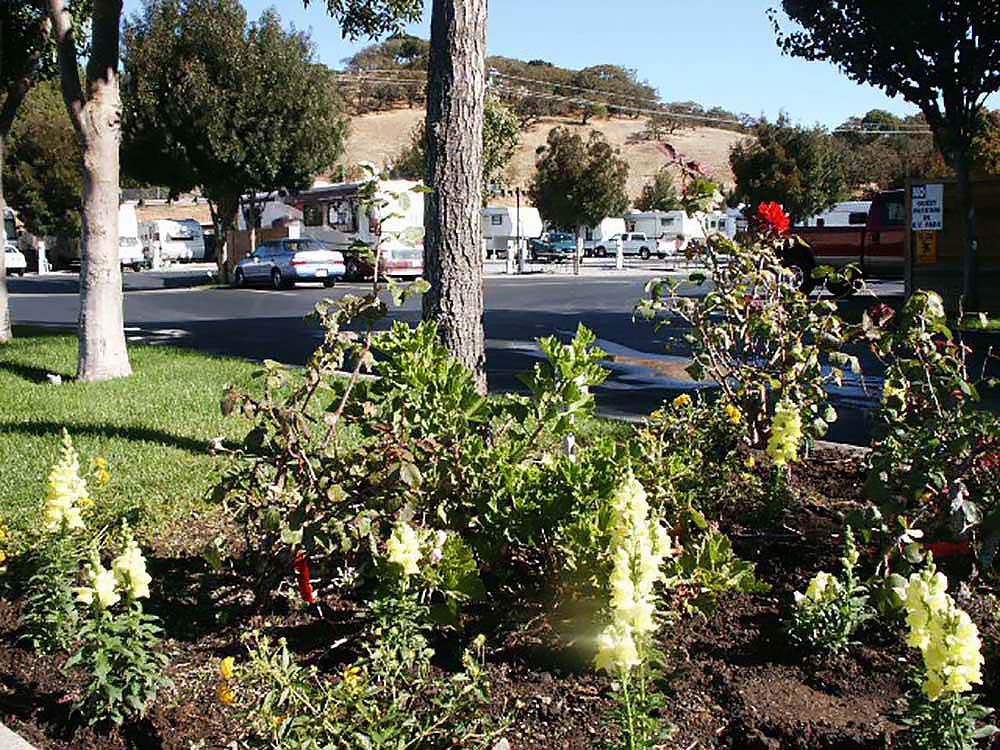
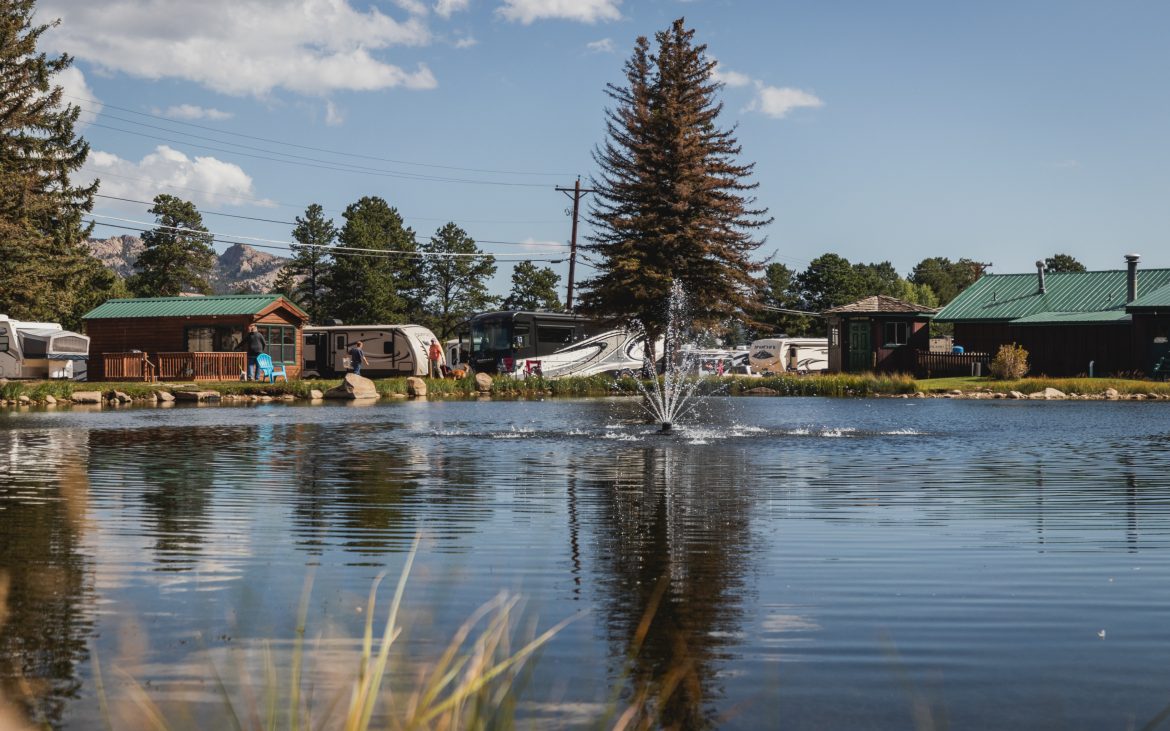
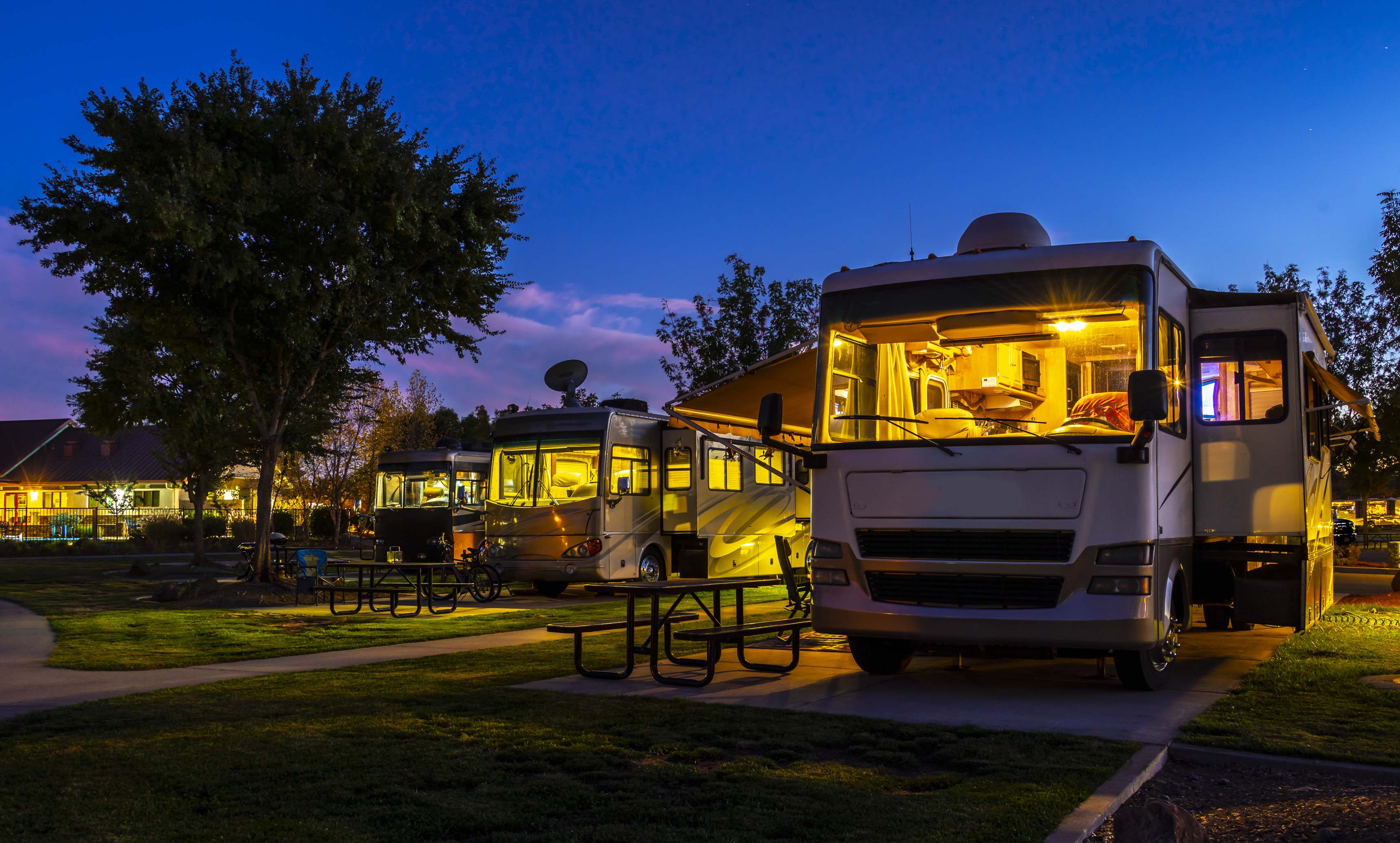
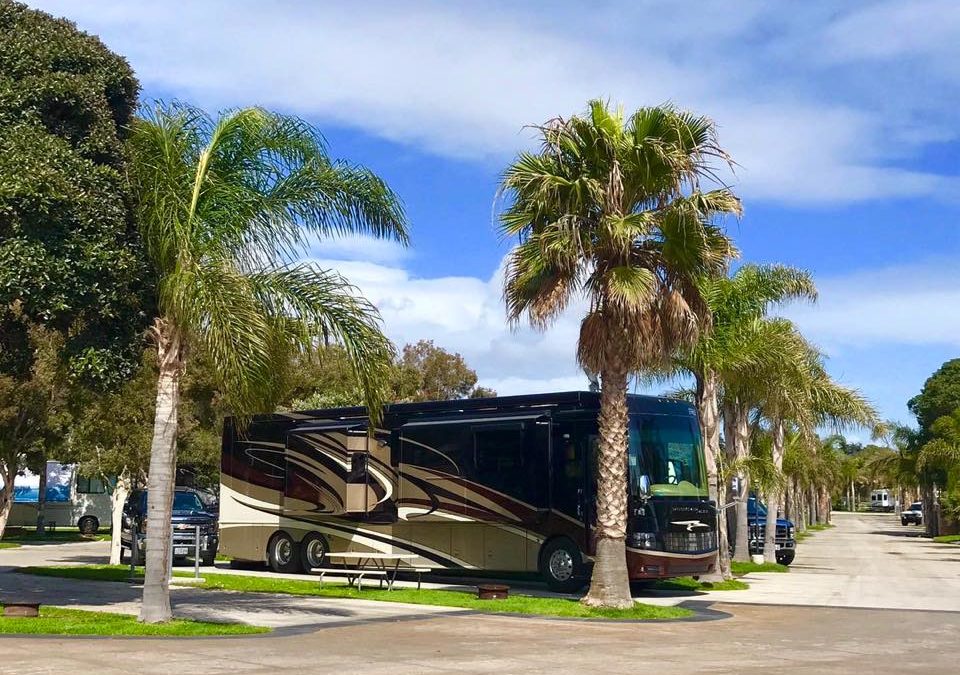
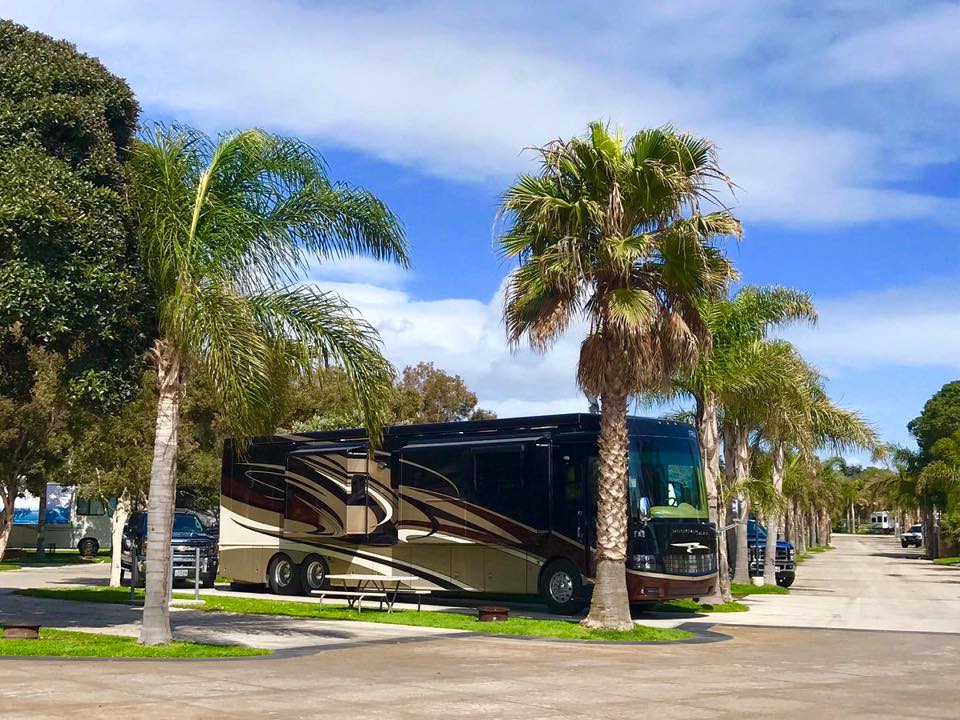
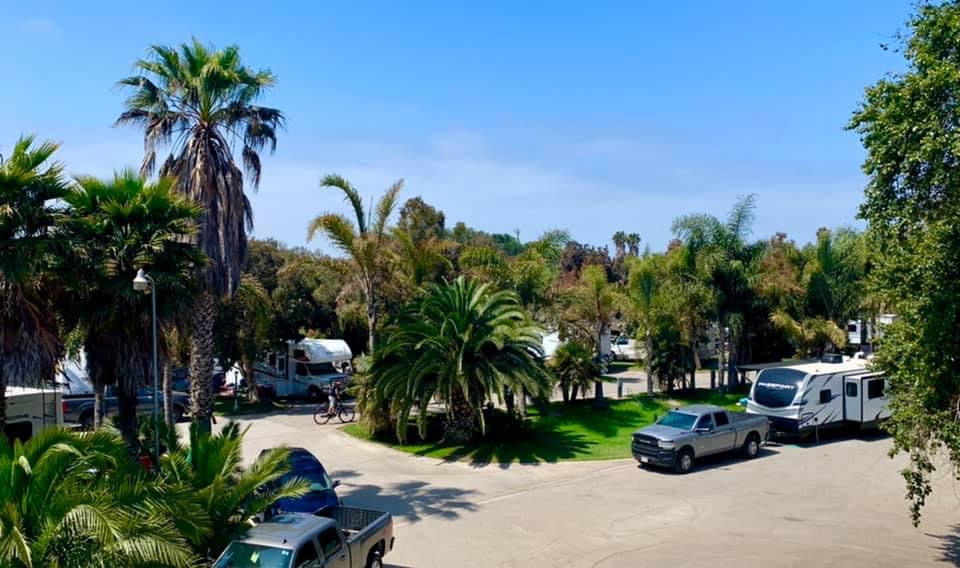
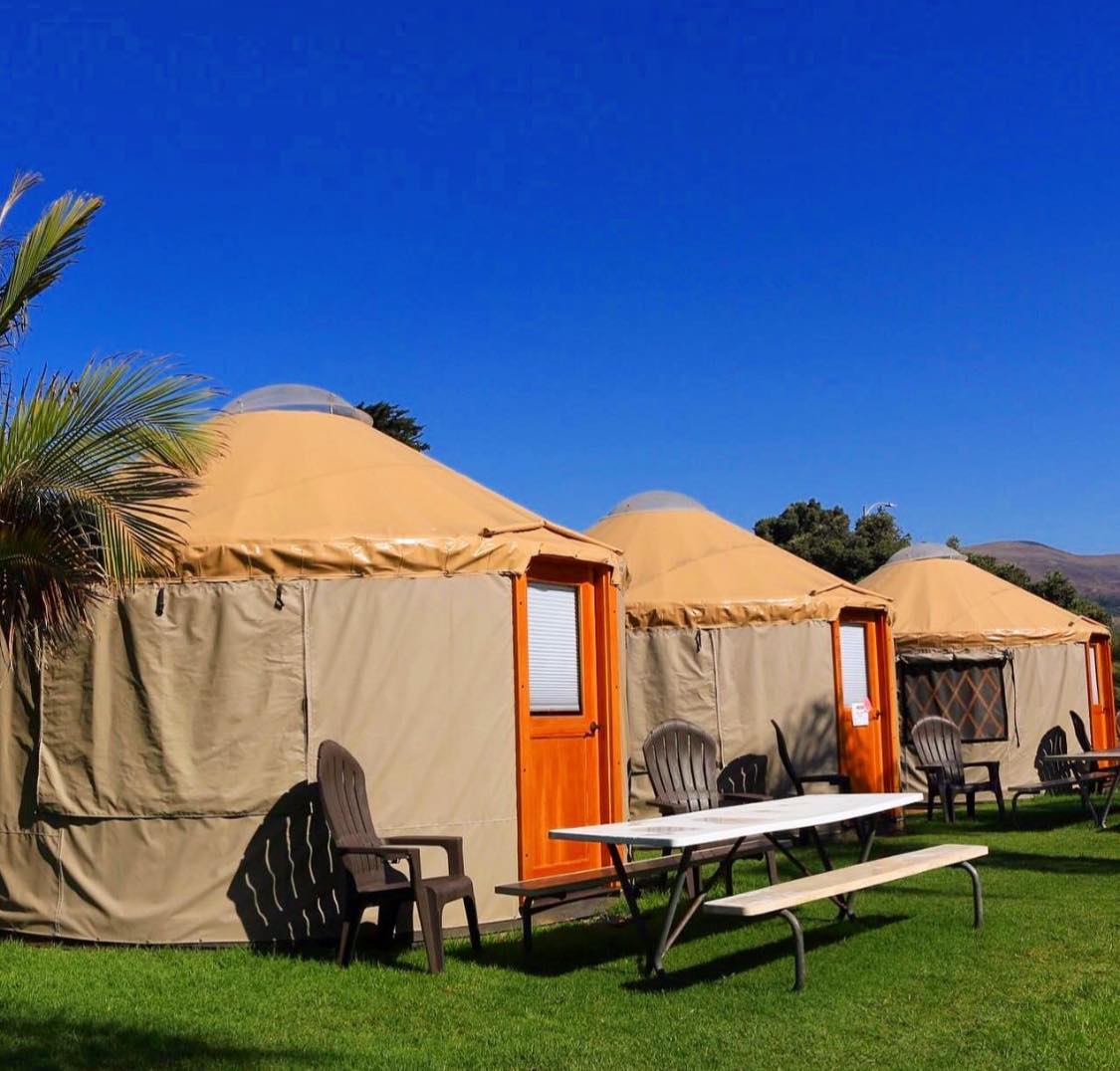
Location, location, location! When choosing the right home base for experiencing an area, location is a priority. It can make or break your experience. That’s why Burnaby Cariboo RV Park (BCRV), your top-rated Good Sam Park, is your best choice!
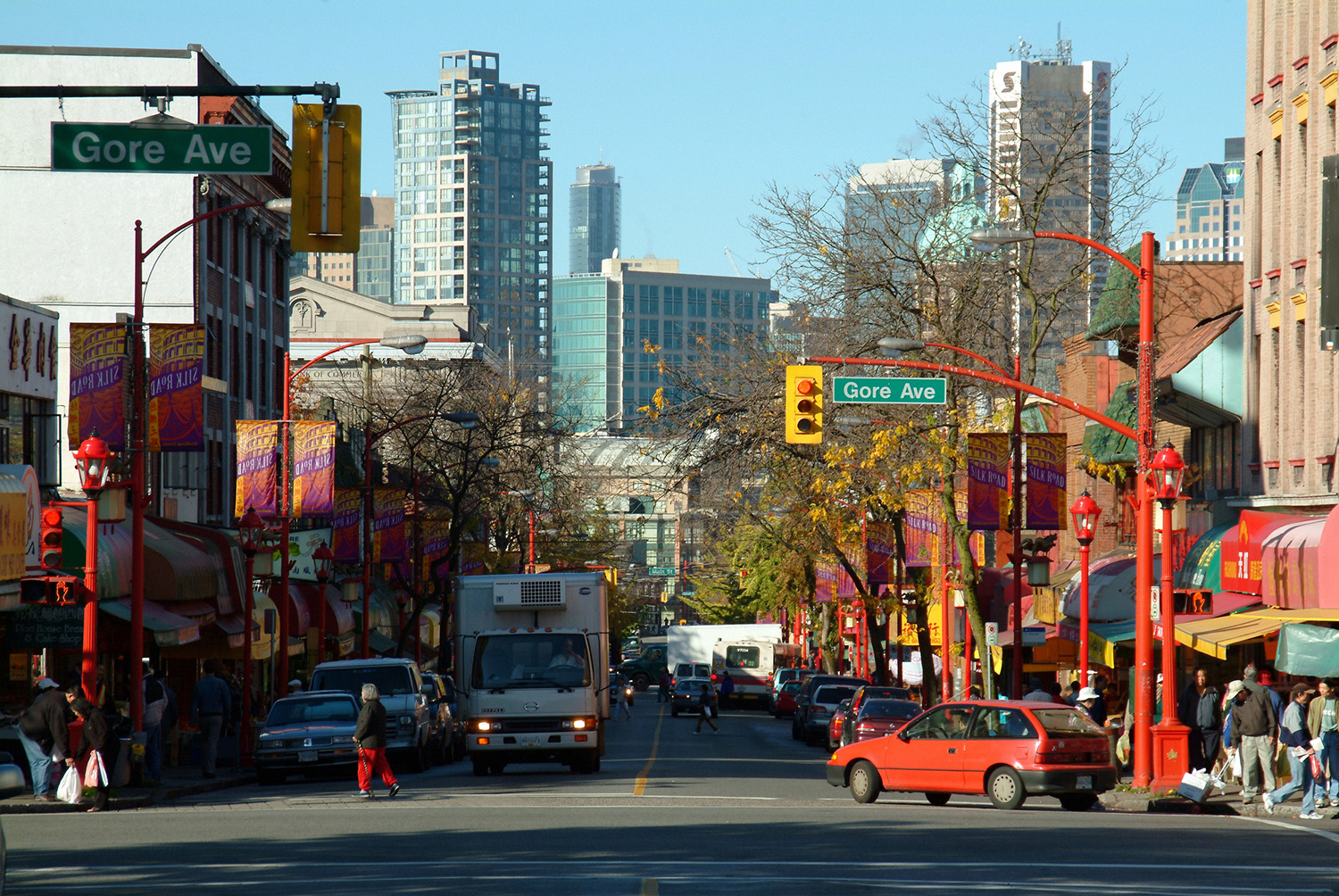
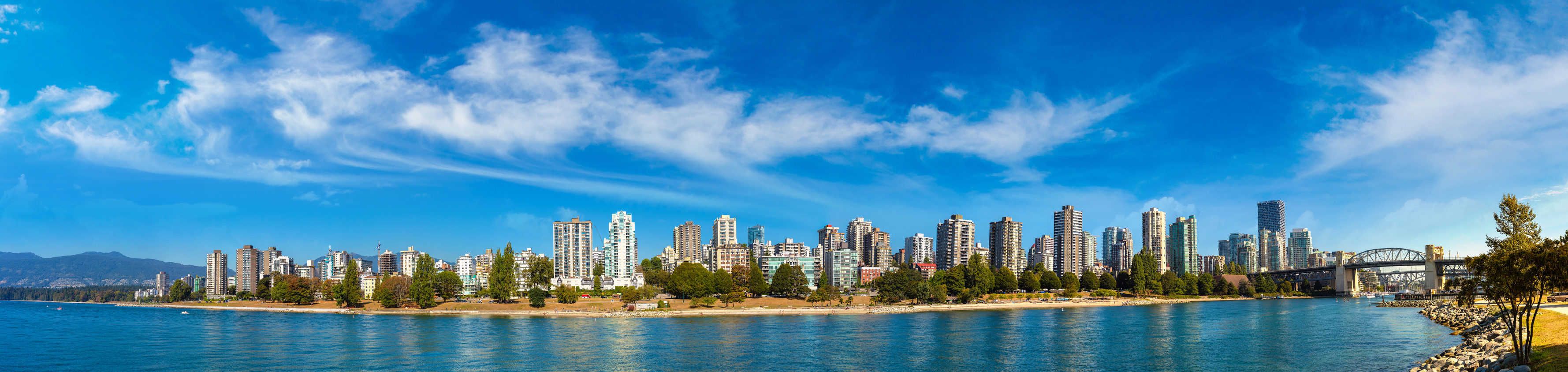
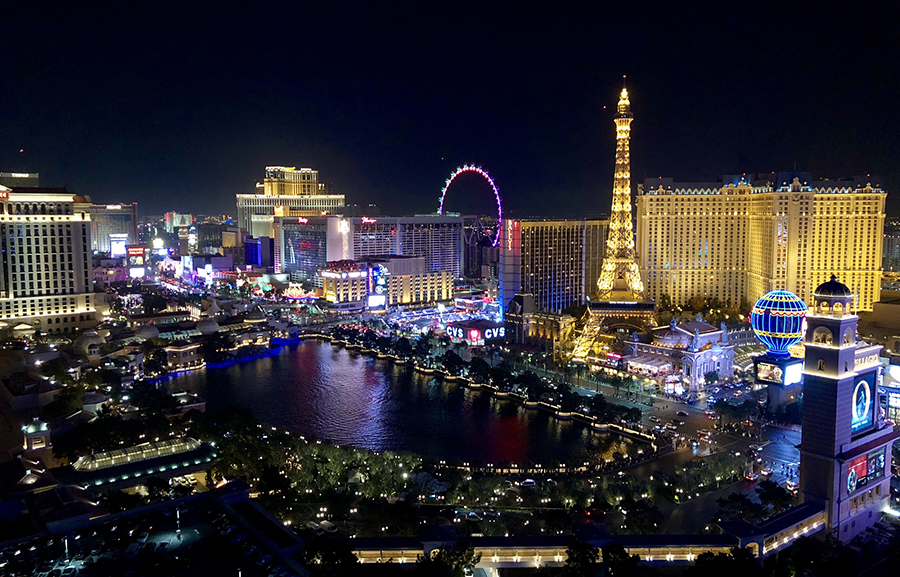
We’re within easy access to everything Vancouver and the surrounding area have to offer. Conveniently located adjacent to the Sky Train, a rapid transit system. You can just park your RV and enjoy your time in the area. Why fight traffic if you don’t have to?
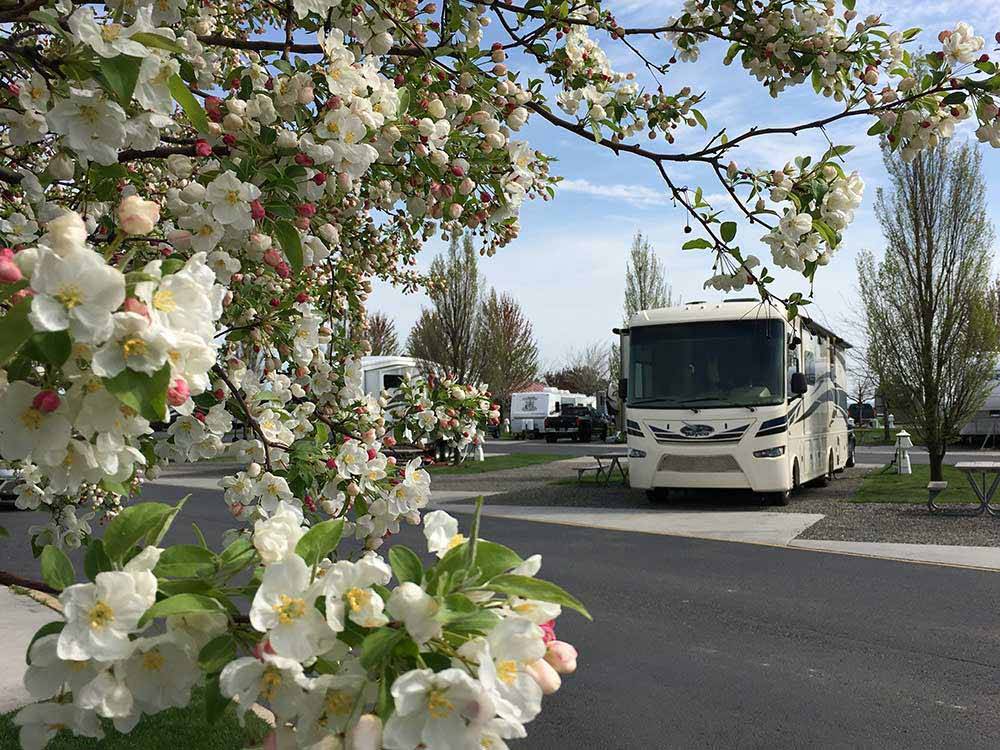
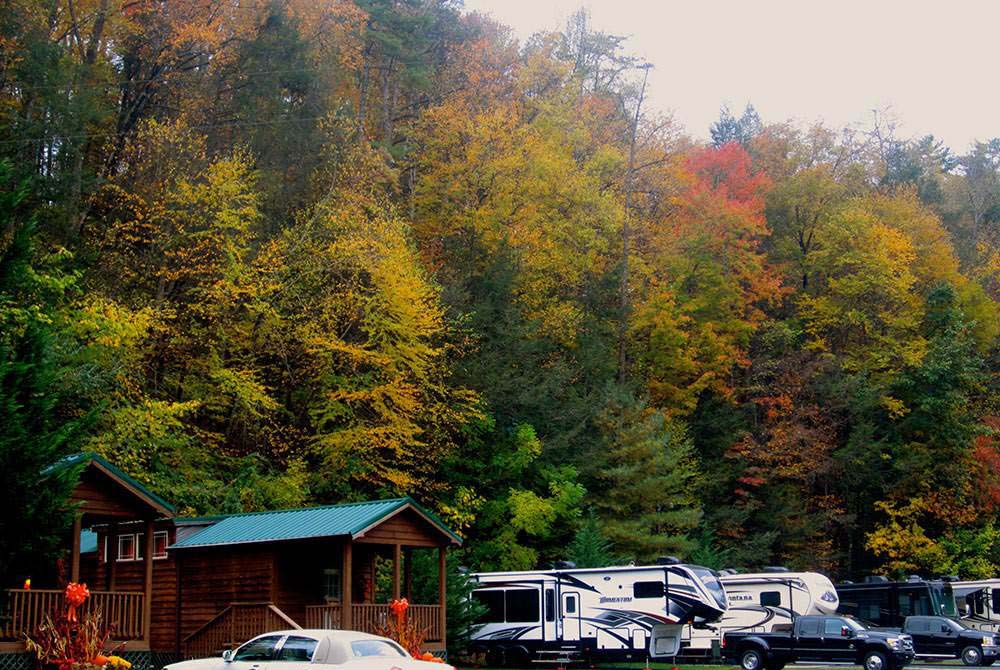
Burnaby Cariboo RV Park.
If there is a festival, the Vancouver, British Columbia, area has it! From music, art and food to heritage, it’s all here! Experience unique shopping areas, museums, tours and markets of every kind.
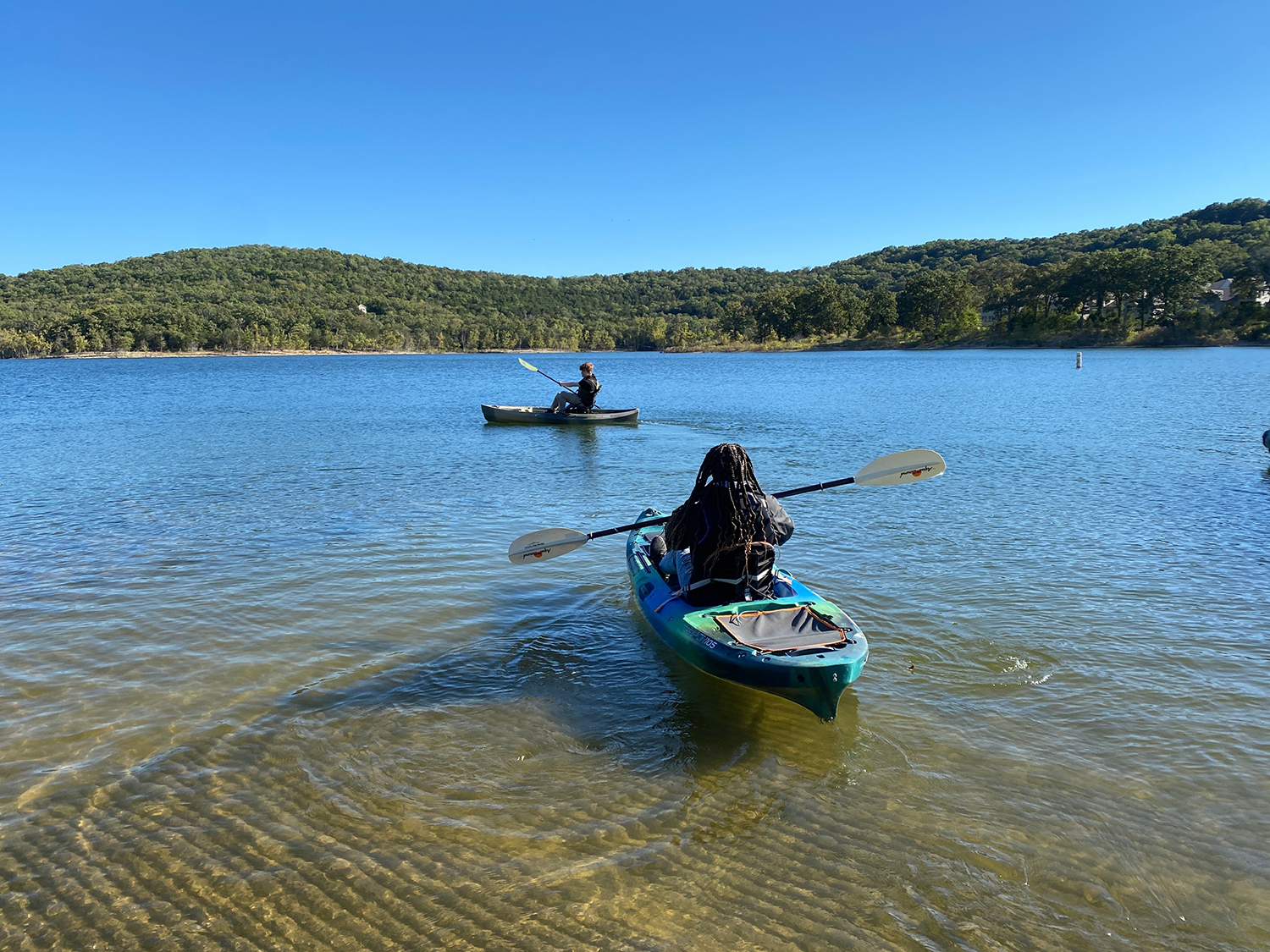
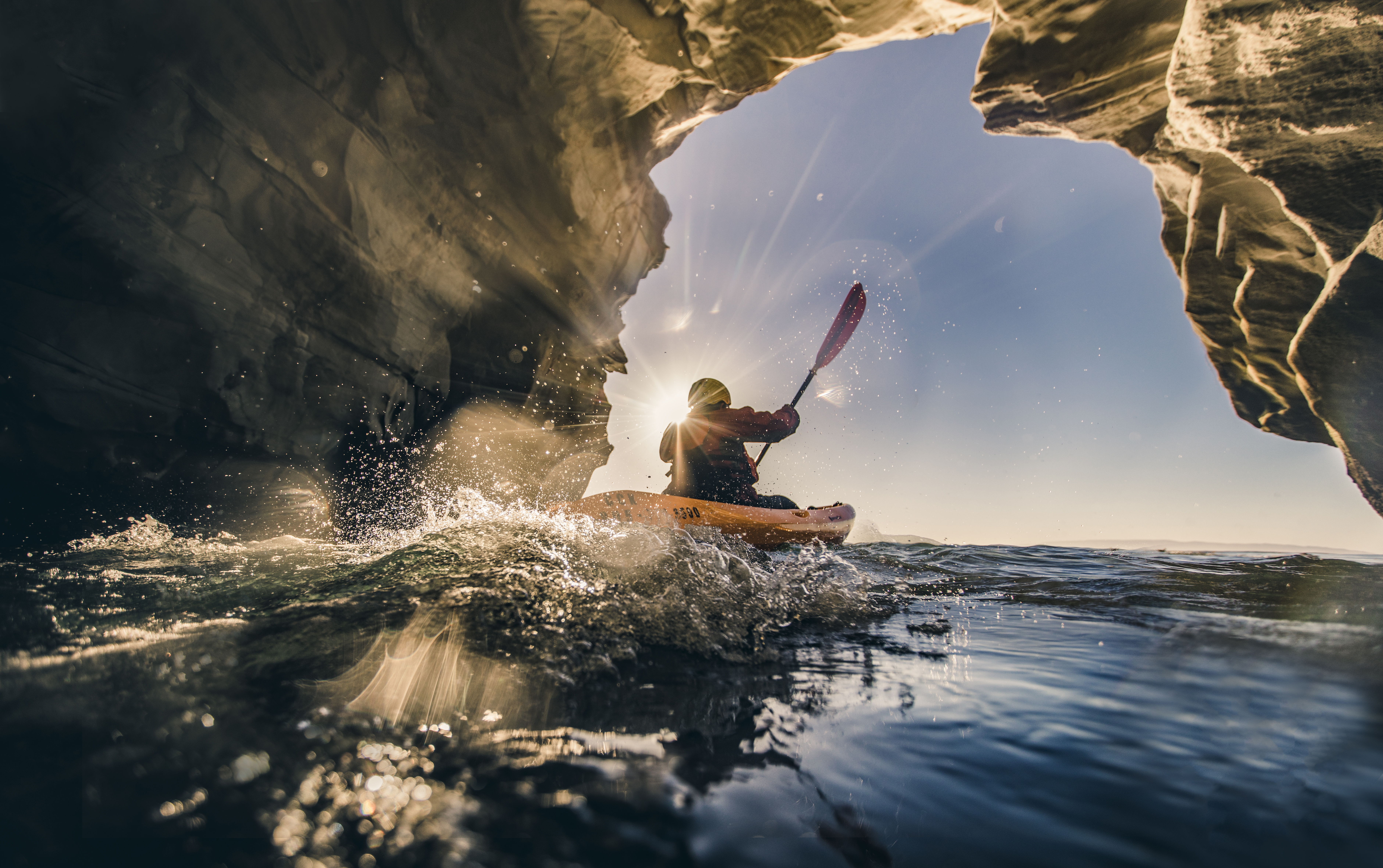
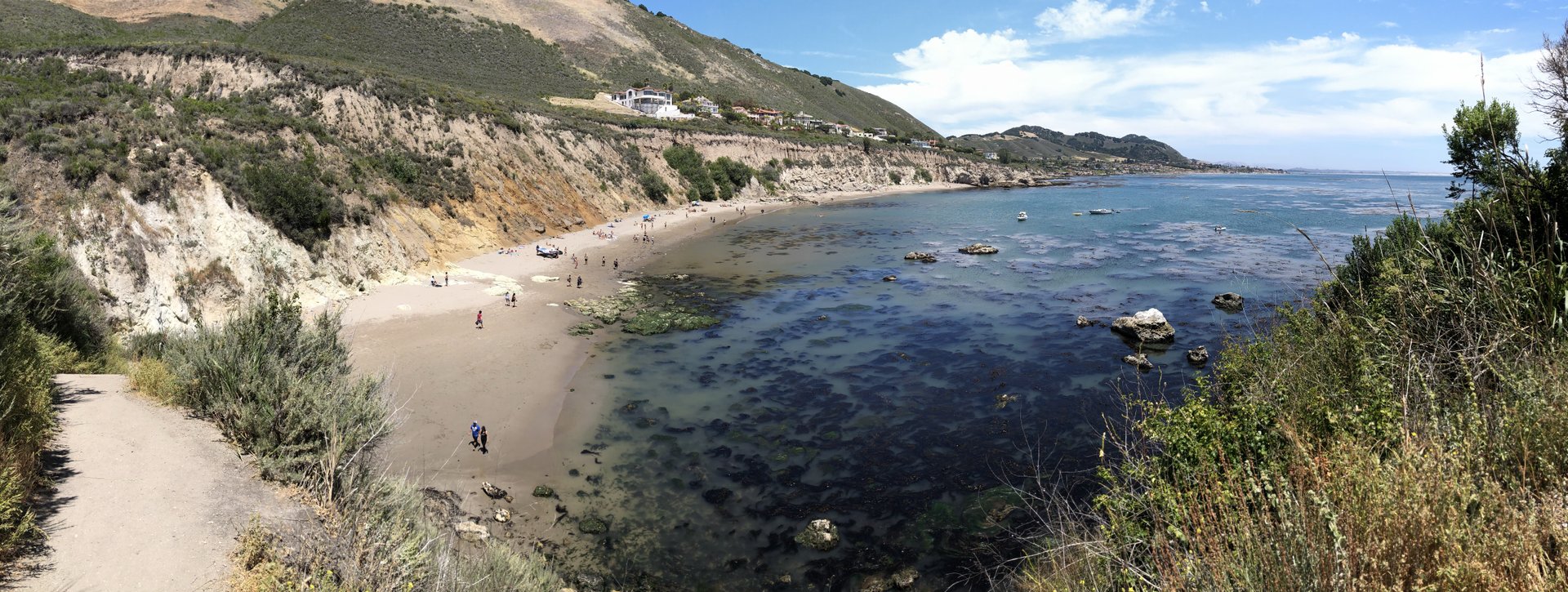
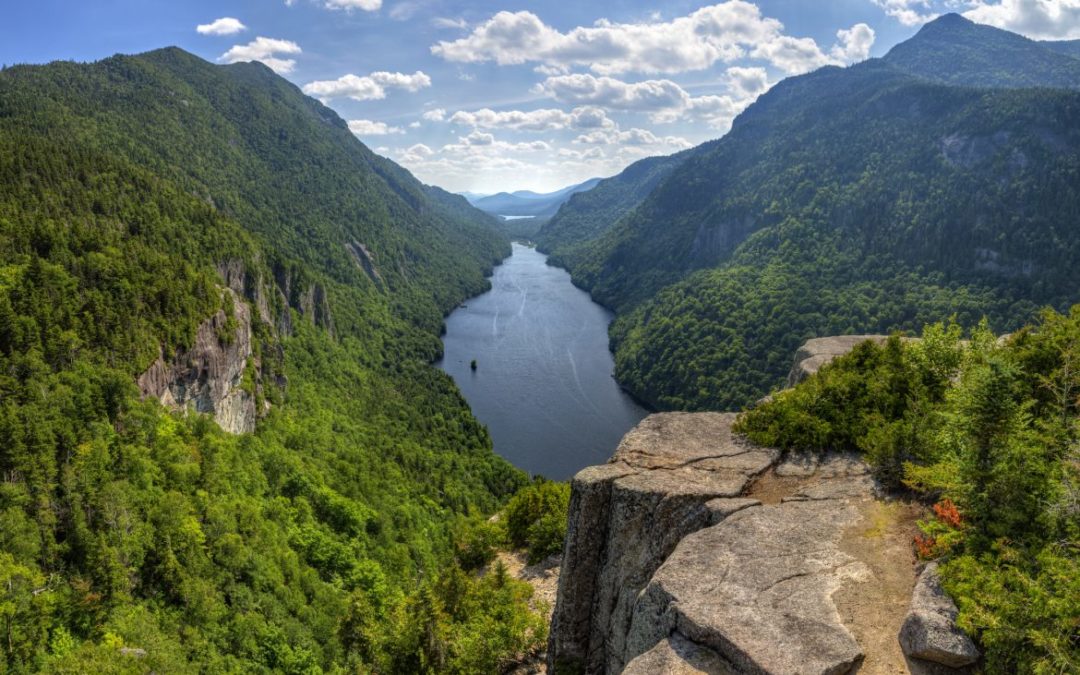
Prefer to explore on your own terms? Hiking, kayaking, whale watching, mountains, lakes and oceans are all day trips from Burnaby Cariboo.
We can even assist you with your excursions. Our friendly staff can make suggestions and can help you book your tours. Grayline Tours picks up right from our park!
Burnaby Cariboo RV Park
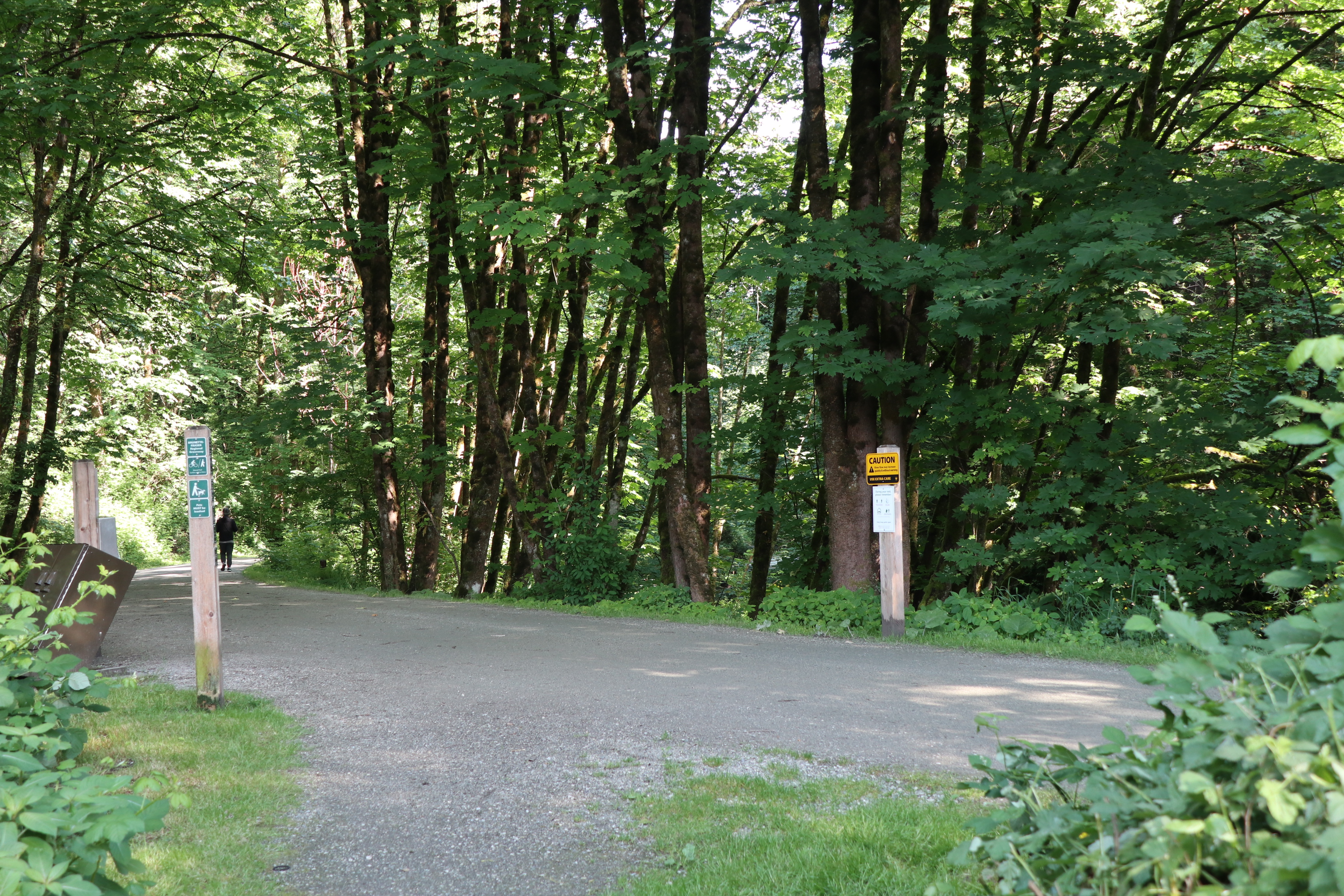
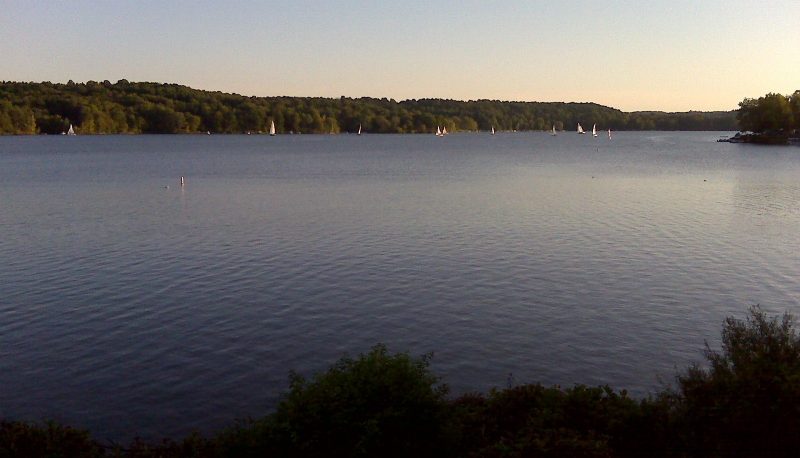
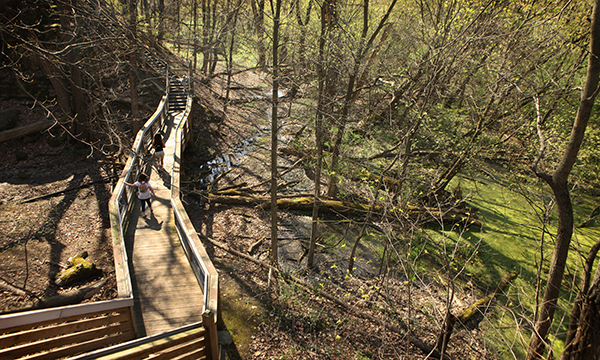
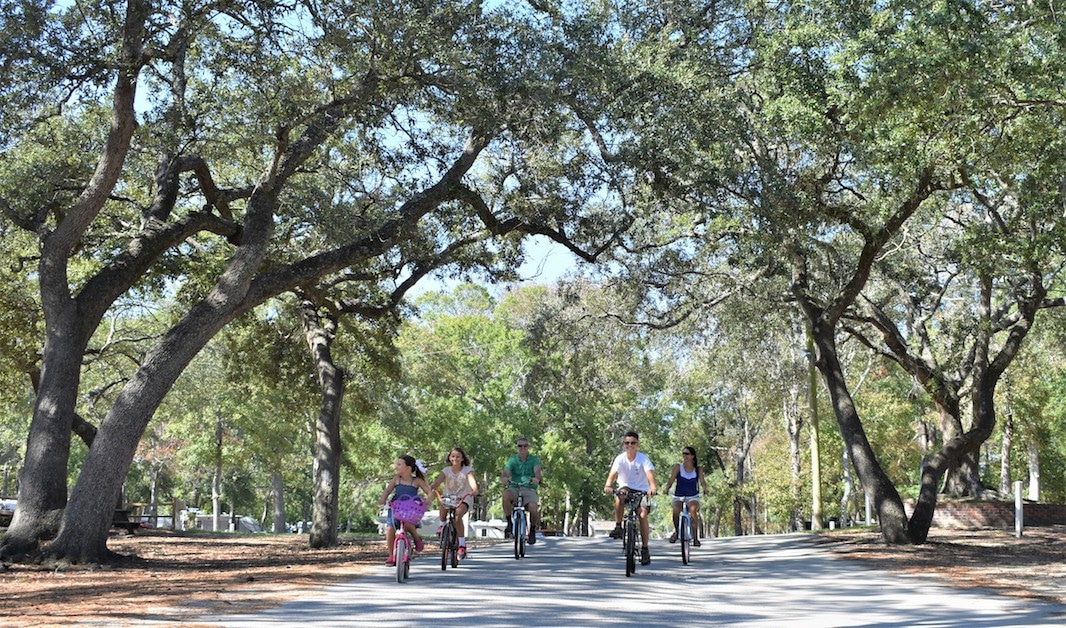
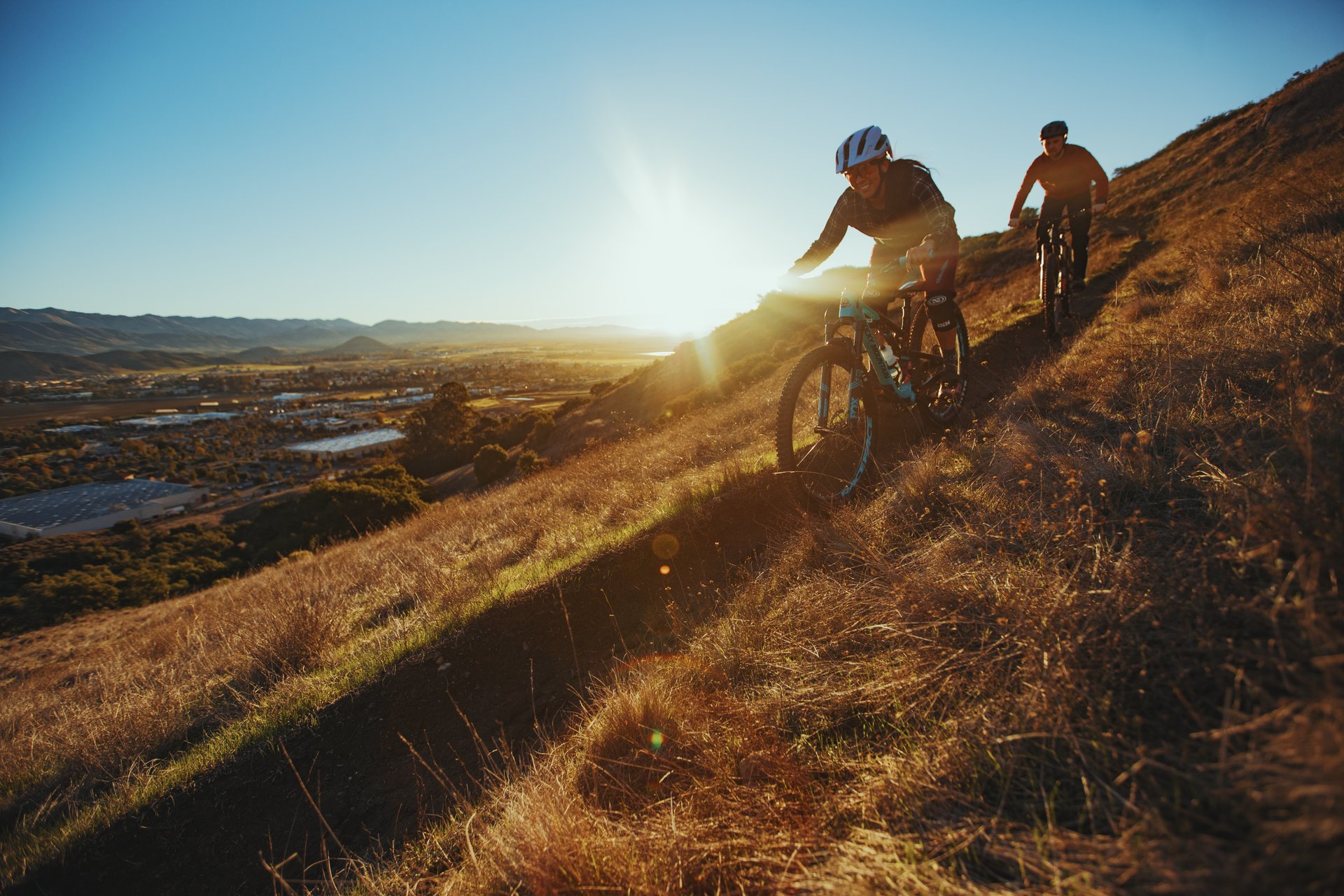
BCRV offers the best of both worlds — proximity to city sites and adventures as well as parks and green spaces. Brunette-Fraser Regional Greenway is immediately outside our park doors! This offers miles of cycling/walking paths. Burnaby Lake is a short walk from the park. Burnaby Lake is a haven for wildlife. Ducks, songbirds, fish and more make their home in this park. Walking trails through mixed forest help guests get close to nature.
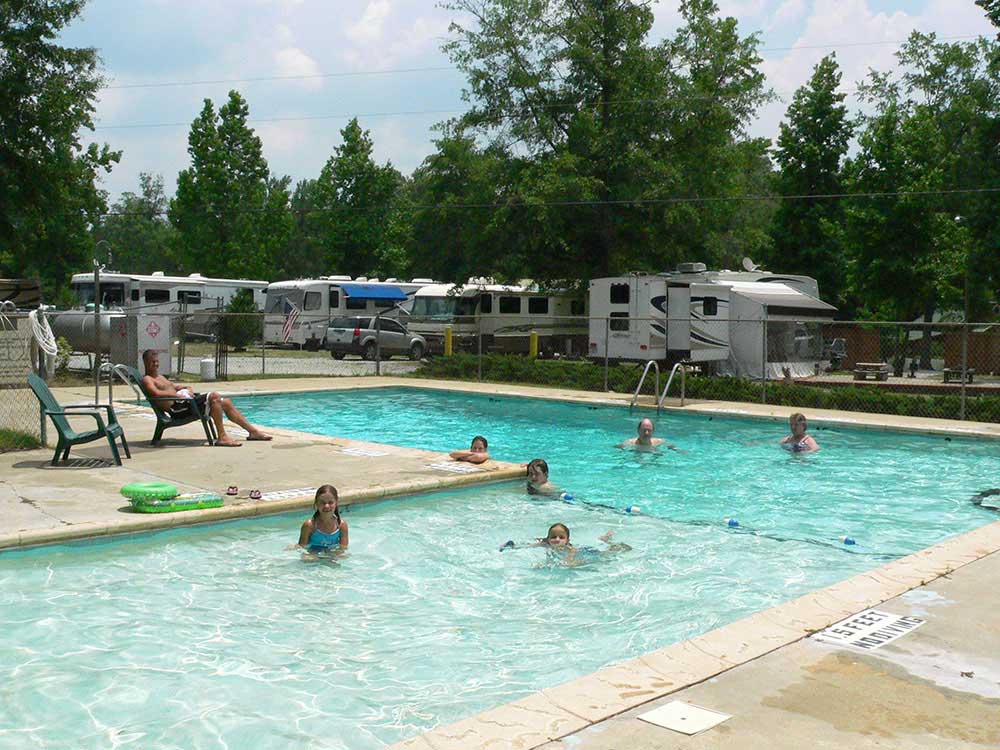
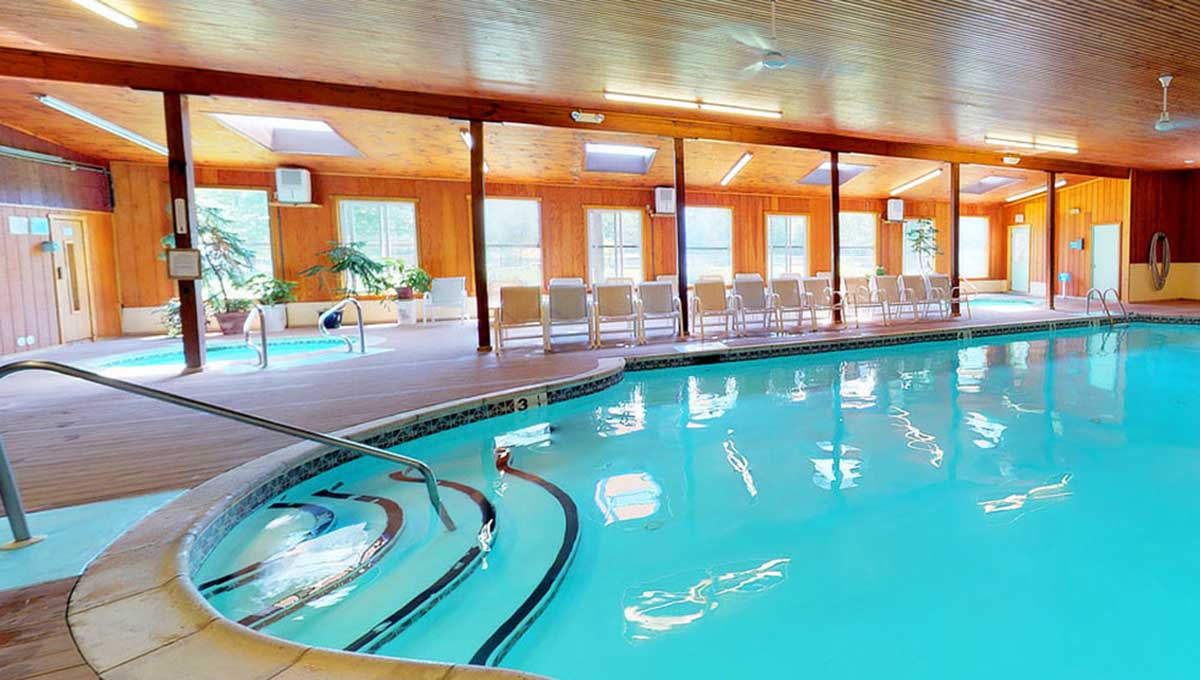
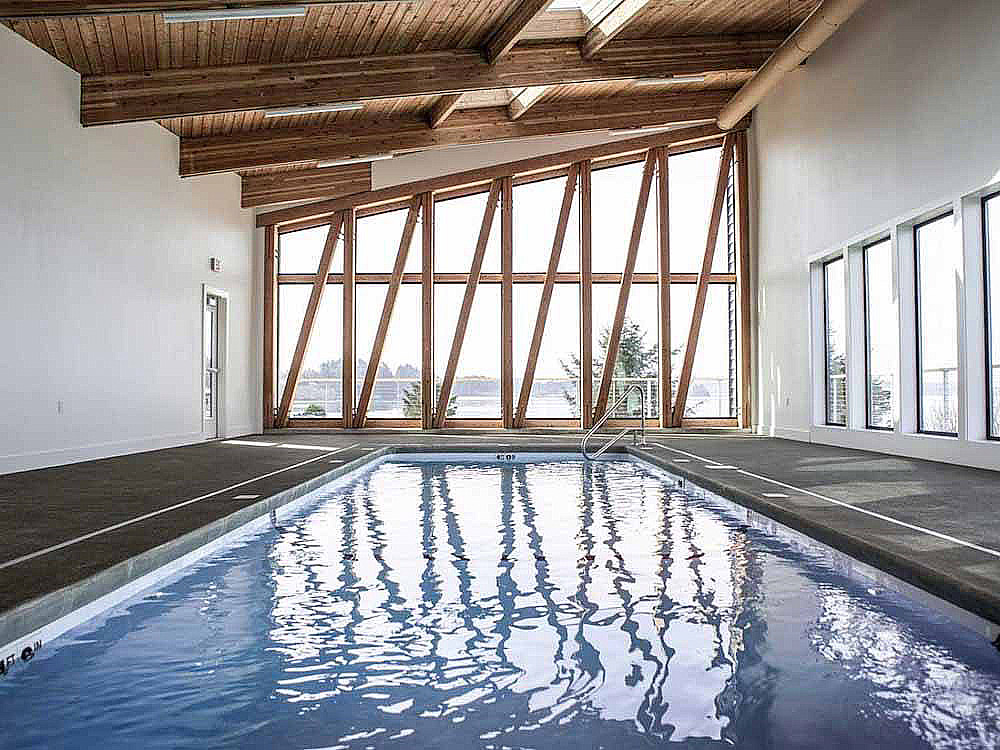
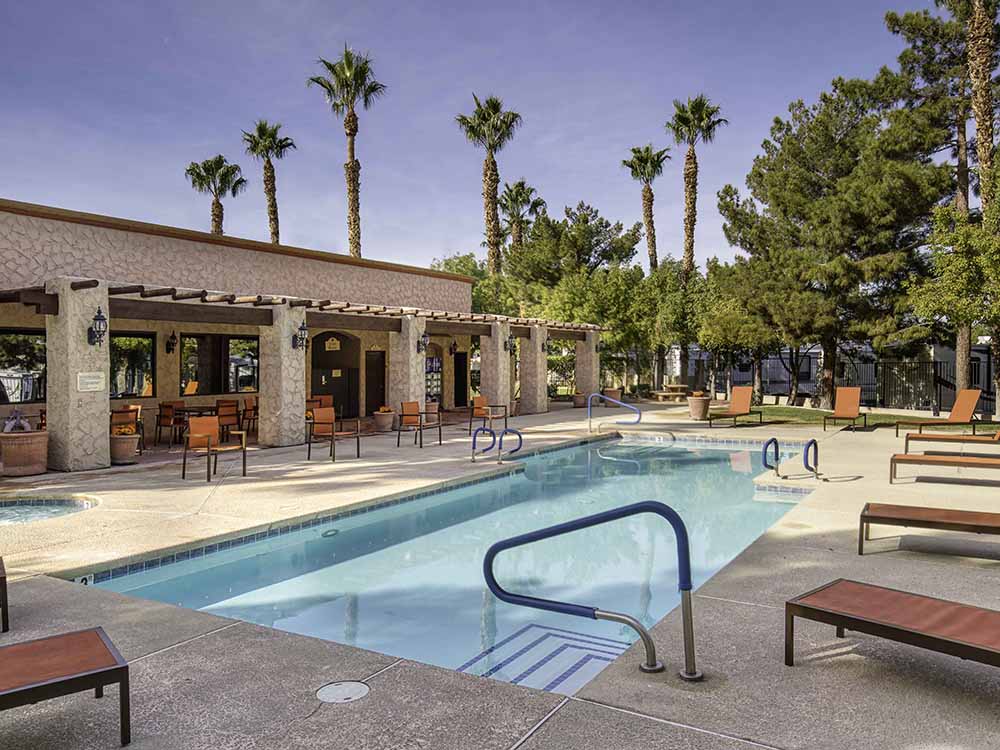
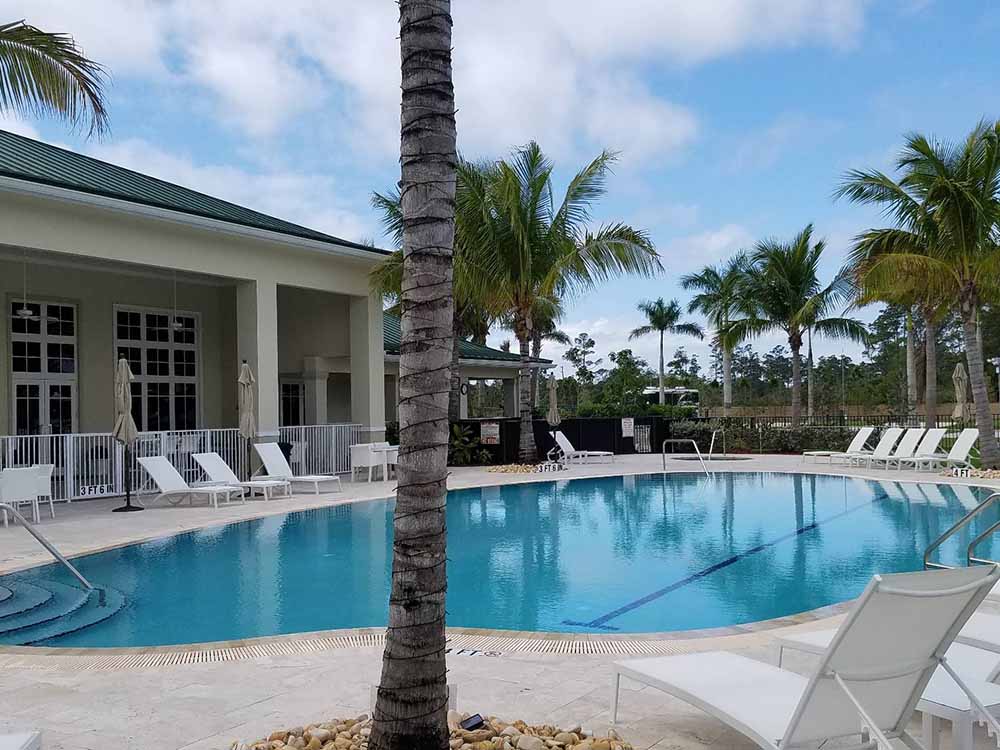
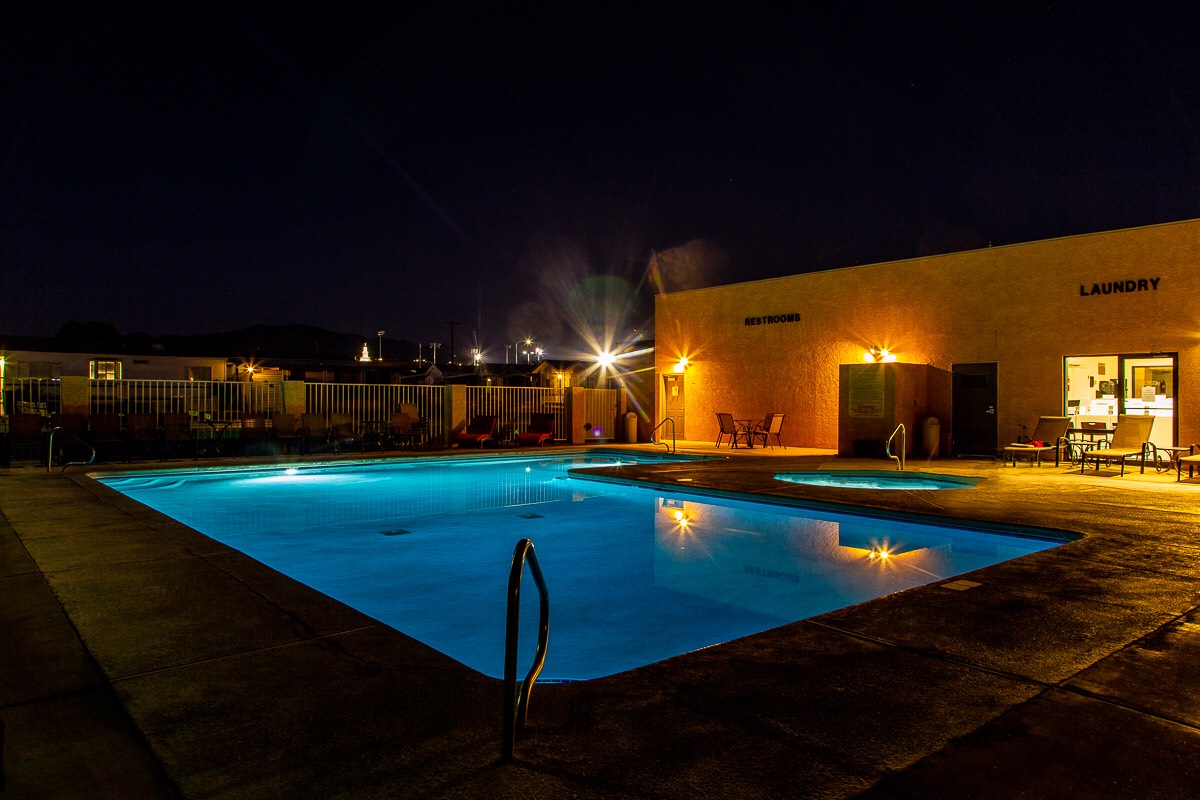
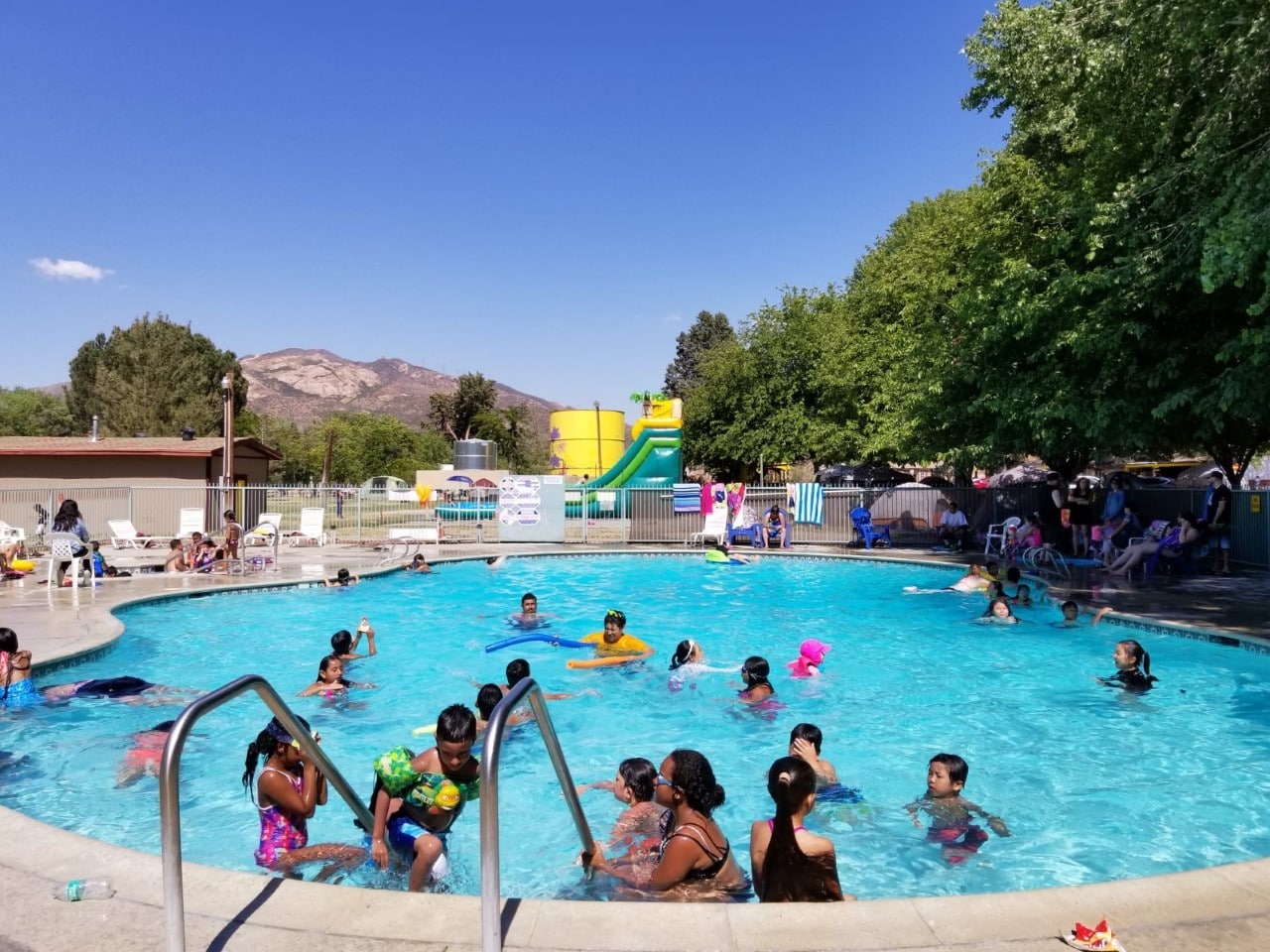
Pool and spa!
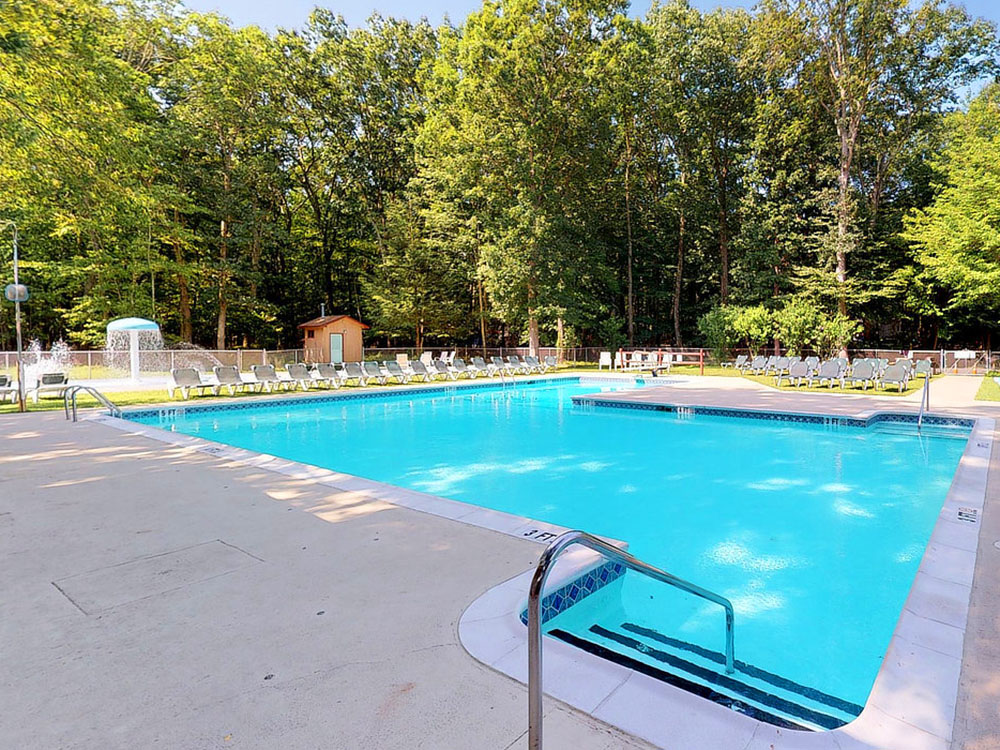
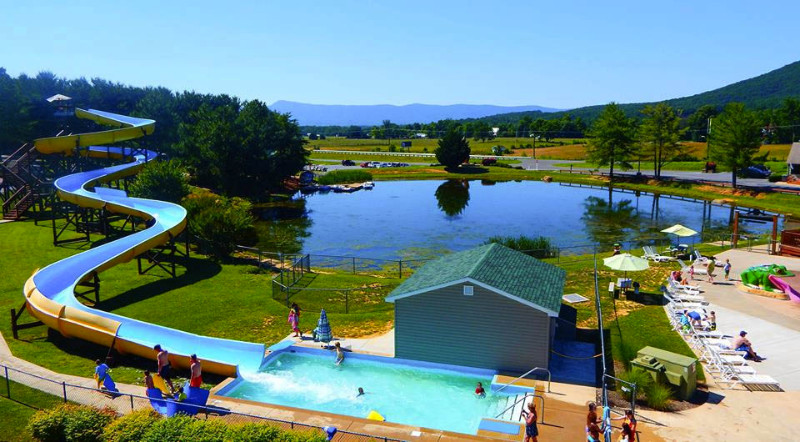
After a day of stress-free exploring, our indoor pool/spa area is waiting for you. Kids will love our large pool. Just upstairs is a games room, exercise room and extra-large clubhouse with TV, books and games.
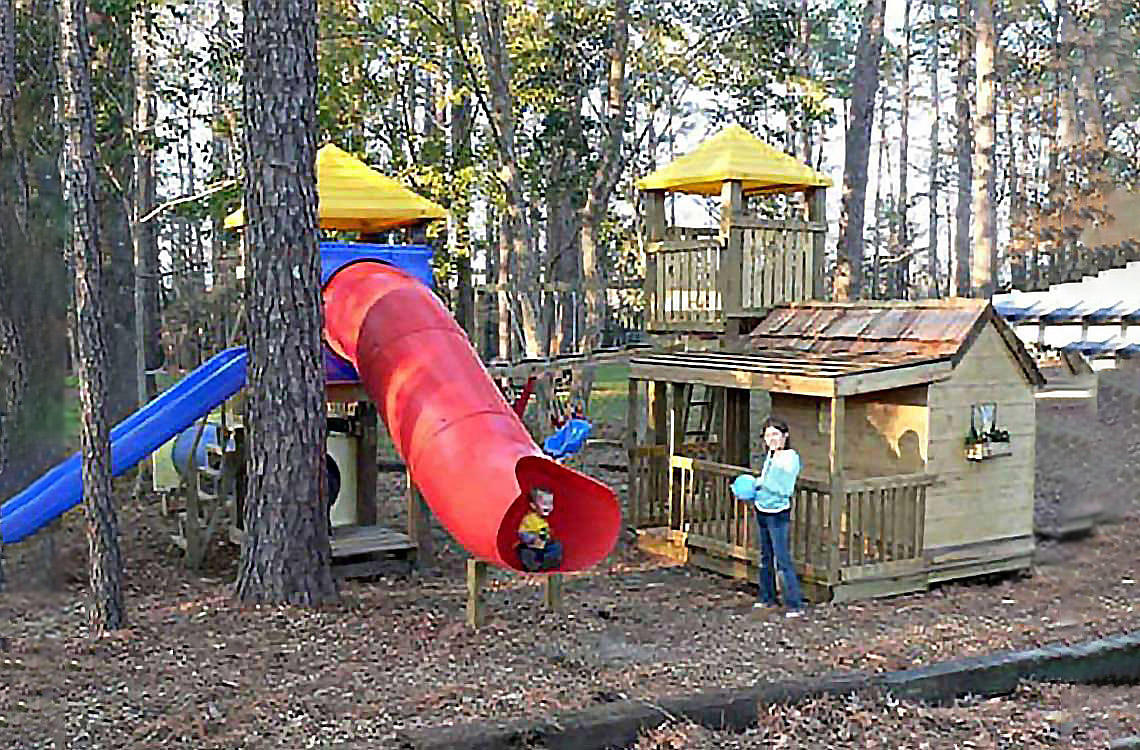
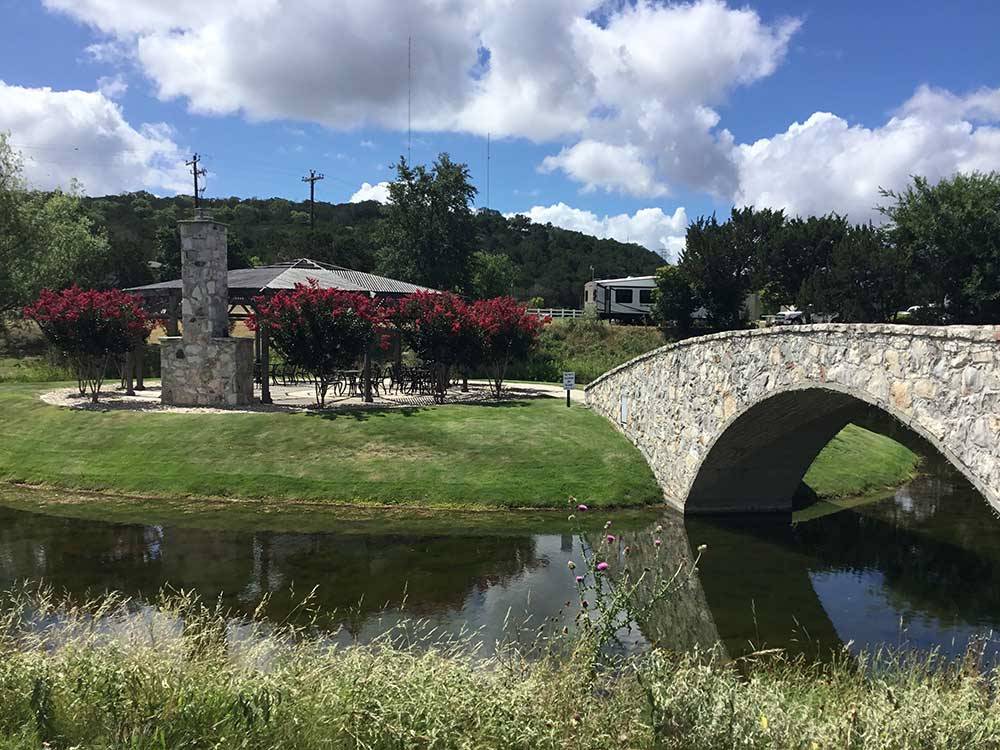
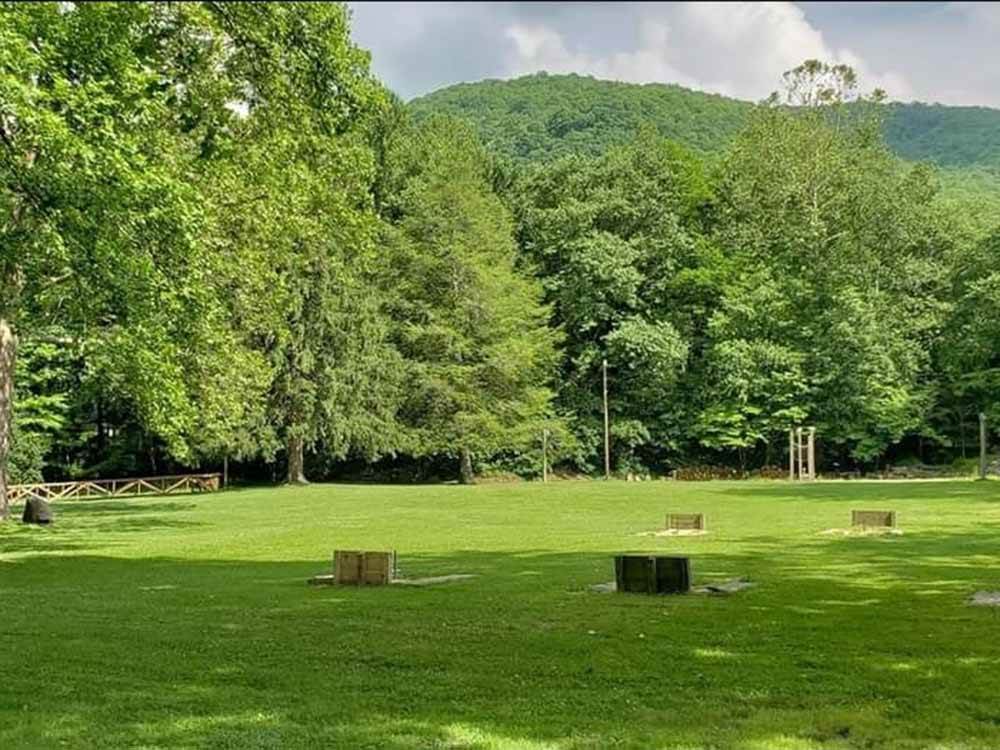
Gazebo is located by the basketball court and playground
Our large open-air gazebo is the perfect gathering place for families or larger groups. A beautiful brick barbecue in the center of the gazebo is available for personal use. Always check with the park to ensure it has not been scheduled for prior use. It is located by our playground and basketball court.
Take advantage of our rooftop patio and enjoy a morning coffee or a cool evening drink on our lounging area overlooking the park.
Our spacious, amazingly clean laundry facility boasts so many machines, waiting is almost impossible! This airy, bright room is equipped with irons, folding table and lots of seating while you wait. You may even enjoy doing laundry!
Planning a cruise but not sure what to do with your RV? Burnaby Cariboo RV Park offers special packages available to help facilitate your travels/experience. Leave your RV in one of our full-service sites while you enjoy your cruise, worry-free. We will even make sure you get to and from your port.
Burnaby Cariboo RV Park (BCRV) has so much to offer and really is the perfect location!
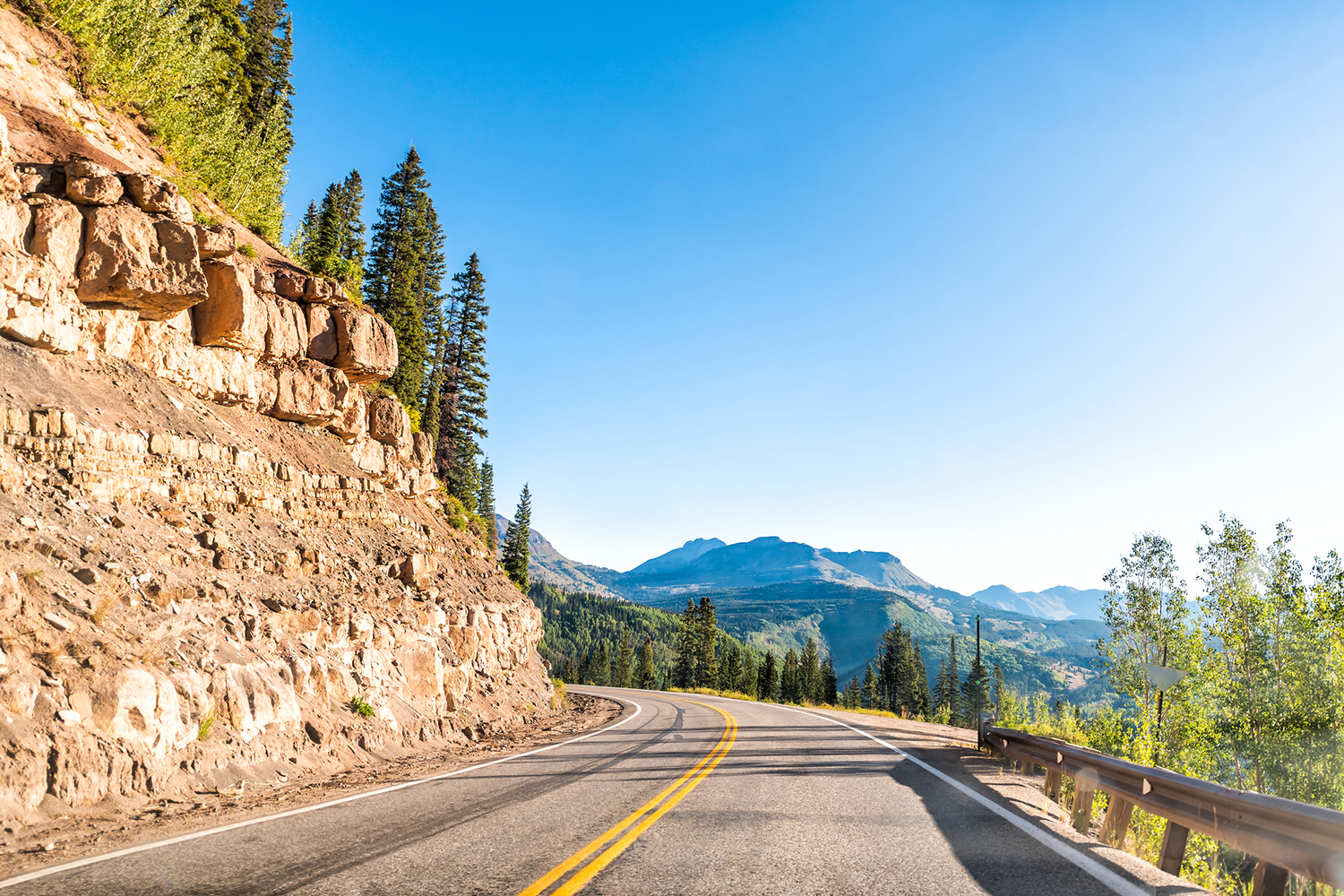
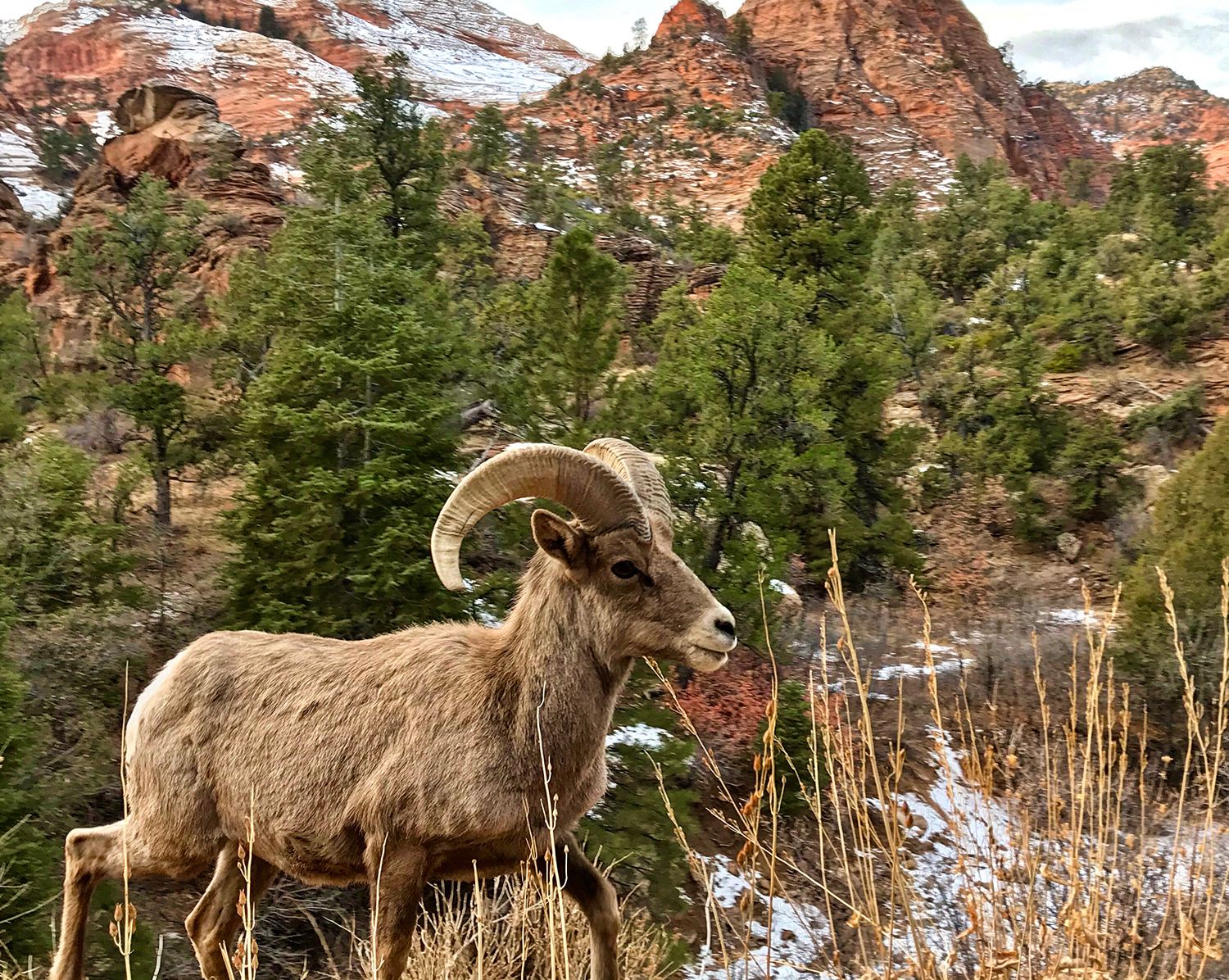
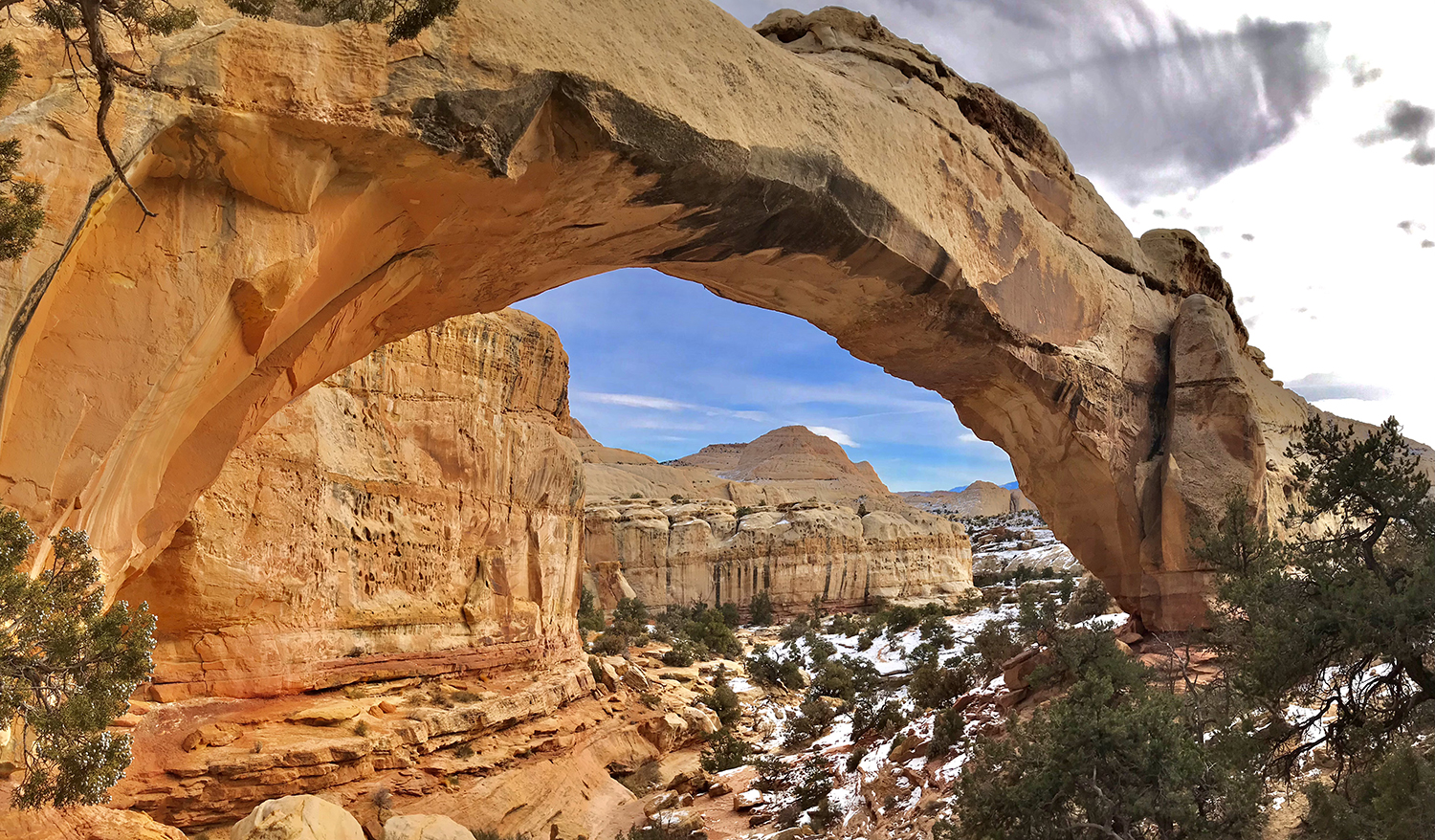
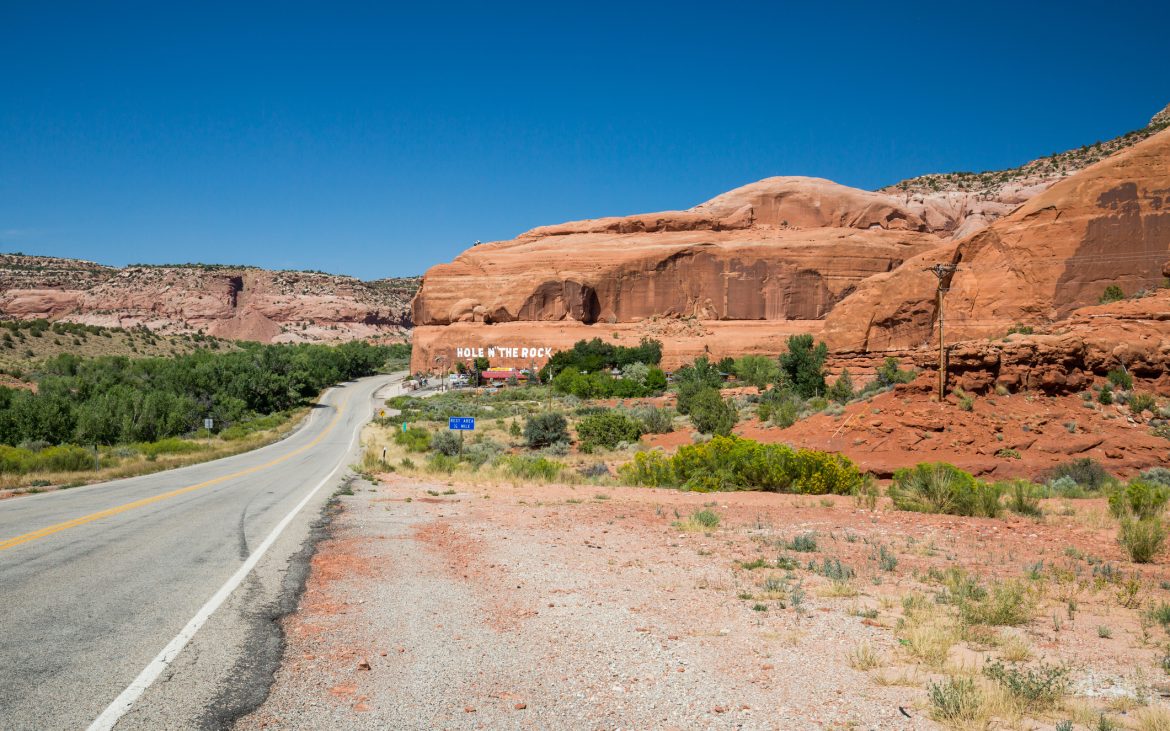
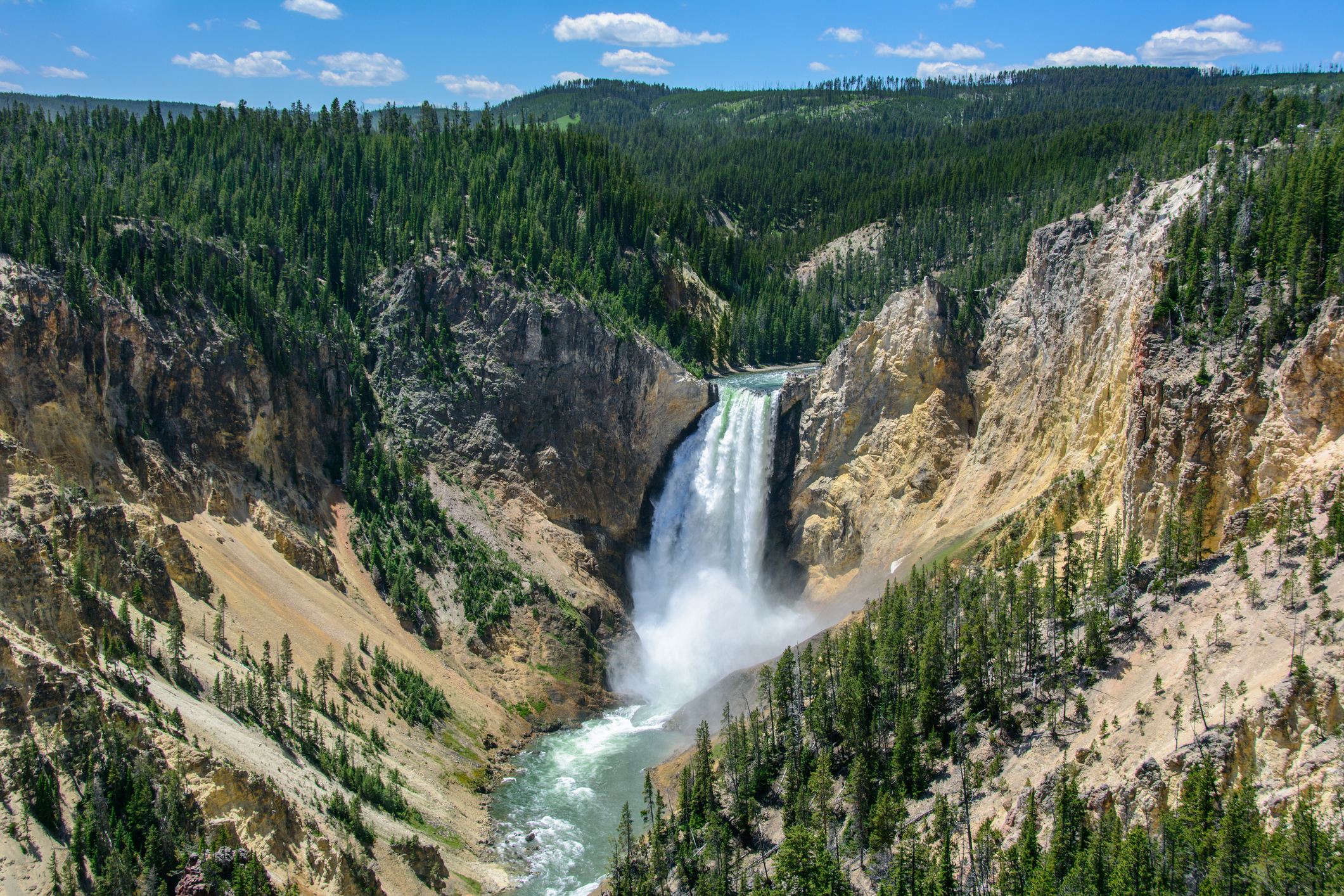
Warmer days mean it’s time to head back out on the road. Pack up the RV and wind along scenic Byway 12, considered one of America’s most beautiful highways, to Bryce Canyon Country. The route has plenty of room to roam between Bryce Canyon National Park and beyond. Take in views unlike any other, taste fresh, locally-sourced food and set up camp in one of the many hotels or RV parks and campgrounds throughout the area.
Scenic Sights
While Bryce Canyon National Park is often what initially draws people to Bryce Canyon Country, it’s not the only amazing wonder to see. Bryce Canyon Country is home to a national forest, a national monument, multiple national and state parks — and that’s merely scratching the surface.
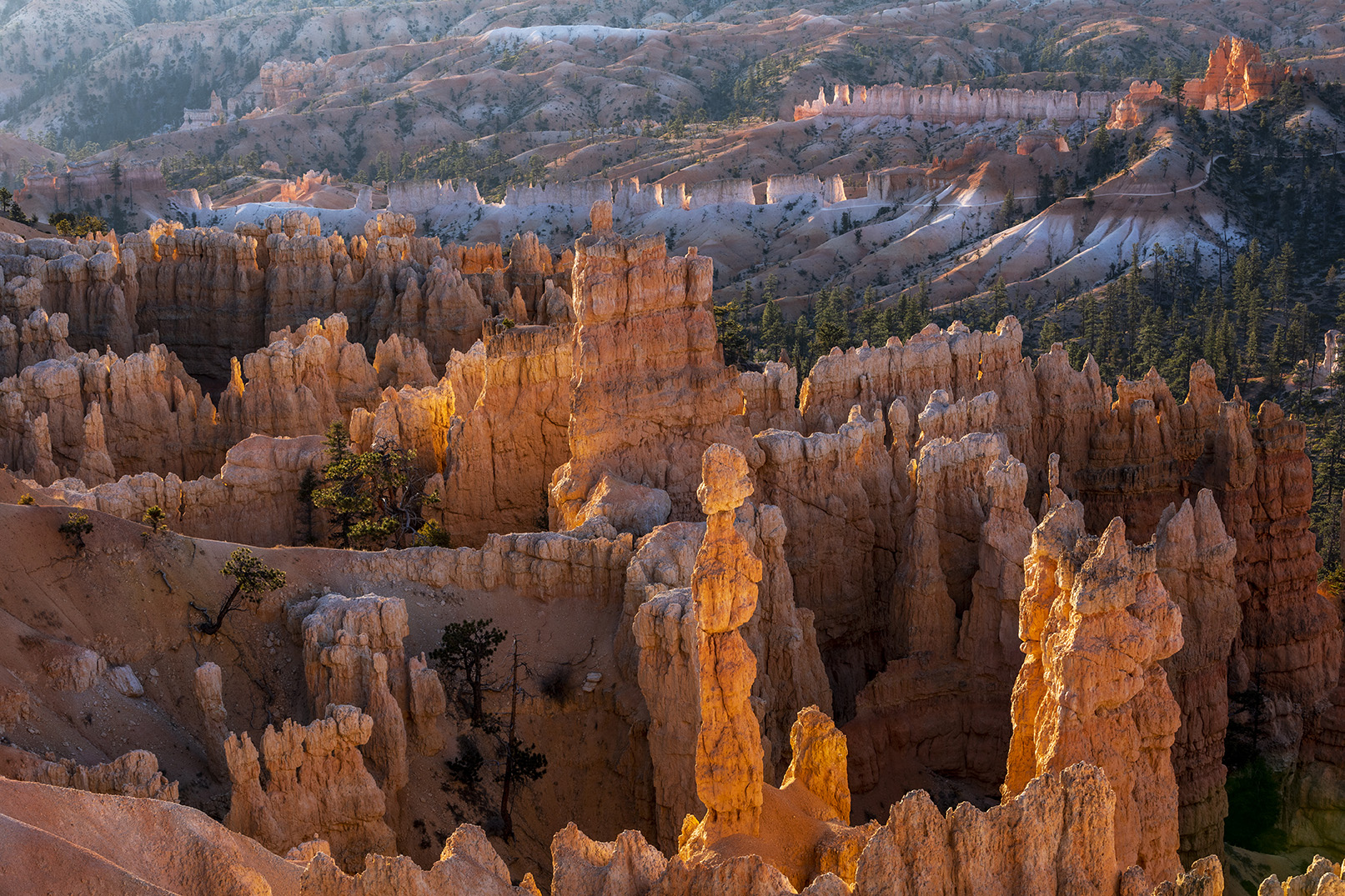
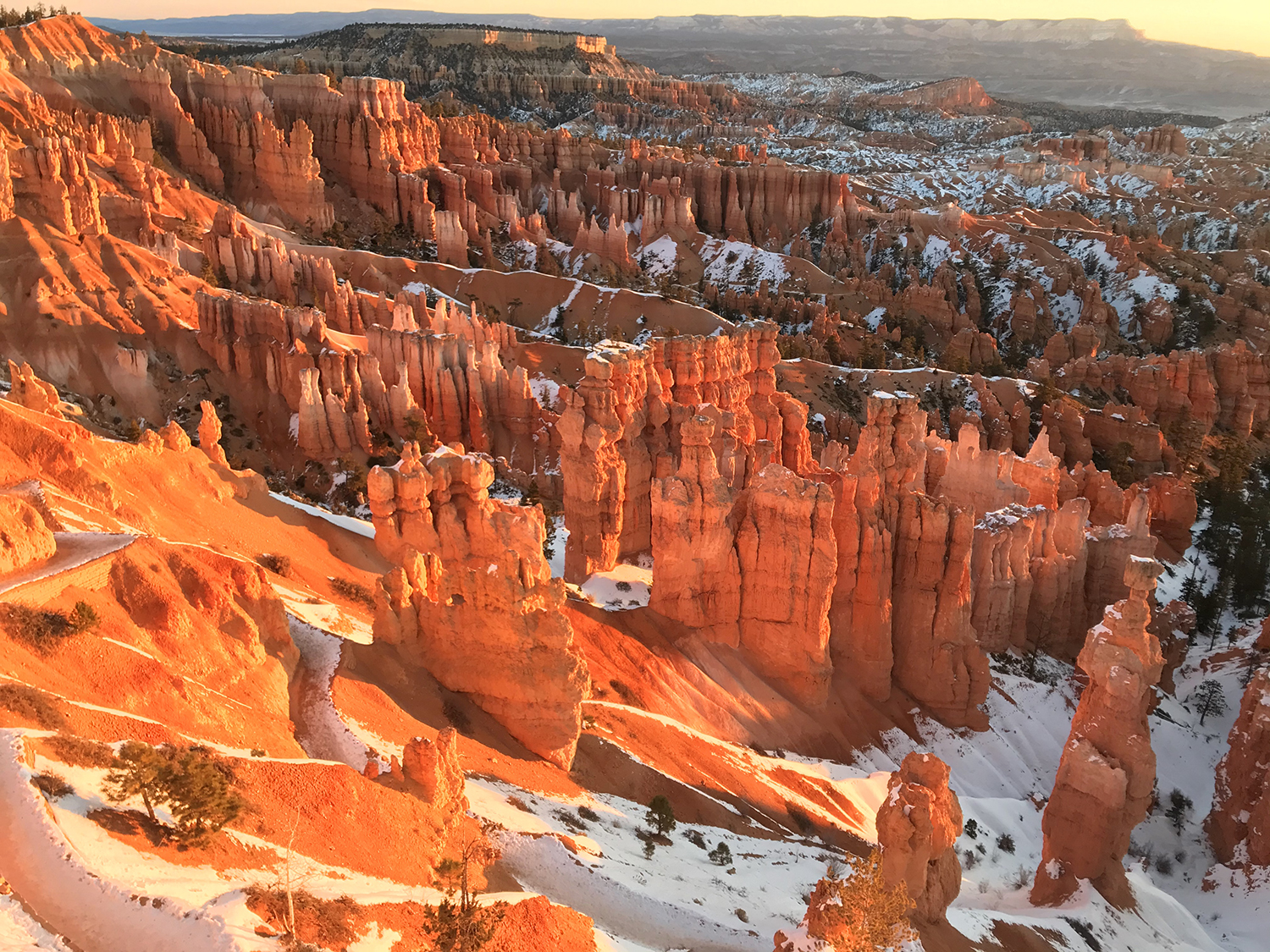
Overlooking the Bryce Canyon Amphitheater is enough to take anyone’s breath away. The orange hoodoos backed by a vibrant sunrise from Sunrise Point will start the day on the right foot.
Setting out from Bryce Canyon National Park, discover the beauty of Red Canyon in Dixie National Forest. Stand in awe of the sandstone pipes that make up Kodachrome Basin State Park. Drive the loop to Devils Garden in Grand Staircase-Escalante National Monument. Step back in history when visiting the Anasazi State Park Museum. Go even further back in time to when dinosaurs roamed at Escalante Petrified Forest State Park, where fossils and multi-colored petrified wood line the trails.
Delectable Dining
One of the things that makes traveling to any new destination so much fun is getting to try the local restaurants that set it apart from everywhere else. While fast-food chains might be convenient, don’t miss out on the full experience of a new place. Dining in Bryce Canyon Country is no different. Try local steak houses, farm-to-table fresh food and local diners.
Looking for a burger to rival any other burger? Try Antimony Merc in Antimony, Henrie’s Drive-In in Panguitch or Nemo’s in Escalante. Family diners like Big Fish Family Restaurant, Kenny Ray’s or the Bryce Canyon Pines are inviting and offer a range of food options for even the pickiest eater to find something. Even though Bryce Canyon Country is remote, that doesn’t prevent it from being home to some fine dining establishments like Hell’s Backbone Grill and Farm — a 2022 James Beard Award semifinalist for Outstanding Restaurant.
No matter the town in Bryce Canyon Country, there is food that keeps people coming back for more.
Photo: Anna Lyn Cook
To be fully immersed in a destination, the last step is finding the right place to stay. Whether traveling by RV, staying in a cozy hotel or glamping under the stars, Bryce Canyon Country has plenty of ways to spend the night.
Each of Bryce Canyon Country’s wonders offers RV parks nearby with plenty of amenities to entice travelers like Ruby’s Inn, Bear Valley Resort, Bryce Canyon Pines and Bryce Canyon Resort. Stay close to explore the wonders of Southern Utah.
Good Sam provides everything you need to have a good trip. From savings on accessories and services to finding a campground, roadside assistance, insurance and specialized products and services designed to enhance RV and outdoor lifestyle.
A nexus of New Mexico culture, Santa Fe welcomes the spring season with a long menu of festivals and events. Check out the Northern New Mexico Fine Arts & Crafts Guild on May 28-29. See creativity at its most inspired at second-largest art market in North America, located in the heart of the city. And throughout the season, special events see vintners, brewers and top bartenders serve up thirst-quenching beverages to eager visitors.
But there’s more to Santa Fe springtime than cocktails and crafts. Visitors can discover a bevy of cultural and outdoor adventures during a visit. Long considered one of the world’s great art cities, Santa Fe is home to more than 250 galleries, as well as an extensive collection of museums and cultural institutions.
It’s no mystery why the city pulsates with a blend of dynamic cultures. Over the course of that 400-year history, the city has served as the capital for no less than four distinct political sovereigns: the Spanish Kingdom of New Mexico, the Mexican province of Nuevo Mejico, the American territory of New Mexico and (since 1912) for the state of New Mexico.
Fantastic Spring Flowers
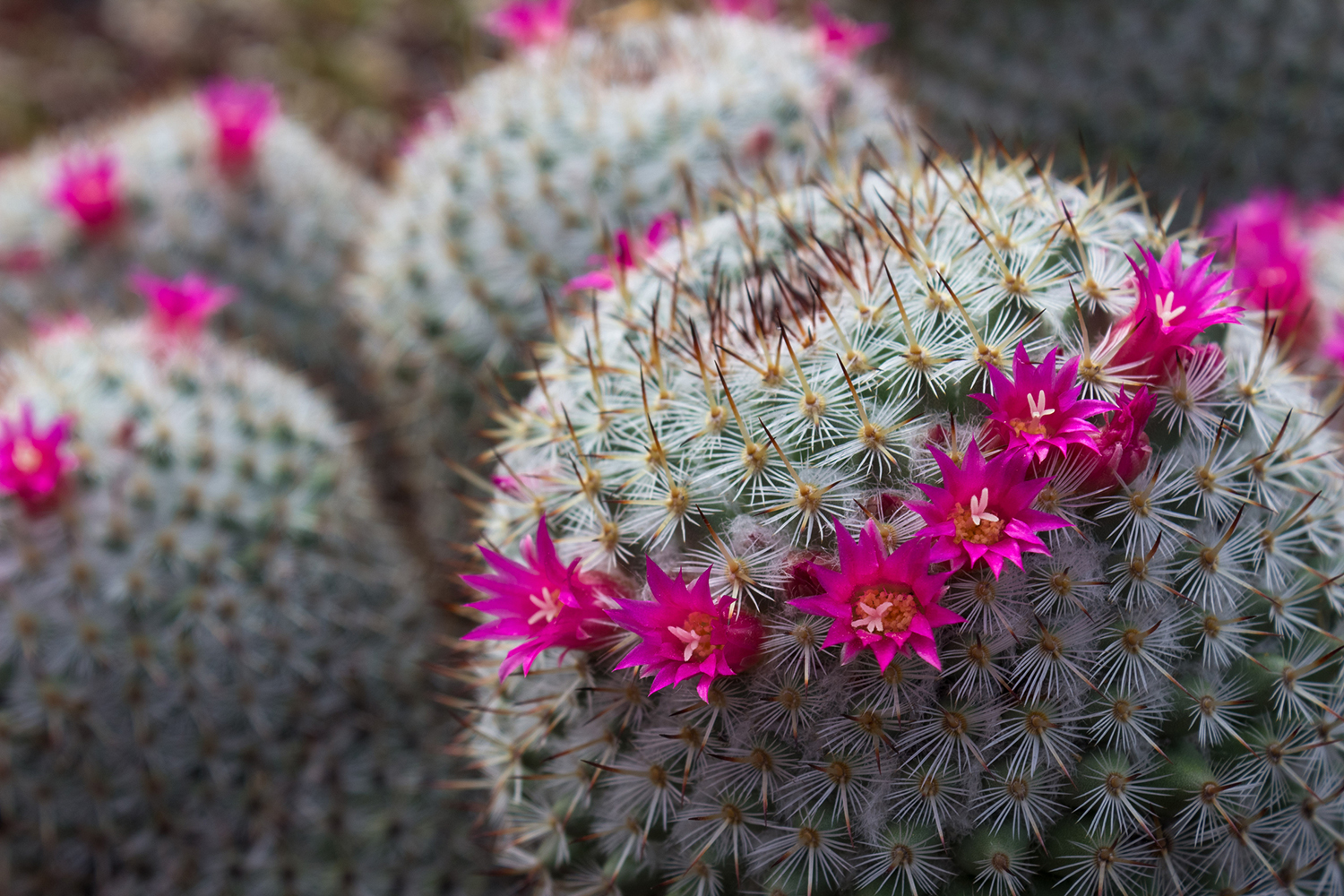
Cactus flowers bloom around Santa Fe. Getty Images
While touring the city during spring, you’ll witness one of the most beautiful springtime scenes in North America. Gaze at iris flowers that burst with purple petals throughout towns. See cherry blossoms explode outside of the Bataan Memorial near the state capital. Outside of town, the Aspen Vista Trail in the Santa Fe National Forest bustles with colorful wildflowers. In town, the Santa Fe Botanic Garden showcases flowers like marigolds that shine brightly in the sun. Asters and other wildflowers grow in profusion outside of Bandelier National Monument and other protected areas.
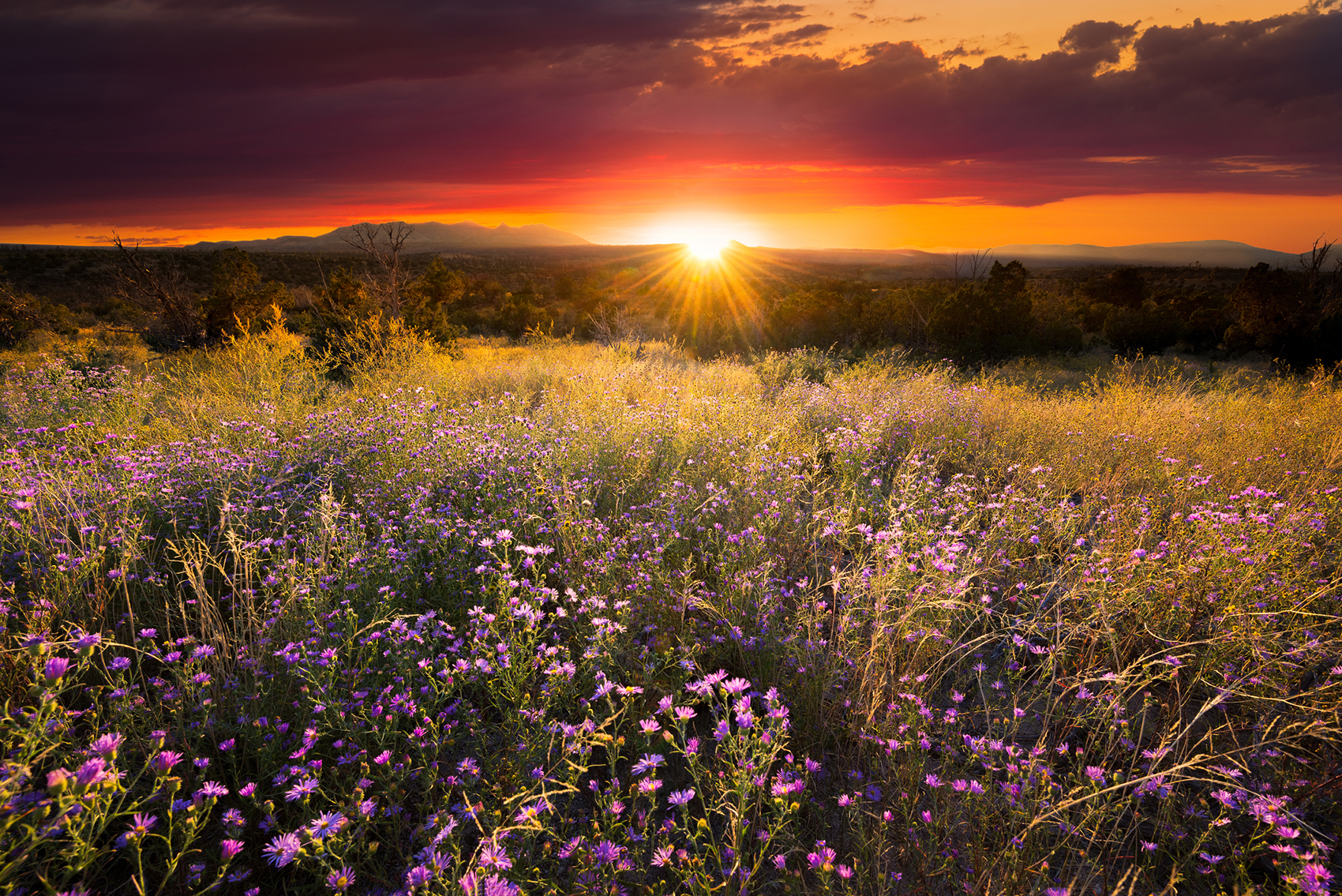
Purple asters at Bandelier National Monument. Getty Images
Beautiful Buildings
If this is your first time in Santa Fe, the first thing you’ll notice is how picturesque and replete with ornate architecture the city is. Since the early days of New Mexico’s statehood, the city has fought hard to preserve and promote its cultural heritage, resulting in a rich assortment of protected buildings and landmarks.
From there, you can walk in the footsteps of Santa Fe’s earliest settlers with a visit to the Palace of the Governors, a 400-year-old adobe structure located in the downtown plaza district. As the country’s oldest continuously occupied public building, the site is brimming with history. Visitors can expect a deep dive into the political and cultural history of the state. The rest of the plaza is equally enchanting. Known as “the heart of Santa Fe,” the central square is home to Native American artisans, performers, restaurants, boutiques and more.
Outdoors Paradise
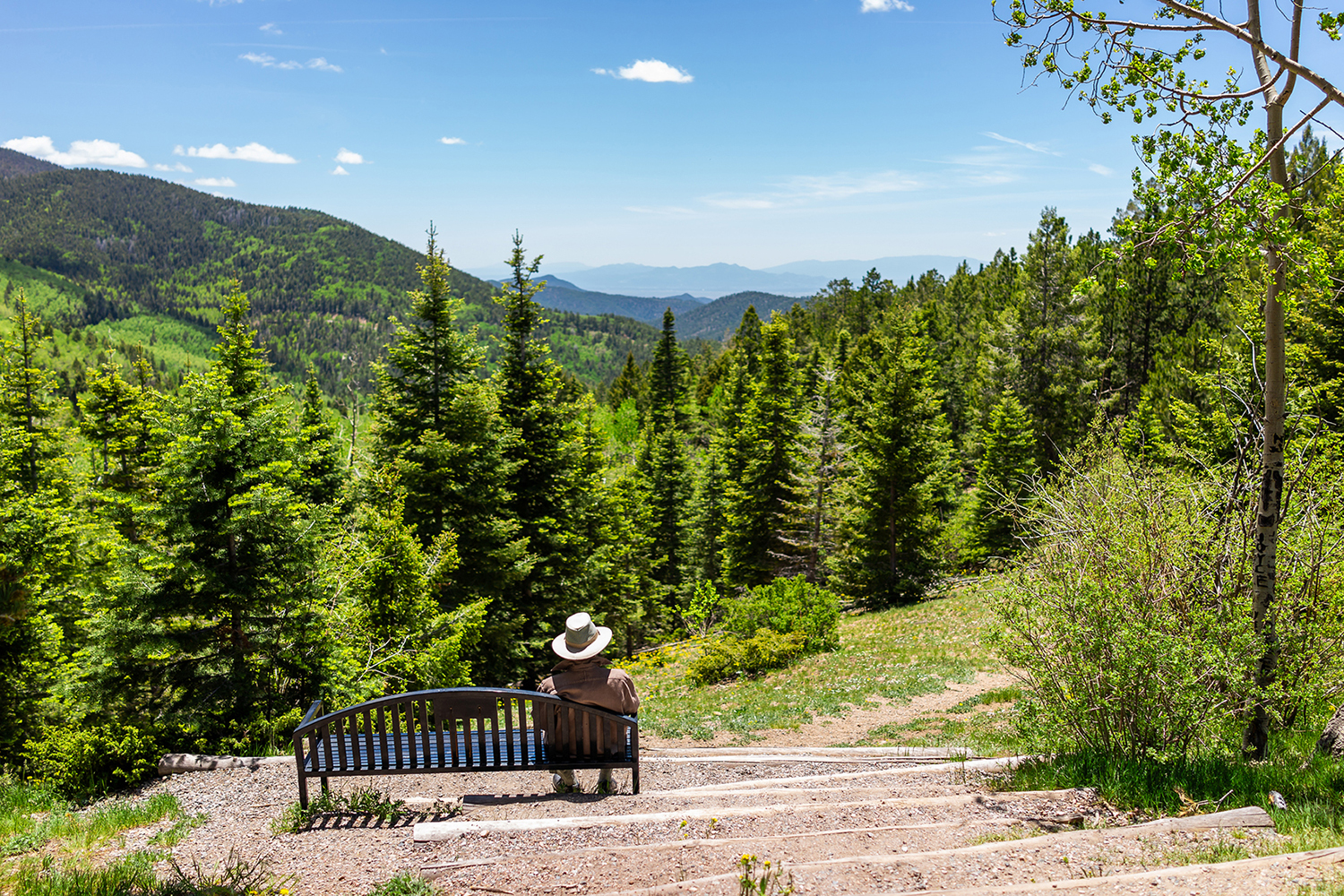
The Aspen Vista Picnic Area in the Santa Fe National Forest amid the Sangre de Cristo mountains. Getty Images
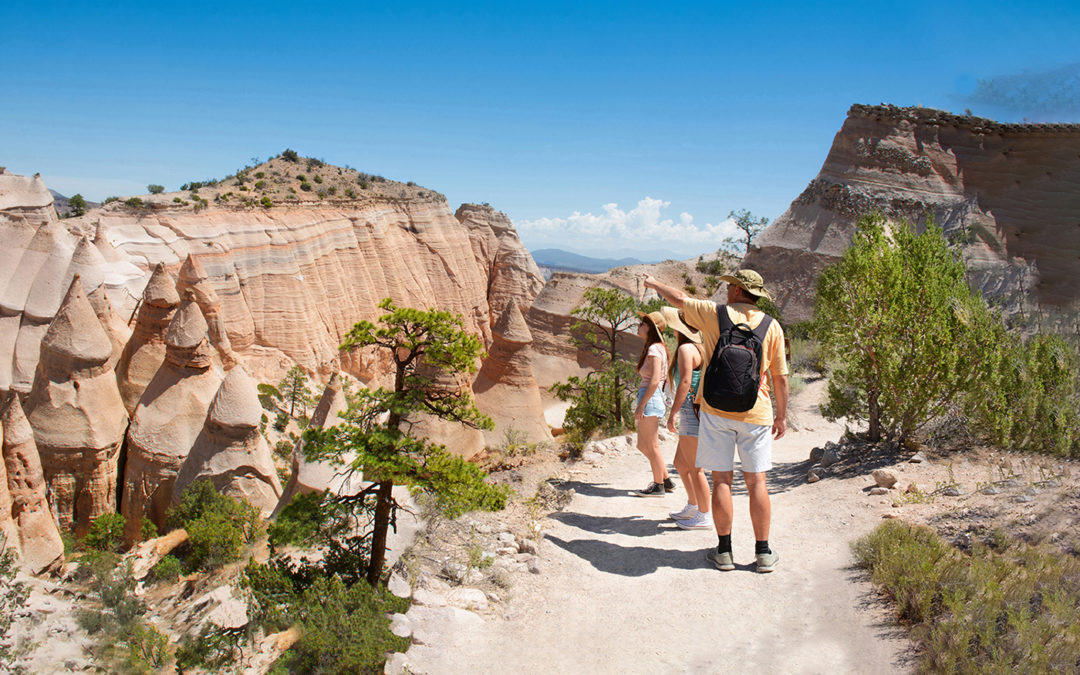
Mere minutes from downtown, the Sangre de Cristo Mountains offer a heavenly backdrop for all manner of outdoor adventure. Beginning hikers and bikers should make time to explore the popular Dale Ball Trails, a system that winds for nearly 25 miles through the foothills surrounding town. In contrast, more experienced hikers can head straight for the Nambe Lake Trail, a 6-mile route through the mountains’ alpine wilderness. About 45 minutes from downtown, the Slot Canyon Trail at Kasha-Katuwe Tent Rocks National Monument is a local favorite boasting breathtaking views and an otherworldly landscape. The cone-shaped rocks were formed by volcanic activity.
Beat it to Bandelier
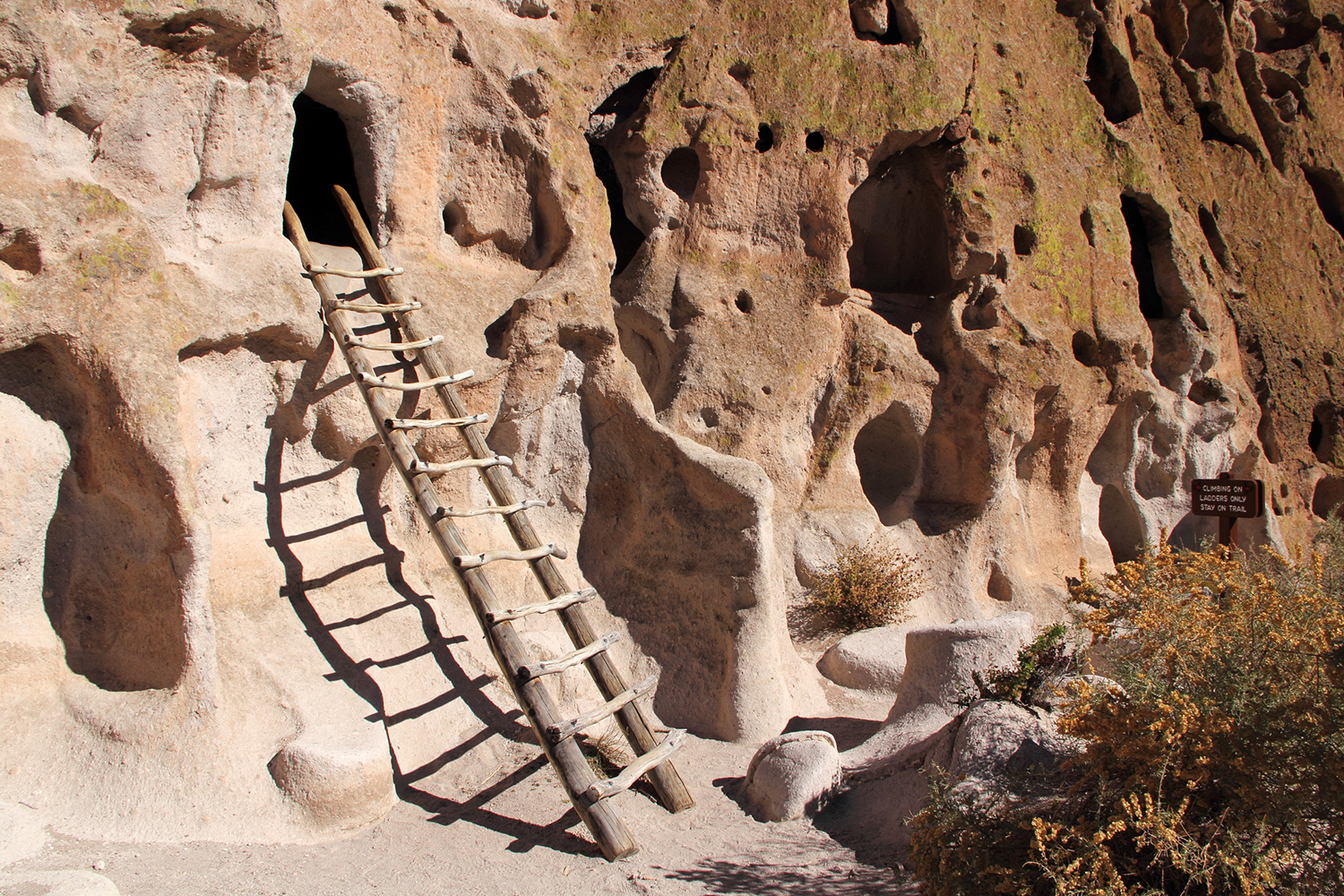
Just east of Santa Fe, Bandelier National Monument protects more than 33,000 acres of canyon and mesa country, along with evidence of human habitation from 11,000 years ago. Visitors can gaze at the petroglyphs, cliff dwellings and artifacts that mark the presence of early Native Americans. Stand in awe at Long House, a dwelling carved into a cliff face with entrances and brick walls still intact. The Tyuonyi Pueblo once stood as tall as three stories. Elsewhere in the canyon, reconstructed dwellings shed light on the lives of the Puebloan people.
Pueblos in Bandelier National Monument, New Mexico
Fun on Water
Situated in proximity to both the Rio Chama and the Rio Grande, Santa Fe is the perfect jumping-off point for all your whitewater adventures. Numerous outfitters in town can arrange anywhere from half-day to multiday trips on raging Class IV waters. Adventurers also can opt for serene floats through dramatic, sun-speckled canyons. Fly-fishing the Chama is another classic New Mexico pastime, and expert guides are available to point you in the direction of the river’s best eddies. The streams that meander through the Valles Caldera National Preserve mountain meadows are also well-known as serene and bountiful fly-fishing hot spots.
Art on Display
Begin your artistic adventures at the eastside Museum Hill neighborhood, home to four of the city’s top attractions — the Museum of Indian Arts & Culture, the Wheelwright Museum of the American Indian, the Museum of Spanish Colonial Art, and the renowned Museum of International Folk Art. Elsewhere in the park, visitors will spot mule deer, lizards and other creatures who thrive in untamed landscapes. Essentially next door to one another, it’s the perfect introduction to the region’s creative culture.
O’Keeffe Painted Here
Recognized as “the mother of American modernism,” Georgia O’Keeffe was Santa Fe’s most famous resident and the Georgia O’Keeffe Museum is a fitting tribute to her artistic genius. An easy walk from Santa Fe Plaza, the museum is a must-see for visitors looking to understand the city’s long-standing influence on artistic movements. Her home at Ghost Ranch is another favorite. The Museum of International Folk Art, Museum of Indian Arts & Culture and the New Mexico History Museum are also well worth visiting. Visit El Rancho de las Golondrinas, or “the Ranch of the Swallows,” a living history museum.
For an immersive experience, head to Meow Wolf, Santa Fe’s most innovative art space. Doubling as a music venue, it’s a hands-on leap into the artistic unknown.
Mountain Valley RV Resort, located in beautiful Heber City, Utah, welcomes you to one of the finest RV resorts in the Western United States and the highest-rated park in Utah. You will find our family-friendly resort just off Highway 40 in Heber City, located in Northern Utah just 45 minutes east of Salt Lake City, 20 minutes south of Interstate 80 (Park City) and 30 minutes east of I-15 (Orem). Open year-round and sheltered by the stunning Rocky Mountains of the Heber Valley, we offer the absolute best in full-service RV lifestyle and accommodations.
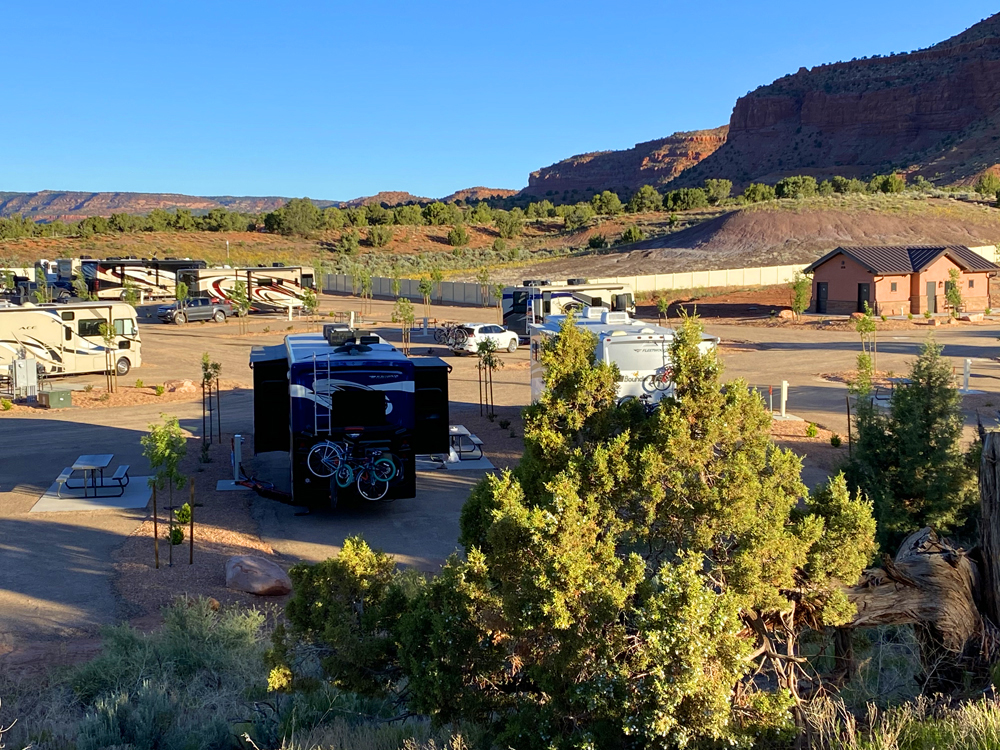
Grand Plateau RV Resort is Kanab’s newest RV destination, located just outside of town and offering stunning desert views. Kanab is located inside the “Grand Circle,” with access to National Parks, Scenic Byways and Native American attractions. Some of America’s most diverse scenery can be found in the Grand Circle — the Grand Canyon, Zion National Park, Bryce Canyon, Lake Powell and Arches National Park, just to name a few. Bold splashes of color, fascinating geologic shapes and the mysterious remnants of Native American cultures await you at every turn. After a day of exploring, return back to the resort to relax in the pool and spa! Open all year!
Spanish Trails RV Park, located in Moab (see picture at the top of page), is Utah’s Finest RV Park with the best views in Moab. One review enthused, “What a great park; maybe the best RV Park in the Moab area. The sites are mostly pull-through, and they have shade trees that are a real plus in this area.” After a day of exploring the scenery that Moab and the surrounding area have to offer, return to our park and relax. Enjoy the beauty of the red rock cliffs, stunning views of the La Sal Mountains and picturesque sunsets. Enjoy the new spa on cool evenings and the pool after a great day out in the park hiking and Jeeping. Open all year!
Good Sam provides everything you need to have a good trip. From savings on accessories and services to finding a campground, roadside assistance, insurance and specialized products and services designed to enhance RV and outdoor lifestyle.
Santa Fe Skies RV Park is family-built, owned and operated. It sits on 17 acres overlooking the beautiful mountains of Santa Fe, New Mexico. We are “Big Rig friendly”: Fifty-five sites are pull-thrus designed to accommodate large motor coaches and travel trailers. All sites are equipped with 20-, 30- and 50-amp electrical service. Water and Sewer are available at all pull-thru and almost all back-in sites. We are “pet friendly.” Free Wifi is available.
Santa Fe Skies
Santa Fe Skies is within a short driving distance to two major shopping malls (one an outlet mall), several restaurants, a large supermarket and other local businesses. We are located just off the scenic Turquoise Trail, which includes the historic Villages of Cerrillos and the artist center of Madrid. It is only a short distance from the 17th-century Spanish Colonial Living History Museum, El Rancho de Las Golondrinas, which was the last overnight stop for travelers coming to Santa Fe on the El Camino Real from Mexico.
Santa Fe Skies
The city of Santa Fe is located at the base of the Sangre de Cristo mountains at an altitude of 7,000 feet above sea level. (That is 1,500 feet higher than Denver, Colorado.) Since the Santa Fe Skies RV Park sits on a ridge just outside of town, you get a panoramic view of the entire Santa Fe area! Not only can you see the historic Sangre de Cristo Mountains, where the sunset makes the mountains shine with a red glow in the evening (hence the name “Sangre de Cristo” or “Blood of Christ”), you can also see the Jemez Mountains to the west, and in the south and southwest the Cerrillos Hills, the Ortiz Mountains and the Sandia Peak at the base of which lies the city of Albuquerque.
Be our guest and enjoy the Painter’s Sunsets and Starry Nights at Santa Fe Skies!
Good Sam provides everything you need to have a good trip. From savings on accessories and services to finding a campground, roadside assistance, insurance and specialized products and services designed to enhance RV and outdoor lifestyle.
Did you spend winter dreaming about all of the warm-weather travel possibilities in North America? Now it’s time to turn those dreams into a reality. We’ve got a slew of under-the-radar spots in the South Central States that explode in color with the arrival of spring.
Out-of-the-way forests, hills and lakes help Arkansas live up to its nickname as the “Natural State.” Explore unspoiled landscapes in a fun, easy-going getaway in the state’s north.
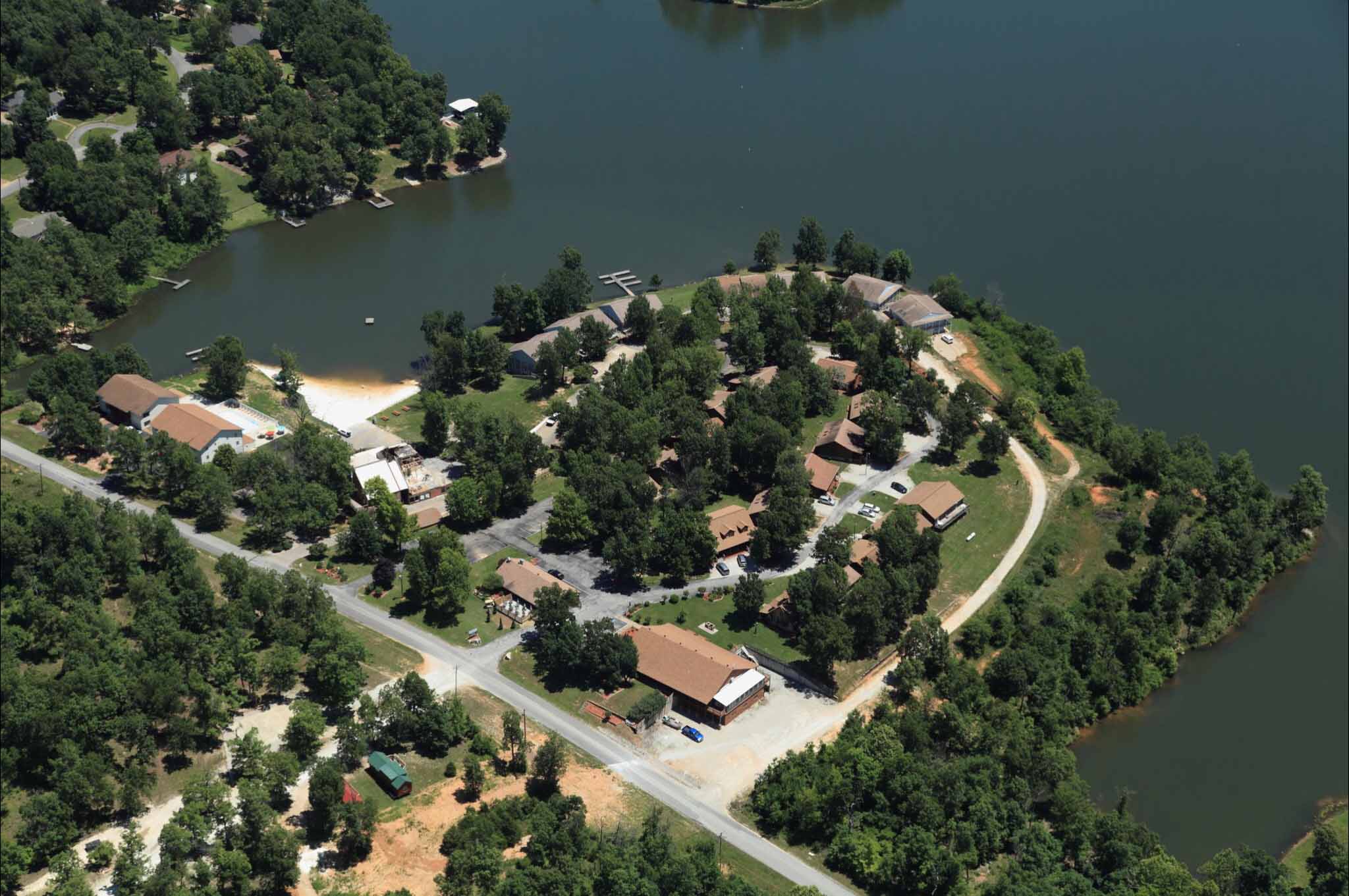
Crown Lake RV Resort in Arkansas.
Boat, Fish and Golf in Horsehoe Bend
Away from the busy highways and interstates, Horseshoe Bend is a refuge for travelers seeking a woodsy escape. Drop a line or go canoeing in the strawberry river. The 640-acre Crown Lake is an unspoiled water recreation hot spot, and the nearby Turkey Mountain Golf Course offers 18 holes with championship-caliber fairways and greens.
For a family-friendly adventure, head out to Horsehoe Canyon Ranch to the east for horseback riding, rock climbing and canoeing. The park’s ziplines — the longest zipline in Arkansas — travels nearly a half-mile at heart-pounding speeds exceeding 50 mph.
The Sunflower State is home to several under-the-radar spots that are perfect for spring travel. Discover Dorothy’s home or discover sprawling lakes and woods on the prairie on the prairie.
Fish Clinton Lake and Meet Dorothy
Getty Images
Southeast of Topeka, Clinton Lake has all the ingredients for a spring vacation. Fishing ponds jump with smallmouth bass and crappie, and 50 miles of hiking trails around the water lead to great views of the lake. The 2.8 mile North Shore Loop is a dog-friendly route that’s great for birdwatchers and suitable for mountain bikers.
Just east of Topeka, the Oz Museum pays tribute to the books and movies devoted to world created by author Frank Oz. Follow the Yellow Brick Road through the museum and experience a centuries of Oz history, with exhibits from the iconic 1939 MGM movie production.
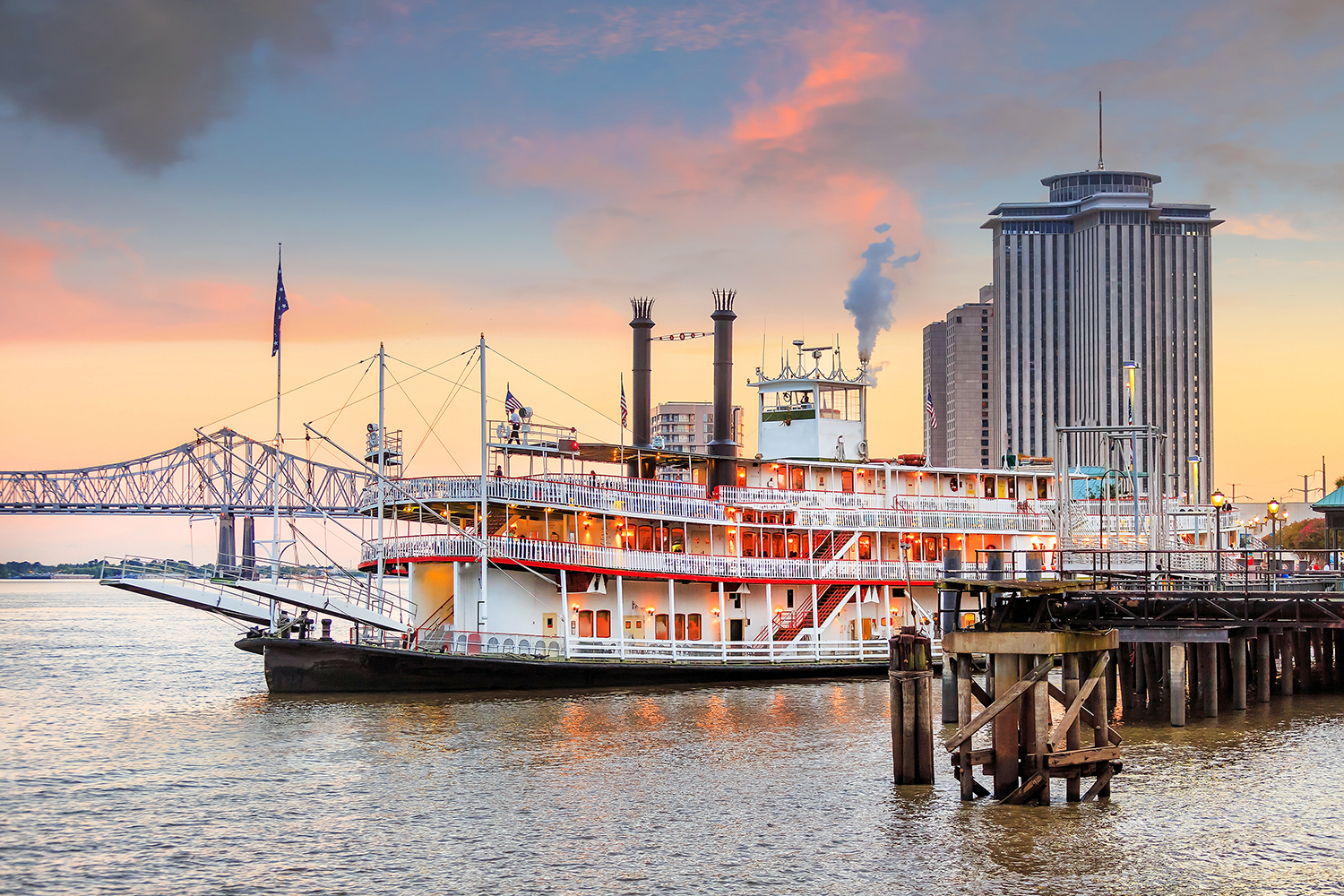
New Orleans paddle steamer in Mississippi river in New Orleans. Getty Images
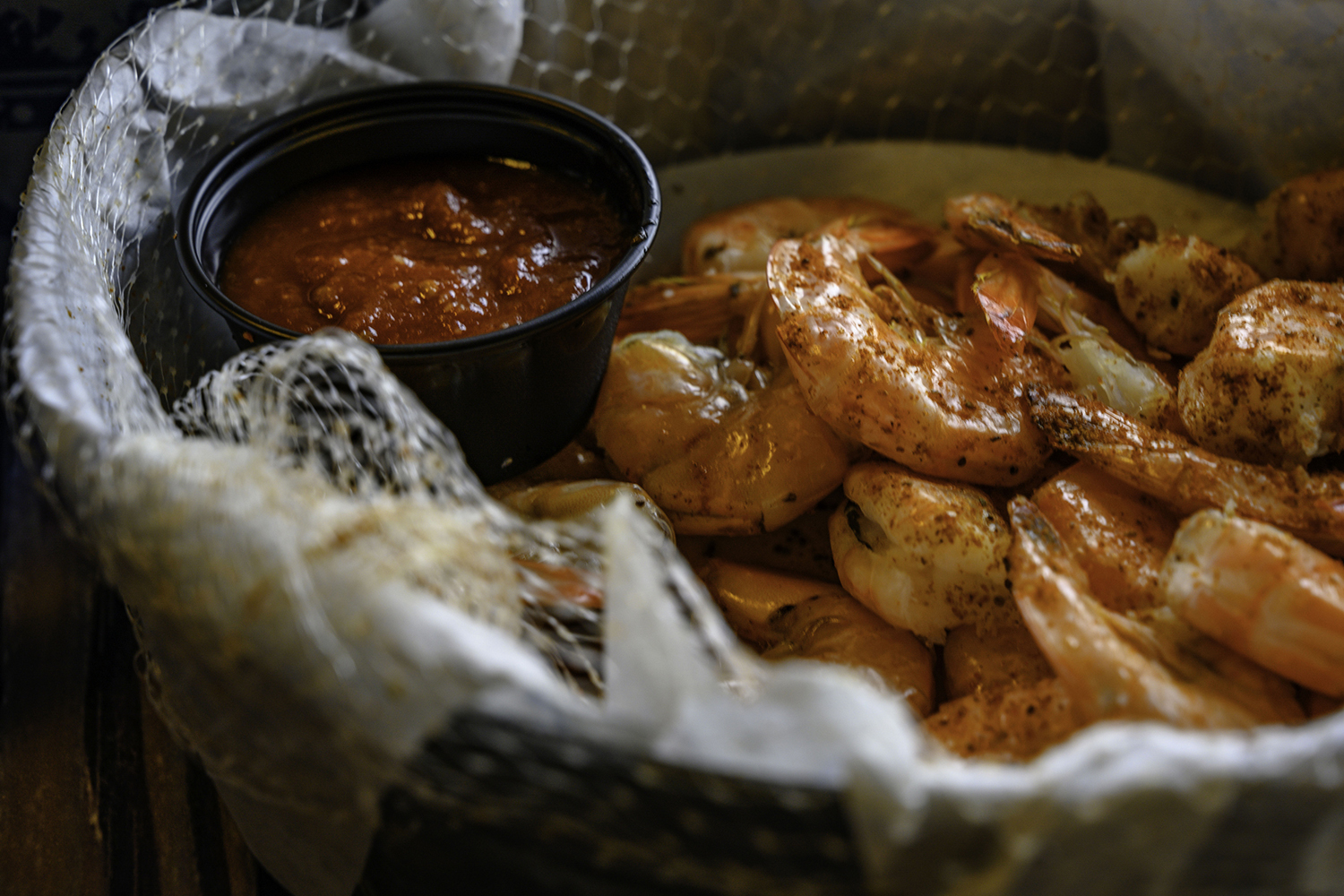
If Cajun flavors tempt your tastebuds, then you’ve come to the right place for spring. Travelers can explore bayous and dine on shrimp, po’boys and gumbo in between fishing trips.
Float Fish and Game in Allen Parish/Kinder
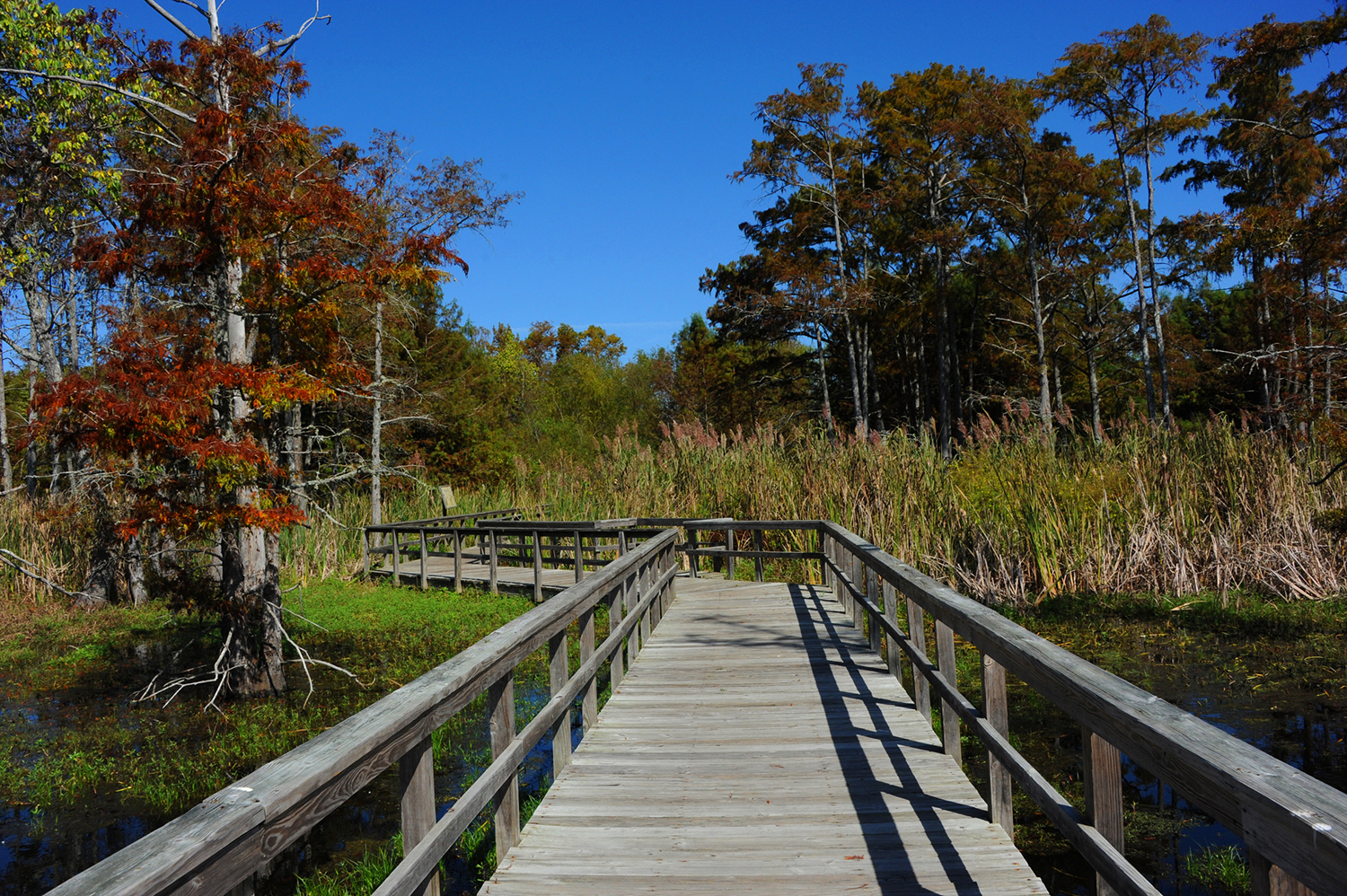
Float fishing is a top pastime on the rivers and creeks of Allen Parish, with boat launches located at many of the bridge crossings. Kayakers will find plenty of places to paddle. Take in the lush natural surroundings or drop a line for catfish, striped bass and crappie that flourish in the waters here. Check out Ouiska Chitto Creek, a great spot for fishing.
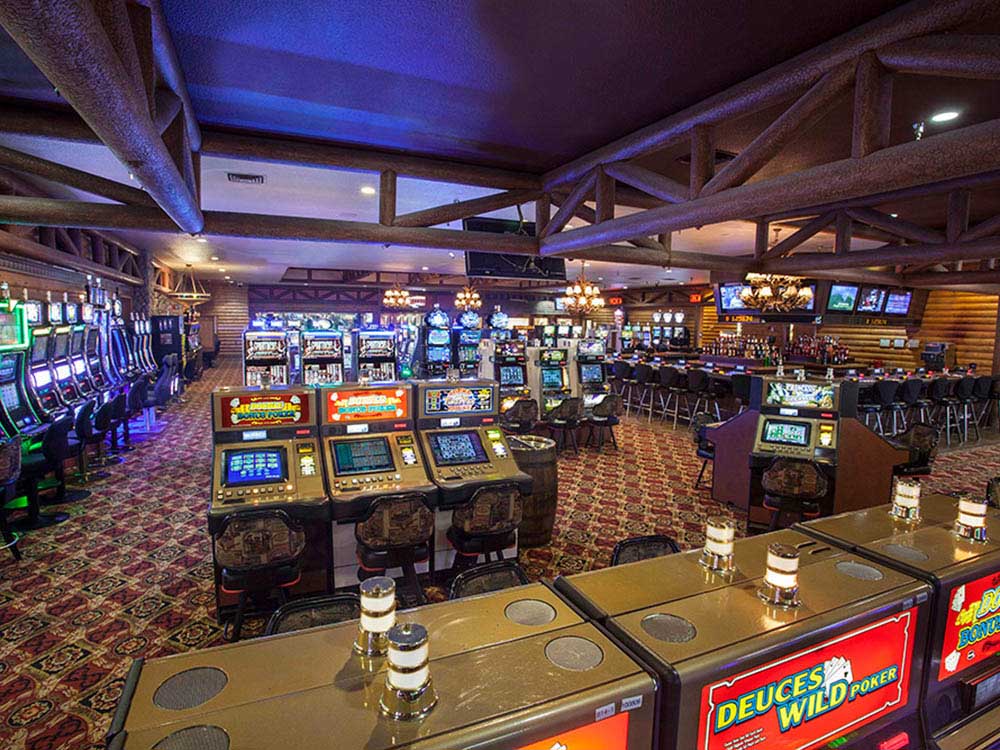
Coushatta Casino Resort in Kinder draws gamblers and recreation seekers to thousands of slots and table games. Guests also will discover 10 restaurants, a water park and one of the state’s best 18-hole golf courses. The destination also is home to an annual summertime Coushatta Powwow, which celebrates the art and culture of the region’s deep Native American roots and includes dances, food, and arts and crafts.
Getty Images
Make Time for Marksville
With a population of around 5,000 people, Marksville gives visitors a taste of small-town Louisiana living. But the big attractions here are the surrounding freshwater lakes and rivers, which offer fantastic fishing and hunting. The Spring Bayou Wildlife Management Area and Grande Cote National Wildlife Refuge provide vast tracts of protected wilderness to explore. The robust population of American bald eagles in the area make this a great spot for birdwatchers.
In town, the Paragon Casino Resort offers an action-packed gaming floor and a tropical pool with a swim-up bar. Check out the full-service spa, golf course and live entertainment.
Getty Images
Hunt and Golf in Livingston Parish
Northwest of Louisiana, Anglers can explore more than 600 miles of waterways in Livingston Parish. Cast lines for largemouth bass, perch, crappie and speckled trout. Hunters will find lots of game on the 67,000 acres of the Maurepas Swamp Wildlife Management Area. Golfers will find outstanding fairways at Carter Plantation, a 7,000-yard, part-72 course named one of the “Top 10 Courses You Can Play” by Golf Magazine.
After an active day, belly up to a plate of authentic Cajun cooking. At the Taste of Louisiana Cafe, the 1/2 Catfish & 1/2 Shrimp plate will send your tastebuds to the stratosphere. Get a big bowl of steaming sausage, shrimp, rice and other tasty flavors at the Pot & Paddle Jumbalaya Kitchen in Denham Springs.
Choose from the following Louisiana RV parks:
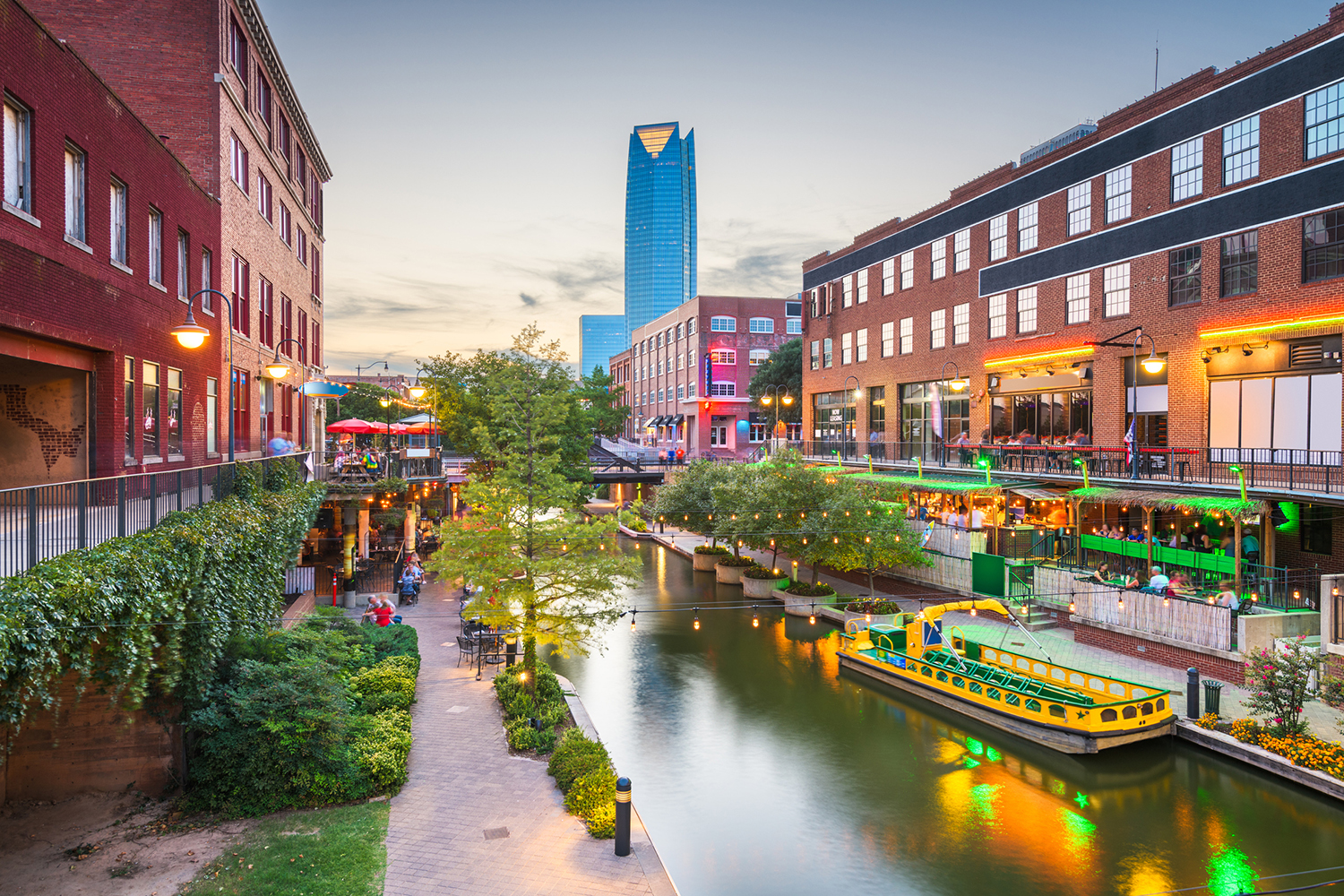
Oklahoma City in Bricktown at dusk. Getty Images
Beyond the Sooner State’s famous plains, visitors will discover tall mountains, rich forests and lakes rich with fish. You’ll also find one of the most exciting cities in the nation.
Go Ziplining and Boot Shopping in Oklahoma City
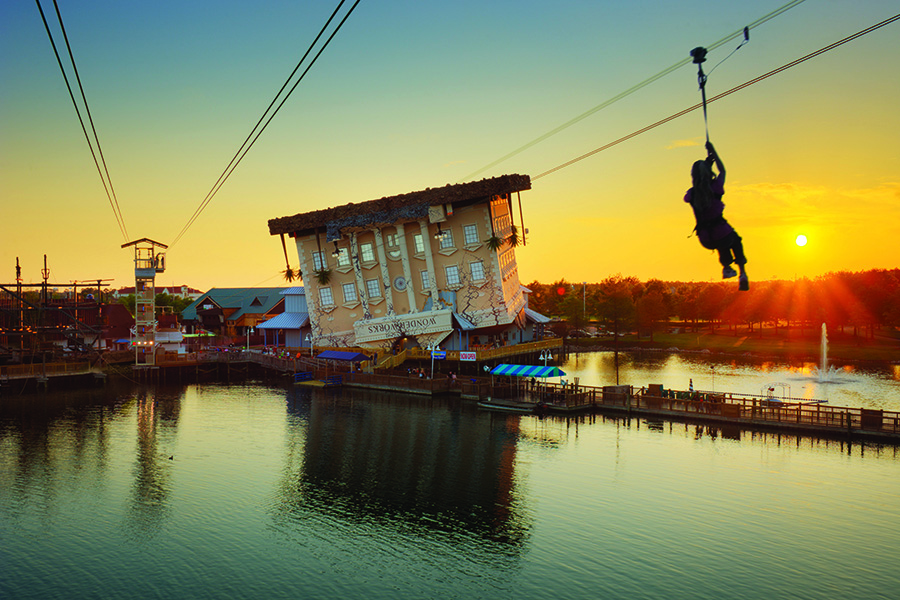
Oklahoma City makes the most of its location on the Oklahoma River. Check out the Riversport Adventure Park in the heart of the city in the Boathouse District near the intersection of interstates 40 and 35. Here, visitors can catch a wave on a simulated ocean at Surf OKC. Fly high over the river on the SandRidge Sky Zip, which carries riders 700 feet across the river at a height of 80 feet. Also part of the complex, the 80-foot-tall SandRidge Sky Trail has six levels of challenges like rope bridges, balance beams and zig-zag elements (a safety harness keeps guests from falling). Elsewhere in the Boathouse District, visitors can go whitewater rafting and tubing.
Add Western flair to your wardrobe in Stockyards City, home to the Oklahoma National Stockyards and a hive of Western shops. Drop into Langston’s Western Wear, where you’ll discover a prairie-size selection of boots, jeans, western shirts and cowboy hats for men, women and children.
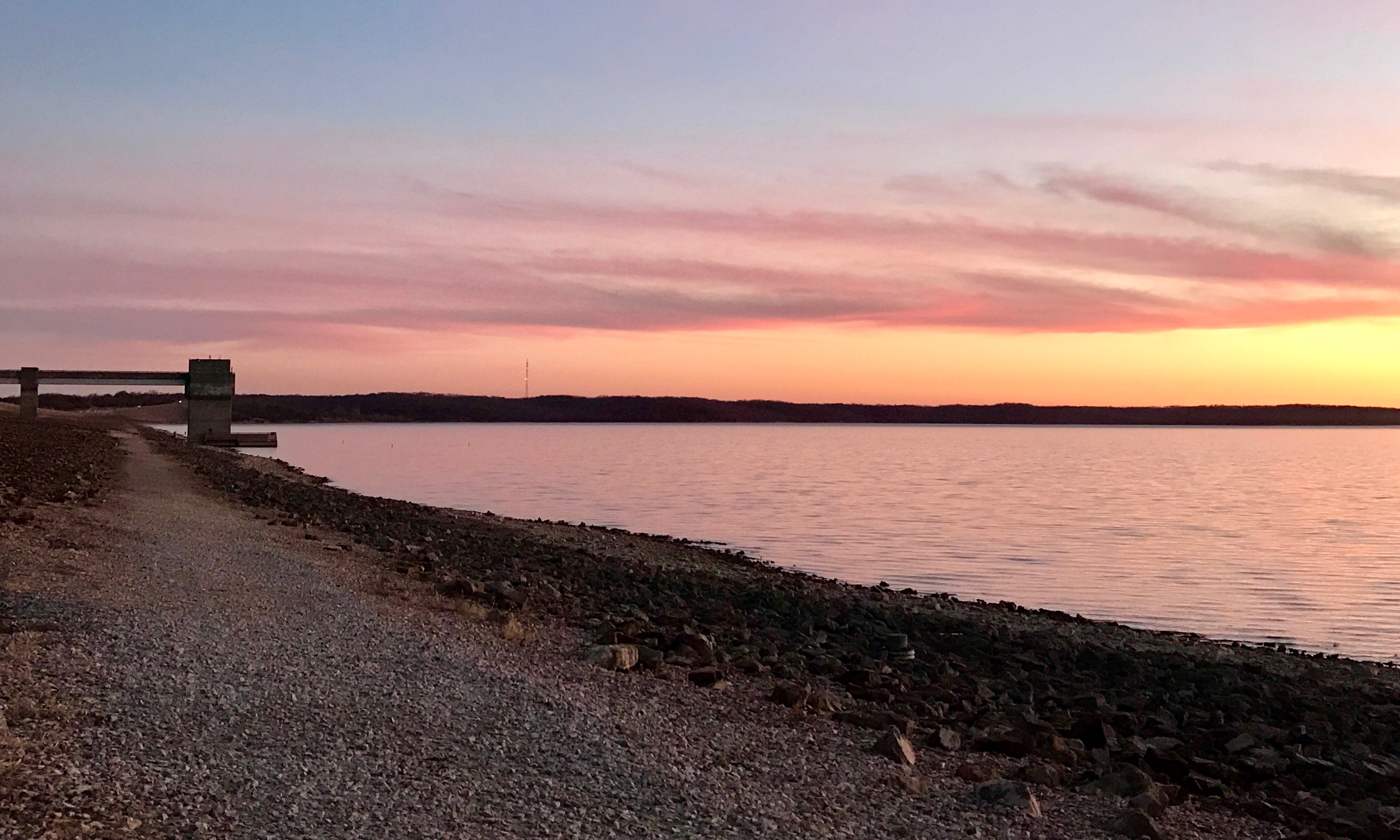
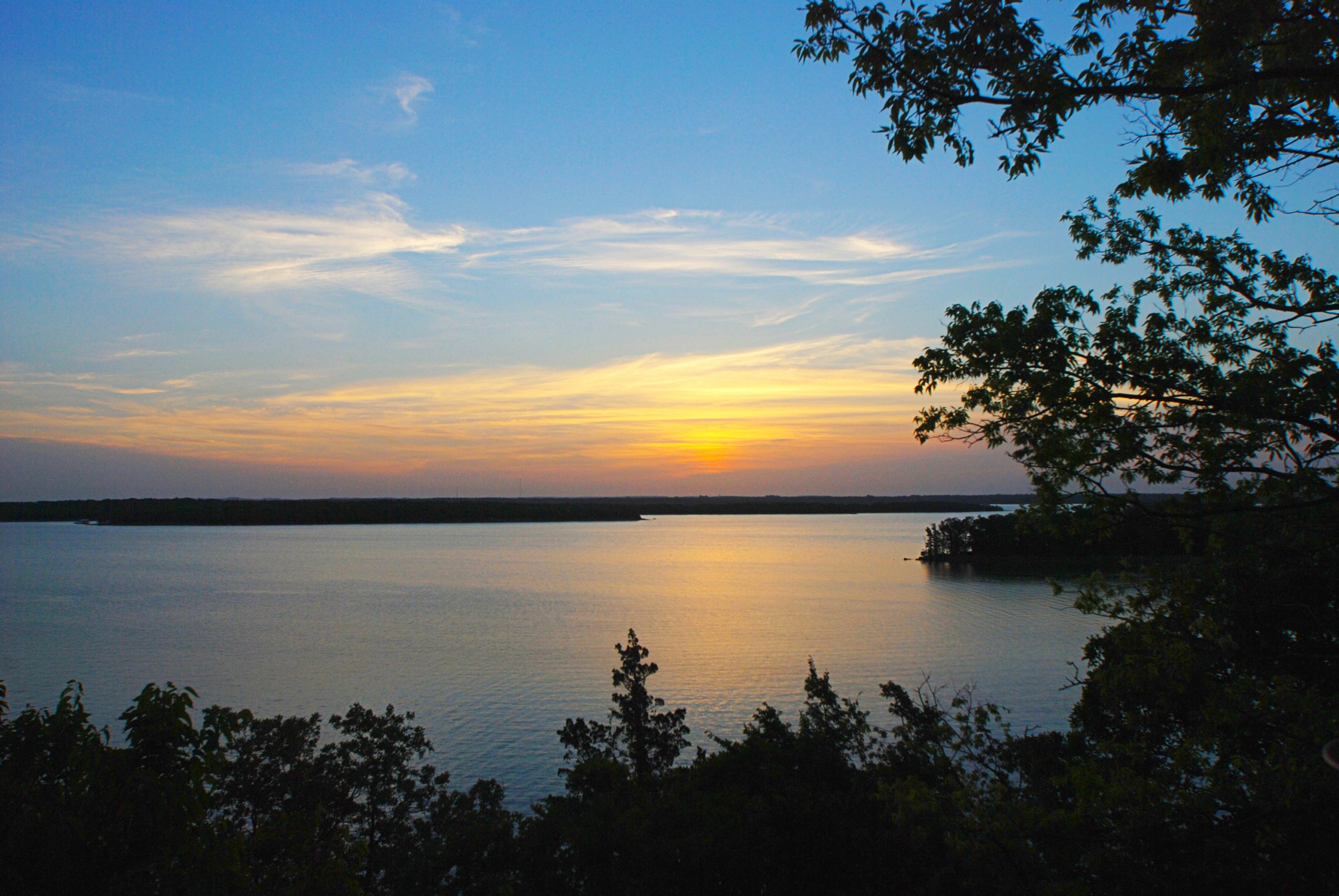
Sunset over Lake Murray. Getty Images
Drop a Line or Roll the Dice Near the Texas Border
In the south section of Oklahoma north of Dallas, Texas, a cluster of lakes keeps boaters, anglers and wildlife watchers busy. Near Ardmore, Lake Murray is hidden gem is known for being part of the largest state park in Oklahoma and for its crystal clear spring-fed waters. Around the shore of the 5,700-acre lake, visitors can enjoy horseback riding, tennis and water sports. Scenic State Highway 77 circumnavigated the lake, dishing out stunning views of the water from all sides. Take this route to find the perfect fishing or launching spot.
Straddling the border between Oklahoma and Texas, Lake Texoma consists of 89,00 acres of fishing and batting fun. Launch a jet ski, tow boat, Wavrunner or pontoon boat, or charter a fishing trip for trophy bass. In Eisenhower State Park, hikers can explore caves and look for fossils along the trails.
Feeling lucky? On Interstate 35, the WinStar World Casino and Resort has a whopping 370,000 square feet of casino floor, packed with slot machines and gaming tables. The Gran Via Buffet puts world cuisine at your fingertips and the Global Event Center features top acts from around the world.
I used to travel to far-flung destinations at every chance I got, but then the pandemic hit and I was forced to sit still in my hometown of Vancouver. With international travel curbed for over a year, I had to find other ways to satisfy my wanderlust. I began researching staycations and stumbled upon the Sunshine Coast in British Columbia.
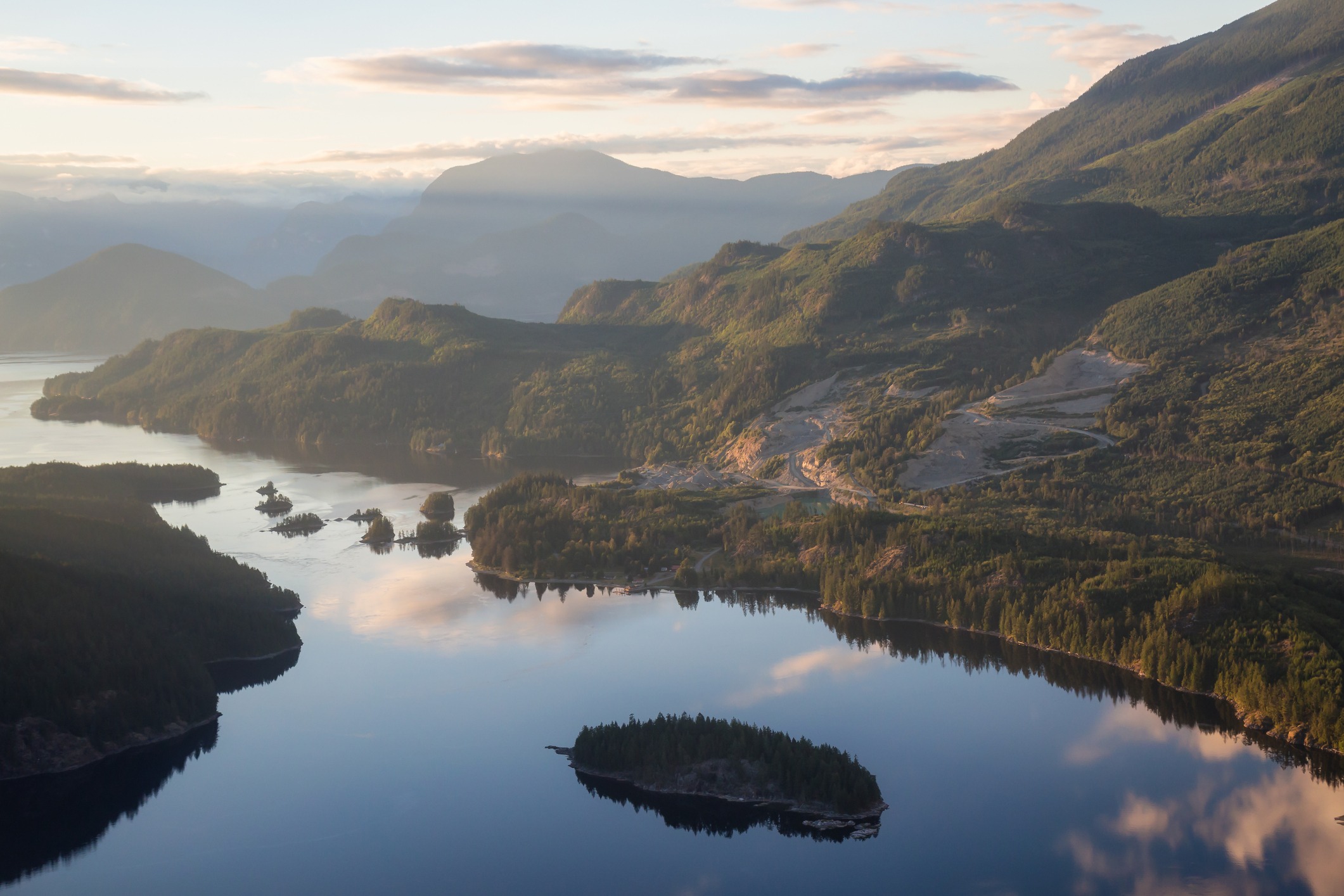
Stretching 112 miles from Howe Sound to Desolation Sound, this slice of natural paradise is a short ferry ride from Vancouver but feels a world away with secluded beaches, old-growth forests and artsy oceanside villages. I spent three days on the Sunshine Coast (it was glorious) and compiled the ultimate itinerary to inspire you to take the same trip.
Day 1: Gibsons and Roberts Creek
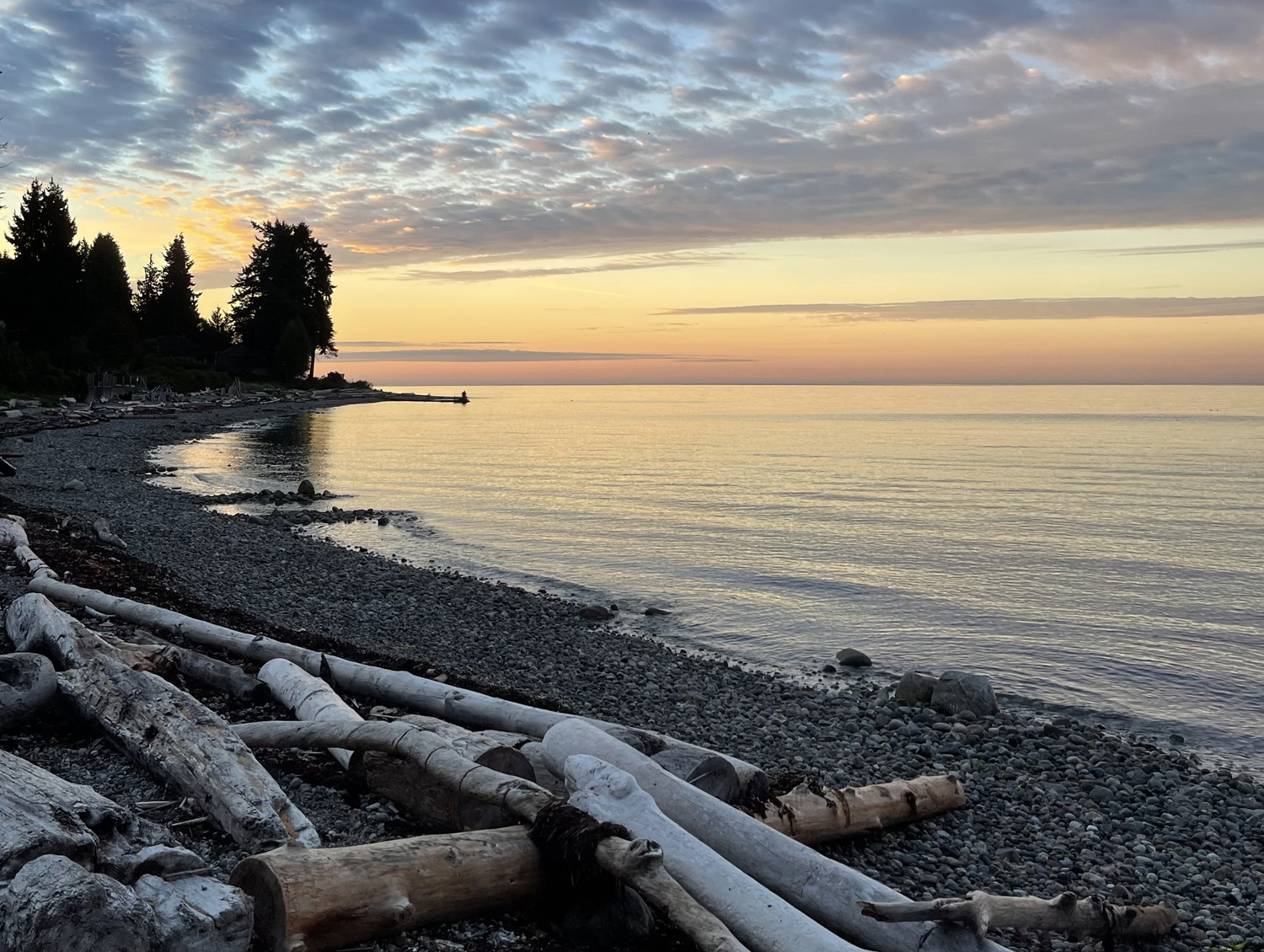
Dusk on Roberts Creek. Getty Images
Morning
From West Vancouver, board a ferry at Horseshoe Bay and enjoy a 40-minute journey admiring a dazzling backdrop of coastal mountains. After docking, drive 10 minutes to the charming community of Gibsons. Gibsons Landing is where much of the action happens, with the Gibsons Public Market, Sunshine Coast Museum and numerous art galleries lining the harbor. Peruse the shops and have fresh seafood for lunch at Smitty’s Oyster House or Molly’s Reach Restaurant.
Afternoon
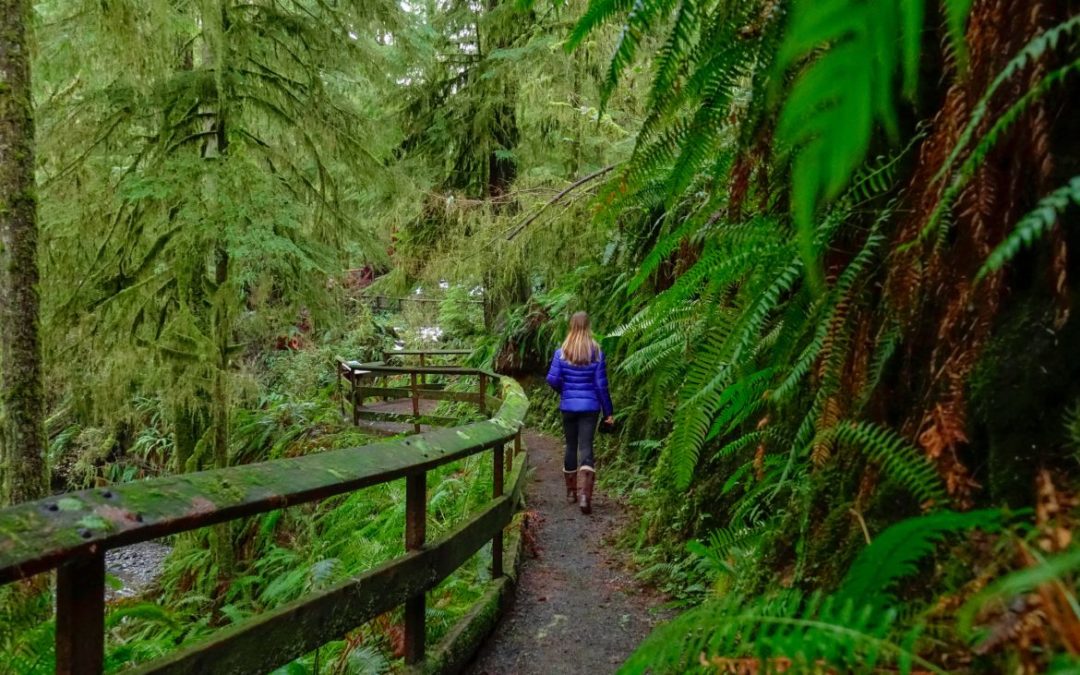
Just a 15-minute drive away is Cliff Gilker Park in Roberts Creek. Spend the afternoon hiking easy trails, which lead to waterfalls and Douglas ir trees. What’s great about this woodland park is that it’s covered by a canopy, so you can hike rain or shine. You can also visit nearby Mount Elphinstone Provincial Park, home to one of the highest peaks in the lower Sunshine Coast. If you’re up for it, trek the 7.6-mile Summit Trail for views all the way to Vancouver on a clear day.
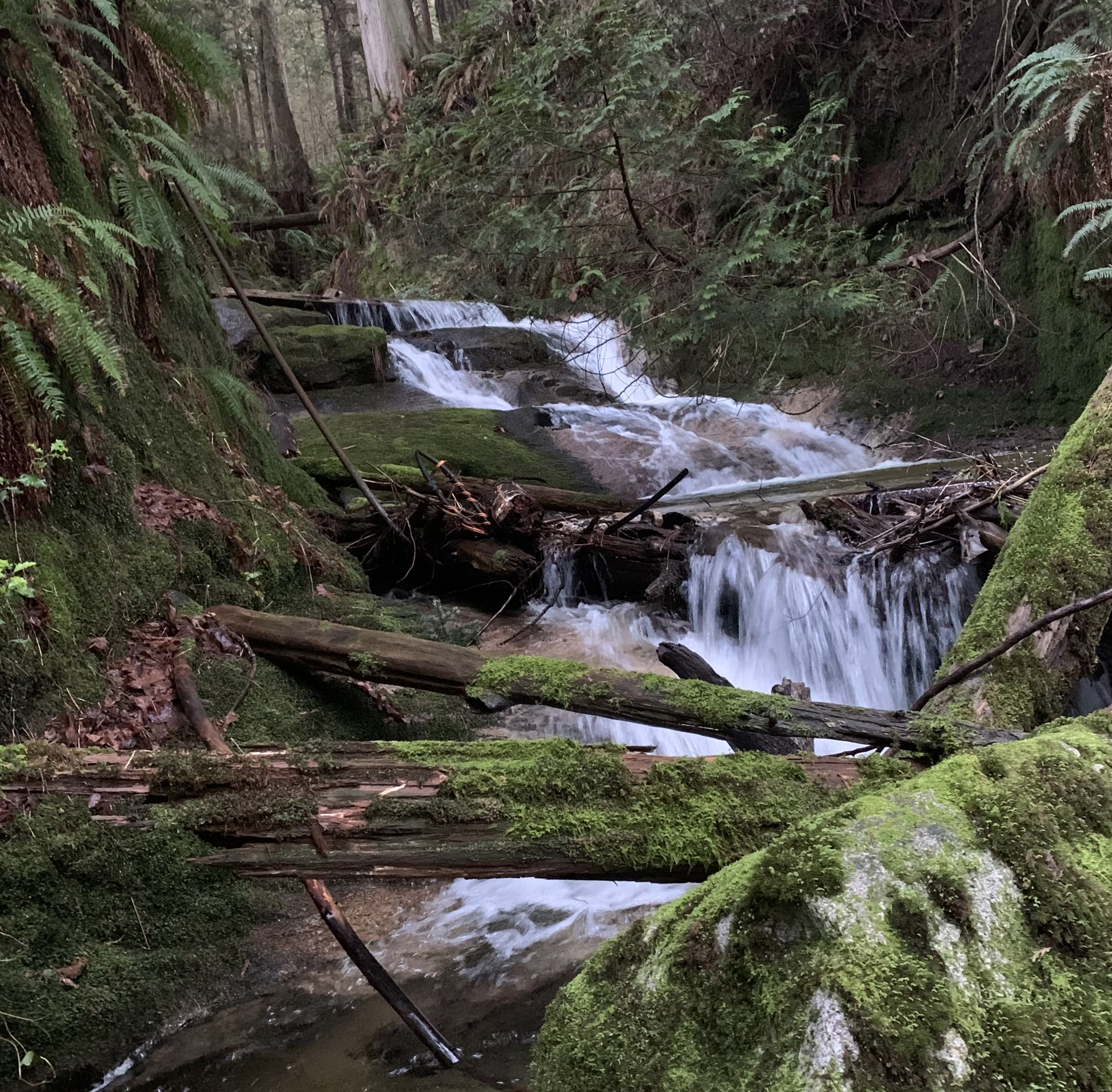
Old-growth forest in Roberts Creek. Getty Images
Evening
Head back to Gibsons and finish your day by discovering the town’s vibrant craft brewery scene. You can indulge in West Coast brews and great pub food at Tapworks, Persephone Brewing Company or The 101 Brewhouse and Distillery. When it’s time for bed, check out several RV parks in and around Gibsons.
Day 2: Sechelt and Halfmoon Bay
The Sechelt Inlet on the Sunshine Coast. Getty Images
Morning
Rise and shine with award-winning craft coffee at Beachcomber and then make your way to Sechelt, located 14 miles away on the banks of the Sechelt Inlet. Outdoorsy folks will want to go to the Hidden Groves, a network of trails weaving through ancient rainforests. Nearby Porpoise Bay Provincial Park also offers hiking and canoeing. In town, you’ll find loads of shops, boutiques and galleries to browse. If you’re visiting during the weekend, make sure to stop by the Sechelt Farmers’ and Artisans’ Market for everything from baked goods to First Nation art. Round out your visit with a seaside stroll along Davis Bay.
Afternoon
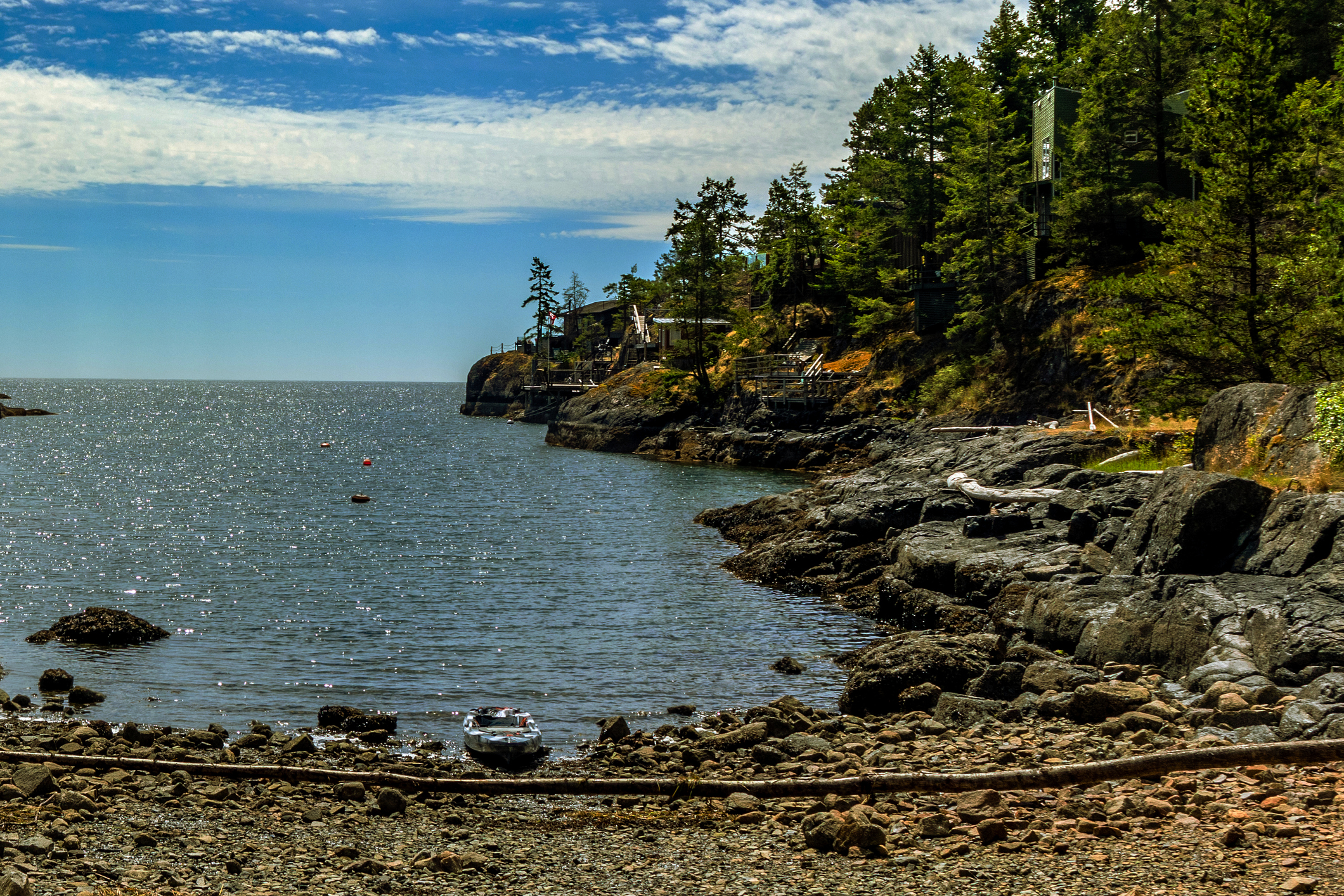
Continue up the coast to Halfmoon Bay and park your car at Smuggler’s Cove Marine Provincial Park. Legend has it this area was used to smuggle bootleg liquor into the United States during the prohibition era. Today, it’s an outdoor lover’s paradise with loads of rock faces, sand flats and coastal forest to explore. Halfmoon Bay also has a few beach access areas, such as Welcome Beach and Coopers Green, so lay your towel out and take a dip when the sun’s out.
Evening
Scenic Smuggler’s Cove. Getty Images
Halfmoon Bay and neighboring Secret Cove offer all sorts of luxury accommodations ranging from log house cabins to resorts. You’ll find several RV parks in the area.
Day 3: Pender Harbor and Egmont
Morning
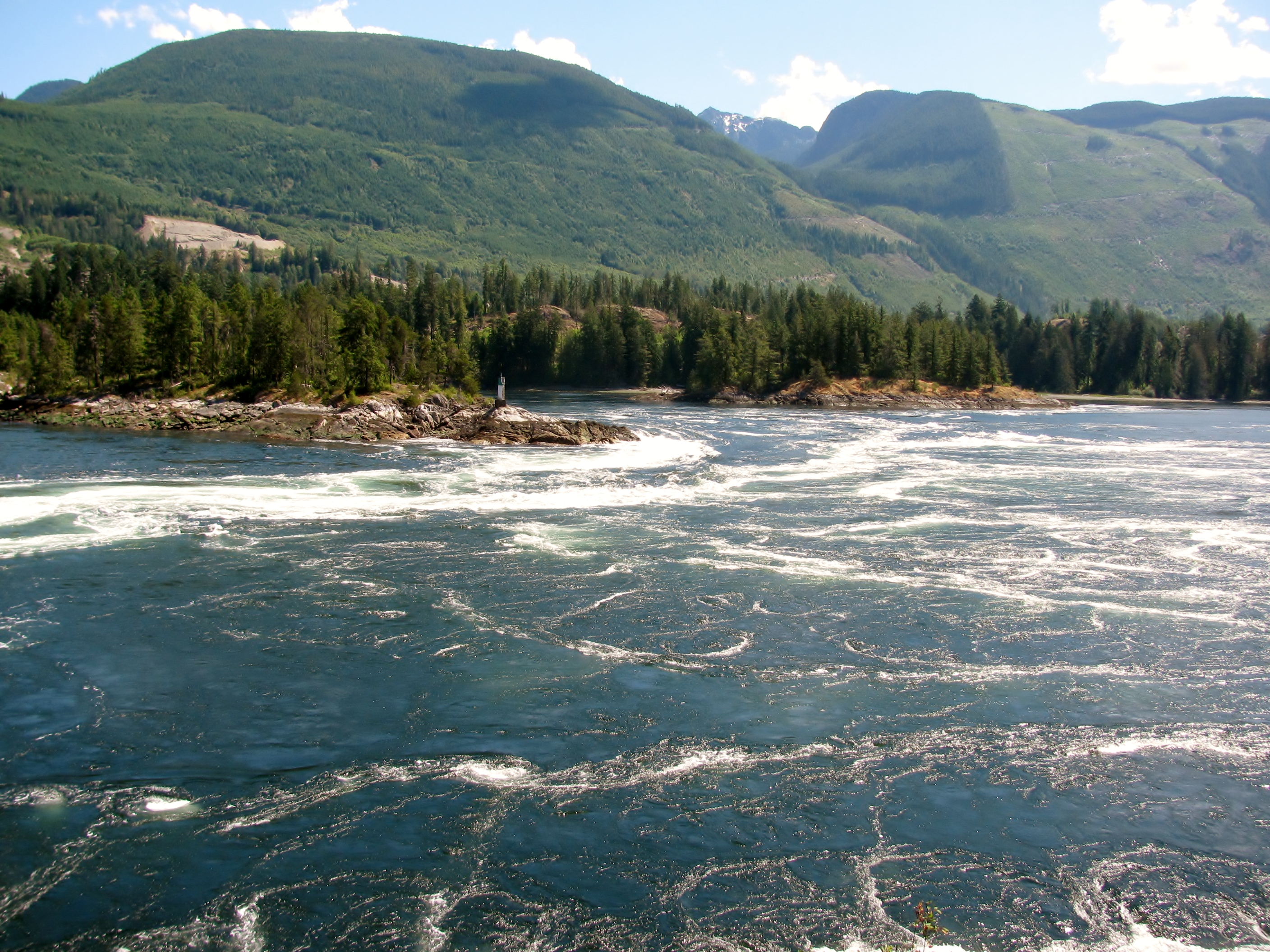
Hop back in the RV and drive 28 miles north to Skookumchuck Narrows Provincial Park in Egmont. Twice a day, powerful rapids change the tide and reverse the flow of saltwater, causing a massive difference in water levels between one side of the rapids and the other. Watch this natural spectacle unfold and keep an eye out for thrill-seeking kayakers paddling through whirlpools. Afterward, have a bite to eat at the Skookumchuck Bakery and learn about the area at the Egmont Heritage Center. Both are located near the park entrance.
Tidal rapids at Skookumchuck Narrows Provincial Park. Getty Images
Afternoon
Conclude your Sunshine Coast adventure in Pender Harbour. The best way to experience this coastal town is from the water, so take a boat tour with SloCat Harbour Tours or head out on a salmon fishing expedition. You can also hike up Pender Hill for sweeping views and enjoy the sunset from Madeira Park.
Evening
Sadly, all good things must come to an end. Enjoy one last meal at popular Pender Hill restaurants like the Lagoon Restaurant and Aquí Es México. Afterward, drive back to Langdale and catch the ferry back to Vancouver. Capilano River RV Park and Burnaby Cariboo R.V. Park put guests close to all that the city has to offer.
Bonus: Powell River and Lund
Not ready to go home yet? Take a ferry from Earl’s Cove to Saltry Bay and spend an extra day exploring the Sunshine Coast’s northern side. In Powell River, wander through the historic Townsite and look for landmarks like the Patricia Theatre, Townsite Brewing and the Powell River Historical Museum. Lund acts as the gateway to Desolation Sound, BC’s largest marine park, offering swimming, diving and fishing opportunities.
To cross into Canada from the United States, American tourists must be fully vaccinated for at least two weeks. Vaccinated tourists must test negative for COVID-19 before traveling (via PCR test), carry hard copies of their vaccination records and upload their documents to the ArriveCAN app or website.
Washington’s Olympic Peninsula is a grab bag of outdoor recreation. Hardcore hikers can hit trails leading to towering, snowcapped mountains. Botany buffs can explore the lush rainforests that flourish under high canopies. Surfers hit the big waves that roll into shore in places like La Push.
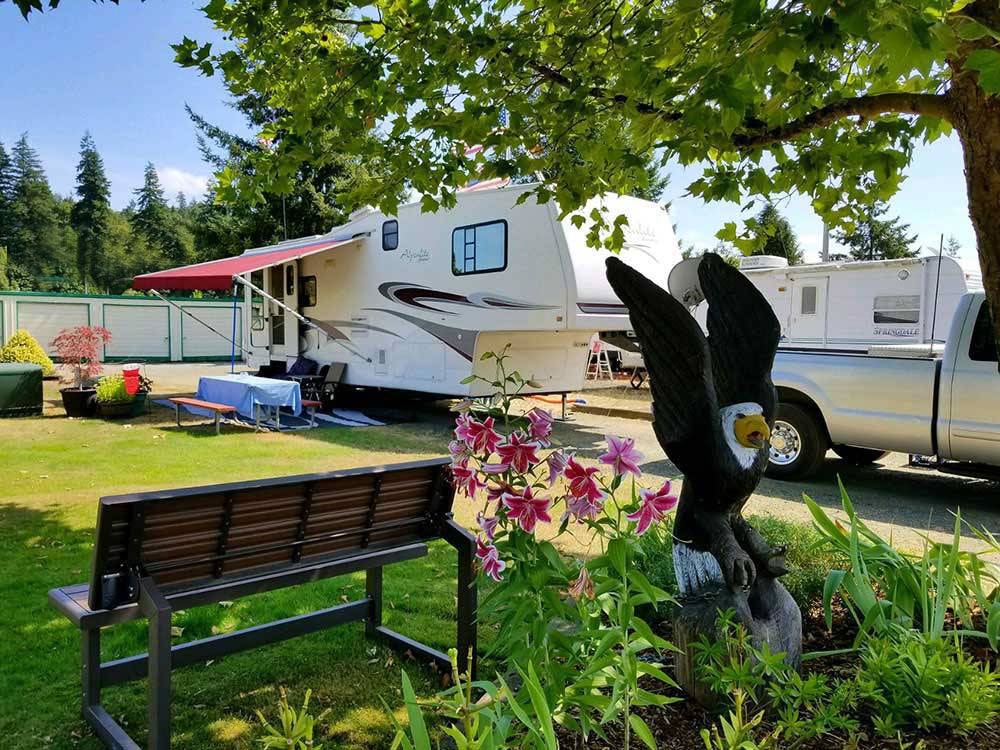
That’s just scratching the surface of the 1,442-square-mile region. Visitors can experience it all when they stay at Elma RV Park, a laidback Good Sam Campground located in its namesake town 30 miles west of Olympia. Described as the Gateway to the Olympic Peninsula, this campground puts the region’s long menu of recreational activities within reach.
Elma RV Park
Coastal Cruising
From Elma, follow roads that hug the Pacific Coast for uncrowded beaches and diverse communities. Forty-two miles west of Elma, motorists will discover a stretch of Pacific Coast lined with several charming beach towns. Hang around Ocean Shores and launch a kite into the sky, or grab a shovel and pail and dig for clams. Head north and watch the Moclips River empty into the Pacific Ocean near the town of the same name. Further North on the Coast, the town of Taholah serves up beautiful beaches near the outlets of the Quinault River.
Surf’s Up
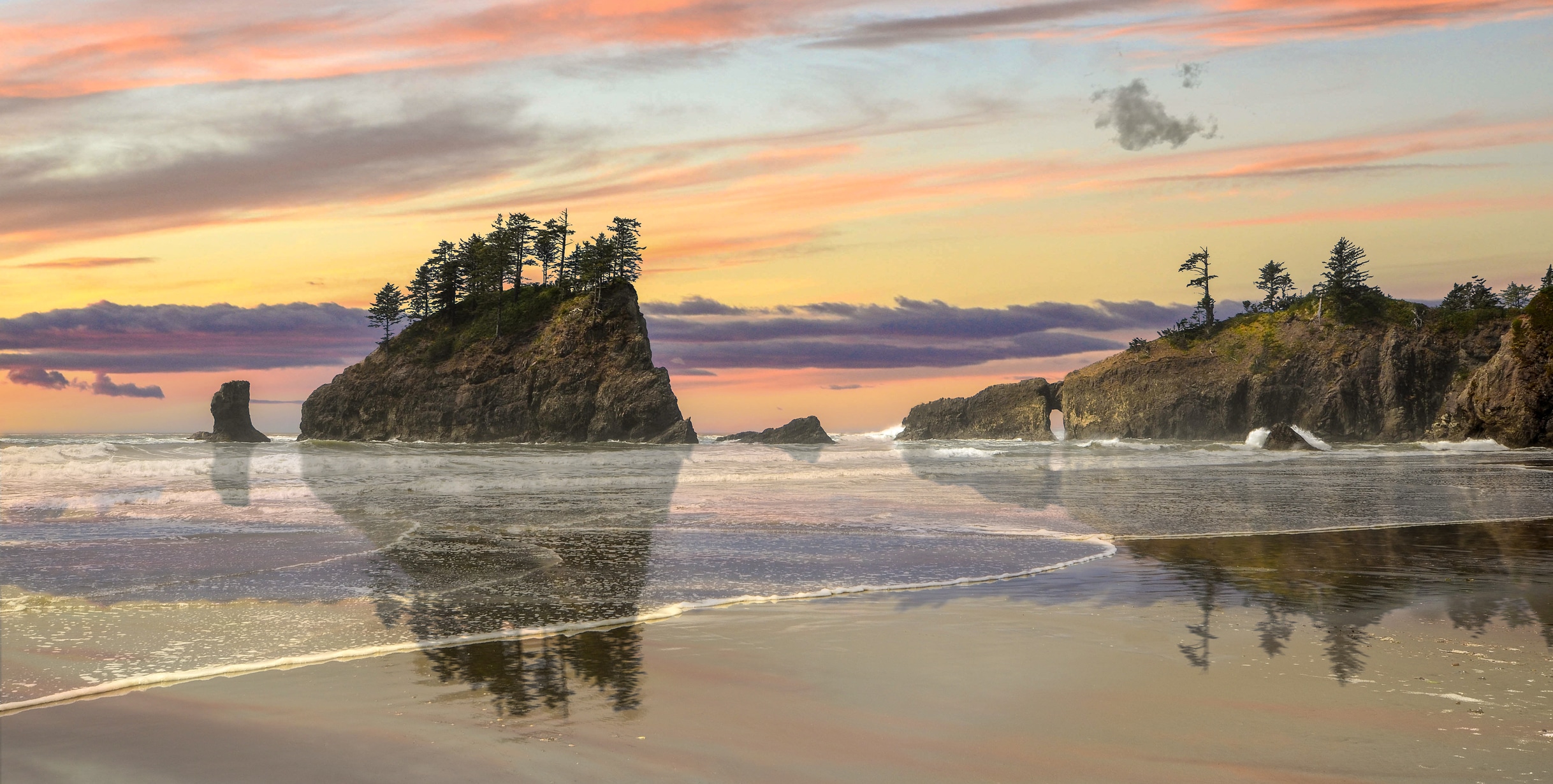
Venturing into Olympic National Park on the Pacific Coast, the community of La Push is home to fantastic waves, with beaches for surfers of all experience levels. Here, where the Quillayute River meets the Pacific Ocean, board riders can catch waves as high as seven feet.
Sunset on second beach in La Push. Getty Images
Head further north for Neah Bay, where surfers will find clean waves during the winter season. Embark on the Cape Flattery Trail and reach the northwesternmost point in the contiguous United States. Spectacular views greet visitors here, including the towering Fuca Pillar. Check out Cape Flattery Lighthouse, built to protect ships making the passage from the Strait of Juan de Fuca to the Pacific.
Along the Peninsula’s northern coast, a slew of fun beach towns greets visitors. About 28 miles north of Forks, famed as the setting for the Twilight series, the town of Clallam spoils visitors with delicious seafood and dazzling views of Clallam Bay. Take a selfie with the statue of the area’s mascot, Rosie the Walking Fish. Rosie overlooks the sprawling bay from the nearby town of Sekiu.
East of Clallam, on the Peninsula’s north coast across from Victoria, Port Townsend buzzes with fun restaurants and eclectic stores. Port Townsend specializes in serving up excellent seafood, cheeses and desserts.
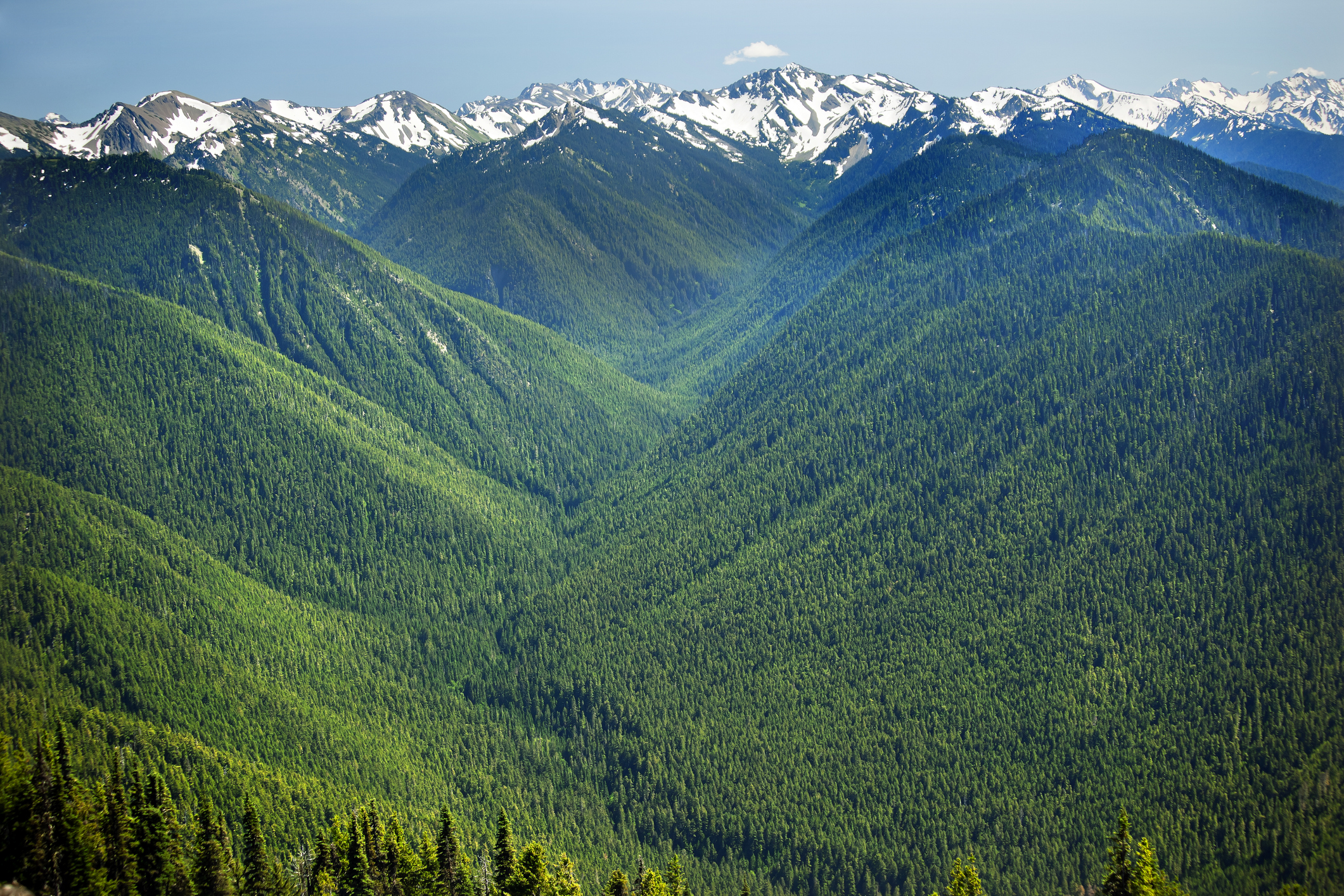
Hurricane Ridge. Getty Images
Into the Mountains
In the heart of the Peninsula, the towering mountains of Olympic National Park take center stage. From Elma, visitors can take the two-hour drive up the east side of the Peninsula to get to the Olympic National Park Visitor Center. Here, you’ll kids can play in the hands-on “Discovery Room.” There’s also an extensive book store and some short trails. Along this route, motorists will pass through exciting towns like Quilcene, Hoodsport and Skokomish.
Hurricane Ridge, in particular, offers great vistas of the Olympic Mountains. Hikers can hit the variety of trails with panoramic vistas of the Strait of Juan de Fuca.
Take Time to visit one of the region’s most picturesque bodies of water. Lake Crescent, known for its deep, turquoise-blue waters, is a glacially carved lake offering a cool, idyllic spot for swimming, boating, camping and fishing. Nestled along Highway 101, Lake Crescent also has several beaches and a trail leading to a swimming favorite known as Devil’s Punch Bowl. Another popular spot in Olympic National Park is the scenic Sol Duc Falls. Here, visitors might also catch a glimpse of bald eagles that often soar overhead. Catch a quick fish dinner at the Salmon Cascades, where salmon run every season. Trout and steelhead run the river in the fall.
Rainforest Wonders
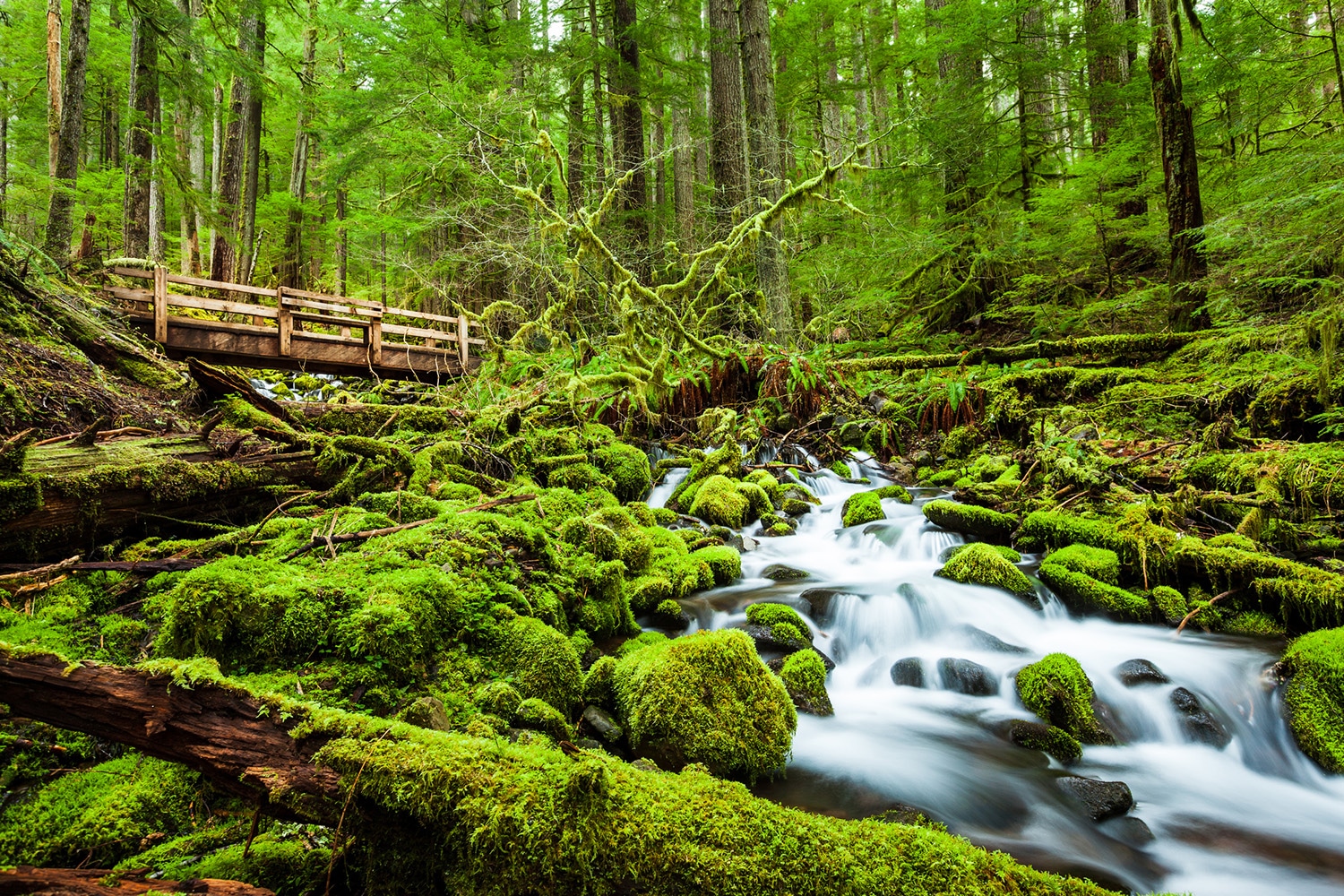
Sol Duc Falls Trail, Olympic National Park. Getty Images
Although you might expect rainforests to exist only in equatorial regions, Hoh Rainforest in Olympic National Park bursts with life, with ferns sprouting out of the ground and lichen coating rocks. Overhead, an extensive canopy keeps this area cool and protects the robust plants on each side of the trails.
Back at Elma
Elma RV Park treats guests to small-town hospitality, with fresh cookies, coffee or tea served to visitors. Guests can relax in big rig sites or in the spacious clubhouse for groups. In town, visitors can explore Schafer State Park, with paths that wind through a lush forest.
Everywhere you look, the lush Pacific Northwest landscape inspires and relaxes. Wi-Fi, room for slideouts, tables at sites and onsite RV make this a welcoming environment. Stock up on RV supplies, use the self-service RV wash or gather at the pavilion. Nearby, a casino, fishing and kayaking or canoeing spots cater to recreation seekers.
As we move toward another camping season, we relish the healthy lifestyle and fun activities that await. Just getting out and using your RV again can be a rewarding pastime. But along with enjoying the outdoor fun, we need to also relax in the comfort of our home-away-from-home. This is especially true on those hot, lazy days when rising temperatures blanket many parts of North America. And as we all know, robust AC units and other factors are critical in keeping our RV interiors cool during summer travels.
Photo: Peter Mercer
Here are just a few tips on keeping the interior temperatures low as outdoor temperatures rise.
AC Remedies
For many of us, RV air conditioning units have trouble keeping up with the climbing temperatures. We wonder if our air conditioners are just getting tired and worn out — after all, your RVs may not be as young as they used to be.
The good news is that RV air conditioning units generally last for many, many years. Consider the two likely solutions for the AC’s flagging performance: needed maintenance and the employment of collateral aids to remove some of the burdens on the unit. First, let’s take a look at what maintenance items that need addressing:
Air Intake Filters
The inside AC air intake filters need to be checked and cleaned regularly. RVers should carry out this task as often as every month or two, depending on the local environmental conditions. Generally, these filter elements are easy to remove and wash. Allow them to dry before their reinstallation.
Inspect the Roof Unit Shroud
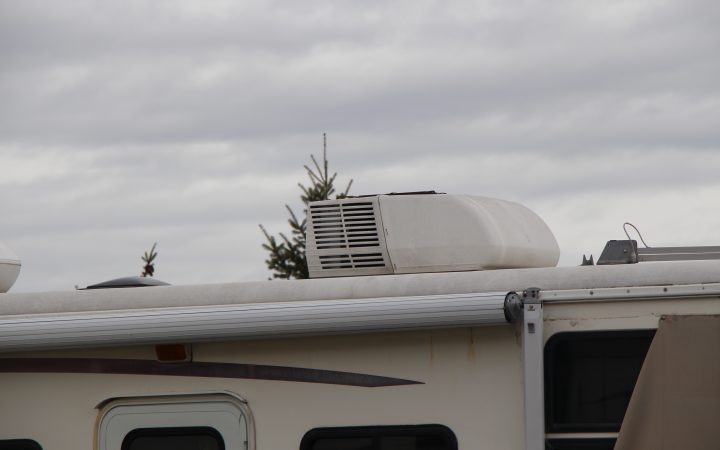
RV AC. Photo: Peter Mercer
The outer cover that encloses the roof air conditioner can become brittle over the years from exposure to the sun’s ultraviolet rays. A visual inspection of the shroud should be done regularly. Look for any cracks or deterioration in the cover. This housing helps maintains the proper airflow through the condenser. The shroud should be replaced if any faults are present. This should be done about five years from the shroud being new and then perhaps every year after that.
Clean the Condenser and Evaporator Coil
Cleaning should be carried out every other year, again subject to the local environmental conditions. Note: This should be done by a qualified A C technician as electrical hazards are present even if the AC power is off.
Service the Freon Refrigerant
The checking for leaks and the topping up or refilling of the correct freon refrigerant may be required if cooling has failed. This should be verified and done by a qualified service technician.
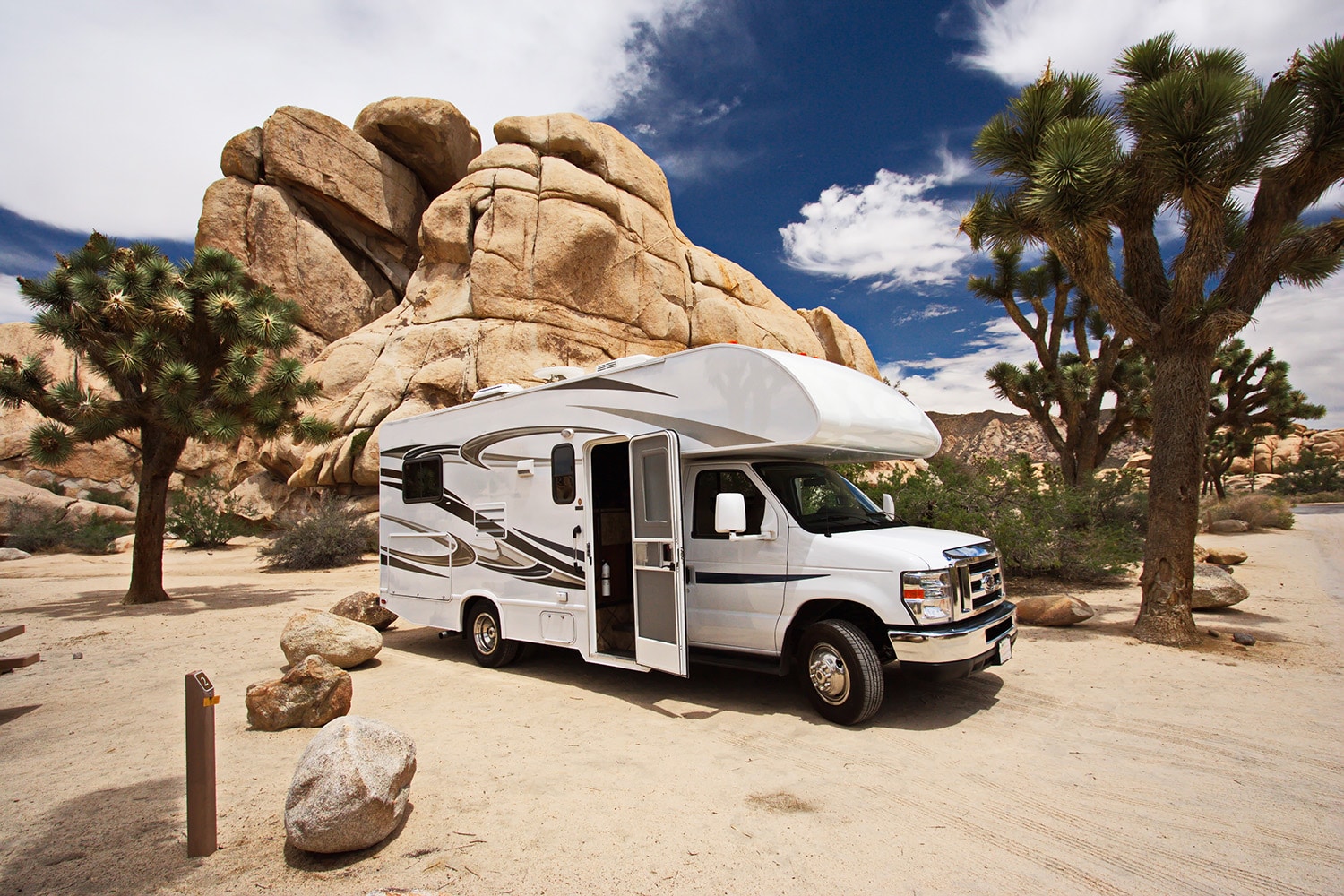
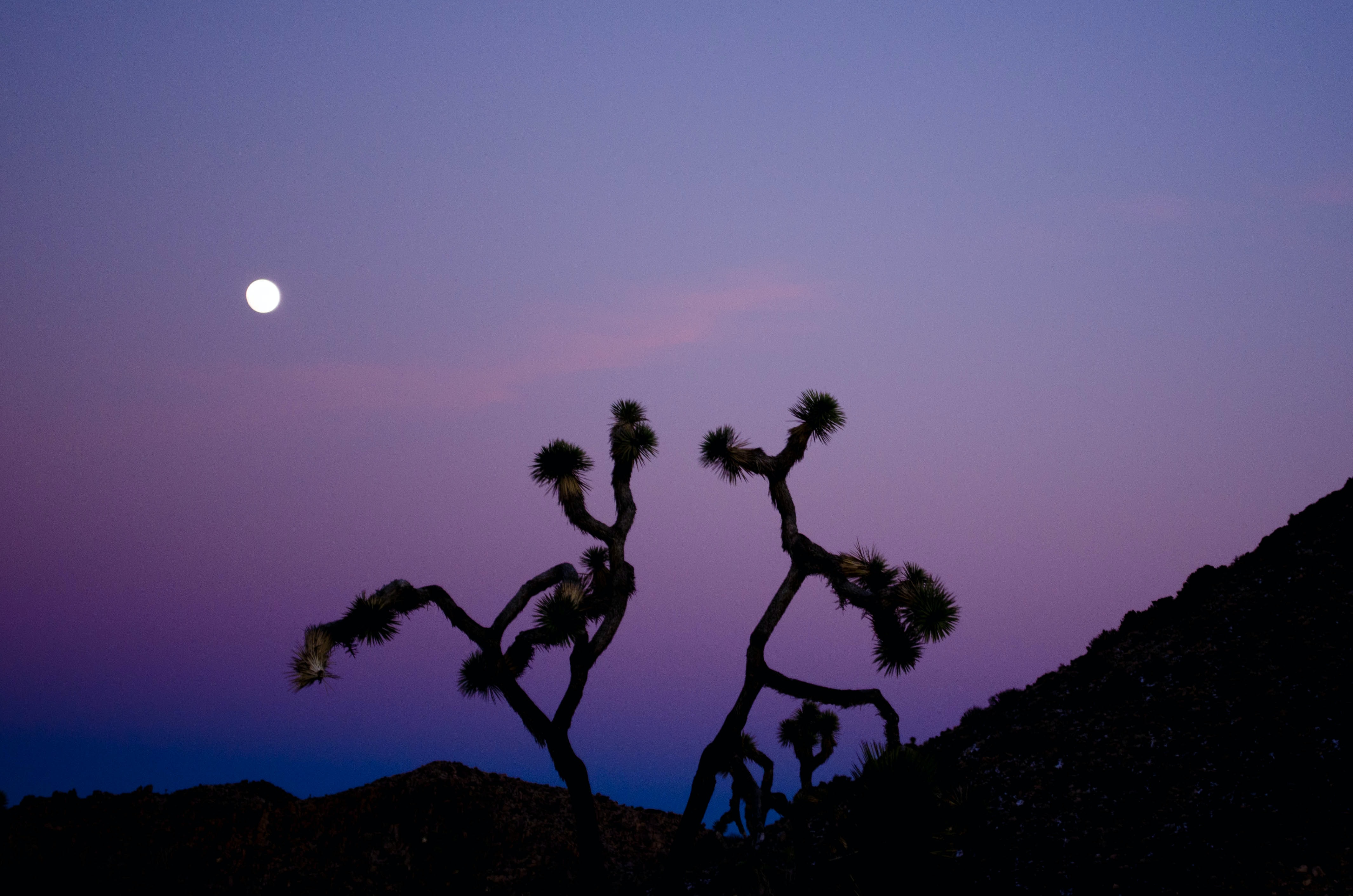
Hidden Valley Campground in California’s Joshua Tree National Park. Getty Images
Keep Your Air Conditioner Enabled
If you are going out for a while or for the day, leave your air conditioner thermostat in the enabled setting. Failure to do this may make it difficult to reduce the RV’s interior temperature when you return. The heated walls, floor, ceiling and all the components and nick-knacks in your coach will make it harder to return the temperature to your comfort level.
Check the Air Conditioner(s) Efficiency Regularly
Test the cold air temperature at the air outlet using a stick thermometer or an infrared gun. You can establish a benchmark performance level and weigh it against future readings. Carrying this out at the first of the season and occasionally throughout the year can confirm it’s functioning properly or warn of a possible fault.
AC Assists: Simple Ways to Keep Cool
Don’t let your AC work alone. There are several things you can do to increase the effectiveness of your RV’s cooling system. These tasks are accomplished by helping to reduce the internal and external heat sources. Here are examples of some common-sense ways to help the AC:
Getty Images
Parking Position and Awning Deployment
Depending on campsite positioning, taking advantage of any daytime shade can substantially reduce the sun’s heat effect. Facing most of the windows’ exposure away from the afternoon sun can also help. Extending the awnings to cause shade on the external body of the RV reduces the wall heat that is partially transmitted to the cabin interior.
Check the Ventilation of the Refrigerator
RV refrigerators disperse their heat at the rear and expel it outside. Some also gather heat at the top, usually from inadequate insulation, and may have a vent with or without a fan. The replacement of a failed pump or the fitting of one can have beneficial results.
Reduce Refrigerator Gazing
Extended and frequent viewing of refrigerator contents can diminish the fridge’s effectiveness. The answer to “What to eat? What to eat?” shouldn’t involve staring into the fridge. The menu really has not changed since you last looked a minute ago. In addition, on hot days, consider putting your cold beverages in a cooler with a bag of ice. This will not only reduce the door-opening frequency but also will take some of the load off the fridge.
Camp Dining Lifestyle
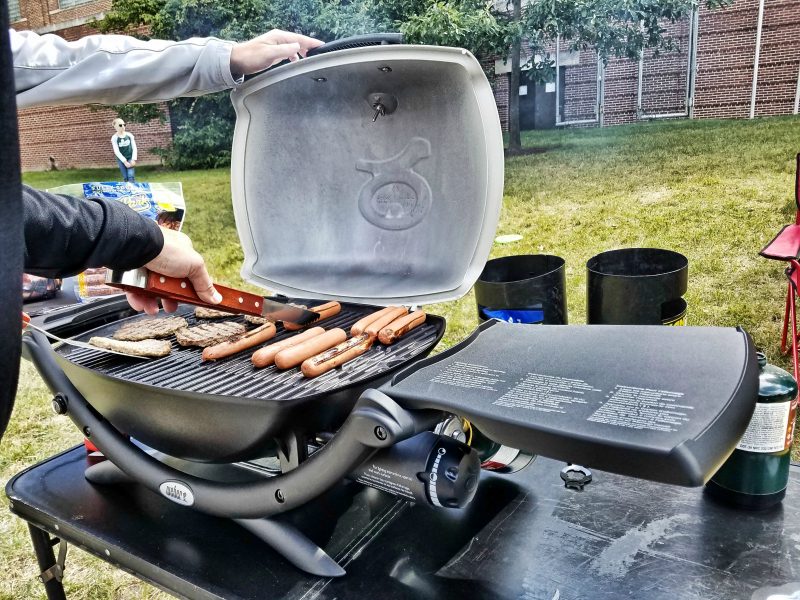
Do your cooking outside. After all, camping in the great outdoors means enjoying the open air. This will eliminate the heat generated inside by the galley stove.
Well, those are just a few thoughts of ways you may keep cool this camping season. Now let’s get on the road and enjoy RV adventure.
Camping season is coming quickly in many states and it’ll soon be time to dewinterize your RV! Dewinterizing your RV means getting your RV out of RV storage, inspecting it, and preparing all the mechanics for camping.
If this is your first time dewinterizing, you’ve come to the right place. We asked our RV experts everything you need to know about prepping your RV for another season of making memories! Read on to learn how.
When Should I Dewinterize My RV?
You want to dewinterize an RV when the weather consistently stays above freezing. If the temperature is still inconsistent, you risk having your pipes freeze. If your pipes freeze and you have water in your tanks, it could damage your RV’s water systems and lead to expensive repairs.
Dewinterizing an RV can take half a day or longer depending on how many systems you have. Prepare your time wisely and don’t be afraid to seek professional RV service for dewinterization. RV experts are here to help you start the camping season smoothly.
Just remember that all RVs are different and this is a general overview of how to dewinterize an RV. Not all steps may apply to your RV. Read your owner’s manual before getting started for model-specific RV dewinterizing instructions.
Step By Step Instructions For Dewinterizing Your RV and Preparing For Camping Season
Remove Your RV From Storage And Inspect The Exterior
When removing your RV from storage, inspect the exterior for damage.
Take your RV cover off or remove any debris that may be on your RV. Thoroughly check the exterior for any signs of damage from the weather.
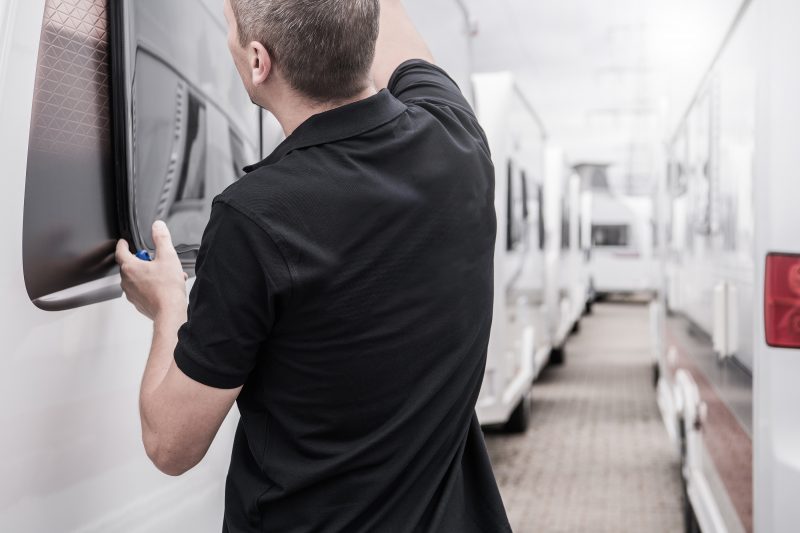
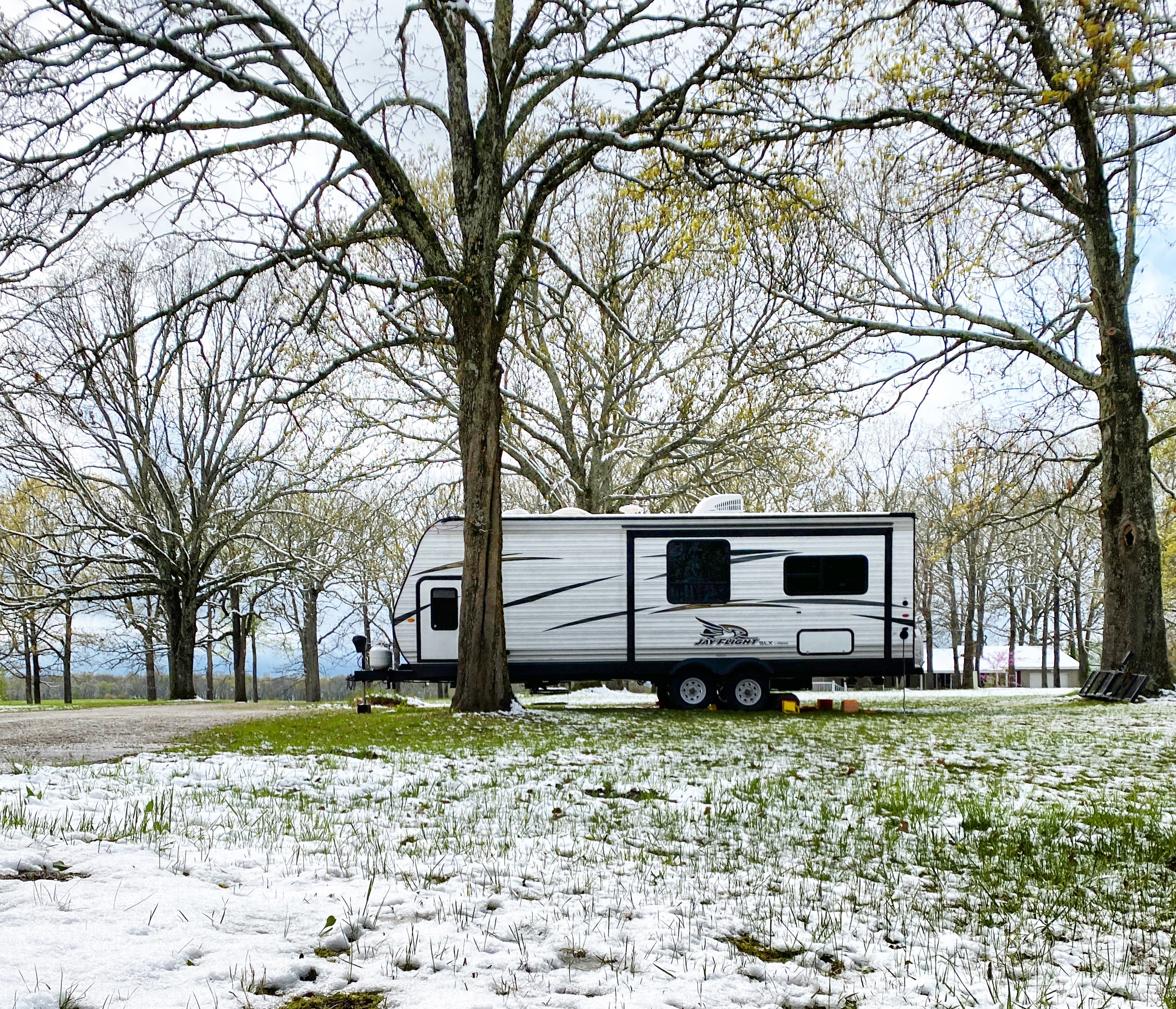
Look for any damages, cracks or leaks on the whole exterior of your RV. Make sure the caulk isn’t cracked along the seams of your RV. You should also check the door and window seals for any flaws or peeling. Replace any sealant that is damaged to ensure water does not enter your RV.
Look Over Your RV Tires
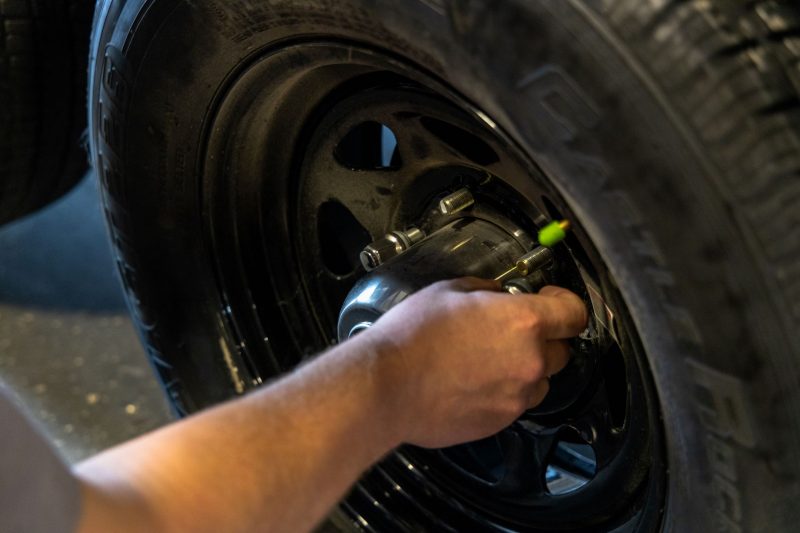
Inspect your RV’s tires and correct the tire pressure.
RV tires naturally lose some air during the winter months sitting in storage. If your RV was sitting for an extended period of time on dirt, grass, or asphalt without blocks you could risk having flat spots on your tires.
The RV owner’s manual has the recommended PSI based on the load of the RV. Correct the pressure of your tires and examine the tread. If you feel vibration, difficulty handling, or a thumping noise while driving, you may have a flat spot and need new tires.
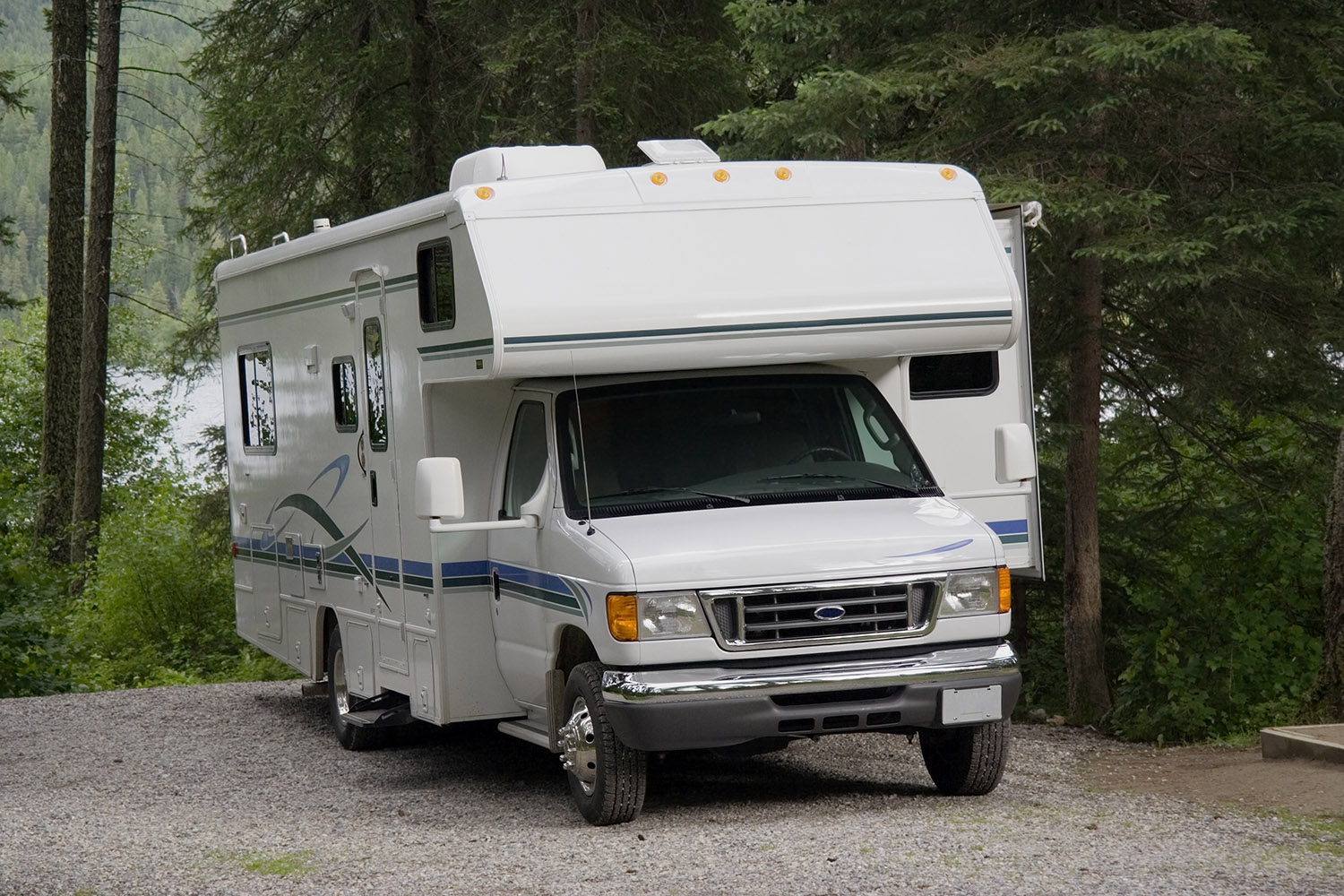
If You Have A Motorhome, Check The Engine
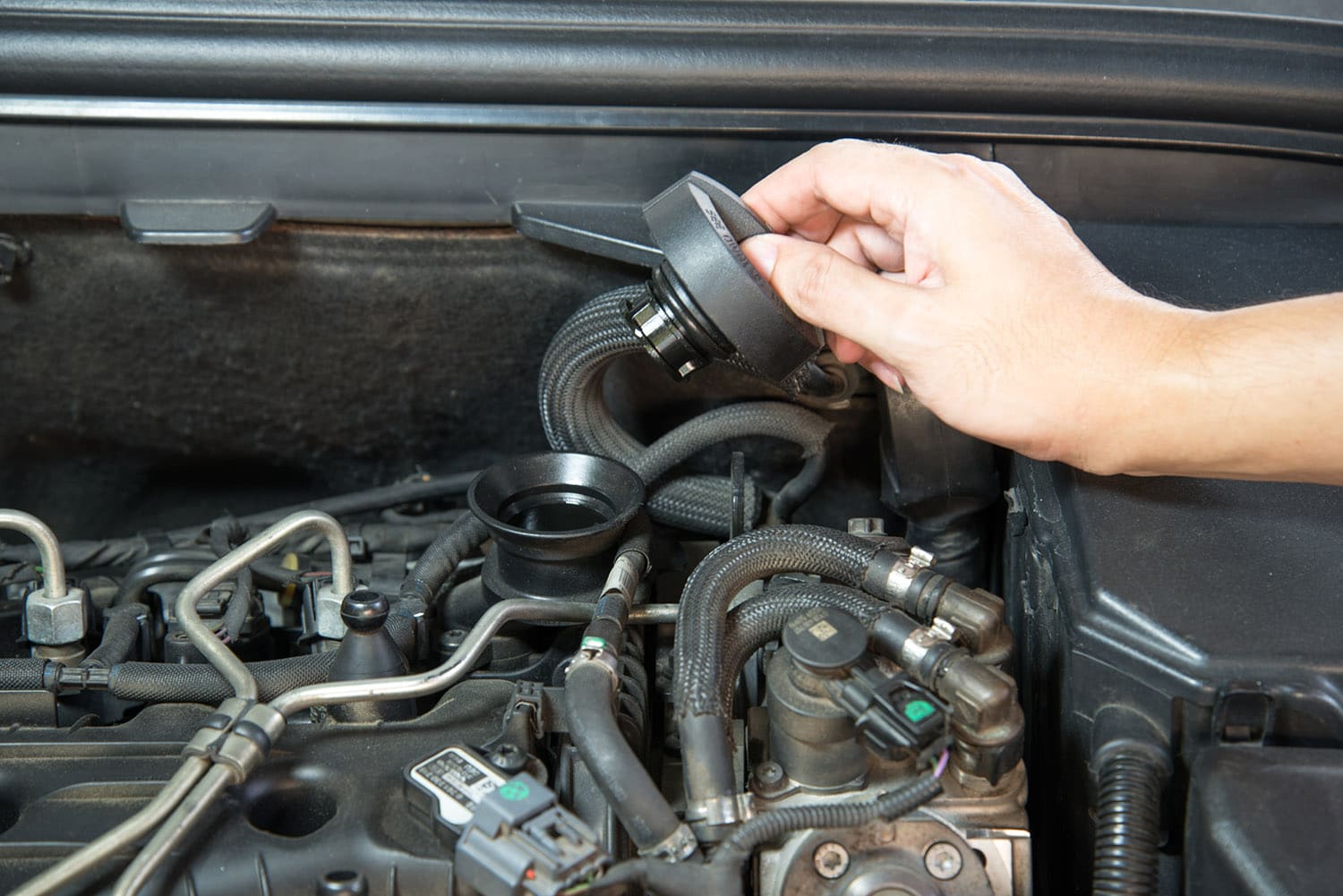
Checking your motorhome’s engine is very important when dewinterizing. Check your engine’s fluid levels like oil, coolant, transmission fluid, power steering fluid and windshield washer fluid. If you have a diesel engine, check your Diesel Exhaust Fluid (DEF) levels too.
Double check when you start your RV that no check engine lights are on and all your systems work properly in the cab. If your motorhome’s check engine light comes on or your systems are not working properly, get your motorhome serviced professionally.
Check Your RV’s Battery Condition
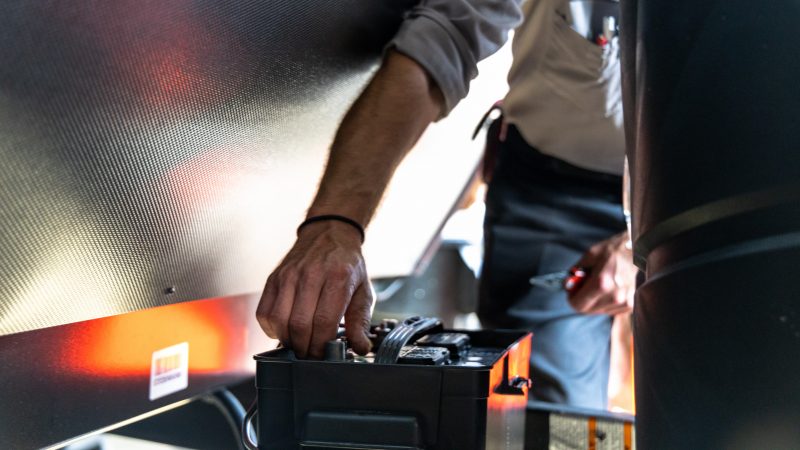
Make sure your battery is ready for camping.
RV batteries will lose a bit of charge due to the cold. Check the charge on your RV batteries and recharge them if needed. It is important to make sure your battery is not connected to electricity or else you could get an incorrect reading.
Check the RV battery fluid levels as well, adding distilled water as needed until the battery is properly filled. If you have to fill your battery fluid level, make sure you wear gloves and remove all jewelry. Wearing jewelry while working with electricity can lead to burns if you are not careful.
Inspect Your RV’s Propane System
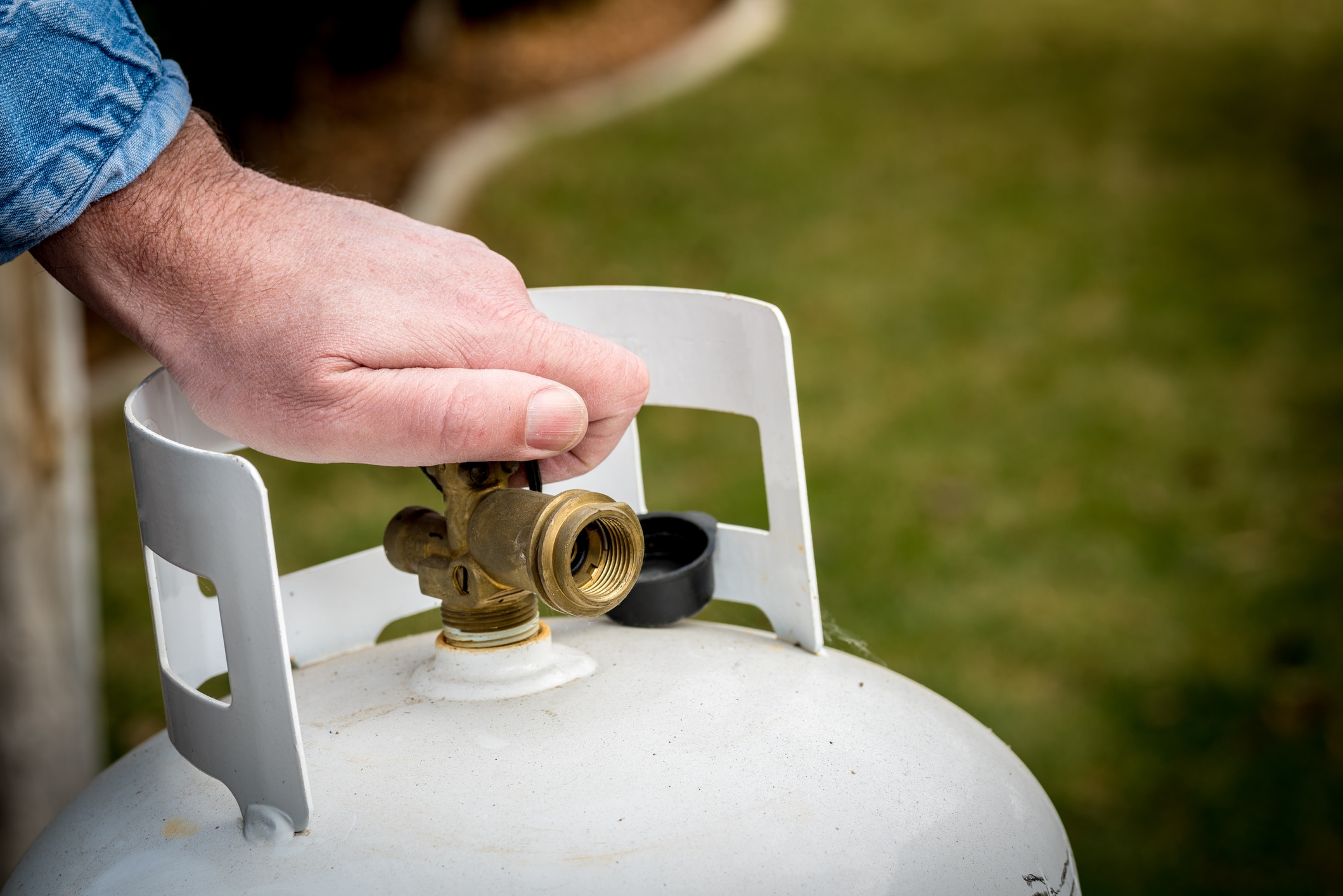
Next step is to check your RV propane system. Double check the hoses and seals for any cracks or damages before you turn on your propane appliances. If your propane system looks good and your tanks are filled, you can turn your system on and check each propane appliance.
If you are checking your RV propane hot water heater, make sure your tanks are flushed of any antifreeze and full of fresh, potable water. Manufacturers warn against having antifreeze in hot water heaters. Antifreeze can harm the anode and be hard to flush out of your hot water heater.
Examine Your RV Generator Or RV Solar Components
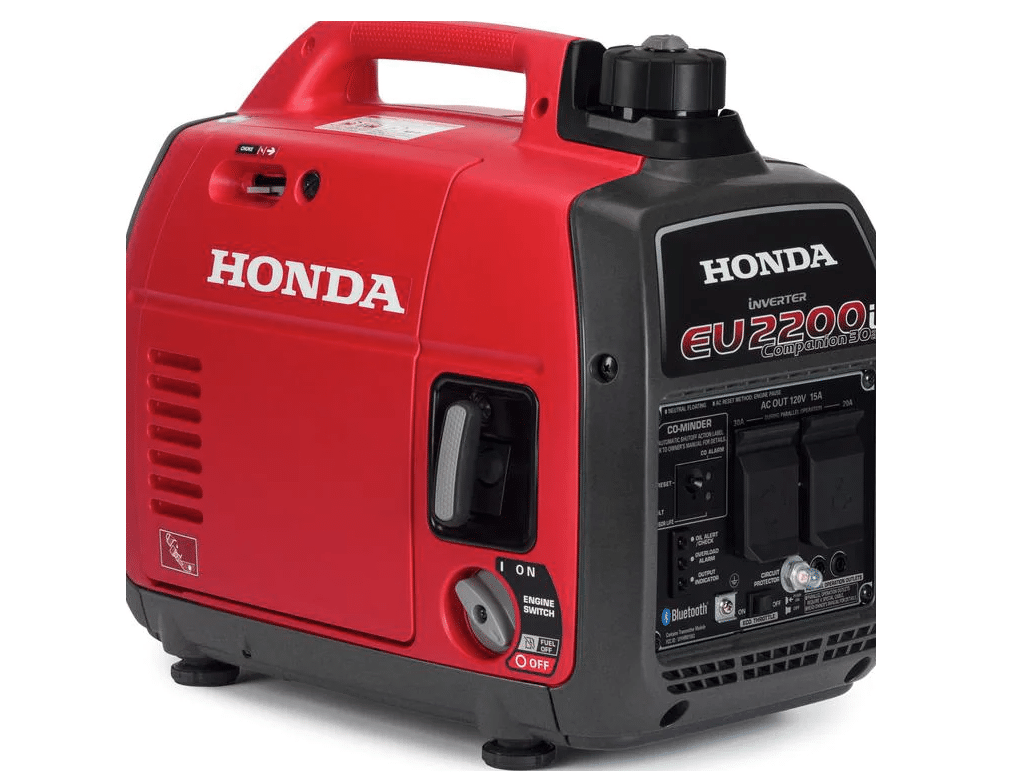
Inspect the generator for any debris or corrosion on the exhaust. If the generator looks clean, make sure the oil level is properly filled and you have fuel to run it. If you periodically ran your generator during the winter, it should start without any issues. The oil can sludge and you can risk the components seizing if you don’t run your RV generator regularly during storage. Give it a few minutes to warm up and then put it under a 50% load for about half an hour.
If you have RV solar panels, snow or hail can crack them in the winter. Make sure the solar panels are free of damage and debris. Also check for bird nests or other small animals that may have taken shelter under the panels. Let your RV solar panels charge fully before turning on any appliances and testing your electrical system.
Test Your RV’s Electrical System
Once you have tested all your systems to make sure they are working properly, you should also check your RVs interior and exterior electrical system. Make sure all your lights work inside and outside as well as any speakers, awnings, and appliances. If you have RV auto leveling jacks or RV hydraulic jacks, test that they are working properly.
You also should check your RV’s turn signals, running lights, and any other exterior lights for the roadway. If they are not working properly, check the bulb or schedule repairs to diagnose the problem before camping season and a potential ticket.
Extend your RV slide/s and inspect the interior and exterior for signs of water damage and make sure your slide seals are in good condition. If you can see light through your RV’s slide seals, you need to replace them. It is also recommended to lubricate the slides on some RVs. Check your owner’s manual for the manufacturer’s recommended procedures for your RV.
Flush And Sanitize Your RV Water System
Before you flush your RV’s plumbing system, look for any water damage or cracks in the pipes. You also need to double check that your water heater is in the bypass mode.
Flush Your RV Water System
It’s important to flush the antifreeze out of each water line.
There are two ways you can dewinterize your system: through the water tank or city water connection. To fill from the tank, fill water into your freshwater holding tank and turn on the water pump. If you are flushing your system through the city water connection, a garden hose works well to flush the system.
Some RVs have low point drains that you can open. You can use these valves to help the antifreeze run out of the pipes.
The next step is to run each fixture one by one, turning the hot and cold on separately. Run each interior faucet and any outside shower, kitchen, or other various water sources. You should also flush the toilet a few times.
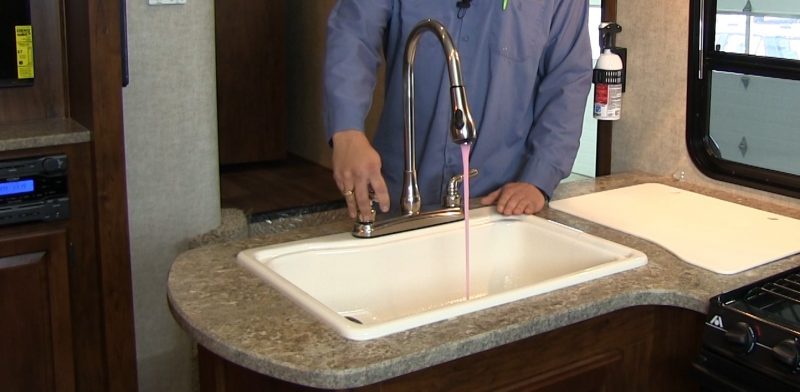
Most RV antifreeze is pink in color and bubbles, indicating that antifreeze is still present. When no bubbles are present and the water is clear, the line is clean of antifreeze.
Washing machines, dishwashers and icemakers have special dewinterizing instructions. Check the owner’s manual carefully or seek professional service if applicable to your RV.
Then properly dispose of the antifreeze and empty your black and grey water tanks.
Sanitize Your RV Water System
The second step to dewinterizing your RV water system is to sanitize it. Sanitizing your water system removes bacteria from your lines that might be growing from sitting over the winter months.
Double check your owner’s manual if you are able to sanitize your hot water heater as well. Some brands allow for sanitization while others can become damaged. If you cannot sanitize your water heater, leave your drain plug out and water heater in bypass mode until you are done.
Use ¼ cup bleach for every 15 gallons of water your fresh water tank holds. Fill the fresh water tank with the mixture and make sure the tank is full.
Turn on your RV water pump and turn on each faucet until you can smell the bleach mixture. It may take a couple minutes at first for the mixture to come through the lines. Then close the faucets and let the solution sit for a minimum of six hours. You can leave the sanitizing solution in the water lines for up to twelve hours.
Once the mixture has sat, it’s time to drain the system and refill with fresh water. Flush the system again until you no longer smell the bleach and all the water is flushed out.
Don’t forget to put your drain plug back in for the hot water heater. Once you are done sanitizing, you have successfully made your RV’s water system ready for camping!
Replace RV Filters and Safety Devices
Clean out the vents of your RV and replace any old filters.
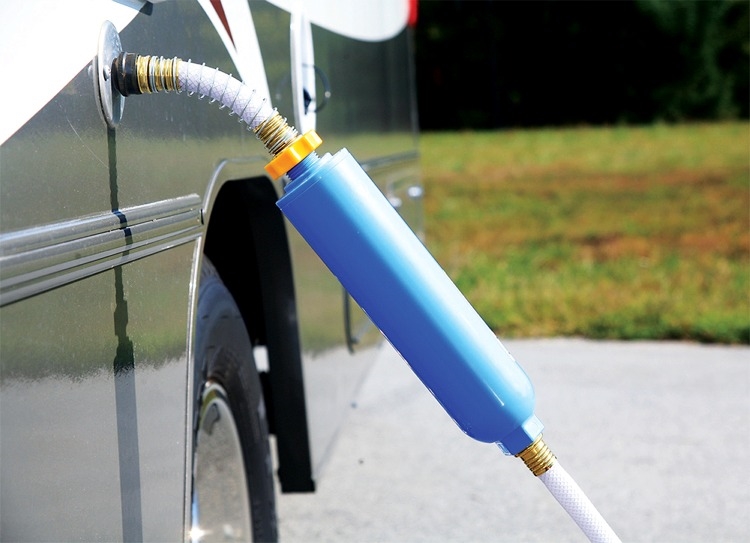
After flushing and sanitizing your RV’s plumbing system, replace your water filters. Water filters need to be replaced every three to six months depending on use. This will also ensure that your water does not have a lingering taste from the sanitization.
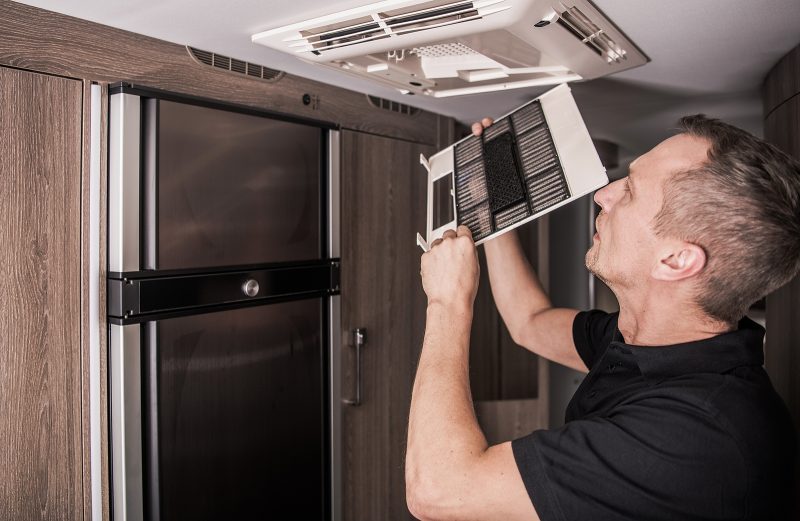
Check the air filters to see if they need to be replaced too. Air filters are necessary for flowing clean and cool air throughout your RV. If you don’t regularly clean the filters, it can start to draw more energy, reduce airflow, and ruin your AC system if unaddressed for too long. Some RV air filters can be washed, while others need to be replaced. Check your owner’s manual to see your requirements.
Since you are already preparing your RV for the camping season, safety devices are another important thing to check. Put in fresh batteries and test the smoke detectors, LP detector, and carbon monoxide detector. Also check the fire extinguisher’s expiration date and replace if needed.
Clean Your RV Before Your First Trip
Next, do a little spring cleaning to get your RV ready for camping season.
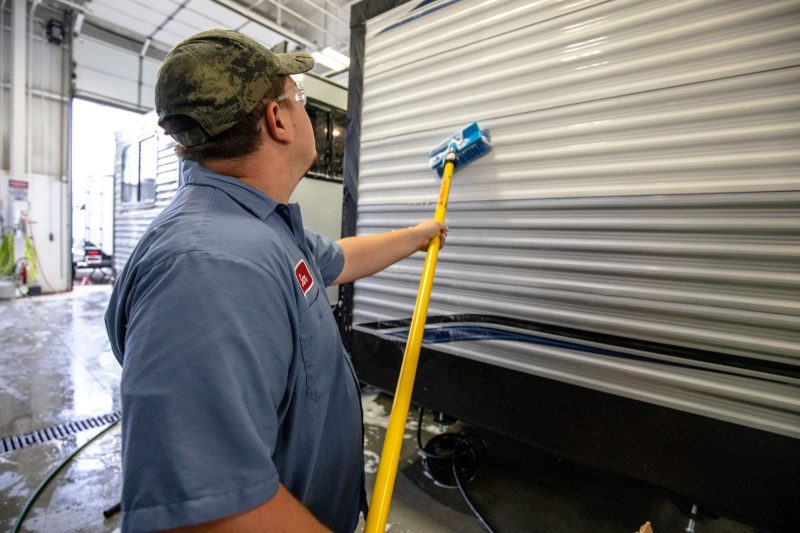
Wash and wax your RV thoroughly. Extend your awning and wash the top and bottom. Awnings are prone to mildew so airing it out after a good cleaning will protect its life. Lubricating your awning arms is also a good idea to protect it from malfunctioning and becoming stuck.
Clean your window screens for better airflow and check that there are no holes to let bugs in. Dusting around your RV and vacuuming or sweeping is another good spring cleaning task. This way you have no cobwebs or debris in your RV before your first trip.
If you left your bedding and towels in the RV, spring cleaning is also a great time to refresh your linens before your first adventure.
A good tip for when you are getting ready for camping season is to check your gear! Grills, camping chairs, and other essentials you store in the RV might need to be replaced. Make sure everything is still in good condition. Nothing is worse than a broken camping chair you forgot to replace. This is a good practice to do before going on any camping trip, but making note of the gear you need will help you feel more prepared for your first trip ahead of time.
Get Your Dewinterization Done Professionally
RV technicians can dewinterize your RV and make sure everything is operational.
Getting your RV dewinterized by a RV dealership is time saving and hassle free. They can also look over your RV for any issues while you’re there. By scheduling regular maintenance with your de-winterization, you can have peace of mind that you’ll be ready for the camping season.
Regular maintenance can include a multipoint inspection where they will look over everything from wheel to roof, making sure your RV is ready for the open road. They can also test for leaks if you notice your seals or caulk is damaged.
Travel trailers also require wheel bearing repacking every year or every 12,000 miles depending on how much you travel. This regular maintenance will help keep you from experiencing a tire blowout.
When getting your RV dewinterized professionally, you can also get a roof wash and treatment to properly seal your roof for camping season. RV experts will seal your roof to help prevent harsh summer weather from harming your roof.
All Systems Go For Camping Season
Now that you have dewinterized your RV, you are ready to hit the road! Just remember, all RVs are different and it is best to consult the owner’s manual or seek professional service if you have any issues.
Find your nearest General RV dealer here if you want to learn more about having your RV professionally dewinterized. With over 500 service bays across our 14 locations, having your RV serviced for camping season is easy.
Sometimes I feel like I’ve hit the jackpot being born and raised in Vancouver. Framed by rugged mountains, lush forests and the Georgia Strait, Vancouver is one of those rare places where you can start your day with skiing and finish it by the beach. The scenery is unparalleled, but that’s just the tip of the iceberg.
With immigrant residents making up almost 50% of the population, Vancouver’s rich multiculturalism has helped the city blossom into one of the world’s most vibrant food destinations. Growing up, I was exposed to food from all corners of the globe — from dumplings and tacos to curry and sushi — and developed an appreciation for diverse cuisines from an early age. To this day, I love trying new foods from around the world and owe it to my hometown for cultivating my passion for international flavors and local ingredients.
Whether you’re coming to Vancouver for a weekend getaway or long-term stint, I’ve rounded up my favorite street eats, restaurants and food markets so you’ll know exactly where to go to get the best grub.
Gastown
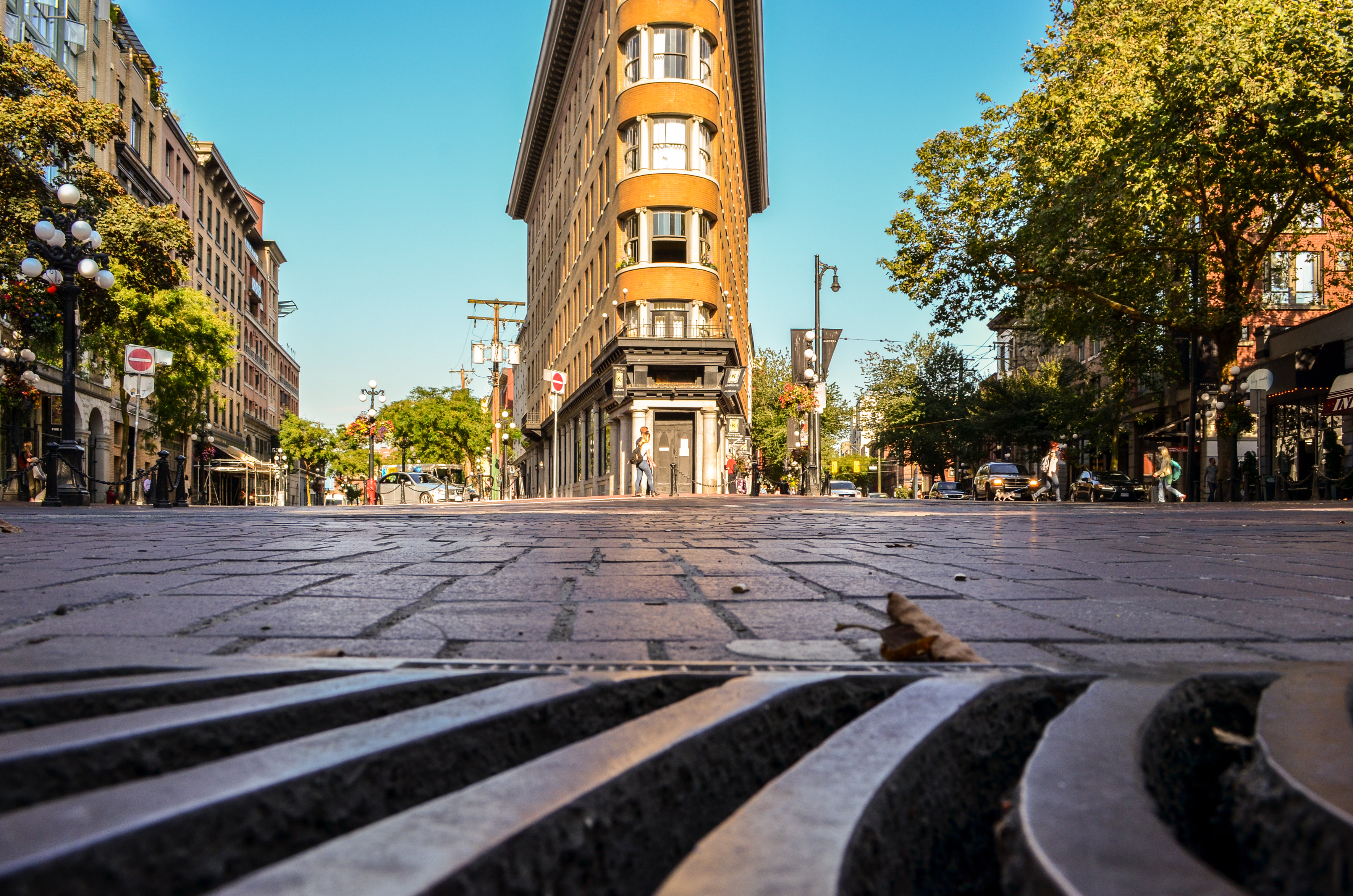
A view from the street in Gastown Vancouver. Getty Images
The cobblestone streets of Gastown are lined with chic bars and eclectic dining options. Look out for Japadog outside Waterfront Station. This iconic street stall blends Japanese flavors with the humble hot dog. Try the signature Terimayo, which comes topped with teriyaki sauce, mayo and seaweed.
At the Flying Pig, bite into delicious Pacific Northwest dishes like herb-crusted steelhead trout and foraged mushroom pappardelle. Just around the corner is Tacofino, a beloved BC chain serving up California- and Mexico-inspired beach food. You can’t go wrong with the crispy chicken or eggplant tacos here.
There’s also Nuba, the go-to spot for authentic Lebanese food. Order a bunch of mezze plates (hummus and crispy cauliflower are recommended) and share with friends. If you find yourself on the outskirts of Gastown, stop by the Alibi Room for a pint of local craft beer or dig into fresh handmade pasta at Ask for Luigi.
West End
The West End is packed with ramen joints, making it every noodle lover’s dream. Slurp up Japanese comfort food at Kintaro (go for the spicy garlic ramen if you can handle spice), Marutama, Santouka or Ramen DANBO. For more Japanese delights, head to Kingyo Izakaya for cold beer and a variety of delicious small plates. Be sure to order the grilled sake-kasu black cod, truffle carbonara udon and stone-grilled Kobe beef.
Other notable restaurants include Dinesty, one of the top places for pork soup dumplings, and Sura, specializing in traditional Korean dishes such as kimchi stew and bulgogi beef. Craving a snack? Grab an Australian meat pie at Peaked Pies or opt for a fresh Belgian waffle at Nero. When it’s nice out, sip cocktails and savor the view of English bay from Cactus Club Café.
Yaletown
Upscale Yaletown is where you’ll find some of Vancouver’s most popular fine dining establishments. Celebrities are often seen dining on fresh seafood at Blue Water Café and Rodney’s Oyster House (I even spotted Owen Wilson here a few years back). For the best Japanese and West Coast fusion, go to Minami and savor its famous salmon oshi sushi. Locals also rave about the pan-seared scallops and extensive wine list at Cioppino’s. In the mood for brunch? Tuck into hearty breakfast poutines at OEB Breakfast Co.
Chinatown
Vancouver Chinatown. Getty Images
Chinatown is a hub for all kinds of Asian cuisine. Start your culinary adventure at Phnom Penh, an award-winning Cambodian and Vietnamese restaurant famed for its beef luc lac and deep-fried chicken wings. There’s always a line out the door, so make a reservation beforehand. You can also satisfy your dim sum craving at Jade Dynasty, which steams up dumplings and barbecue pork buns all day long. Along the fringe of Chinatown is Chambar, a Belgian brasserie known for hefty pots of moules frites. Don’t leave the neighborhood without a box of Mello brioche doughnuts. The lemon curd, matcha and tiramisu flavors are guaranteed to make you swoon.
False Creek
False Creek in Vancouver.
Stretching from Science World to past Granville Island, the False Creek area is ripe with gastronomic surprises. Grab a table at Ophelia and indulge in authentic Mexican dishes like corn-crusted octopus smothered in white mole. Afterward, treat yourself to dessert at Ernest Ice Cream or grab a drink at local watering holes CRAFT Beer Market or Tap and Barrel.
Getty Images
Every Vancouver holiday includes a visit to Granville Island, a cultural hub with hundreds of art studios, boutiques and eateries. At the public market, you can stock up on fresh produce and browse the food stalls offering everything from maple candy to smoked salmon. When you work up an appetite, refuel with fish and chips from Tony’s or chicken pot pie from A La Mode. If you’re after waterfront views, take a seat at The Sandbar and enjoy the landscape with a side of Dungeness crab cakes.
Get Ready to Eat Your Way Through Vancouver
This article barely scratches the surface when it comes to all the incredible food in Vancouver. Use this list as a starting point for your foodie tour and be sure to make your own delicious discoveries along the way. If you’re feeling adventurous, venture out of downtown Vancouver to areas like Kitsilano, Commercial Drive and Richmond for even more culinary gems.
To cross into Canada from the United States, American tourists must be fully vaccinated for at least two weeks. Vaccinated tourists must test negative for COVID-19 before traveling (via PCR test), carry hard copies of their vaccination records and upload their documents to the ArriveCAN app or website.
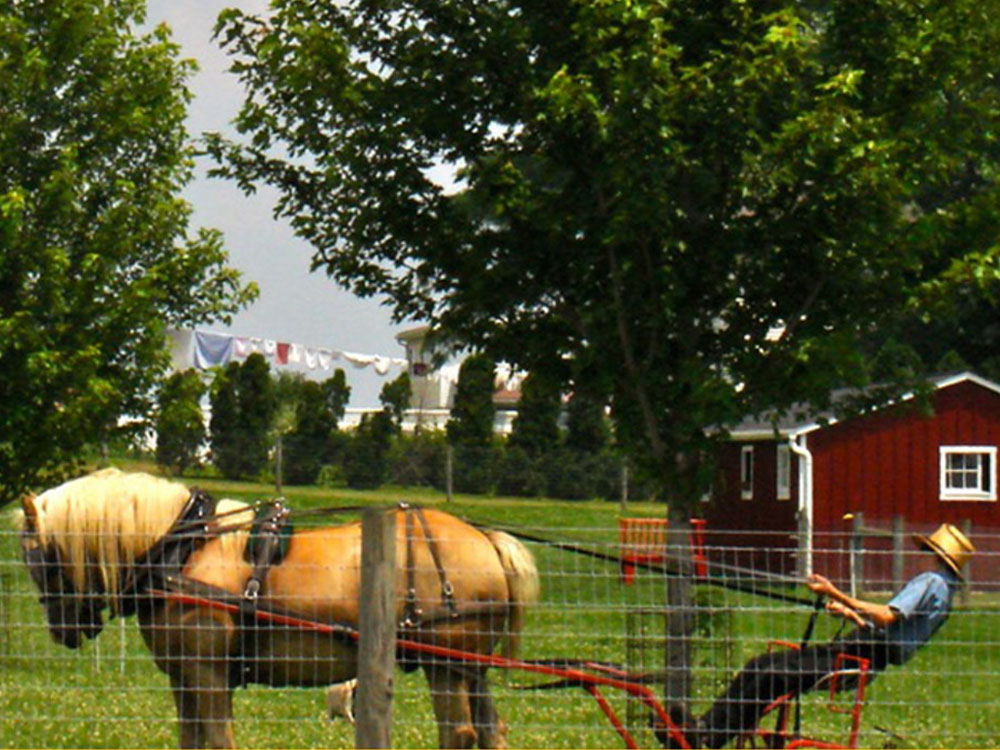
There’s a reason Lancaster County and Amish Country draw visitors from all over the country. Check out the fun things there are to do at our park, then explore the beauty of the area during your stay. Owned and operated by the Korznieckis family since 1981, Flory’s Cottages and Camping has a rich history built on a family-friendly atmosphere that always leaves our guests feeling right at home. We strive to make your Lancaster County vacation the best it can possibly be.
Flory’s Cottages and Camping is easy to reach, located between U.S. Route 30 and Pennsylvania Route 340 on North Ronko Rd. in the Village of Ronko, seven miles east of Lancaster.
Photo: Flory’s Cottages and Camping
Flory’s Cottages and Camping has much to offer you
We support a family experience and take pride in our clean and friendly park. Nestled into the scenic Lancaster County countryside where the Amish are our neighbors, Flory’s Cottages and Camping is a gathering place for friends and family. We promote a place to unwind, relax and enjoy the beauty of the area and the company of good people.
We provide your choice of housekeeping cottages, guest rooms and campsites with five-point hookups. Our campsites are clean, spacious, pleasantly located, well maintained and ready to accommodate you. Flory’s Cottages and Camping offers an Office, Camp Store, Laundry and Game Room, a Bathhouse, Dump Station, Playground and the Luigi Lounge on-site. We provide NH-EWS and Cable TV, EWS and Cable TV, EWS, Cable and Satellite Dish.
Nearby Attractions
Photo: Flory’s Cottages and Camping
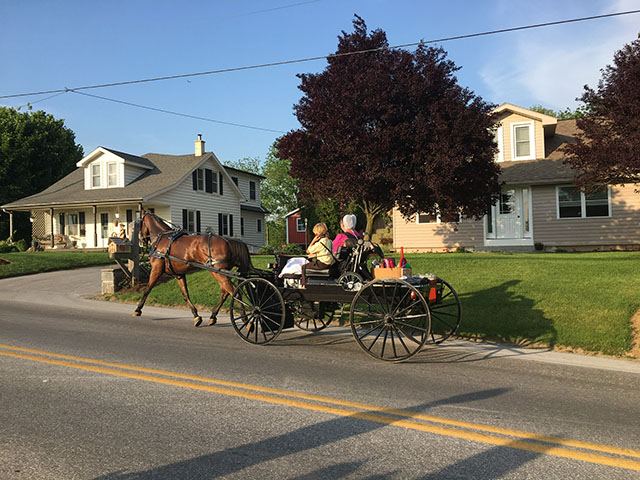
Flory’s Cottages and Camping is surrounded by so many unique attractions in the heart of Amish Country. Memorable experiences for the whole family are within easy traveling distance, so it’s easy to see why Lancaster County draws visitors from all over the country…and at Flory’s, you’re only a short distance away. The unforgettable experience of an Amish Buggy Ride is available right outside our door. Tour an authentic Amish farmhouse from the mid-1800s for an experience that will delight the family. There’s really nothing like the legendary Amish Craftsmanship. Amish crafts are the perfect souvenirs from your vacation! From fresh produce to freshly made baked goods, some of the tastiest memories of your trip can be found at a humble market or roadside stand. The Bible comes to life at the Sight and Sound Theatre in Strasburg. Treat the family to a memory they won’t soon forget! Take a ride on the Strasburg Railroad for an unforgettable tour. Visit the Dutch Wonderland Amusement Park for a day of fun for the whole family. Treat yourself to a visit to Hershey Park and Hershey Chocolate World during your stay! There are few better trips than a family visit to Gettysburg. A trip to the capital, Harrisburg, is a fun and educational outing. Tours, museums, dining, fun and shopping are all within your reach from Flory’s Cottages and Campground.
Good Sam provides everything you need to have a good trip. From savings on accessories and services to finding a campground, roadside assistance, insurance and specialized products and services designed to enhance RV and outdoor lifestyle.
Winter will be a distant memory before we know it, and there’s never been a better year for RVing to the best flower festivals in the U.S. Mother Nature is preparing for what promises to be the most vibrant and cheerful flower festival season yet. It’s time to seed your road trip itinerary with some ideas from our cross-country RV flower festival tour through the blooming landscapes of Virginia, North Carolina, Texas, Washington and Oregon.
Tulip festival near Seattle. Washington. United States.
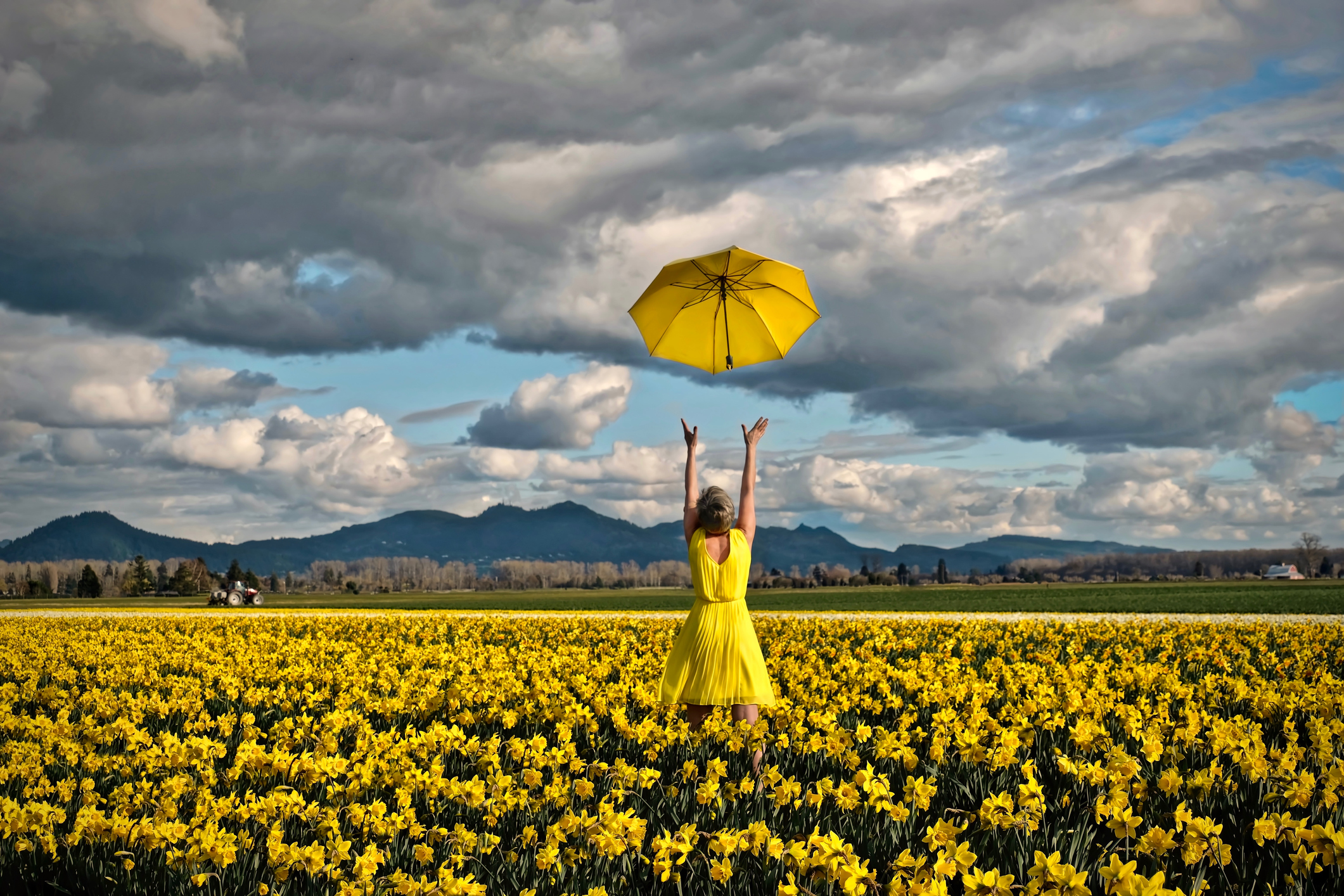
If you miss the famous daffodil bloom in March, don’t worry. Springtime presents one spectacular wildflower show after another in the fertile aggie lands lining the riverbanks just south of Bellingham. Come and enjoy endless flocks of swans, snow geese and ducks zoom fly across the skies. But keep an eye on the ground too, because local farmers grow more tulip and daffodil bulbs here than anywhere else in the U.S. The Skagit Valley Tulip Festival celebrates the colorful harvest in area-wide events that keep the region hopping between April 1 – 30. Designed as a driving tour through vibrant fields lining the hills between La Conner and Mount Vernon, the month-long festival spotlights local flower farmers and their endless fields of technicolor beauty. Tourists are welcome to view and photograph their crops as long as Mother Nature cooperates. Meanwhile, local communities celebrate the coming of spring with tulip-themed art shows and family activities including a street fair, barbecues and dinners, a parade and more. Create your home base on the water at La Conner Marina & RV Park, and you’ll be within walking distance of local events, restaurants and outdoor activities that take advantage of the region’s temperate climate and the Pacific Northwest’s prettiest scenery.
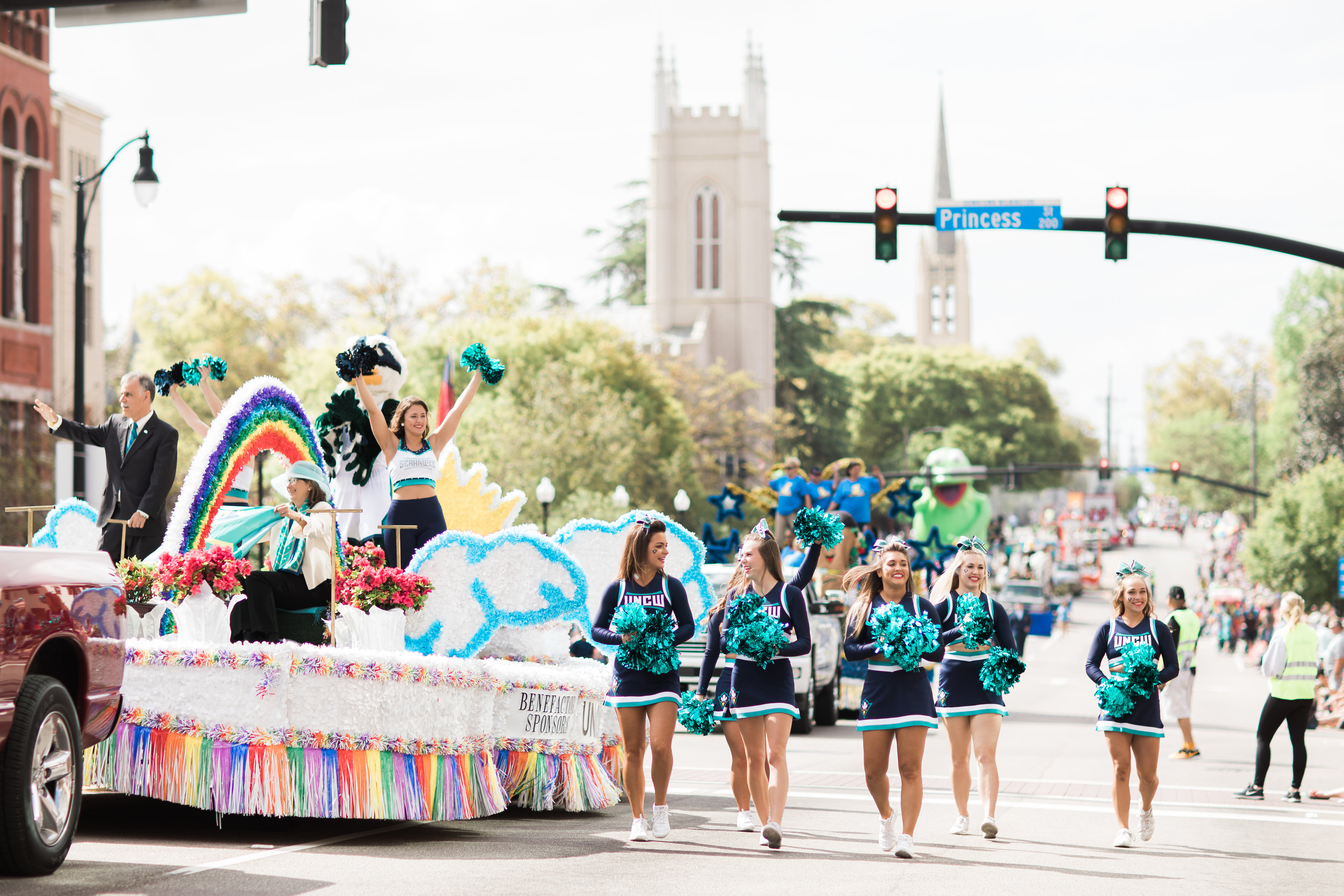
Come for the annual Azalea Festival but plan on staying longer to experience this undiscovered Atlantic Coast gem. There’s so much to see and do in Wilmington during springtime. Start with the annual festival to get a feel for this welcoming community. The Azalea Festival shines a spotlight on the region’s native Azalea plants that bloom each spring. From the Blue Ridge Mountains to the sea, azaleas paint the terrain with a welcome sign that spring has arrived. This is the best time to enjoy cool mornings and nights, with humidity-free days and bright, sunny skies. Celebrate like a local and when you need a break from the concerts, art fairs and garden tours, spend some quality time at Wilmington area beaches. Cast your line from the oldest fishing pier on the Atlantic, paddle around the Intercoastal waterway and step back in time for amusement park fun on the Carolina Beach boardwalk. Set up base camp at nearby Lanier’s Campground and you’re just a few minutes from all the best springtime fun in Wilmington.
Park your home on wheels at Sunset Point on Lake LBJ in Marble Falls, and you’ll be just minutes away from the 33rd year of the Bluebonnet Festival in the cute little town of Burnet. Close to Austin but far enough away to feel like a throwback in time, Burnet is the heart of the Lone Star State’s world-famous wildflower season. Each spring a blanket of bluebonnets, Indian paintbrush, purple coneflower and prairie verbena carpet the lush rolling fields of the Hill Country in every direction. Officially known as “The Wildflower Capital of Texas,” Burnet’s Bluebonnet festival attracts over 30,000 people between April 8 and 10. Come for the arts and crafts vendors, stay for the flowers, food and legendary concerts. Every event is family-friendly, and many are free to enjoy. All events at the festival are within walking distance of one another too, making it easy to soak up the fun and get to know the locals. Enjoy a biergarten, music, pet parade, demolition derby, and many more small-town activities that will bring you back next year for more.
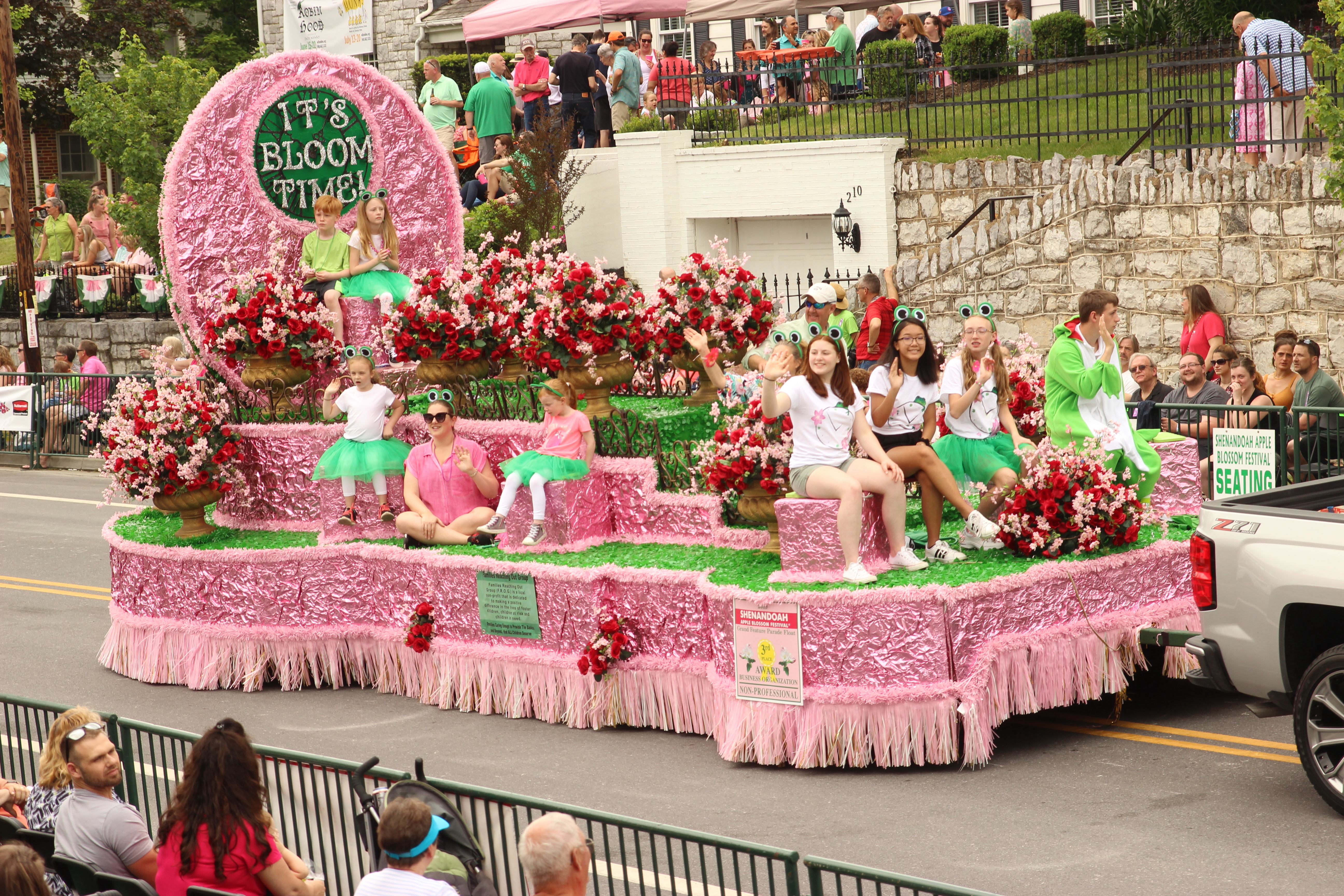
From Shenandoah National Park to the Chesapeake Bay, springtime in Virginia presents endless choices of things to do for RVers. But if you’re in the state during April, the one must-see event is the annual Shenandoah Apple Blossom Festival. Now in its 95th year, this 10-day celebration of springtime in the Shenandoah Valley honors a longtime tradition that puts the region’s rich agricultural history front and center stage.
Enjoy activities like apple cider and wine tastings, orchard tours, apple pie baking contests, a giant carnival midway and several themed dance parties during the celebration. The festival is highlighted by Miss Apple Blossom, a contest so popular that two different U.S. presidential daughters once competed for the crown. Stay in the middle of the fun at Winchester’s Candy Hill Campground, a family-run resort with full hookups and Saturday San Francisco-Style trolley tours to show campers the local sites and festivities.
There’s a good reason why Fodor’s Travel calls the Portland Rose Festival one of the world’s best flower festivals. Over three weekends, this hipster city throws the country’s largest rose-themed party with dozens of events, including the Grand Floral Parade, Starlight Parade, Junior Parade, CityFair and Navy Fleet Week celebration along the waterfront. Nosh on upscale Pacific Northwest rose-themed cuisine, stroll through street fairs, catch live music and wear your favorite costume for a Rose Festival fun run that benefits local charities. The world-class festival started over 100 years ago and is still going strong, beginning Memorial Day weekend and rolling through two more fun-filled June weekends. Park your home at nearby Jantzen Beach RV Park to be close to the fun and walking distance to shopping and restaurants, but far enough away to enjoy the picturesque Columbia River scenery at your doorstep.
Photo: Portland Rose Festival Foundation
Get Floral
This list of RV itineraries for flower festivals around the U.S. is only the beginning. As more cities in great RV destinations resume their spring celebrations of native flowers, food and art, you have many reasons to celebrate spring RVing from coast to coast.
Many travelers discover Fossil Basin, Wyoming, on a trip to visit the state’s national parks and monuments. But the destination is worthy of more than just a quick stop. Plan to spend a couple days in the Kemmerer-Diamondville area and uncover all that the Fossil Fish Capital of the World has to offer!
Day 1
Fossil Butte National Monument
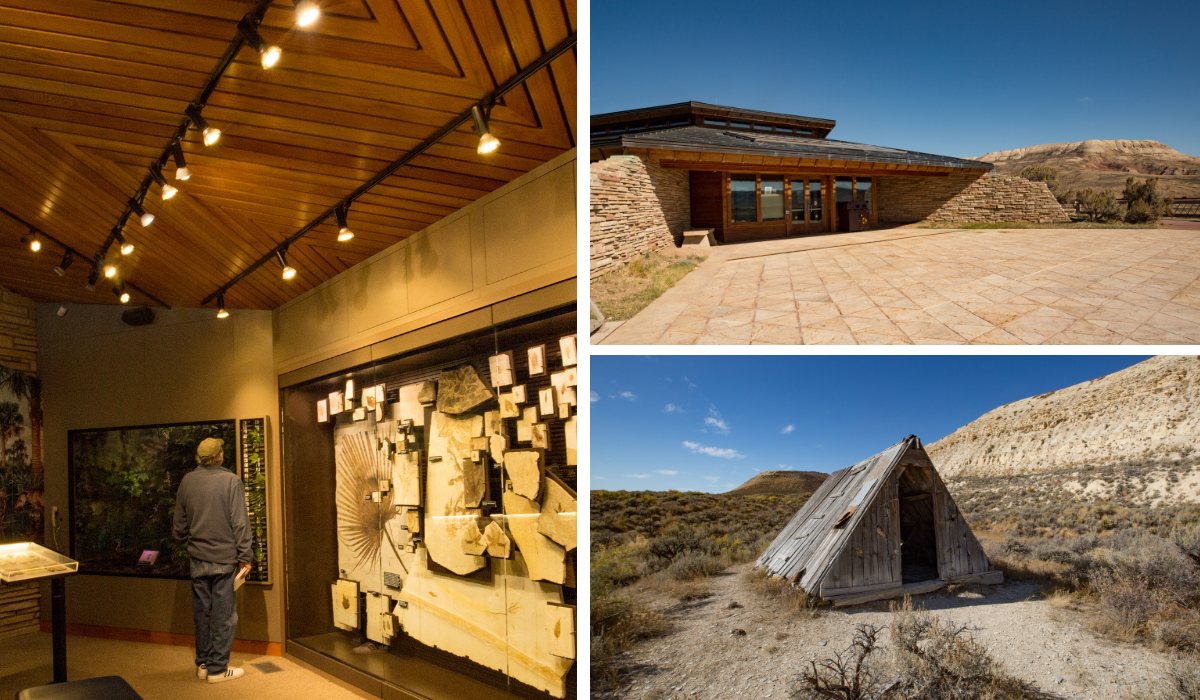
After you arrive in the area and get settled, head to Fossil Butte National Monument. Your first stop should be the Fossil Butte Visitor Center. Inside, you’ll find exhibits featuring more than 300 fossils, including some really unique specimens. During the summer, you can visit the Research Quarry, watch fossil preparation demonstrations at the visitor center’s scientific lab, and listen to park rangers talk about the geology of Fossil Butte and the surrounding area.
The hiking trails at Fossil Butte National Monument are another great way to see and learn more about the wildlife, geology, and history of Fossil Basin.
To get some incredible views of the area’s landscape, take the scenic drive up past the Nature Trail and picnic area. Visitors should be aware that beyond the Nature Trail parking area, the scenic drive is a narrow, steep, gravel road so RVs and vehicles pulling trailers should not be driven past that point.
Fossil Butte National Monument. Photo Courtesy of Fossil Basin
Around Town
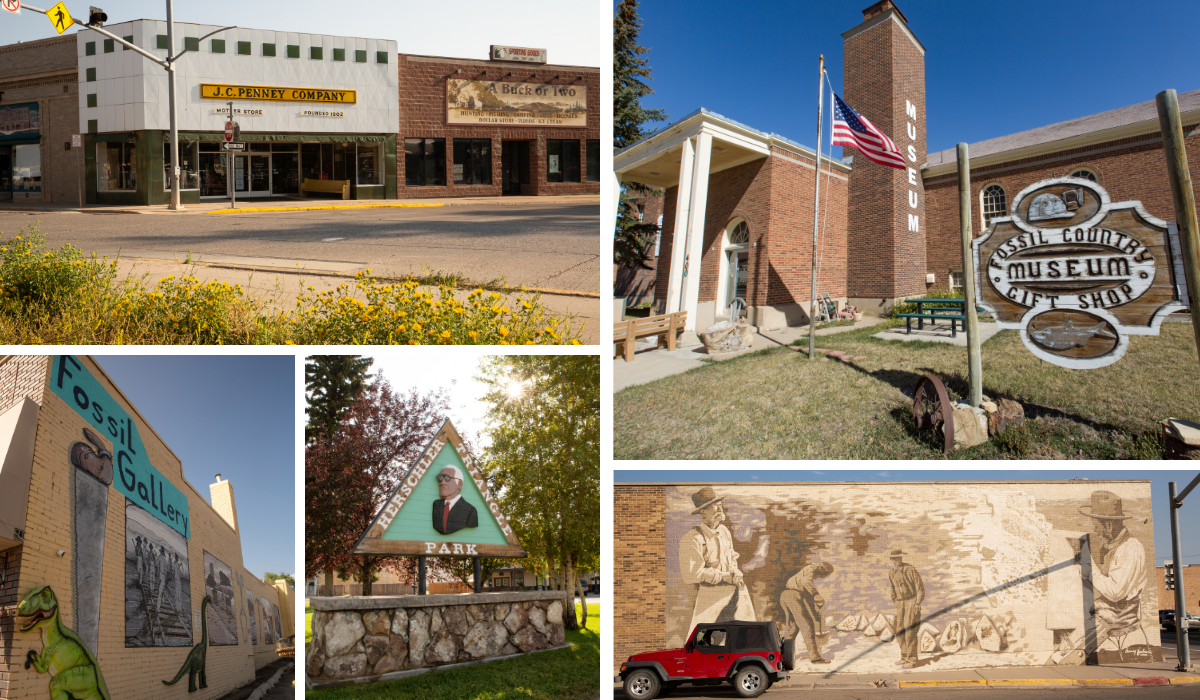
When you get back to Kemmerer, take a stroll around downtown and the Triangle Park area. This part of town is steeped in history. The JCPenney Kemmerer Mother Store is right across from the park. Today, it’s part museum and part store. The store sells current JCPenney merchandise and also displays a variety of artifacts and items from the store’s early days. Just down the street from the store is the J.C. Penney homestead, where James Cash Penney (the founder of JCPenney) lived during his time in the Kemmerer area. One more piece of JCPenney history can be seen in Triangle Park—a statue of James Cash Penney that was originally located at JCPenney’s Plano, TX headquarters.
As you explore the small towns of Kemmerer and Diamondville, keep an eye out for fossil shops and galleries. InStone Fossils, Tynsky’s Fossil Shop and Wyoming Fossils are great places to shop for souvenirs and unique gifts.
The Fossil Country Frontier Museum has hundreds of artifacts from Fossil Basin’s past and is certainly worth a visit for those curious about the community’s story.
Downtown Kemmerer, clockwise from upper left: JC Penney, the Fossil County Museum, a mural depicting the town’s early days, Triangle Park and Fossil Gallery.
Day 2
Fossil Digging
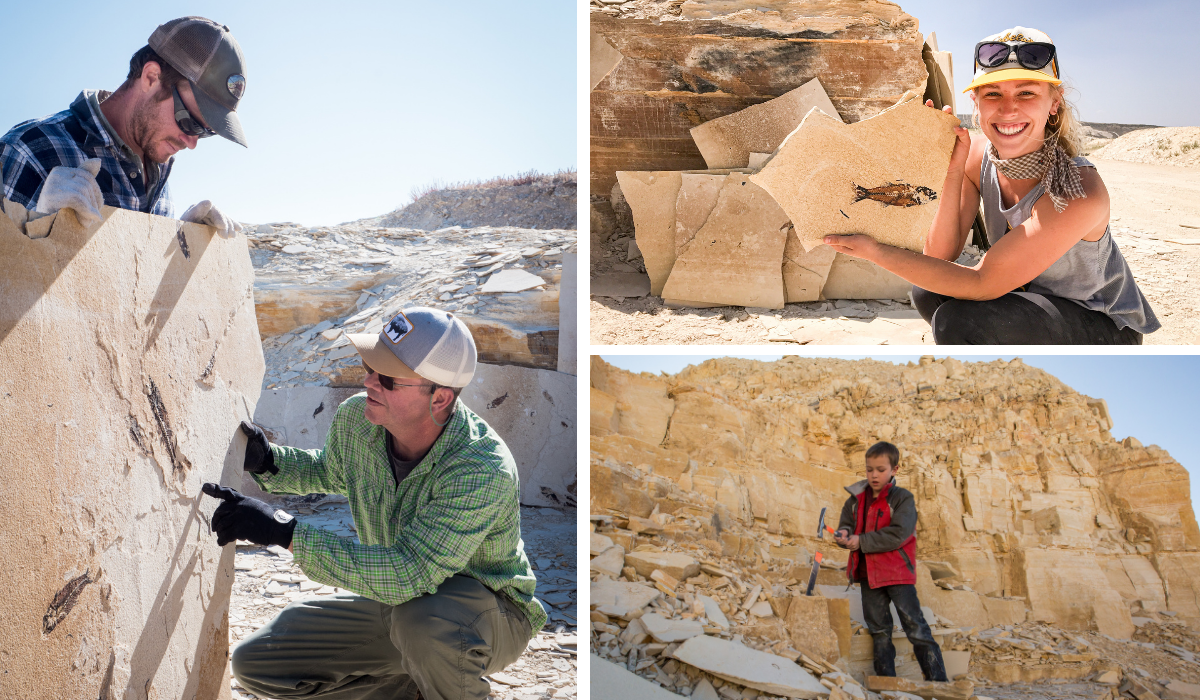
With a little luck, today you’ll uncover several fossils at one of the area’s dig-your-own fossil quarries! The fossil most commonly found in Fossil Basin is the Knightia fish, which is also Wyoming’s state fossil. But, ancient Fossil Lake has been the site of several rare fossil discoveries too, so you never know what you might dig up! For best availability, we recommend scheduling your fossil dig ahead of time. If you’ve never done a fossil digging excursion before, check out this article to get an idea of what to expect when visiting a fossil dig site.
Digging for for prehistoric remains in Fossil Basin.
Depending on when and how long your fossil dig is, you’ll likely have some time to do a bit more exploring in the area before or after fossil digging. Here are a few suggestions for how to spend the rest of the day.
Bridger-Teton National Forest
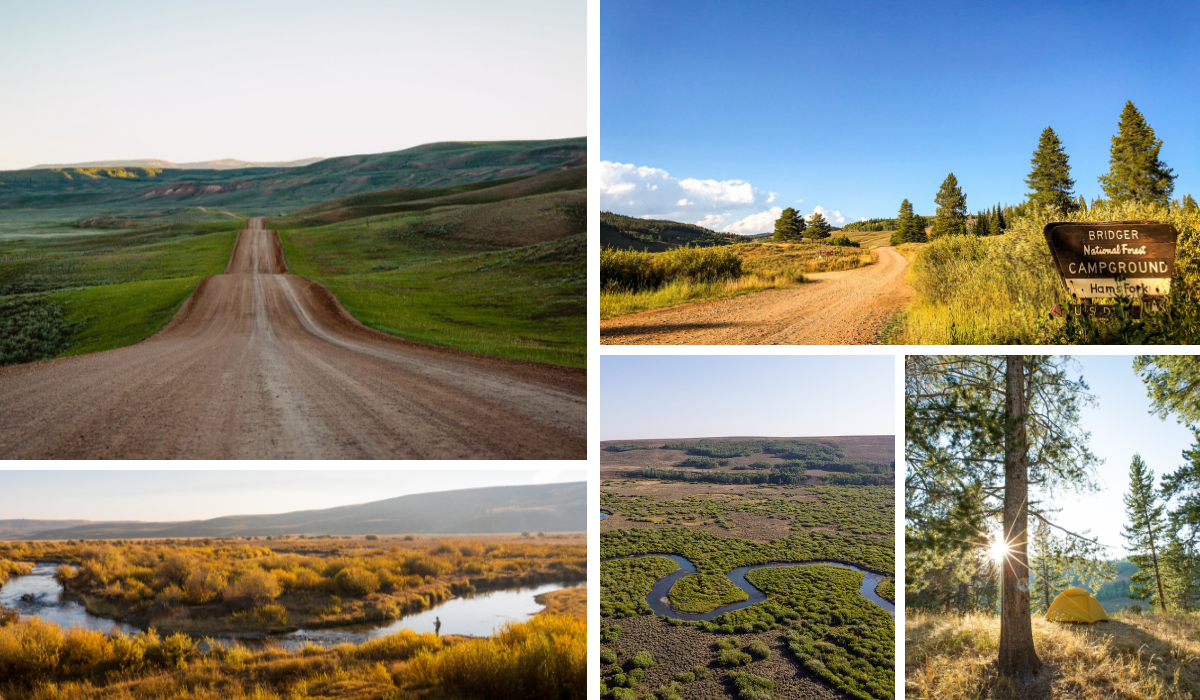
The southern part of Bridger-Teton National Forest is a scenic drive a little over an hour north of Kemmerer on state highway 233 and county road 305. This peaceful drive has beautiful views of rolling hills and the Hams Fork River. The Hams Fork is an excellent fishing spot, so if you enjoy fishing, you may want to stop and cast a line! This scenic drive, known as Big Spring Scenic Backway, meanders through a section of the national forest before joining up with US highway 30 near Cokeville, WY.
Bridger-Teton National Forest.
Fossil Island Golf Club
Fossil Island Golf Club, nestled next to the Hams Fork River in Kemmerer, has a nine-hole course with a unique feature—a dual island green. Yes, there’s a golf course in Wyoming with an island green!
Seedskadee National Wildlife Refuge
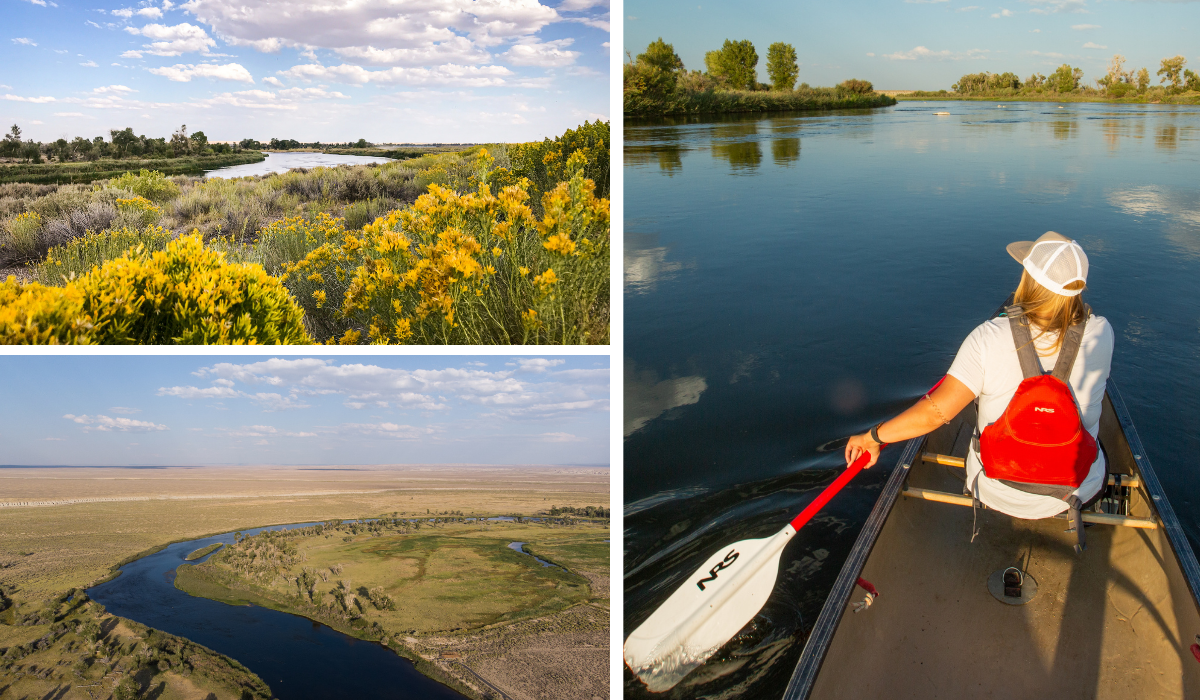
About 45 minutes east of Kemmerer-Diamondville is another place where you can find scenic serenity and connect with nature. Seedskadee National Wildlife Refuge encompasses over 25,000 acres along the Green River. It’s home to over 200 species of birds and lots of other wildlife including moose, North American river otters, coyotes, pronghorn and more. One of the best ways to spot wildlife is to bring a canoe or kayak and enjoy some peaceful paddling on the Green River.
Seedskadee National Wildlife Refuge
Oregon Trail History
The Oregon Trail ran through southwestern Wyoming, and signs of those pioneers are evident at a few sites not too far from Kemmerer-Diamondville. At Names Hill State Historic Site you can see where emigrants, including Jim Bridger, carved their names into limestone after crossing the Green River. Other notable sites in the area include Emigrant Spring and the graves of Nancy Hill and Alfred Corum.
Explore More
Planning to spend more time in Wyoming and Utah? Take a look at this five-day itinerary that includes Fossil Basin and Wyoming’s national parks. Or, if you’re a paleontology enthusiast, consider a Wyoming & Utah road trip with stops at some of the best places to see fossils in the United States. Find more trip planning information at fossilbasin.org.
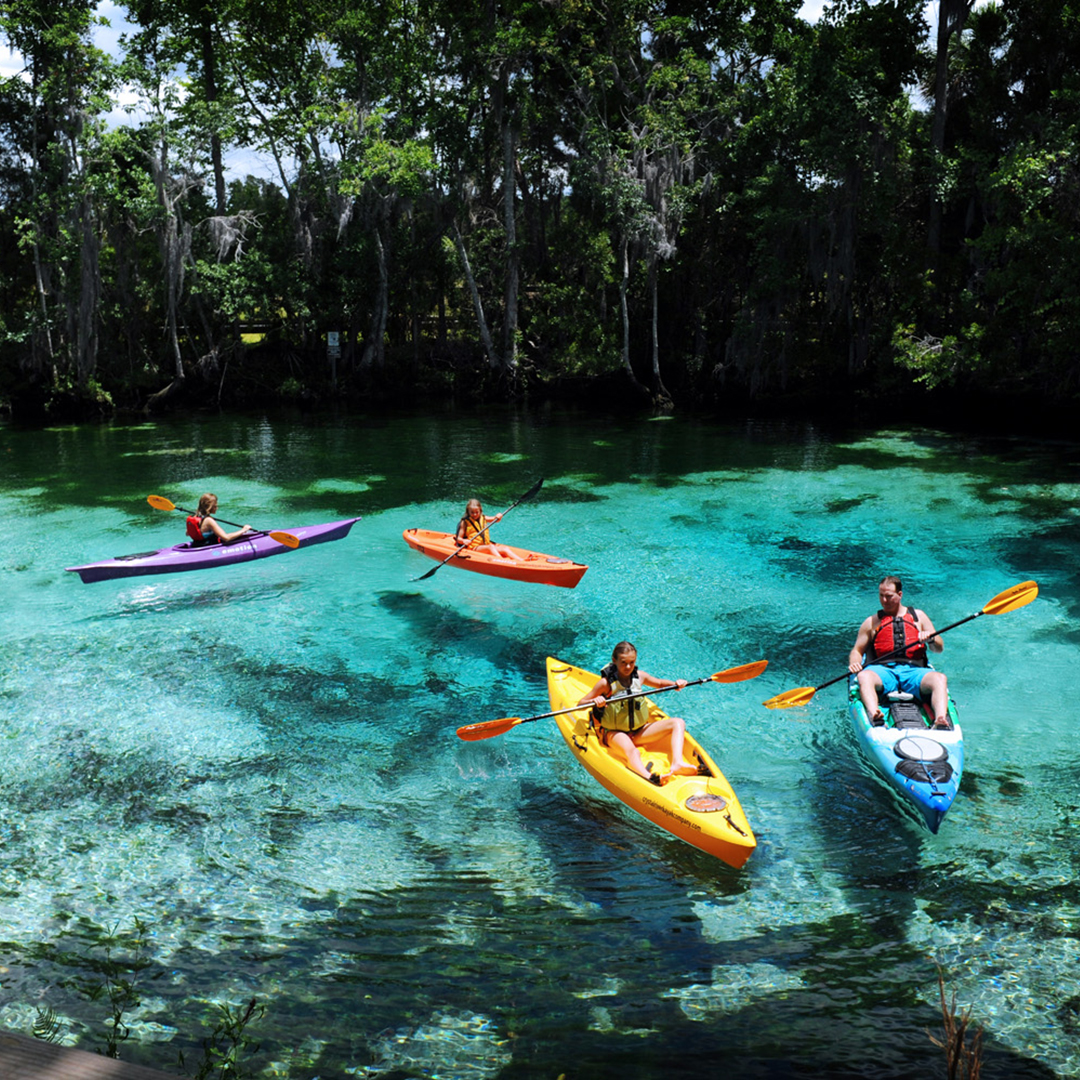
Are you looking to maximize your time outdoors on your next family vacation? Take your family RV camping in Citrus County, Florida, and experience hiking, boating, paddling, scalloping and fishing in a beautiful natural setting. Here are some of the top places to go RV camping on your next visit to the soul of Florida:
Crystal Isles RV Resort: Close to the Gulf beaches, this RV Resort offers plenty of amenities, including a pool, waterfront sites, on-site laundry and boat rentals.
Rousseau RV Resort: On beautiful Lake Rousseau, the sites at this RV Resort are shaded by ancient live oaks. Guests will enjoy the waterfront views, swimming pool and access to both saltwater and freshwater for plenty of fishing.
Nature’s Resort: Situated on the Homosassa River, this 97-acre resort offers RV sites and also cabin rentals. There’s a swimming pool, game room and access to the Gulf for fishing and boating.
Discover Crystal River
Riverside Lodge RV Resort: Right on the Withlacoochee River, this RV Resort offers RV sites, tent camping sites, and cabin and cottage rentals. Guests who rent a cabin can enjoy free canoe and kayak rentals to get out on the water. There’s also a pool for your family to enjoy.
Chassahowitzka River Campground: This riverside campground offers 53 full hookup RV sites and 28 primitive tent camping sites along with a boat launch, boat rentals and general store. Camp here if you are looking for scenic views, wildlife and some of the best paddling in Florida.
Make the most of your RV adventure! Discover the best of untouched Florida during your visit here with these ideas:
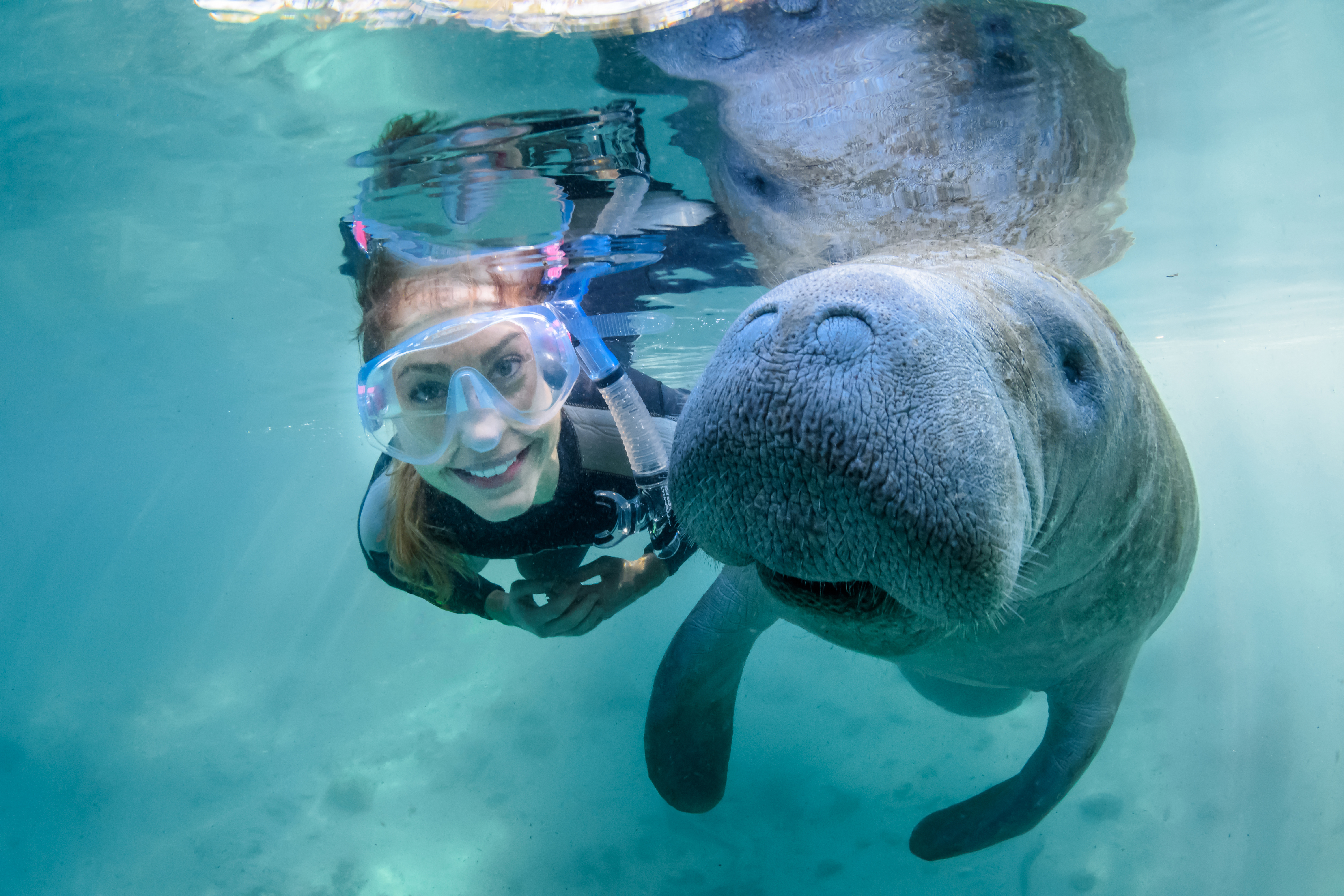
With scalloping season from July to September, summer is the perfect time to dive into this Florida tradition, likened to an underwater easter egg hunt. The waters off Crystal River and Homosassa are two of only a handful of places in Florida where you can dive down and fill buckets with fresh, juicy scallops. Don your snorkeling gear and dive in to gather your dinner.
Plan your RV adventure to untouched Florida in Citrus County today using our Digital Guide online or Visitors Guide. You’ll receive a printed version in the mail within 6-8 weeks.
Pinch Pond Family Campground, in the heart of Amish Country, offers the perfect combination of camping fun and the convenience of touring.
Pinch Pond Family Campground is family owned and operated for over forty years! If you are on vacation touring this area, we can help. We are centrally located, in the foothills of Northern Lancaster County – home of the Pennsylvania Dutch, between Hershey Park, Gettysburg, Philadelphia and the Chesapeake Bay area. We are close enough to these major tourist areas for you to visit during the day and return to our campground for the night, then head in another direction the next day. We offer reservations by the day or month to assure your ability to stay in this beautiful centrally located facility.
If you are looking for a place to stay and enjoy the campground, Pinch Pond offers a wide variety of activities to enjoy during your stay, as well as great restaurants and attractions nearby. We offer fun for the whole family; pets are welcome!
Photo Courtesy of Pinch Pond Family Campground
Pinch Pond Family Campground has accommodations for everyone
We offer very spacious sites, sunny or shaded, for campers from the largest RVs to the smallest tents. All sites include a campfire ring and picnic table. RV sites also include water, electric, sewer and cable tv hookups. Pop-up sites include water and electric hookups. WIFI hotspots and ethernet connections are available for a small fee. Cottages and Cabins are available for rent to non-campers.
Pond Family Campground strives to make your experience both memorable and fun for everyone. We offer a 30×60-foot pool, a large fishing pond, a large indoor video game room with the latest games, three clean, modern restroom buildings, a laundry room and a large recreation building for indoor events. There is a large office and well-stocked camp store on the premises, which offers everything from RV supplies to candy bars to gifts. We have many scheduled activities for all ages, including crafts, fishing and sporting events, pool parties, bingo, wagon rides, hayrides and events to celebrate the seasons – culminated with our famous Haunted House. We offer the opportunity to enjoy a wonderful vacation without even leaving the campground.
Our Location Is Key, Attractions Nearby
Photo Courtesy of Pinch Pond Family Campground
If you want to stay close but enjoy some additional recreation, shopping and dining as well we are close to many good choices. We are minutes from the Mount Hope Estate and Winery, home to year-round entertainment (including the Pennsylvania Renaissance Faire) a historical destination specializing in handcrafted Mount Hope Wines, Swashbuckler Beers and Lancaster County Ciders, offering unique entertainment, culinary experiences and educational opportunities. Other near attractions include Spooky Nook Sports, which is USA’s largest indoor sports complex, and the Caddieshack, with restaurant and mini golf. Also in the area are Nookside Stables, Kreider Farms and Roots Country Market and Auction. There are many other adventures and restaurants too numerous to mention .
And the major city tourist areas of Hershey, Gettysburg, Philadelphia or Chesapeake Bay and everything in between are within your reach.
As teenagers enter the time in life when they start pulling away from family to spend more time with friends, RVing can be a great way to stay connected. However, if you want your teenager to engage in your travels, you should be mindful of their lives and preferences.
We started RVing when our sons were 11 and 14. Over the next few years, they grew a lot taller, got involved in school activities, started their first jobs, and then one of our sons went off to college. These changes in their lives affected many aspects of our travels! However, we continued to look for ways to keep them involved without giving up on our travel dreams.
Here are 11 tips for traveling with your teens:
1) Include teens in the RV travel process
Photo: Kerri Cox
The best way to keep your kids engaged is to let them be part of the planning process. Find out what locations and activities interest them. Show them a few options of destinations or attractions to see what looks fun. Even if they aren’t your favorite, adding theme parks to your itinerary might provide a teen-friendly adventure.
2) Be mindful of their schedules
School activities, jobs, and social events all fill the nights and weekends for most teens. Family should be a priority, but that doesn’t mean you can disregard your child’s life. We have been willing to leave our sons at home if they have big plans, but we’ve also made sure to take plenty of trips together.
3) It’s okay to leave them behind
Whether they stay with friends and family or are mature enough to stay at home alone, teenagers don’t have to go on every trip with you. This is bittersweet for our family because I want my boys to share our experiences, but I also can’t stop traveling just because their schedules are packed. Also, once you embrace this fact, you just might enjoy traveling alone, with your spouse, or with friends!
4) Shorter trips may be easier to manage
While I love a long three-to-four-week cross-country adventure, these are difficult to plan with our young adult sons, especially with one in college. I’ve learned that I can more easily lure them along when our trips are shorter. Plan the occasional weekend trip for a burst of togetherness.
Photo: Kerri Cox
5) Encourage them to bring a friend
Allowing teens to bring their friends along can make your travels more fun for them, especially if their friends are having fun. Book campgrounds that allow you to pitch a tent beside your RV if you want to give the kids their own space.
6) Don’t cut off their social connections
Yes, we all know some people believe camping is a sacred time where there should be no technology. I can’t think of a better way to make your teenagers dislike traveling than taking a hardline to technology. The better way is to strive for balance. Build tech-free times into your days, but don’t gripe about the tech during other times. This allows your teen to stay connected while enjoying time with family. We also don’t book campsites at locations with no cell service because everyone will be miserable.
7) Don’t let their negativity get you down
Teenagers aren’t supposed to like what their parents like—this has been true ever since the invention of the word “teenager.” Some grumbling and eye-rolling is to be expected, but you can choose to ignore it, as long as your kid isn’t being outright rude.
Photo: Kerri Cox
8) Add adventure
Teenagers enjoy some novelty, so try new things on your travels, whether it be in sampling local foods or participating in new activities. While I love nothing more than gazing at beautiful views while hiking in a national park, my sons craved bigger thrills, so we added whitewater rafting and ziplining to our last RV adventure to Colorado.
9) Use your RV in new ways
While traditional camping trips may be how you usually use your RV, don’t be afraid to do something new with your teenager. Maybe you can go tailgating at a major sports event, travel to a concert, or take a college tour road trip.
10) Use RVing to help them learn about the world
RVing is a great way to experience new cultures and to learn about history and geography. You can bring their academic studies to life by connecting with real-life locations.
11) Remember that this is one phase in life
As you kids grow out of the teenage phase and become young adults, they may hopefully see the joys in your travels. However, it can be even harder to travel with them at that stage, if they leave for college or the military, start a family, or have school/work commitments. However, someday, you may get to take them on more RV adventures — and you may even have grandchildren to join in on the fun.
Hopefully, these tips will help you and your teens have happy travels! We are always balancing each family member’s school, work, and life commitments, as well as everyone’s personal interests. But, if you keep working at it, you can still enjoy some time around the campfire as a family.
Woodland Park Campground is located a short walk from a unique 7- mile stretch of natural sand beach on the clean blue shallow waters of Lake Huron, famous for excellent swimming and spectacular sunsets.
Woodland Park Campground is one of Good Sam’s Top-Rated 10/10*/10 parks. The Park has over 770 total sites, with 155 being overnight/transient sites, plus tenting sites. Each site includes a large cement patio, paved roads, free cable TV, picnic table and fire ring. High-speed WiFi is available. The indoor heated pool and hot tub provide family fun – rain or shine.
Woodland Park.
For those who do not have a camping unit, the family can still enjoy the camping experience in one of Woodland Park Campground’s 2- or 3-bedroom Trailer rentals. Trailers include all dishes, plates, pots, pans, glasses, cutlery, microwave, toaster, coffee-maker, TV, and FREE CABLE.
There are supervised children’s activities and two playgrounds for the younger members of the family. If you have some spare energy, hit the courts to enjoy a game of basketball, get some sun playing sand beach volleyball or play a game of ping pong or billiards.
Sauble Beach’s seven kilometers of pristine sandy beach is the second longest freshwater beach in the world. With that much beach, there’s lots of room to bring the family and spread out. Swim, surf, kiteboard, jet ski, play in the sand, play volleyball or visit the famous Piping Plovers. Why fly to the Caribbean when a slice of the Caribbean exists in Ontario’s Sauble Beach? Sandy, clear, family-friendly and a short distance to all types of amenities. Whether you like to swim, shop, golf or just relax in the sun, there is something to do for everyone.
Lake Huron. Photo courtesy of Woodland Park
Nearby Attractions
Just up the road is Sauble Falls. Take your time and explore both sides of the falls. In season, keep a keen eye for fish trying to jump the falls. It is a natural spawning ladder, at the right time, in September, and October, for Trout and Salmon. Another interesting area is the Fishing Islands in Oliphant. Continue up Bruce Rd 13 to Oliphant and enjoy the shoreline drive, while checking out the Fishing Islands.
Then take the short drive to the numerous tourist areas such as the Sauble River, the Bruce Trail, the Provincial Parks & Nature Reserves, the majestic Niagara Escarpment, Wiarton, and Tobermory.
Spring Break. Those two words conjure up images of travelers waking up from winter hibernation and hitting the road for fun in warm weather. Some places get crowded very fast, but savvy travelers can avoid the chaos and take a spring break at their own pace in these spots. Discover family-friendly getaways or peaceful spots for couples.
Early spring is an ideal time to explore northern Arizona. The peak crowds haven’t yet descended on local attractions and the temperature is cool and crisp — perfect for outings in places like the Grand Canyon and towns like Flagstaff.
Grand Canyon Hiking
Don’t settle for sweeping views of the canyon from the lofty observation point on the South Rim. Take a hike deep into the canyon and see the 277-mile-long marvel from a different perspective. Hit the South Kaibab Trail to Ooh Ah Point, a 1.7-mile out-and-back trail, which leads hikers past beautiful wildflowers and leads to some stunning views (as the name implies). Prefer to let someone else do the walking? South Rim Mule trips are offered year-round, but make reservations early: spots fill up quickly.
Biking the red rocks of Sedona. Getty Images
Verde Valley Wine and Wonders from the Past
Between Phoenix and the Grand Canyon, the Verde Valley contains a wide menu of adventures for travelers. While Sedona is known for its red rock buttes and canyons, it’s also a haven for spas, shops and art galleries. Take the Verde Valley Wine Trail into towns like Cottonwood and Jerome to discover unique vintages. Explore Native American past at the Montezuma Castle National Monument and Tuzigoot National Monument, a pueblo more than two stories tall.
Choose from the following Northern Arizona RV Parks:
The Golden State’s most spectacular mountains and forests are found in the North. Walk among towering redwoods near the coast or savor world-class wines in lush valleys.
Exploring Redwood National and State Park
Explore the land of the giants. These two contiguous parks are home to some of the tallest trees on earth. Set out on the Tall Trees Grove Loop trail, a 3.3-mile route that features a river and leads hikers into a cathedral-like environment of towering trunks. Also popular is the Lady Bird Johnson Grove Trail, a 1.3-mile loop with colorful wildflowers growing in the shade of the trees. The trailhead is located close to Highway 101, making it a popular spot.
Trekking Wine and Whale Trails
Some of the top winemakers on the planet are located in Northern California, and if the big crowds at Napa and Sonoma wineries get you down, try an off-the-beaten-path location like Hollister, east of Monterey Bay. The Hollister Wine Trail introduces visitors to fantastic vintages without the big crowds and expensive fees.
Getty Images
If you want to watch one of the most majestic animal migrations on the planet, visit the Mendocino Coast Botanical Gardens. This 47-acre expanse of lush landscaping also serves as a vantage point to the Pacific Ocean, where gray whales can be seen migrating north during March.
Choose from the following Northern California RV parks :
Tall mountains and exciting towns make Colorado a top spring destination. The cool, fresh spring air will inspire you to check out some of the state’s most beautiful destinations.
Durango to the Million Dollar Highway
The town of Durango is the starting point to one of the most scenic drives in the Rocky Mountains. The 236-mile San Juan Skyway is a loop drive that takes travelers through Telluride, known for its Old West-style streets and gorgeous views of surrounding mountains. The stretch of U.S. 550 linking Ouray to Silverton is known as the “Million Dollar Highway,” so named for the stunning views at every turn. Because of the road’s sharp drop-offs, motorists with a phobia of heights are advised to stay away.
Fishing Near Denver
The reservoirs and lakes between Fort Collins and Denver are filled with walleye and smallmouth bass. Cast a line from popular spots like Carter Lake, Horsetooth Reservoir and Boyd Lake State Park. If you’re in the Denver metro area, try your luck at Cherry Creek State Park, Chatfield State Park and Stanley Lake, or venture into Boulder Creek to catch a bounty of rainbow and brown trout.
Choose from the following Northern Colorado RV parks:
Acoma Pueblo (Sky City). Getty Images
With a timeless history involving indigenous peoples and Spanish settlers, New Mexico is like a window into the past. Conversely, the state’s thrilling natural attractions will keep you living in the moment.
Whitewater Rafting on the Rio Grande
It wouldn’t be spring break without a little sun and water now, would it? Class III whitewater rapids churn in the Racecourse, a stretch of the Rio Grande River that thrills both newbies and veteran rafters. Sign up with New Mexico River Adventures and get ready to get wet in a beautifully rugged desert setting. After drying off, peruse an art gallery on Canyon Road in Santa Fe.
Soar in Sky City
West of Albuquerque, Acoma Sky City preserves the buildings, customs and cultures of the region’s earliest residents. The Acoma people have occupied this area for more than 2,000 years, making it one of the oldest continuously inhabited communities in the U.S. Tour Pueblo structures, see a Pueblo dance and buy impeccably crafted pottery. Back in Albuquerque, savor the finest Tex-Mex cuisine on the planet.
Choose from the following New Mexico RV parks :
Angel’s Landing trail in Zion National Park. Getty Images
Explore the Beehive State, where trails lead to unforgettable vistas and friendly towns that put a new spin on the American West.
Hike to the Angels Landing in Zion National Park
With plummeting gorges and towering peaks, Zion National Park ranks among the most photogenic national parks. Get the ultimate Zion experience by embarking on the Angels Landing trail, a 4.4-mile out-and-back trail that leads hikers to jaw-dropping vistas of the surrounding landscapes. The final stretch involves chains bolted to the cliff that serve as handholds; if you have a fear of heights, don’t try it. You can stop at Scout Lookout and enjoy the gorgeous views.
Nearby, the charming town of St. George will help get your feet back on the ground with golf, great restaurants and historic Mormon sites. The St. George Dinosaur Discovery Site at Johnson Farm.
Bike and Bound in Moab
More than 150 miles of biking trails snake through slick rock and desert landscapes, making this eastern Utah town a must-visit for bikers. Advanced cyclists can set out on the slick-rock Bike Trail, a challenging course across sloping rock surfaces and tricky landscapes. For an easier biking excursion, take the M Loop Trail, a scenic route that crosses diverse terrain and dishes out plenty of desert scenery.
Close your eyes and picture it. You’re lying on the beach with your hat shielding your eyes. In the background, you hear seagulls and the crash of waves slapping off the sand. All of a sudden you get hit with a jolt of adrenaline as you hear the drag on your conventional reel going. An 18-pound striped bass has started pulling on your line. You jump up, grab your rod and prepare yourself for the surf fishing fight of your life.
While this might all sound a little dramatic, surf fishing is an exciting way to wet some lines. The problem is very few people understand how to get started. It seems more difficult than other methods of fishing, and while it’s not necessarily true, there are a few things you need to know.
By the end of this guide, you will be equipped with the knowledge necessary to gather up the right gear and head toward the coast in search of some awesome fishing.
What is Surf Fishing?
Fishing at sunset. Getty Images
Surf fishing is exactly what it sounds like. It’s fishing along the beach and casting into the surf using a large rod and rig. While it mostly takes place on the sand, you could also surf fishing on a pier or along the rocks.
This is a unique experience for anglers who’ve never done it before. If you’re used to fishing a shoreline or out on a pond in a boat, this is a real treat.
There are a lot of different species you can target. Some include:
• Striped Bass
• Flounder
• Mackerel
• Sea Trout
• Pompano
• Redfish
Golden Pompano. Getty Images
Keep in mind that you can’t expect to simply walk out onto the beach with your typical setup and catch anything. There’s a huge learning curve to surf fishing, even for the most experienced anglers.
Surf Casting
The first thing you’ll need to learn is how to cast in the surf. It’s basically like regular casting, but there’s a lot more emphasis on distance because you need to land your bait beyond the crest but still in the surf.
A standard overhand cast will do the trick. This cast involves bending your arm to a 90-degree angle and flicking the pole forward, propelling your bait towards the water. Once you master the basic cast, you can experiment with different things.
If you’re fishing from a pier, you won’t have to worry as much about the cast because you’ll likely be out beyond the crest.
The key to surfcasting is understanding the power required to cast far enough. You can compensate for lack of power by using large pyramid weights (which we’ll talk about). The extra weight on your line will help you get over the close cresting waves and out into the surf.
How to Read the Beach
You’ll hear a lot of experienced surf anglers talk about “reading the beach.” Don’t overthink it. It’s no different than how you would scout out a lake and look for things like structure, vegetation and stumps.
Keep in mind that surf fishing doesn’t always occur on a “beach.” You can fish in some of the best southern states like North Carolina or South Carolina and find plenty of beaches.
But, fishing some Northern states like Maine will result in more rocky terrain.
Casting into the ocean. Getty Images
The problem is, when you’re looking out at the vast ocean, there’s nothing to see but water and waves. So, it can be challenging to determine where to cast or where to to fish when everything looks the same.
There are a few things you can look for, though.
Sandbars: If you find a sandbar, you’ll find fish. Fish in all waters enjoy changes in structure and a sandbar is an example of this. Try to cast along the sandbar.
Rip Currents: A rip current is a narrow channel of fast-moving water that generally occurs because of sandbars. The rip current is the area between two sandbars and fish will sit in the area and feed.
Fish can be found under docks. Getty Images
Piers and Docks: If you can fish from underneath a pier, you’ve likely found yourself a nice spot. Fish will hold to this type of structure for protection from both predators and waves.
Weather and Tides
As you’re analyzing the beach and looking for ideal places to cast, you’ll want to pay attention to the tides and how the weather affects them. These two factors will play a major role in the behavior of fish as well.
Fishing during overcast weather is ideal because there are fewer shadows. If you can fish during a slight rain, this is the best situation because storms result in low pressure in the atmosphere, which increases the energy of the fish. When the pressure is high leading up to a storm, this is when the fish are most lethargic and less likely to strike your bait.
Fishing off the Atlantic seashore at Montauk Point, Long Island, New York. Getty Images
Keep in mind how bad weather can affect the tides as well. Your safety is important, so only fish if you know you’ll be safe. The waves can quickly increase in size, and if you’re caught along the shore with your rod, you can end up getting sucked out.
Speaking of tides, fishing when the tide is high is the best strategy. This is when most of the fish will come into the shallow water to feed. This will vary based on the coast, what fish you’re targeting and your precise geographical location. Your best bet is to stick with fishing along structures and sandbars.
Essential Surf Fishing Gear
Now that you understand some of the basics of surf fishing, let’s talk about the specific gear you’ll want to have.
Surf Rod
You can’t use just any rod when surf fishing because you need something with enough power and length to help you cast out into the surf. A measurement of 8 to 9 feet is generally considered the minimum optimal length for surf fishing.
Fishing on the Florida’s Gulf coast. Photo: Getty Images
Another reason you use a long rod is that you want to keep your line out of the water. This is why you always see surf rods sitting in the sand at a steep angle. This keeps it out of the surf and also out of the way of people walking or swimming nearby.
Surf Reel
You’ll want to use a size 30 or larger reel for surf fishing. You can choose between a conventional or spinning reel, but I believe conventional reels are the way to go.
Make sure the reel you choose is also properly rated for saltwater fishing. The saltwater can damage the bearings and internals if you’re not using something properly sealed and protected against saltwater.
Line
Generally speaking, you want to use a 20- to 40-pound test line when surf fishing. If you’re using a braided line, you can go towards the higher end. If you’re using monofilament, you’ll likely be somewhere around 20 and 25 pounds.
The “pound test” of a line simply refers to how much weight it can take before it snaps. So you’ll need to choose the line you plan to use based on whatever fish you’re targeting. Keep in mind that it’s highly unlikely that you’ll catch anything over 15 pounds from the surf, so these lines should be more than enough.
Fishing on the rocks at Salt Creek, Washington. Getty Images
Best Surf Fishing Bait
Live bait is the choice of many surf fishermen because it allows you to fish more passively. You don’t have to create a presentation or move the line around much because the natural elements are doing that for you.
Here are some of the best baits:
Cutbait: Cutbait refers to pretty much anything you can find, cut up and hook onto the end of your line. If you can find a mullet, cut it up into two-inch pieces, and rig it on your hook, you’ve got yourself a likely chance of catching something good.
Shrimp: Sea trout and flounder love shrimp, but almost any species of saltwater fish will eat them. You want to rig these with a pyramid sinker because you won’t get the weight you need to complete a long-distance cast.
Sand Fleas: Pompano and striped bass love sand fleas. They’re easy to get as well by raking the sand. If you can’t find them yourself, most tackle shops along the coast will have them. These are some of the best baits because they’re affordable and easy to get.
5 Surf Fishing Tips for Beginners
1. One Rod at a Time
If you’ve never been surf fishing before, I recommend you only use one rod the first time. You’ll see people lined up on the beach with four or five rods, but that doesn’t mean you have to do that. As you pick up on it and get better, you can use two rods.
2. Set the Drag Properly
Drag is going to be very important in surf fishing because you need to tighten it enough to ensure the fish doesn’t literally swim away with your line. But you can’t keep it too tight, or it’ll be hard to handle the fish.
One-third of your total pound test is generally considered good for surf fishing. That means if you’re using a 25-pound test line, you’ll want your drag set around 8 to 9 pounds.
3. Use the Right Sinkers
The pyramid, wedge and hatteras are the best sinkers for surf fishing because you need something heavy and a sinker that will hold up against the waves. Anything smooth like a split shot or coin sinker will slide around.
4. Fish Early and Late
I had mentioned that fishing during high tide is when you have the best chance of catching anything, and that remains true. Early in the day and late in the evening are the best times for surf fishing because there is less activity as well.
5. Know the Beach
Before you ever intend on taking a fishing trip to the beach, you need to scout it out. First of all, you can’t just fish anywhere you want. Some beaches do not allow surf fishing and are not conducive to fishing.
If the beach is overly crowded, it’s not only going to make for an annoying experience, but all the commotion will likely keep the fish from coming near your bait anyway.
You also need to factor in the trek across the sand with all this gear. I recommend bringing a sled or some type of cart you can use to pull everything. It’s a lot easier than trying to carry all your gear by hand if the water is far away from where you park.
Reeling It All In
Surf fishing is a unique and exciting experience that I think every angler should try in their life. Whether you live close to the water or you’re planning a special trip, keep some of the tips and tricks in this guide in mind. Hopefully, they’ll help you land a big one. Good luck out there!
Sitting in the western foothills of Washington’s Cascade Mountains, Riverbend RV Park puts guests within reach of a slew of fun activities in one of the most ruggedly beautiful regions of the U.S. The park’s location on the banks of the Methow River means that fishing, kayaking and swimming are just steps away. Venture further into the Methow Valley, and guests can go rock climbing and hiking in the mountainous terrain. Outfitters in the area can arrange horseback riding on trails that lead to spectacular views.
You’ll also find plenty of attractions for sightseeing and shopping. Buy some fresh, locally sourced food by visiting the Methow Valley Farmers Market, put on every Saturday. Grab a seat in a restaurant on the bank of the Methow River, or peruse one of the galleries in town. The local Merc Playhouse hosts music concerts, dance performances and guests speakers throughout the year. Learn about firefighting when visiting the Smoke Jumpers Base in Winthrop, Washington, just eight miles to the north. Take a tour of the base and learn about the firefighters who parachute into remote areas to combat aggressive blazes. Exhibits and tours showcase the history of these highly skilled public servants.
Winthrop, Washington
After a busy day of sightseeing and fun, relax back at Riverbend RV Park, which keeps guests comfortable with 56 full-hookup sites powered by 30- and 50-amp electricity. The roomy sites allow plenty of room for slideouts and also include tables and fire pits. A campground store with RV supplies keeps guests stocked up and ready for the next adventure. Riverbend also has propane, laundry facilities and a dump station. Dog owners can let their pets burn off energy on the 1/2-acre dog park.
During your stay, check out some of the local attractions:
Biking and Hiking
RV travelers are advised to bring their bikes on their trip because hundreds of miles of biking trails snake through the hills and mountains. Biking destinations here include the Sun Mountain Trails, a system of paths with wooded sections and access to Patterson Lake. Advanced riders can tackle Angel’s Staircase, a loop trail that reaches altitudes of 8,000 feet. New trails are being added frequently.
Hiking in the Methow Valley. Photo: Getty Images
If you prefer to go on foot, you’re in luck. You probably won’t run out of hiking trails during your visit to the Methow Valley. Dozens of trails lead hikers through mountain scenery, where slopes are covered with majestic trees and colorful wildflowers.
Biking in the hills of the Methow Valley. Photo: Getty Images
Horseback Riding
Prefer to let somebody else do the walking? Local outfitters organize trail rides, chuckwagon breakfast outings and multi-day pack trips into remote wilderness. Explore the terrain like the area’s earliest pioneers.
Water Fun
Aquatic recreation here ranges from fishing on sedate lakes to zooming on roaring rapids. Nine miles northwest of Riverbend, Patterson Lake serves as a mellow escape for anglers or swimmers. The lake prohibits jet skies, waterskiing or any boat traveling faster than 8 mph, so anglers can expect a tranquil fishing experience. Kayaking and canoeing also are popular here.
Some stretches of the Methow River churn with Class IV rapids, and trips can be customized for families and groups. Arrange an adrenaline-pumping trip through Methow Rafting. For something on the relaxing side, rent an inner tube and drift down a less-turbulent segment of the river.
Stargazing
This region boasts some of the clearest night skies in the Lower 48 states. On cloudless, moonless nights, stargazers can see the Milky Way Galaxy from one end to the other. In fact, a local effort is afoot to transform the area into a “dark sky community.” Spend those summer nights picking out the constellations that glimmer above your campsite.
Riverbend RV RV Park of Twisp
Birdwatching
More than 250 species of birds thrive in the Methow Valley, and you can spot many of them if you know where to look. Bald eagles soar along the river, while bluebirds and hummingbirds fly along trailside fence lines. Birdwatchers can take advantage of the many public access walks that lead along the river bank and through meadows dotted with wildflowers. Folks who venture to the upper valley might glimpse a peregrine falcon on the hunt.
Sports
The Methow Valley has no shortage of ways to work up a sweat. You’ll find golf courses, pickleball courts and even a roller rink to keep you busy during your stay.
Though Arizona might be best known for its giant crack in the earth, the Grand Canyon State offers boundless opportunities to experience some of the most unique landscapes in the country. From towering saguaros, colorful canyons and ancient cliff dwellings to kitschy Route 66 attractions and relics of the Old West, Arizona is chock-full of places to explore.
Page and Marble Canyon
The Navajo Bridge crosses the Colorado River near Lee’s Ferry.
Situated along Arizona’s northern border, the town of Page provides the perfect basecamp for exploring this region of the state. Take the scenic drive south from Page to Marble Canyon, home of the Navajo Bridge that spans the Colorado River. While there, explore Lee’s Ferry, the principal launching point for Grand Canyon rafters, and hike along the interpretive trail featuring ruins from the old settlement. For a longer trek, hike the Cathedral Wash Trail that takes you through a beautiful slot canyon with spectacular geology. While in Page, stop at Horseshoe Bend for an iconic view of the Colorado River and explore the Lake Powell area.
Prescott and Jerome
Not far from Sedona and along scenic 89A, you’ll find the historic mountaintop town of Jerome. This former copper mining town-turned-artist colony is also known for its haunts and ghost tours. Explore the place once regarded “Wickedest Town of the West” on guided trips that allow exclusive access to several historic buildings. While walking around the community, peruse the quirky galleries and boutiques that line the streets and drop by the Mining Museum. Because of the winding nature of this high-elevation segment of 89A, with 127 curves in 12 miles, it’s fair to say this is a destination where the trailer is best left-back at camp.
Frankie the goat takes in the views at Watson Lake in Prescott
Prescott (pronounced, “Press-kit), the original capital of the Arizona Territory, is full of cowboy charm and Old West landmarks in addition to its gorgeous scenery. Like Jerome, this higher-elevation destination is a great place to escape the heat while exploring its granite peaks, crystal lakes and vast ponderosa pine forests. During your visit, hike the pet-friendly loop trail around Watson Lake or the panoramic trail on Granite Mountain. In downtown’s historic district, drop by Whiskey Row, where you’ll find dozens of lively bars, including the Palace Restaurant & Saloon, Arizona’s oldest establishment. That’s not the only historic claim to fame — Prescott is also home to the world’s oldest Rodeo, and during “Frontier Days,” the town celebrates with parades, dances and Old West events.
Sedona
Chapel of the Holy Cross is built into the red rock.
It’s been said that people gravitate to Sedona’s Red Rock Country not only for its beauty but also for its famed vortex zone. This mecca for healers attracts people from all over the world, who visit Sedona to recharge, relax and improve their wellness. With numerous outdoor opportunities, countless restaurants and dozens of art galleries, the town offers a little bit for everyone to enjoy. Some popular hiking trails include Cathedral Rock, Boynton Canyon, Devil’s Bridge and Bell Rock, but get there as early as possible to avoid the crowds. Visit the stunning Chapel of the Holy Cross, designed by famed architect Marguerite Brunswig Staude, a pupil of Frank Lloyd Wright.
Superstition Mountains
With their jagged volcanic peaks, the Superstition Mountains just east of Phoenix dramatically rise above the desert floor, providing a natural playground for outdoor adventurers. Between rock-climbing, hiking, canyoneering, boating and biking, the area is chockful of recreational opportunities. Shrouded in mystery, the Superstition Mountains are home to many local myths, from Native American legends to that of the Lost Dutchman, an immigrant who discovered gold and purportedly buried his treasure in the mountains. To this day, no one has found the valuable cache. While visiting, explore old movie sets at the Superstition Mountain Museum and hike the trails at Lost Dutchman State Park.
Grand Canyon National Park
The Grand Canyon’s South Rim trail is one of the few pet-friendly trails in the park.
Bigger in area than the state of Rhode Island, the Grand Canyon is more than a mile deep and measures over 1,902 square miles in its entirety. This giant chasm exposes more than two billion years of geological history and is considered one of the Seven Natural Wonders of the World. While planning a trip during the spring through fall, the North Rim offers visitors relief from the massive influx of tourists seen at the more developed South Rim. This higher elevation section of the national park is sprawling with beauty and panoramic views. While there, take the 11-mile scenic drive from the visitor center to Point Imperial, the highest rim overlook at 8,803 feet. Take the short hike to Bright Angel Point and Cape Royal, the widest panoramic vista at the Grand Canyon, where you can also view Angels Window, a natural arch made of Kaibab limestone.
Located near Flagstaff, the South Rim is more centrally located than its northern counterpart and is easily accessible year-round. Drop by the state-of-the-art visitor center and hike along the South Rim trail, the only pet-friendly trail with canyon views.
For those who have extra time to spare and enjoy adventure, plan a backpacking, rafting or mule trip down into the canyon.
Montezuma’s Castle National Monument
For a peek into the past, plan a visit to Montezuma’s Castle, a five-story, 20-roomed cliff dwelling centrally located between Sedona and Phoenix. This indigenous apartment complex was built and used by the Sinagua people, the ancient ancestors of present-day Pueblo tribes of Arizona. To see additional villages in Arizona left behind from the Sinagua, visit Tuzigoot, Walnut Canyon and Wupatki National Monuments.
Organ Pipe National Monument
In addition to its namesake cactus, Organ Pipe National Monument is home to over 550 species of vascular plants.
Straddling the Arizona/Mexico border, Organ Pipe National Monument is the only place in the country you can see the organ pipe cactus grow in abundance. With only a fraction of Saguaro National Park’s visitation, Organ Pipe is the perfect spot to escape the crowds and explore the best of the Sonoran Desert. The ideal time to visit is late fall to early spring, while the temperatures are pleasant. Drive the Ajo Mountain Scenic Route, a 21-mile gravel road with plenty of pull-offs for picture taking. While on your motor tour, enjoy the abundant organ pipe, saguaro, cholla and ocotillos that cover the desert floor. One of the best hikes is the Double Arches Trail that takes you through Arch Canyon, which can be seen near the halfway point along Ajo Scenic Drive. There are few supplies nearby and groceries are limited, so make sure to stock up before arrival.
Meteor Crater
Meteor Crater’s observation deck offers great views of the rugged ground below.
Formed 50,000 years ago when an asteroid crashed into what is now central Arizona, Meteor Crater is the best-preserved impact crater on Earth. Traveling 8-miles per second, the 150-foot-diameter asteroid left a crater measuring 3,900 feet across. While there, walk on the observation deck for a birds-eye view of the massive hole in the ground or take the guided 2.4-mile trail around the crater’s rim.
Kofa Wildlife Refuge
Walk the labyrinth along the road to Palm Canyon.
Not far from Organ Pipe is Kofa Wildlife Refuge, a protected haven in the remote desert encompassing more than 665,000 acres. The site was designated to protect the Bighorn sheep, but it also attracts rockhounds, hikers, wildlife photographers and stargazers. Not only is it a safe haven for wildlife, but it’s also a quiet winter escape from the crowds down the road at Quartzsite. While visiting the area, hike to Palm Canyon and walk the labyrinth, located just off the dirt road to the canyon.
Route 66
Before I-40, Route-66 was the primary route for those traveling West.
The famed Mother Road stretches across Arizona as it makes its way from Chicago to the Santa Monica pier, passing badlands, volcanic craters, petrified forests and stark plateaus. The road tells the tale of a bygone era, and though a good portion of it is now dust in the wind, there are many notable stops that are worthy of a trip down memory lane. With over 250 drivable miles, you’ll find scores of iconic Route 66 highlights in the Copper State, including Holbrook’s Wigwam Motel, Williams’ neon signs and Oatman’s wild burros. Get a photo-op on the corner in Winslow, Arizona and with offbeat roadside attractions like the Rock Shop Dinosaurs in Holbrook. While following Route-66, also enjoy the natural gems scattered along drives like Sunset Crater Volcano National Monument, the Painted Desert and the Petrified Forest National Monument.
Bisbee
Located Southeast of Tucson, the thriving artist town in the Mule Mountains came to prominence in the 1800s for its famed mining operations. Dubbed the “Queen of the Copper Camps,” Bisbee proved to be one of the richest mineral sites in the world, producing over 8 billion pounds of copper, and 3 million ounces of gold in addition to silver and zinc. By the early 1900s, Bisbee was the largest city between San Francisco and St. Louis. Today, enjoy the many eclectic galleries and boutiques that line the colorful streets, tour the famed Queen Mine and have a cold one at Old Bisbee Brewing Company.
Saguaro National Park
The Sonoran Desert is the only place on Earth the saguaro cactus grows.
Named after its signature cactus, Saguaro National Park outside of Tucson is a desert landscape brimming with life. With more than 1.6 million saguaro plants and countless other species of flora within the park boundaries, this area is a stunning landscape, especially when it’s in bloom. The park is split into two districts: The western division is known as the Tucson Mountain District, which is hotter and drier, while the larger Rincon Mountain District to the East is cooler and wetter. Take the 5-mile Scenic Bajada Loop Drive through a dense saguaro forest that offers beautiful mountain views and hike the Signal Hill and Valley View Overlook trails. For a pet-friendly hike just outside of the park, take the crowd-free Cocoraque Butte trail in the Ironwood Forest, which brings you to an excellent petroglyph site.
Chiricahua National Monument
Tucked away in the Southeastern corner of the state, Chiricahua National Monument is a hidden gem comprised of hoodoos, towering pinnacles, and diverse flora and fauna. The unique volcanic rock formations date back over 27 million years, when the Turkey Creek Caldera erupted, depositing 2,000 feet of ash in the region and forming the Chiricahua Mountains. Over time, the tuff eroded from the elements, leaving behind a wonderland of rocks. While visiting, hike along the 17-miles of trails within the park and take the 8-mile scenic drive to Massai Point for panoramic views of the mountain range. Being an island in the sky, stargazers can enjoy an ultrabright Milky Way as the park has little light pollution.
Monument Valley
For one of the most iconic views of Monument Valley, drop by the Forrest Gump Point.
Without a doubt, Monument Valley is one of the most recognized natural landscapes in the country. With towering monoliths and buttes rising sharply over the desert floor, this colorful setting straddles the Arizona/Utah state line. To explore by car, enter the Navajo Tribal Park and take the scenic loop drive to many of its stunning overlooks. For those who want to see where Forrest Gump turned around during his trek across the country during the 1994 movie of the same name, stop at the pull-off around mile 13 along Highway 163 for a photo op.
Cosanti and Arcosanti
Today, visitors can tour Arcosanti and Cosanti free of charge, but donations to the organization are encouraged.
Built by famed Italian architect, Paolo Soleri, Cosanti is one of Arizona’s most eclectic historic sites. After studying under Frank Lloyd Wright, Soleri became known for designing experimental earth-formed concrete structures, integrating architecture and ecology. Cosanti, located near Scottsdale in Paradise Valley, was his residence and his first attempt at creating a space where people could live and work while making a minimal impact on the surrounding natural environment. Like the Earthships of New Mexico, his organic architecture was about harmonizing with nature. About an hour north of Phoenix is Arcosanti, a sustainable living project started by Soleri, that was built to be the answer to urban sprawl. Today, you can tour both sites and donations to the organization are encouraged.
Canyon de Chelly
This area is recognized as one of the longest continually inhabited landscapes in North America. For nearly 5,000 years, people have lived in these sacred canyons located near the Four Corners. The Canyon de Chelly National Monument lies on Navajo land and is known for its dramatic sandstone-walled canyons, Puebloan cliff dwellings and ancient petroglyphs. While visiting, take the two scenic rim drives for sweeping views of Spider Rock and Antelope House, a massive cliff-side ruin. Take a hike along the White House trail that leads you down into the canyon and ends at the White House dwelling dating back to AD 1200. To explore the canyon further, Navajo guides lead hikes, four-wheel drive, and horseback riding trips within the canyon.
Pack your bags and plan to stay a while in the beautiful high-desert town of Borrego Springs. Located just 90 miles Northeast of San Diego, there is so much to explore and do in Borrego Springs. Experience the adventure of hiking in the desert, gazing at the night sky, visiting area attractions or just enjoying the amenities of this breath-taking resort!
Anza-Borrego Desert State Park is no more than a mile away. Which means it is easy to spend your days roaming badlands and enjoying the views.
View Sky Art inspired by Fossil Treasures of the Anza-Borrego Desert. View the whimsical metal sculptures scattered about on permanent display in the city of Borrego Springs.
Borrego Night Sky Tours — Located in an International Dark Sky Community, Borrego Springs can bring out the astronomer hidden in you. Or if you are a bona fide stargazer, you can bring your spyglass and gaze to your heart’s content. For the novice, local astronomer Dennis Mammana will take you on a guided tour so you can learn firsthand from an expert about the cosmos!
For some good exercise along with enjoying desert flora, take the Cactus Loop Nature Trail for a 0.7-mile walk appropriate for all skill levels.
These are just a few of the thrilling adventures you can experience while staying at Palm Canyon Hotel and RV Resort. For a list of other adventures, go here and take a look!
Get your grub on at Big Horn Burgers & Shakes
Dining at Palm Canyon Hotel and RV Resort
Located on property, Big Horn Burgers and Shakes serves up some scrumptious burgers and hand-spun shakes to nourish you at the end of a busy day of hiking or touring the area. If burgers aren’t what you are craving, they have other options. Just take a look at the menu of food and beverages and find something that pleases your palate!
There are many other dining options in the Borrego Springs area. Visit here for a complete listing!
Roaming the Anza-Borrego Desert is fun — but it can be pretty tiring, too. That’s why Palm Canyon offers all kinds of accommodations to suit all kinds of travelers. Whether you’re looking for a giant king suite with an in-room jacuzzi, a vintage airstream with its very own fire pit or a real comfortable RV site with easy hookups, you’re bound to find a comfy place to lay your head! And you’ll have access to pools, hot tubs, Big Horn Burners & Shakes, gym and saloon, so you’re bound to make new friends and great memories. When you want to have a really great time and an even better night’s sleep, no other place holds a candle to Palm Canyon Hotel & RV Resort.
Late winter and early spring are the perfect times to take care of the RV maintenance chores. Before you know it, weather conditions will be perfect for the first trip of the season. Don’t get caught off guard. Use this time to pamper your RV and get it road-ready for spring.
Here are 10 spring RV maintenance items to tackle now:
Do a Deep Cleaning of the Interior and Exterior
Spring cleaning isn’t just for your home. After being closed up for a few months and, possibly, enduring some winter storms, your RV is ready for thorough cleaning inside and out. Pull everything out of your cabinets and exterior storage, so you can wipe down the surfaces. Check carefully for signs of pests. Wash and wax your exterior.
As the first shoots of spring arise, it’s time to prep the RV. Photo: Kerri Cox.
Get Your Wheels and Tires Ready to Roll
Your tires have likely lost some pressure over the winter months. Properly inflate them and check the lug nuts and tread. If you haven’t had your wheel bearings packed in over a year, it may be time to tackle that task, whether you do it yourself or have a professional take care of it.
Check Your Battery
Whether you’ve removed your battery for the winter or not, a thorough battery inspection is important before your first trip. A voltmeter or hydrometer can be used to check the battery charge. If it is below 80 percent, charge it. Next, this is also a good time to check the water and electrolyte levels. This is another task your local service center can handle if you don’t have thorough knowledge.
Photo: Getty Images
Take Care of the Engine
Always “check under the hood” of the vehicle you’ll be driving, whether it’s a tow vehicle or motorhome. Get an oil change and do a basic inspection of other driving components and all fluid levels.
Dewinterize and Sanitize Your Plumbing System
Once you have confidence temperatures will primarily be above freezing, you can dewinterize. If you use antifreeze, you should run fresh water through the system until the water runs clear. Follow your manufacturer’s instructions for sanitizing the freshwater tank, and then allow that sanitizing solution to flow through your pipes. Check under your rig and beneath sinks to inspect for any possible leaks that may have cropped up over the winter.
Are you ready for spring? Photo: Kerri Cox
Inspect Your Seals
Do a thorough visual inspection of your door and window seals to check for cracks. If you do find cracks or holes in your caulking, you may use appropriate materials to make repairs. If you can get on the roof, check around the air conditioner, skylights, and other obtrusions. Finally, step inside your rig, run your hands along the walls and ceilings to check for any soft spots, which could be a sign of leaking. If you are not comfortable on your roof or are unfamiliar with the caulking process, add this to your service center tasks.
Slideouts should be inspected each spring. Photo: Getty Iamages
Operate All Appliances
It’s terrible to get out on a trip and discover your fridge, water heater, or some other appliance isn’t working. Before you head out for your first spring trip, give each a test run. If you had the water heater bypassed while winterizing, make sure to reopen the valve to allow water to fill the heater before turning it on. If your fridge has developed mold over the winter, mix one-fourth cup of bleach and one gallon of water to create a cleaning solution.
Handle Your Slide Maintenance
If your rig has slides, they occasionally need to be inspected, cleaned, and lubricated. The slide seals are the parts that protect the interior from the exterior. Check for cracks and apply a dry lubricant or whatever your manufacturer recommends. Next, if you have hydraulic slide mechanisms, you should visually inspect these and check the fluid levels.
Repack Your Rig
If you pulled a lot of items out for the winter, now is the time to restock. If you plan on camping again soon, you may even begin to load your toiletries and pantry items. Use your packing list to take stock of products that may need to be refilled (such as paper towels, plastic wrap, toilet paper, and septic maintenance items).
Shakedown cruise. Photo: Getty Images
Plan a Shakedown Trip Close to Home
If your camping season travels will involve lengthy cross-country trips, it’s a good idea to take a seasonal shakedown trip close to home. This will allow you to tow/drive your rig and operate all its systems before you hit the open road.
If you’ve found some technical issues with your RV, take it to a service center for some spring maintenance.
Once you mark these 10 spring RV maintenance items off your to-do list, your rig should be road weather ready for the trips ahead! Happy travels!
There’s nothing like the iconic Highway 1 road trip in California, especially when you do it by recreational vehicle.
Whether you know it as PCH or Highway 1, the scenic route snakes along undiscovered beaches, rolling green hills and quaint communities in SLO CAL (San Loius Obispo, California). This bucket-list journey can’t be made in one day, so don’t miss out and plan your multi-day stop in SLO CAL to see it all.
While you drive through Ragged Point, take time to enjoy the stunning coastal views and listen to the waves crashing below. As you head south, you’ll find the beaches occupied by a SLO CAL favorite, elephant seals. These mighty animals claim the beaches of San Simeon. The elephant seal viewing area has plenty of parking, accommodating vehicles of all sizes, no matter your RV’s size.
Watching the sunset from Ragged Point. Photo: SLO CAL
Next, it’s time to set up camp. There’s an array of coastal RV Parks waiting for you to check in. Morro Strand RV Park has sites ranging from 20×30 feet all the way up to 40×70 feet to best accommodate whatever your needs may be. Enjoy fire pits and BBQs with Morro Rock standing tall as a backdrop. Forget the firewood? There is also a convenient general store onsite, stocked with all your needs to make your stay as stress-free as possible.
Stop into Avila Beach for a beach town you’ve never experienced before. Tucked into the curve of the San Luis Obispo Bay, this south-facing beach town offers ideal sunbathing weather. Grab a pick-me-up at Kraken Coffee or cure your sweet tooth with a shave ice from Big Al’s At The Beach. Don’t miss out on kayaking the open waters and keep your eyes peeled for starfish clinging to the piers!
Traveling south along Highway 1, you’ll find Pismo Coast Village RV Resort. Spanning across 26 acres of land in Pismo Beach, there’s no shortage of room for you to set up your beach chairs. The heated pool, arcade and miniature golf will leave you asking for an extended stay. With just a short walk around the lagoon, you’ll find yourself strolling along the beach in no time.
Lakes Pines Campground and Event Center in Columbus, Georgia, has become more than just a campsite that is shared among friends and travelers; it has grown into a legacy for generations of outdoor enthusiasts to enjoy and love. The Peach State welcomes travelers with modern cities and relaxing towns that echo the Old South.
Situated on 20 acres of pine forest, Lake Pines RV Park & Campground has welcomed visitors with a family-centered retreat away from the busy world for over 50 years.
Lake Pines RV Park & Campground
Lakes Pines has grown from a local summer neighborhood into a hidden gem for the city of Columbus, and it is still growing. Columbus is the third-largest city in Georgia. This historic city that was once a Confederate Stronghold continues to ooze the Southern antebellum charm. Fine museums and artfully restored 19th-century mansions framed by majestic oak trees showcase the heady days of the city’s cotton boom.
Lake Pines RV Park & Campground
Stroll RiverWalk, a 15-mile park that flanks the Chattahoochee River, where water sport enthusiasts can experience the world’s longest urban whitewater rafting. Thanks to a dam-controlled release system, the river offers rapids for every skill set; family-friendly Class I-III rapids in the morning escalate to more thrilling Class III-V rapids in the afternoon. For historical thrills, drop into the National Civil War Naval Museum to see the nautical past. Check out the salvaged wrecks of the ironclad CSS Jackson and the gunboat CSS Chattahoochee.
If you want at least 51 reasons why you would want to spend a week or two in Columbus, go to visitcolumbusga.com and start planning your stay.
Lake Pines RV Park & Campground
Lake Pines RV Park has so much to offer as a family camping destination. Enjoy our swimming pool, catch and release fishing, hiking trails and if you are planning a wedding or special occasion, please see our complete offerings at www.lakepineseventcenter.com. The only decision you have to make now is when do you want to visit. Call 706-561-9675 or go online to lakepines.net to book.
Good Sam provides everything you need to have a good trip. From savings on accessories and services to finding a campground, roadside assistance, insurance and specialized products and services designed to enhance RV and outdoor lifestyle.
Looking for an island getaway? The Florida Keys constitute that rare tropical island destination that can be reached without a plane ticket or cruise ship fare. Just follow the 106-mile Overseas Highway from mainland Florida to the chain of islands that stretch far into the ocean and light-years away from your troubles.
Camp at a Good Sam Park where palm trees sway in cool breezes and turquoise waters lap against unspoiled beaches. Enjoy iconic bars that serve up tropical drinks and join one of the quirky events, like Key West’s famous Ernest Hemingway Look-alike Contest. Hit the gas for these 11 Keys getaways. We’ve included the Overseas Highway Mile Markers, so you know how far to go.
Dive in the John Pennekamp Coral Reef State Park • Mile Marker 102.5
The Christ of the Abyss statue in John Pennekamp Coral Reef State Park. Getty Images
Sixty-four miles south of Miami and located in Key Largo, the John Pennekamp Coral Reef State Park entices snorkelers and divers. Established in 1963, the first state park under the sea covers a 25-mile-long and 3-foot-wide swath of ocean and is home to a stunning diversity of plants and animals. Take a diving tour and go deep to see the Christ Under the Sea statue, which stands on the seabed about 25 feet below the surface. Prefer staying dry? Take a ride on a glass-bottomed boat and witness fantastic flora and fauna beneath your feet. Bird watchers can feast their eyes on gray kingbirds, short-tailed hawks and mangrove cuckoos.
Looking for a great place to view a sunset? On the southwest end of Marathon Key, Sombrero Beach serves as the perfect setting for a barbecue, picnic or just a walk on silky sands. The long stretch of sand has handicap access on a wide, flat path, a children’s playground, picnic pavilion and volleyball court. Dogs on leashes are allowed. Dip into the turquoise waters for snorkeling or fishing in the shallows. A short distance to the north, enjoy farm-to-table dining in a garden setting at Irie Eats, with Caribbean shrimp jerk and sweet & spicy tuna avocado.
Swim With Dolphins and Save Turtles on Marathon Key • Mile Marker 47
Injured sea turtle receiving treatment at the Turtle Hospital. Getty Images
Lovers of animals won’t want to miss Marathon Key. At the Dolphin Research Center, visitors can learn about the behaviors and habitats of these highly intelligent mammals with demonstrations and exhibits. You can get a chance to swim with the dolphins and even get a free ride with a dorsal pull. Also on Marathon, the Turtle Hospital helps the vulnerable migrating reptiles heal from injuries and rescues vulnerable hatchlings. Since its opening 30 years ago, the hospital has treated more than 2,000 creatures.
Cycle, Fish or Hike on Bahia Honda • Mile Marker 37
Hikers on Bahia Honda. Getty Images
This 500-acre key packs lots of adventure both on land and sea. Hop on your bike and ride to Bahia Honda Bridge, a 5,055-foot railroad span that connects Bahia Honda with Spanish Harbor Key to the west. Although the span is now derelict, the graceful steel-truss structure serves as a stunning backdrop for selfies. Cool down by swimming in the warm waters of the Atlantic Ocean or Florida Bay. The island’s unspoiled, white-sand beaches are great for sunset strolls. The key has 80 sites for RVers and tenters.
Kayak Mangrove Tunnels in No Name Key • Mile Marker 31
Kayaking through a mangrove forest. Getty Images
From Big Pine Key and Head west on State Road 4a
Throughout the Keys, mangroves grow in dense thickets on coastal areas. Kayakers can get a unique look at ecosystems they form by navigating the “mangrove tunnels” — waterways that snake under the canopies. Head to No Name Key for an unforgettable entry into this hidden world. No Name Key is Located directly to the east of Big Pine Key across the Bogie Channel on State Road 4A. Start at the Key’s Old Wooden Bridge Fish camp to start your tour through the tunnels. Several outfitters in the area offer tours of the tunnels, giving you a chance to watch herons, fiddler crabs and other creatures thrive in this setting.
Spot Tiny Deer on Big Pine Key • Mile Marker 30.5
Key Deer on Big Pine Key. Getty Images
One of the largest of the Florida Keys happens to be home to some tiny deer. More than half the island’s 9.9-square-mile surface is occupied by the National Key Deer Refuge, the habitat of an endangered subspecies of white-tailed deer that is the smallest deer in North America. Watch these graceful mammals as you tour the refuge’s forests and wetlands. Also on the island is the Blue Hole, a former limestone quarry now filled with water and home to American alligators, osprey and green herons. After a day of adventures, drop into the No Name Pub, where diners can choose between big slices of homemade Key Lime Pie or tall pitchers of cold beer, sangria or soda.
Marvel at a Majestic Reef at Looe Key Marine Sanctuary • Mile Marker 27.5
Queen Angelfish swims through Coral Arch on Looe Key Coral Reef. Getty Images
Start at the Looe Key Resort and Dive Centers for charters to take you to the site.
Watch angelfish, sea turtles and eagle rays glide through the water on a vast coral shelf. The Looe Key Marine Sanctuary encompasses the only complete reef ecosystem in the continental United States, making it a magnet for divers seeking a glimpse of unspoiled ocean life. Scuba divers and snorkelers can explore the sanctuary; sign up for a night trip to see how the environment transforms after sunset. Nearby, the August Adolphus Busch IV — a sunken cargo ship — serves as a home for barracudas, silversides and horse-eye jacks.
Experience Nature on Stock Island • Mile Marker 4.5
Zebra longwing butterfly. Getty Images
While Key West is Florida’s most famous key, neighboring Stock Island has some treasures of its own. Check out the Key West Tropical Forest and Botanical Garden, which serves as a gathering place for some of the area’s most stunning wildlife. See migrating birds — from frigatebirds to osprey — congregate around the gardens’ two ponds. Try to follow the paths of colorful insects flitting around the trees in the one-acre butterfly habitat. Smell intoxicating flowers that shimmer in colors you never knew existed. At day’s end, dine at the Rusty Anchor, which serves fresh seafood brought in from the local commercial fleet.
Stroll Through History on Key West’s Duval Street • Mile Marker 0
The Schooner America sailing off Key West for a sunset viewing. Getty Images
Florida’s southernmost Key buzzes with offbeat charm and irreverent attitude. Iconoclasts like Ernest Hemingway and Tennessee Williams lived here, and you can join the rollicking fun when you stroll down Duval Street. Hoist a delicious cocktail at Sloppy Joes, a favorite Hemingway hangout, or go people-watching in Mallory Square. Hop on the Conch Tour Train to visit landmarks and neighborhoods shaped by the Depression, World War II and the cultural shifts of the second half of the 20th century. Make a visit to the Southernmost Point Marker, heralding the point in the continental United States closest to the Equator. Catch a sunset cruise to see Old Sol dip below the ocean horizon.
Key West. Getty Images
Catch the Big One Off the Keys • Mile Marker 0
Fishing off the Keys. Getty Images
The Florida Keys are home to some of the finest sportfishing on the planet, and Key West offers a smorgasbord of sportfishing options. Choose your poison: deep sea fishing outfitters whisk anglers out to waters that teem with marlin, sailfish and tuna. Go flats fishing for bonefish and permit, which lurk inches below the surface. Head out to the “backcountry” to find a channel with tarpon, cobia and snapper.
Visit the Past in Dry Tortugas National Park
Diving in Dry Tortugas National Park. Getty Images
Depart From Key West via Seaplane or Ferry
Take a seaplane or ferry from the lower keys to Dry Tortugas National Park for an unparalleled underwater adventure. Consisting of 99 percent water, the park is home to the wreck of the Windjammer, a ship that sunk on Loggerhead Reef in 1901. Divers can encounter the creatures that have made a home in the hulk, ranging from 200-pound grouper to diminutive reef fish. Also within the park is Texas Rock, a massive coral mound that teems with myriad fish. History buffs can walk along the walls of Fort Jefferson, a hexagonal redoubt completed on Garden Key in 1826. Composed of more than 16 million bricks, the structure served as an advance post for ships sailing the Gulf of Mexico.
Prince Edward Island is a favorite destination for RVers from across North America. Located on the east coast of Canada, Prince Edward Island is known for its natural beauty, miles of sandy shoreline and delectable culinary scene. This is the place for an adventure-filled vacation or a relaxing retreat at a slower pace.
The Island, as it is affectionately named, always leaves a big impression on visitors. Its size and shape mean you can plan your tour to begin at one entry point and end at another. Arrive via the Confederation Bridge from New Brunswick anytime or sail with Northumberland Ferries from Nova Scotia across the Northumberland Strait from May to December.
Equestrian adventures on Prince Edward Island.
Prince Edward Island has so much to offer RV vacation enthusiasts, including eight provincial campgrounds. Brudenell River Provincial Park is the largest campground in the eastern region, with scheduled children’s programming each day as well as a marina and river beach for all ages to enjoy. Horseback riding, kayaks and paddleboards are available for a fee on the premises. Within walking distance is a resort with two championship 18-hole golf courses and a spa.
Also in the east, Red Point Provincial Park offers a supervised beach nestled on the Northumberland Strait and only 10 minutes to the seaside town of Souris. Local beaches are well known for digging clams and beachcombing for sea glass.
In the area known as Green Gables Shore, the largest provincial campground is Cabot Beach Provincial Park. This park is popular with families for its large playground, sandy beach and activity center with daily programming. This region is a dream come true for campers who love “Anne of Green Gables” books, movies and world-class musical performances. Within 10 kilometers (6 miles) is the beloved Indian River Festival at the historic St. Mary’s Church. Only a short distance further is the famed Lake of Shining Waters at Park Corner.
With gently rolling hills and pristine beaches, Prince Edward Island can be described as an outdoor enthusiast’s dream with scenery worth slowing down to enjoy. Discover a province-wide hiking trail, 25 golf courses, championship disc golf courses and countless other outdoor festivals, events and attractions. Food is also a way of life here. Prince Edward Island is home to fresh seafood, award-winning craft beer and wine and the world’s best potatoes. You will not leave hungry.
Reservations open for Prince Edward Island Parks on April 12, 2022. Book online or call toll-free 877-445-4938.
Good Sam provides everything you need to have a good trip. From savings on accessories and services to finding a campground, roadside assistance, insurance and specialized products and services designed to enhance RV and outdoor lifestyle.
Centered around a glistening 60-acre lake, Otter Lake Resort is a 300-acre getaway located in the beautiful Pocono Mountains, just 10 miles from the Delaware Water Gap, Interstate 80 and Stroudsburg. We offer easy access from both Interstate highways 80 and 84, yet with all the seclusion and quiet of a remote Pennsylvania camping retreat. Probably the best part of camping at Otter Lake is our direct proximity to so many of the most popular Pocono attractions, many only minutes away! We are family-oriented, meaning we have something for all ages and interests.
Recreation in Otter Lake Resort.
Otter Lake Resort Offers Many Features and Amenities
Otter Lake Resort’s sandy beach offers a swimming area and a place to play in the sand. We offer rowboat, canoe and paddleboat rentals. Otter Lake provides a great fishing experience. We sit close to many hiking trails for the enjoyment of the area’s magnificence. Pavilions are available for group events.
Otter Lake Resort
There is also an outside pool with a grassy lawn for sunning, a diving area with a diving board, a slide and a separately enclosed kiddie pool. Our new attraction is a splash park for children. And if that’s not good enough, we have a heated indoor pool open all year, a sauna and two whirlpools!
Otter Lake Resort’s indoor swimming pool
We offer lighted tennis, racquetball and basketball courts, a lighted softball field, four playgrounds, horseshoes and shuffleboard.
For those who like planned activities, Otter Lake Resort offers in spring and fall: softball and volleyball games, ceramics, fire truck rides, movies and bingo. Holidays have their own special themed events. In Summer, our activity director plans daily children’s activities, including softball, kickball, soccer, fishing contests, arts and crafts, and more. Adults and kids alike can participate in archery and ceramics classes. There are daily fire truck rides and bingo sessions twice a week. On Summer weekends, guests can enjoy entertainment with live bands and DJs on Saturday nights, church services on Sundays and much, much more.
We offer full-hookups, 30-amp electric, Wi-Fi and cable TV, pull-thru, lakefront and tent sites with paved roads. We have deluxe, heated restrooms with separate showers and dressing areas, a convenience store, two laundromats, a rec hall and game room. Our facilities are large and very clean.
Nearby Attractions, Evening Entertainment and Shopping
Pocono Mountains Visitors Bureau has everything you need to know about the Pocono Mountains, four seasons of endless fun and a tremendous variety of diversions, including family attractions, outdoor adventures and more. The Poconos are famous for natural scenic beauty, 150 lakes, including Lake Wallenpaupack, and the quaint, historical towns in the Four County area.
These are a few of the attractions: Camelbeach Mountain Waterpark, Dorney Park & Wildwater Kingdom, National Canal Museum & the Emrick Technology Center, Shawnee Mountain, Steamtown, the Crayola Experience, Adventure Sports, Bushkill Falls, Delaware Water Gap National Recreation Area, Mountain Creek Riding Stable. Mount Airy Casino, Shawnee Playhouse, The Crossings Premium Outlets, the Old Engine Works Market Place Antique Mall.
When you find a campground you really love, it can feel like a second home, even if you only visit once a year. When you find the very best campground to return to, again and again, packing and planning are simple and you can relax right into vacation mode. General RV has been helping families make camping memories for 60 years, and now employees are revealing some of their favorite places to set up camp across the nation. Whether you’re looking for tranquility in the woods, or an activity-packed park, this list of favorite places to camp from General RV employees will provide plenty of inspiration for your next vacation.
Duck Creek RV Resort is a great place to spend your summer vacation! Located between the lakefront towns of Muskegon and Whitehall on Michigan’s beautiful west coast, it also happens to be across the street from Michigan’s Adventure Amusement Park! Relax and enjoy all that this area has to offer including white sandy beaches, championship golf courses, boating on quaint inland lakes, exploring the big lake, or reeling in your catch at your choice of fishing spots. Duck Creek RV Resort accommodates pop-up trailers, hybrid trailers, travel trailers, fifth wheel trailers and motorhomes of any size. However, they do not accept tents. Want to camp with a friend? No problem with the “Buddy site.” Two RVs, one firepit… a lifetime of memories!
Rates & Amenities
$90/Night – Spacious, paved site featuring full hook-ups, and includes fire pit and picnic table.
“Buddy Site”, Duck Creek RV Resort
Why We Love This Campground
Not only are the campsites spacious, but there’s plenty of space between each site, as well. The resort is well-maintained and kept super clean. More importantly, you simply cannot beat the proximity to Michigan Adventures, which is literally across the street.
Grand Haven State Park is a 48-acre park set along a half-mile of sandy Lake Michigan shoreline. The park consists primarily of beach sand and provides scenic views of the Grand Haven pier and two lighthouses. The park is home to a modern campground, an overnight lodge, a designated swim beach, picnic areas and a beach pavilion. The adjacent boardwalk along the Grand River is a popular fishing destination. The park’s track chair is available for visitors with mobility challenges to explore the park. These off-road, electronic chairs are available by reservation.
Rates & Amenities
$42/Night – A pet-friendly site accommodating RVs no bigger than 35 feet and features electrical hookups and picnic tables.
Grand Haven pier at Grand Haven State Park, Visit Grand Haven
Why We Love This Campground
Grand Haven State Park has so much to do, and you can’t beat camping by the beach and the scenic views it provides. It’s by far my favorite place to camp.
Big Sable Point Lighthouse and Lake Michigan shoreline, Visit Ludington
Ludington State Park is situated between the 5,000-acre Hamlin Lake and 7 miles of sandy Lake Michigan shoreline. The park features scenic sand dunes, three campgrounds, the iconic Big Sable Point Lighthouse, wetlands, marshlands and forests. Whether you prefer modern or primitive camping, Ludington State Park is surrounded by natural woodlands, water and dunes. There are a total of 355 sites among all the campgrounds, including three mini-cabins. A 1-mile stretch of the Big Sable River runs through the park and provides excellent opportunities for fishing, paddling and tubing. In addition, the park boasts more than 21 miles of marked trails through dunes, forests and wetlands.
Rates & Fees
$38/Night – Gravel sites accommodating RVs up to 35 feet featuring electric hookups, picnic tables and a fire pit.
Why We Love This Campground
Ludington State Park is my favorite place to camp, because it’s the perfect spot for all of your favorite outdoor activities, like fishing and hiking, all right on Lake Michigan. And an added bonus, it’s also a dark sky park for the most amazing stargazing at night.
Mackinaw Bridge at sunset, Mackinaw Mill Creek Camping
As one of northern Michigan’s most popular campgrounds, Mackinaw Mill Creek Camping offers sites for every type of camper. Everything from popular cabin rentals to lakefront RV sites with full hookups. Inspired by the great national parks, the camp is surrounded by thousands of acres of wilderness. Campground guests enjoy a spectacular natural setting on the shores of Lake Huron. Mackinaw Mill Creek Camping is situated on a mile of lakefront, providing spectacular views of the Mackinac Bridge and Mackinac Island.
Rates & Amenities
$69.33/Night – Ideal for RVs and trailers longer than 35 feet or that have multiple slide-outs. Electric, water and sewer hookups are provided, as well as a fire pit, but no view of the Mackinac Bridge.
$79.33/Night – Ideal for RVs and trailers under 35 feet. Electric, water & sewer hookups are provided, and features views of the Mackinac Bridge, the Straits of Mackinac and Mackinac Island.
Mackinaw Mill Creek Camping
Why We Love This Campground
Other than the breath-taking views of the Mackinac Bridge and Island, Mackinaw Mill Creek boasts a well-maintained park with a family atmosphere.
Munising Tourist Park Campground, Munising Tourist Park
Located in the heart of Michigan’s Upper Peninsula on the shores of Lake Superior lies the Munising Tourist Park Campground. This city-owned campground was established in 1924 and has long since been a stopping point for campers visiting Pictured Rocks National Lakeshore. With its unique location on Lake Superior it gives campers the ability to recreate on Lake Superior while experiencing breathtaking views. The campground is just 3 miles west of Munising where campers will find boat rides such as Pictured Rocks Cruises, Glass Bottom Boat Cruises and the Riptide Ride.
Rates & Amenities
$46/Night – Full hookup waterfront sites are pet-friendly, close to bathrooms and showers, feature free WiFi, picnic tables and fire pit.
Why We Love This Campground
It’s a beautiful campground right on Lake Superior. Munising Tourist Park is my favorite place to camp because it offers gorgeous views of waterfalls and the Pictured Rocks, and all of the kayaking opportunities.
Old Orchard Campground is located in beautiful Oscoda, Michigan, and features camping sites for all types and sizes of campers, tents and pop ups. Old Orchard also offers cabins, yurts and group camping areas from March 15 to November 30. One of the largest campgrounds in Northeast Michigan, the park resides within the Huron-Manistee National Forest. 525 marked camp sites (modern, waterfront and primitive) are available, as well as fully furnished 3-bedroom cabins for rent. Amenities include bathhouses, large public pavilion, beach area and boat ramp.
Rates & Amenities
$28/Night – Waterfront sites (when available) accommodating RVs up to 40 feet, electric and water hookups, both pull-thru and back-in.
Why We Love This Campground
There are always plenty of outdoor recreation opportunities for all three seasons the park is open, whether it’s fishing, hiking, fun on the river or the beach and activities for kids. Plus, there’s plentiful views of Lake Huron.
Silver Lake Resort & Campground features sparkling clean and modern facilities, a friendly and accommodating staff, and all the amenities you need for a memorable family vacation. Enjoy comfortable family camping just one mile from the world famous Silver Lake Sand Dunes. Silver Lake Resort & Campground offers multiple ways to camp: Bring your RV, pop-up trailer, or travel trailer. Frequently cited as the ideal spot for Midwest family vacations, the Silver Lake area boasts a wide range of outdoor and indoor recreational opportunities, gorgeous scenery and more.
Rates & Amenities
$52/Night – Spacious site accommodating RVs up to 40 feet, includes electric, water and sewer hookups, and features patio slab and grass.
Silver Lake Resort & Campground
Why We Love This Campground
There are plenty of activities to do at Silver Lake Resort & Campground, especially with the beautiful sand dunes and lakes nearby. The people are always so friendly there.
Lower Falls of Tahquamenon River, Michigan Department of Natural Resources
Tahquamenon Falls State Park encompasses nearly 50,000 acres and stretches more than 13 miles across Michigan’s Upper Peninsula. The majority of the park is undeveloped, and the centerpiece is the Tahquamenon River and its waterfalls, which are viewable from multiple accessible overlooks. The Upper Falls, one of the largest waterfalls east of the Mississippi River, has a drop of nearly 50 feet, is more than 200 feet across and has a maximum water flow of more than 50,000 gallons per second. The park is home to multiple campgrounds, overnight lodging facilities, a boat launch, a picnic area and more than 35 miles of trails. The North Country Trail travels 16 miles within the park, including the trail between the Upper and Lower Falls.
Rates & Amenities
$39/Night – A grated site accommodating RVs up to 50 feet, electric hookup, pet-friendly, with fire pit and picnic table included.
Why We Love This Campground
The abundance of outdoor recreation opportunities cannot be overstated, including biking and kayaking, especially hiking to the Tahquamenon Falls, which are absolutely gorgeous anytime of the year.
Holloway Reservoir of Flint River, Genesee County Parks
When you need to get away from it all, there’s no place quite like Wolverine Campground, part of the Genesee County Parks system. Nestled on the north shore of the Holloway Reservoir, Wolverine offers the serenity, natural splendor and family-friendly fun you’d expect to travel hundreds of miles to find. All 195 camp sites are nestled in a pine forest, with a boat launch and swimming beach for plenty of aquatic recreation. Whether you’d rather rough it or bring along a few modern conveniences, you’ll find great camping just the way you like it.
Rates & Amenities
$40/Night – Lakefront site accommodating large RVs, electric and water hookups provided, access to dump station, restroom and shower facilities on site.
Why We Love This Campground
Wolverine Campground resides in a beautiful area with plenty to do. The park sits directly on a lake with a beach, giving you a place to dock your boat and have some fun with your kids.
Camp amid the magic of the great outdoors. Disney’s Fort Wilderness Resort & Campground evokes the timeless beauty of the American frontier, with deer, rabbits, ducks and armadillos roaming the Resort’s 750 acres of pine and cypress forest. Discover charming woodland trails, spectacular pool areas and rip-roarin’ entertainment at this picturesque backcountry retreat.
Rates & Amenities
$206/Night – Premium Meadow Campsite, features full hookups including sewer, can accommodate large RVs up to 50 feet.
Why We Love This Campground
There is no shortage of activities to do at Fort Wilderness, and the close proximity to Disney cannot be overstated.
The campground at Hanna Park includes 300 sites set in a wooded area that is easily accessible by paved roads. RV, tent and rustic cabin camping are available. Mountain bikes and kayaks can also be rented to further your outdoor adventure. Reservations for all sites are first-come, first-served.
Rates & Amenities
$33.75/Night – Large sites featuring electric and water hookups, a dump station on site, restroom facilities with showers, a central camp store and 24-hour security.
Why We Love This Campground
You are guaranteed to find a diversity of activities at Hanna Park. There’s plenty of woodsy sites that allow you to set up camp right next to beach.
Residing on 450 feet of pristine Gulf of Mexico beachfront on Estero Island, vintage-style Red Coconut RV Park holds 60 RV sites as well as shower and laundry facilities. A short walk across Estero Boulevard takes you to additional RV sites as well as rental homes. Each RV site consists of a concrete slab, full hook ups, WiFi and a picnic table.
Rates & Amenities
$120/Night – Paved sites include electric, water and sewer hookups, wireless internet, access to the beach and fishing and close proximity to restaurants and shops.
Beach between Gulf of Mexico and Red Coconut RV Park, FRVTA
Why We Love This Campground
I love the Red Coconut RV Park, it’s my favorite place to camp. You get to camp surrounded by palm trees, and the white, sandy beaches of the Gulf of Mexico just feet away.
Atwood Lake, Muskingum Watershed Conservancy District
Atwood Lake Park offers a variety of campsites that range from waterfront with panoramic views of the lake to campsites nestled in the woods. More than 500 campsites are available for RVs and tents to camp for a night or longer, featuring both full hookup sites, as well as primitive. An easy drive from Akron and Cleveland, Atwood Lake is one of the region’s top lakes for sailing and pleasure boating. Atwood Lake Park features a wide, sandy beach, vending area, changing room with showers, playground, picnic area and picnic shelters.
Rates & Amenities
$71/Night – Premium Waterfront site with a concrete pad, includes full hookups
Why We Love This Campground
The campground is clean and well-maintained. The lake is wonderful, offering a fantastic beach and plenty of opportunities for fishing and boating.
Nestled among the rolling countryside, the 500-acre Clay’s Park camp-resort is a top destination for outdoor fun in Northeast Ohio. When campers aren’t busy splashing at the Adventure Water Park, bouncing on jumping pillows, or sinking putts at an 18-hole mini golf course, they can relax at their premium campsites around a crackling fire. Just a short drive from Cuyahoga Valley National Park and historic Canal-Fulton, Clay’s Park offers a breathtaking camping experience for everyone.
Rates & Amenities
$169/Night – Premium Pull-thru sites feature water, electric, and sewer hook ups. Great for Class A motorhomes and fifth wheels.
Why We Love This Campground
Clay’s Park is my favorite place to camp. It offers a wide variety of activities to keep the kids busy, while providing a cozy and inviting atmosphere. The scenery is also top notch.
Rock Cut State Park, Illinois Department of Natural Resources
Chiseled out of the Illinois’ far northern region is Rock Cut State Park. It’s an area of rolling plains, interesting history and a wide variety of recreational opportunities. Rock Cut’s 3,092 acres include two lakes offering a retreat to fish, ice fish or ice skate. The park’s hiking trails, horseback riding trails and cross-country skiing and wildlife watching, as well as seasonal hunting programs, make it a year-round recreation destination. The beautiful campground has 270 premium campsites, and is home to abundant wildlife.
Rates & Amenities
$20/Night – Premium site accommodating RVs up to 40 feet. Site includes electric hookup and dump site on the grounds, but water is not provided at individual sites.
Why We Love This Campground
Rock Cut State Park offers a tranquil environment and offers tons of activities and hiking trails.
Located amongst the picturesque Blue Ridge Mountains, Yogi Bear’s Jellystone Park in Luray, Virginia offers an inspiring camping experience the whole family will enjoy. 73 scenic acres are situated just down the road from the popular Luray Caverns and breathtaking Shenandoah National Park. When campers aren’t busy swimming, splashing at the splash pad, or zooming down huge water slides, they can enjoy an 18-hole mini golf course, gem mining experience, arcade, pedal boats, fishing pond, jumping pillows, laser tag, outdoor movie theater, sports facilities, playgrounds, and much more.
Rates & Amenities
$80/Night – Pull-thru site with a concrete pad, accommodating large RVs, full hookups, and upgraded stone fire pit.
Why We Love This Campground
Jellystone Park is my favorite place to camp. It has a massive waterpark with a tons of slides, plenty of fishing spots and children’s activities like mini-golf and more. It’s a beautiful park that is well-maintained and clean.
*All rates and amenities are accurate as of 2/7/2022. Contact the campground to verify any information before making a reservation.
For many RV travelers, a new year brings dreams of buying a new vehicle. And folks who are in the market for a Class A motorhome must decide between two types: diesel pushers and gas-powered vehicles.
The diesel RV features an engine mounted at the rear of the vehicle (hence the term, “pusher”). Gas-powered vehicles are powered by engines more conventionally placed in the front. Gas-powered Class A coaches are limited in overall length of about 38 feet, while diesel pushers are made up to 45 feet.
Diesel pusher motorhome. Photo: Peter Mercer
For many new to Class A motorhome travel, one question often comes up: Why are diesel motorhomes so much more costly than their gas-powered cousins? Indeed, the difference is quite dramatic: Pusher prices can exceed their gas-powered counterparts by $100,000 and more. How can you justify such a huge gap? After all, a combustion engine burning diesel fuel cannot cost that much more than a gas unit, right?
Well, the engine difference is not the only big-dollar item here. The fact is, they are totally different vehicles.
Explaining the Difference
To start with, diesel power plants aren’t manufactured in the same numbers as mass-produced automotive industry motors. They are built much heavier to withstand the greater compression combustion and high-torque output. And unlike RV gas engines, diesel vehicles are equipped with turbochargers, air-intake-charge coolers and regulated air compressors built-in. The crankshaft torque of a diesel engine dwarfs that of the gas-powered motor.
Diesel pusher motorhome in RV resort. Getty Images
This high torque requires a much stronger vehicle transmission, computer-controlled torque management, heavier engine mounting and substantially stronger driveline components. It needs a higher-capacity rear-end differential and a much heavier custom-built chassis. The increase in the chassis weight and structural strength requires upgrading the braking package to handle the much higher weight. Today’s diesel pushers are equipped with air brakes and many now employ air-disc type. Full air suspension with self-leveling servos are employed to provide a smooth ride. The diesel pusher, conforming to the fuel onboard, also utilizes a diesel generator which is both heavier and more costly.
Rear-engine-mounted diesels require specially designed cooling packages, some of which are quite complex. Radiator stacks have to deal with engine coolant, air intake cooling, oil cooling and transmission fluid temperature regulation.
Another Way to Look at It
In some ways, we should not think that diesel coaches are more expensive than gas. Instead, it could be said that gas-powered units are priced lower than diesels. This can be attributed to the fact that they use an already designed and mass-produced auto industry truck chassis. And that saves a lot of coin. On the other hand, many diesel-pusher chassis are niche market products that are not even close to being mass-produced.
When all is said and done, it is difficult to fully compare the two on paper. But what about firsthand experience? Generally, a diesel-pusher motorhome is equipped with far more high-line features and options. This is partially due to a much higher weight-carrying ability and the fact that these are designed for a target market. With the rear-mounted motor, the driver and forward seated passengers are isolated from the engine noise. This delivers a dramatic difference from that of the gas-powered front mount. The heavier overall vehicle weight and air suspension contribute to a smooth ride and reduced effect from crosswinds and traffic-related vortices. Steep grade descending is made easy with diesel engine brakes such as exhaust or Jake brakes.
Newmar Dutch Star diesel pusher interior. Photo: Newmar
While they are both motorhomes, they are in many ways quite different. It could be said that the diesel’s ability to deliver better fuel mileage than the gas rig is quite true. However, in an RV application, it might not be as thrifty as one would believe. Some of the diesel’s economic advantages are mitigated by the additional vehicle weight.
So, is the much higher price tag justifiable for a diesel pusher over a gas model? Perhaps so. I think each has its value based on what the buyer’s application is and their wants.
So consider this information if you’re thinking of purchasing a new motorhome in the coming year. Look for RV shows in your area, browse vehicles online or visit an RV dealer who sells the models that strike your interest.
Rain Spirit RV Resort, new in 2019, is located in Clarkdale, Arizona. Rain Spirit RV Resort overlooks the Verde River and has views all around of beautiful mountain ranges as well as Sedona and Sycamore Canyon red rock formations. The big-rig-friendly resort has 63 full-hookup sites, back-ins and pull-throughs, with paved roads and compacted gravel sites. Enjoy the centrally located pool and spa, rec room with library lounge, fitness center, private tiled shower rooms, laundry facilities and enclosed dog run.
Rain Spirit RV Resort
Historic Clarkdale and Outdoor Fun
Clarkdale is a well-preserved and historic turn-of-the-century mining town just a few miles away. The town boasts the largest copper museum in the Grand Canyon State. Also near the RV park are hiking and mountain bike trails along the river as well as hundreds of miles of ATV and jeep trails. The Verde River also is easily accessible for fishing, bird watching, swimming and kayaking. There is a 3-mile stretch of river for kayaking rapids with a launch park upriver and a pick-up site just below the park.
Kayaker on the Verde River.
From the river overlook to toward the east, the Tuzigoot National Monument can be seen in the near distance. It is a large, 1,200-year-old Sinaguan pueblo, semi-restored with tours and a gift shop. Adding to the appeal, Rain Spirit RV Resort is located away from light or noise pollution, which makes for a restful experience after a busy day enjoying the area. Don’t forget the Verde Canyon Railroad round-trip excursion that starts in Clarkdale and runs along the river. Guests can enjoy spectacular views while wining and dining in classic custom rail cars.
Take a Jaunt to Jerome
Other points of interest within a few miles of Rain Spirit are Old Town Cottonwood and Jerome. Old Town Cottonwood offers shopping, wine tasting and local restaurant favorites, and seasonal street fairs and historic events. Jerome is an amazing historic hillside mining town with spectacular views of the entire Verde Valley. Old saloons, art galleries and museums cling to the mountainside along little curvy traversing streets.
The Sinagua people built Montezuma Castle, which looms over Camp Verde.
There are many other places to visit within 20 minutes from Rain Spirit, including Sedona, beautiful Oak Creek Village, Tlaquepaque, Cliff Castle Casino, Montezuma Castle and Historic Camp Verde. Plan your next RV trip with Rain Spirit RV Resort, a clean, quiet new Arizona favorite. Happy Camping!
Take a memorable Valentine’s Day road trip. The second month of the year is a great time to fall in love with RV travel. The following locations will make you get back in touch with your passion for hitting the road.
Nothing could be finer than a trip to the Tarheel States sweetest attractions.
Escape to the Great Smoky Mountains
Take a romantic escape into the mountains. Hikers can follow hundreds of miles of trails, like the four-mile Appalachian Trail to the Charlies Bunion route for jaw-dropping mountain views, the two-mile Joyce Kilmer Memorial Forest Loop Trail to explore old-growth forests, and nine-mile Mountains-to-Sea Trail for exceptional wildlife viewing. There are more than 100 scenic waterfalls in the Smokies, from the elegant Grotto Falls to the 100-foot-high Ramsey Cascade.
Biltmore Estate in North Carolina. Getty Images
Dine in the Biltmore Estate
Biltmore Estate is the largest privately owned house in the United States. Comprised of more than 8,000 acres, the home touts 250 rooms including 35 bedrooms, 43 bathrooms, a 10,000-volume library and 65 fireplaces. Take the regular house tour but don’t miss some behind-the-scene offerings like the Rooftop Tour with spectacular views. Enjoy a special Valentine’s Day meal at the estate.
Choose from these North Carolina RV Parks:
Myrtle Beach. Getty Images
The Palmetto State is home to some of the most beautiful beaches in the nation. Take a walk on the shore and cap it with a libation at an oceanside bar.
Have Fun in Myrtle Beach
Exciting attractions await at Broadway at the Beach. Make a splash in Myrtle Beach Water Park, strike a pose at Old Tyme Portraits and play with more than 100 interactive exhibits at WonderWorks. Finish your action-packed day by watching Legends in Concert, a celebrity tribute show, or taking a paddle boat ride under the Broadway bridges.
Leave Your Troubles Behind in Hilton Head Island
Looking for a romantic getaway? From atop the Harbour Town Lighthouse, you can see Hilton Head Island spread out below you, with undulating hills and magnificent beaches bordering the jewel-toned Atlantic. Hilton Head Island is a preeminent getaway, where relaxation comes easy, and you can find it in each crash of a wave along the sandy shores. You’ll also find a bounty of recreational opportunities, live entertainment venues and upscale shopping and dining experiences. Choose from these South Carolina RV Parks:
Choose from these South Carolina RV Parks:
Neon signs on Lower Broadway Area of Nashville. Getty Images.
The Volunteer State reels in visitors seeking music, mountains and great down-home cooking. Reignite your love of the great outdoors in the shadow of the Smokies.
Grab a Bite in Nashville
Treat your sweetheart to a food tour of Nashville. Sign up for a Nashville Food Tour and sample distinctive Southern fare in local eateries. Enjoy hearty barbecue and toast some of the spirits distilled in town. After dark, enjoy a drink in The Valentine, a top Music City hot spot that throws a special celebration on February 14th.
Explore the Smokies
A hike in nature is a great couple’s activity. Pigeon Forge is a gateway to 500 thousand acres of Appalachian wilderness, making the perfect Smoky Mountain escape even easier. This mountain resort city is a year-round family vacation destination, with attractions ranging from Alpine mountain coasters to dinner theaters, making it the All American getaway. Welcoming more than 10 million visitors a year, the Smokies are America’s most visited national park, and it’s easy to see why.
With so many campground locations, it’s easy to find a tranquil spot to get back to basics and revisit the simplicity of nature. Once you set up camp, you’ll soon realize that birdcalls, meandering trails and lazy afternoons are welcome distractions from everyday life. Read on and discover strategies to picking the perfect campsite in Colorado.
There are thousands of campsites in Colorado’s state park and public land systems and hundreds more private sites. You simply need to find the part of the state you want to visit, choose a site with the amenities you need and make a reservation.
Colorado State Parks
Colorado State Parks Camping
Forty-two parks with amenities all over the state are administered by Colorado Parks & Wildlife. The system boasts more than 4,000 campsites. Amenities at many parks include visitor centers, reservoirs, restrooms, full electrical hookups and shower facilities. Some even have laundry facilities and playgrounds. Yurts and cabins available for rent offer comfortable, year-round alternatives to traditional camping.
Federal Lands
The US Forest Service manages 14 million acres of land in the state’s 11 National Forests and two National Grasslands, while the Bureau of Land Management oversees an additional 8.4 million acres. Both agencies have campsites that range from developed areas with restrooms, fire rings, water and other amenities to remote areas, with no amenities, that are reached only by horse, mountain bike or backpacking. Reservations can be made at recreation.gov.
Colorado State Parks.
Private Campgrounds
There are many privately owned campsites in Colorado, and they often have perks you may not find on public lands, including playgrounds, hot tubs, laundry facilities and Wi-fi. COLORADO.com campgrounds listings, and the Colorado Campground and Lodging Owners Association (https://campcolorado.com/) are just a few places to make reservations and locate campgrounds.
Colorado State Parks
WHAT YOU NEED TO KNOW
The weather can change quickly, even in the summer months. To stay comfortable, it’s best to wear layered clothing. • Depending on location, you may be required to purchase a pass or permit. Plan ahead by reviewing the websites listed above and the information posted at campgroun`d entrances. • Be aware of your location and obey all posted signs and notices at campgrounds and trail entrances. If venturing onto private property, be sure to first get the owner’s permission. • Remember the golden rule of camping: Leave no trace. Visit lnt.org (lnt.org) for tips on how to ensure your outdoor adventure keeps the land protected for generations to come.
PACKING ESSENTIALS
Tent with a rain cover
Down sleeping bag (even in summer, it can get below freezing in Colorado’s higher altitudes)
Pillow and sleeping pad (keeps you warmer than just sleepin’ on the ground)
Camp stove and/or matches to use at your campsite’s fire pit
Plenty of drinking water and food
Can opener, aluminum foil, paper plates, cups/mugs, utensils, multipurpose knife, trash bags, paper towels
Layers of clothing, including water-resistant coat, wool socks and long underwear
Good Sam provides everything you need to have a good trip. From savings on accessories and services to finding a campground, roadside assistance, insurance and specialized products and services designed to enhance RV and outdoor lifestyle.
During winter, southern Utah’s famed red rock country becomes a land of contrasts as the vermillion cliffs, hoodoos and colorful monoliths get dusted with stark white snow. In this desert winter wonderland, visitors can enjoy some of the most pristine landscapes in the country without overwhelming crowds that flood the parks the majority of the year. Find solace on the trails, drive roads that are usually closed to private vehicles and take advantage of the off-peak prices. However, exploring in winter comes with its own share of challenges; park services are limited, not all sites are accessible and temperatures can get frigid. Before you set off on your adventure, be mindful of the weather forecast; pack plenty of layers and winter hiking gear, and research road conditions to ensure your trip is fun and safe.
Zion National Park
Bighorn Sheep were reintroduced to Zion in the 1970s and are frequently seen between the Mount Carmel Tunnel and the East Entrance.
Considered one of the most majestic national parks in the nation, Zion’s most prominent feature is Zion Canyon, nearly 15-miles long and up to 2,640-feet deep. One of its less attractive features is the crowds, as it’s the third most visited National Park in the country. To beat the 20,000-per-day summer visitors, head to Zion during the winter, where you’ll find plenty of solitude while out on the trails. The other bonus about visiting between December and February is the fact that you can drive to almost all of the trailheads along Zion Scenic Drive, which is closed to private vehicles and only accessed by shuttle buses the majority of the year.
Though evenings are chilly, daytime temps hover in the 50s, providing comfortable weather for strenuous hikes. Luckily, Zion Canyon’s low elevation means snow rarely makes it to the floor, and if it does, it quickly melts. However, on the peaks and higher elevations, expect snow and ice.
Lake Powell
Frankie, our faithful watch goat, stands guard at our trailer parked at Lone Rock Beach on Lake Powell.
Straddling the border of Utah and Arizona, Lake Powell and the greater Escalante area makes the perfect basecamp for winter adventures. Unlike summer, which sees its most visitors, winter is an ideal time to visit the lake where the water is calmer, the fishing is better and the cooler temperatures allow for longer hikes. Take a boat tour to Rainbow Bridge National Monument, one of the world’s largest known natural arches, or rent a powerboat at the marina to explore Glen Canyon. For pet-friendly hikes, take the short walk to Horseshoe Bend outside of Page or hike along the Toadstool Hoodoo Trail near Big Water. If you don’t mind tight spaces, book a tour of Antelope Canyon, one of the most photographed slot canyons on Earth. For the best view of Lake Powell, take the scenic but bumpy drive to Almstrom Point, which rewards visitors with panoramic views of Lake Powell.
Bryce Canyon National Park
Plan to catch the sunrise at Sunrise Point for the best views of Bryce Canyon National Park.
It can be said that Utah’s smallest national park could also be its prettiest. During the winter, this unique high-elevation park turns into a winter wonderland as snow covers its vibrant hoodoos. The rich reds juxtaposed with the stark white snow is a photographer’s dream, but you will have to put up with frigid temperatures. During the day, wintertime highs only reach about the mid-thirties and nights get well below freezing — so pack plenty of warm clothes, traction cleats or snowshoes to explore the trails. While visiting Bryce, take the 18-mile scenic drive from the Visitor Center to Rainbow Point, stopping at the many overlooks including Bryce Natural Bridge. Take the 3-mile hike along the Navajo Loop and Queen’s Garden Trail that passes through some of the most iconic scenes at Bryce Canyon. For those interested in photography, catch the sunrise at the aptly named Sunrise Point and watch the geological amphitheater aglow with morning’s first light. If you are traveling with pets, like other national parks, Bryce trails are mostly off-limits, except for the Rim Trail between Sunset Overlook and Sunrise Overlook. To take Fido on a longer hike, head down the road to the pet-friendly Red Canyon, where you’ll find plenty of trails to roam.
Capitol Reef National Park
Hickman’s Natural Bridge is a short and easy hike at Capitol Reef.
Perhaps one of the country’s most underrated national parks, Capitol Reef is a hidden treasure within red rock country, filled with canyons, domes, cliffs and natural bridges. Its most prominent feature is the Waterpocket fold, essentially a 100-mile long wrinkle in the earth’s crust caused by multiple tectonic uplifts and erosion. The park has a rich history of its early inhabitants. Capitol Reef’s indigenous people date back over 10,000 years, as there’s evidence of cave shelters, spears, woven nets and stone tools. Roughly 2,000 years ago, the Fremont culture and Anasazi called the area home, where they irrigated crops of maize and squash and stored them in stone granaries. They also left behind written testimony of their hunts and lifestyle, which can be viewed at the petroglyph panel along highway 24. In the 16th century, the Ute and Paiute tribes occupied the area before early Mormon settlers made their way to Capitol Reef. Today, you can visit several historic sites located right off the road, including the Fruita Schoolhouse, cabins and orchards. While exploring the park, take the 7.9-mile paved Scenic Drive that stays open year-round, and if weather and conditions permit, the two dirt spur roads; Grand Wash and Capitol Gorge. For some short hikes, follow the trails to Hickman’s Natural Bridge or Cassidy Arch, and for a longer trek, explore the Grand Wash trail. While hiking in winter, don’t be surprised to see bighorn sheep, mule deer, eagles and foxes while exploring the park. In the winter, you don’t have to worry about snakes, as they hibernate until spring.
Goblin Valley State Park
Exploring the labyrinth of rocks at Goblin Valley.
One of the best-kept secrets of South Central Utah is Goblin Valley, a perfect stop between Capitol Reef and Moab. You’ll understand where it gets its name as soon as you see the thousands of goblin-shaped hoodoos that cover the valley floor. This pet-friendly state park is a choose-your-own-adventure kind of place, so wander through the labyrinth of rocks as you wish, as there are very few actual designated trails. While there, you can also explore the “Goblin’s Lair,” a cavernous slot canyon that requires a little bit of scrambling. Besides hiking, you’ll find great biking trails and an excellent disc golf course close to the campground. For those interested in boondocking, there are ample spots along the road to camp just outside of the park boundary.
You can avoid the extreme summer heat by exploring Little Wild Horse Canyon during the winter.
Just two miles down the road from Goblin Valley is Little Wild Horse Canyon, an impressive slot canyon in the heart of the San Rafael Swell. This pet-friendly BLM-designated loop trail can be hiked in its entirety or as a shorter out-and-back trail that passes the most dramatic part of the canyon.
Moab
Colorful mineral-rich hills can be found around Moab, perfect for rockhounding.
When it comes to outdoor recreation, Moab is a mecca for adventure. Within an hour of downtown, you can be exploring Arches National Park, Dead Horse Point State Park, and Canyonlands National Park. Additionally, the area is known for its dinosaur track sites and some of the world’s largest collections of petroglyphs, including Newspaper Rock and the Great Gallery. Though winter is its quietest season, Arches National Park is by far the most attended park in the area, so plan to explore midweek or early during the day to beat the crowds. While visiting, enjoy the world’s largest proliferation of natural bridges, including more than 2,000 recorded arches within the park’s boundaries. During the off-season, most hiking trails remain open; just remember to bring traction devices or trekking poles for the snow and ice. For iconic views of the park, take the trail to Delicate Arch, Double Arch or Landscape Arch and drive the auto tour along Arches Scenic Drive, passing by Park Avenue, Double Arch and Balance Rock.
Newspaper Rock, near Canyonland’s Needle District, is an impressive collection of petroglyphs you can see right along the road.
Unlike Arches, Canyonlands National Park is spread out into four districts, each offering different opportunities for sightseeing and adventure. The closest to Moab is the Island in the Sky district, situated between the Green and Colorado Rivers and adjacent to Dead Horse Point State Park. There, you’ll find expansive overlooks and a multitude of hiking trails. Along the scenic drive, take the short trail to Mesa Arch, one of the most photographed features of Canyonlands National Park. For a more backcountry experience, take a day trip or plan a multi-day excursion to the Needles District, about a 2-hour drive from Moab. Named for the colorful spires of cedar mesa sandstone, Needles offers visitors plenty of solace, as it receives far fewer visitors than Island in the Sky. While there, explore the old Cave Springs Cowboy Camp. Take the short hike to Pothole Point or the longer trail to Chesler Park Viewpoint. The Maze District is even more remote than Needles and requires four-wheel drive and high clearance, while the Rivers District can only be accessed by boat.
Mesa Arch provides stunning views of the canyon below.
Dead Horse Point State Park, best known as the setting for the iconic ending scene in Thelma and Louise, is an easy drive from Moab and is on the way to Island in the Sky. Located on a 2,000-foot-high mesa, the park offers great hiking trails and jaw-dropping panoramic views of the river canyon below. While visiting, take the East and West Rim trails and catch the sunset or sunrise.
Valley of the Gods
Red rocks are aglow during the first and last light of day.
Located in the Southeastern portion of the state, Valley of the Gods is the less populated yet equally stunning neighbor of Monument Valley. Situated near Mexican Hat, the area dazzles with its colorful freestanding monoliths, spires and buttes rise high above the valley floor. The formations are considered sacred to the Navajo, who interpret the rocks as being ancient warriors frozen in stone. While exploring Bears Ears Country, take the 17-mile unpaved scenic drive through the Valley and Moki Dugway if weather and conditions permit.
While in the Mexican Hat area, plan a visit to Gooseneck State Park, where the San Juan River has carved a series of tight turns in the canyon, exposing nearly 300 million years of geological history. Soak up the night sky and the panoramic vistas of the river below.
For those who want to see where Forrest Gump turned around during his trek across the country, Monument Valley is a short drive across the border into Arizona and the pull-off is around mile 13 along Highway 163.
It took me a long time to purchase an ice fishing flasher because I thought they were way more complicated than they are. The good news is, they’re actually simpler to use than a fish finder in a lot of ways. You just need to understand what the various colors and dials mean.
In this guide, I am breaking down all the finer details of ice fishing flashers so you can understand if buying one for your ice fishing trips is the right choice.
Vexilar Ice Fishing Flasher
What is an Ice Fishing Flasher?
Ice fishing flashers can be difficult to understand. When I first looked at one, I thought they looked like some type of engineering device or something used to read the water quality. In reality, once you understand what every little dial and color means, they’re actually quite simple to use.
An ice fishing flasher is a piece of fishing technology designed to help you identify fishing opportunities beneath the ice. Using the flasher, you can figure out where the fish are, where the bottom is, what the total depth is and what type of structure or vegetation is scattered throughout the water.
How Does an Ice Fishing Flasher Work?
Vexilar Ice Fishing Flasher.
There are a few steps you’ll need to take to get your ice fishing flasher ready to use. I’ll break these down into bite-size pieces to help you better understand:
Setting the Transducer
To get started, you’ll have to power up your flasher and set the transducer length. The transducer is a cone attached to a cord that’s attached to the main unit. This is what you’ll insert down into the water to actually receive a reading.
The ideal length you choose will depend on various factors such as ice thickness, the length of the cord, and what type of fish you’re targeting.
You want to make sure it passes through the ice, so the sonar waves don’t bounce around, issuing a false return. The transducer should hang just low enough in the water so it doesn’t tangle around your fishing line.
Mark the Bottom
To figure out where everything is in the water column, you need to first mark the bottom. Once you’ve set your transducer you’ll find a red line at 0 on the display. That’s not the bottom; that’s the surface.
To find the bottom, you need to use the gain or sensitivity dial on your flasher and move up from 0 until a strong red line is developed on the display. This line is your bottom.
Now you can know that anything showing up on the display between 0 and the red line is either vegetation, structure, or a fish.
Photo: Igrishkoff/Pixabay
Wetting Your Line
One simple way to test that all the settings are right is by dropping a lure down into the hole and seeing if the flasher picks up on it. The bottom is indicated by a solid red line and the surface is indicated by the red line on 0.
When your lure is dropped, you should see it start at 0 and work its way down the indicator until it eventually reaches the solid red bottom line. The lure is usually indicated by a green or yellow color. Jigging it should show that the green line bobs up and down as you work the lure.
If the lure passes through other green and yellow lines along the way, that could be fish or it could be vegetation.
How to Read an Ice Fishing Flasher?
So far, there’s been a lot of “it could be” in this guide. The question is, how do you actually know when there are fish around?
Once you’ve dropped your lure down into the hole and you see it in the water column indicated by a green line, you might find that other green lines begin to enter the display as well. They may enter, pass through, and then disappear. These are fish.
Anything that shows on the display and doesn’t go away is vegetation or something in the water. The best thing about reading an ice fishing flasher is that you can actually see the fish moving towards your lure.
When you see green lines moving towards the green line indicated by your lure, you know that they’ve noticed the lure and might be investigating it. If you feel a nibble or a strike during this time, you can be sure that there’s a fish checking out your bait.
Ice Fishing Flasher vs. Ice Fishing Fish Finder
Garmin Fish Finder.
Why purchase a flasher instead of a fish finder? With a general overview, the flasher seems way more difficult to use, so why not just get a fish finder?
The main advantage of a flasher is the fact that it displays real-time information. A fish finder is showing you historical sonar based on what has been happening in the last few minutes because of the way the sonar works.
A fish finder transducer sends sonar waves down into the water and they bounce off of whatever gets in the way. A fish-finding flasher sends constant waves on sonar, so you’re getting an immediate response which makes it easier to react accordingly to what you see on the display.
Ice Fishing Flasher Pros:Ice Fishing Flasher Cons:Real-time dataOnly for vertical readingsCrisp resolutionCan only be used for ice fishingMore accurate readingsCannot be used while movingLonger battery lifeNo GPS features
Perch under ice. Getty Images
The fish finder has plenty of benefits as well. It’s more versatile, offers more features, and can be used across any season and any fishing situation. With flashers, you’re limited to using them only for vertical jigging and ice fishing.
Fish finders also offer a wide range of features, including GPS, mapping capabilities, chart plotting, side view, structure view, and the list goes on and on. Flashers are very limited. What they do, they do very well, but they can’t do anything else beyond that.
The best fish finders come with a high-quality display, LCD screen, and a plethora of features. The learning curve is about the same on both, but if you’re not tech-savvy, it might take you a while to understand how to use some of the more modern fish finders.
If you’re not a serious ice angler, you won’t want to get a flasher because you can only use them for ice fishing. Fish finders can be used all year long, so if you occasionally ice fish but do most of your fishing when the weather is warm, a fish finder is the better choice.
Fish Finder Pros:
More features
Year-round fishing
More purchasing options
Better choice of sonar
Fish Finder Cons:
Not real-time information
Shorter battery life
Less portable
Not all fish finders can be used for ice fishing
Guide to Choosing the Best Ice Fishing Flasher
Flasher in action.
If you think that an ice fishing flasher might be the right option for you, there are some important things to consider before making a purchase. Here are some of the things to keep in mind when you’re shopping around for the best ice fishing flasher.
Depth Range
This feature consists of two parts. The first part refers to the actual total depth that the flasher can read. The second part is the number of depth readings you can take along the way. Most flashers should allow you to read at five or six different depths and the best ones will provide accurate readings up to 200 feet.
Target Separation
Target separation refers to the amount of space it takes between two objects for the technology to be able to identify it as two objects.
Think about it like this: If you have a school of fish, it’s going to be hard for the flasher to figure out that it’s actually a bunch of fish. It’s only going to show you that it’s one or two fish because they’re traveling close together.
When the flasher has optimal target separation, it means that it’ll pick up on multiple fish even when they’re close together. The goal here is to find a flasher with at least one-inch target separation. Since you’re working vertically with a flasher, the red line indicating the fish will tell you that it’s either below or above your lure.
Transducer Cone
The transducer is the object that sends sonar waves throughout the water when you put it down beneath the ice. The cone is a literal cone of sonar that comes out of the transducer. As it gets further down in the water, the cone becomes more spread out.
A wide-angle cone will cover a large area of water, but it will be less accurate. A narrow cone covers less water but will be more accurate. You want to shoot for a narrow beam in the range of 12-14 degrees. It’ll offer you enough space to pick up on a decent amount of fish while still ensuring accuracy.
Fishing in a Flash
Understanding how to use an ice fishing flasher is actually much simpler than it looks. The problem is, a lot of people are intimidated by these or they’ve never even heard of them.
In comparison to a fish finder, they’re the better option for ice fishing because they’re more accurate and better for vertical jigging, which is what most people will do when ice fishing anyway.
From the soulful sound of the Fisk Jubilee Singers to the promulgation of country music from the stage of The Grand Old Opry to Taylor Swift strumming her guitar in the Bluebird Café, Nashville has earned its nickname as Music City U.S.A. If you want to beat the big crowds and still enjoy all the attractions, consider taking a trip to Nashville in winter or early spring. While many visitors stay away during this time, the town still thrums with music and fun.
Travelers to Nashville will find myriad ways to experience its musical roots, from refined museums to rambunctious honky tonks. Many of these attractions are indoors, away from the winter chill. However, there’s so much more to the city than its music, making Nashville a popular travel destination.
But, let’s start with the music since it’s the star of the show.
Getty Images
The Grand Ole Opry
What started as an insurance company’s idea for a business promotion way back in 1925 is now the longest-running live radio music show in U.S. history. To this day, the Grand Ole Opry is the twangy heartbeat of Music City U.S.A.
The Grand Ole Opry’s live show is offered four nights a week, and you just never know who will show up on stage, ranging from up-and-comers to full-blown country music legends. Even if you can’t see a show, a backstage tour is a must to learn about the toe-tapping history.
Ryman Auditorium. Getty Images
Ryman Auditorium
Home to the Grand Ole Opry from the 1940s through the 1970s, the Ryman Auditorium is as iconic as the show itself. Today, it is a popular live music venue, bringing in a wide range of popular artists.
Tours and exhibits help tell the story of the Ryman’s journey from a gospel church to an auditorium that presented the country music gospel. Learn about the famous musicians who have performed in this sacred space, and see posters, instruments, and other artifacts from the Ryman’s long history.
Country Music Museums & Famous Stops
Though Nashville continues to thrive as part of the music industry, it never stops honoring its past. Visitors can explore this rich history with visits to the town’s many museums. Each displays a different verse of Nashville’s unending song.
Some of the more unique offerings include the Gallery of Iconic Guitars, the Hatch Show Print (which displays vintage concert posters), and the RCA Studio B (where some of the biggest names in country and pop laid down tracks).
A Living, Thriving Musical Industry
Nashville’s story didn’t start and end in the past; instead, the town is still the production capital for country music, as well as gospel, contemporary Christian, bluegrass, and more. Take a stroll through the Music Row Historic District to see where the industry in action. You’ll find record label headquarters, publishing houses, recording studios, and more.
High-sellling records at the country music hall of fame. Photo: Conrad Uwe.
Local bars and cafes serve up never-ending performances for those trying to break into the industry—and from some who already have. Lower Broadway is known as the “Honky Tonk Highway,” thanks to the dozens of clubs where live music in performed. You’ll feel like you’ve slipped into a jukebox as the raucous sounds spill into the streets.
A trip further from downtown to the Bluebird Café is worthwhile, as this is one of the most iconic live music venues in Nashville. Here, you get to hear the “heroes behind the hits” as songwriters take the stage. Many future legends got their starts in this quiet room where the audience is captivating by the music.
A mural of country music legends. Getty Images
More Nashville Attractions
There’s more to Nashville than music, of course. Gaylord Opryland Resort is home to a nine-acre indoor garden. Take a flatboat tour of the river that runs through this lush landscape. An onsite waterpark is a great family-friendly attraction, as well.
Before becoming president and in his later years, Andrew Jackson lived in Nashville. His home, the Hermitage, is one of the most visited presidential estates, with over 1000 acres to explore. Take a tour of the mansion and surrounding grounds.
Hot Eats and Drinks
There are two ways to feel the burn—in a good way—in Nashville. Aside from the hot sounds of the country hits, Nashville is known for its fire hot fried chicken. Prince’s Hot Chicken Shack is where it all began over 100 years ago, when a scorned girlfriend attempted revenge on her guy by serving him up a plate of innocent-looking chicken that was tainted with a blistering mix of spices and peppers. Much to her surprise, the boyfriend loved it and went into the restaurant business.
Getty Images
Today, hot chicken is a Nashville staple and is sold in restaurants across town. Hattie B’s, Bolton’s and Pepperfire are popular spots to find this scarlet-colored poultry. Just brace yourself for the slow fire that will build in your mouth!
If you want to burn your throat as well as your mouth, sample the locally crafted whiskeys. Tennessee has a long history with whiskey. Jack Daniels, produced 70 miles south of Nashville in Lynchburg, is the most well-known, but a number of smaller craft distilleries can be enjoyed across the state.
If you want to stay close to the action in Nashville, Two Rivers Campground is a top pick, located near the Opry Mills outlet mall. Campers can enjoy peace and quiet after a busy day in downtown Nashville. Southeast of the city, Nashville I-24 Campground also is a highly rated Good Sam Park within reach of top attractions.
If you are traveling with kids, Nashville Shores Lakeside Resort should be tops on your list. In addition to receiving great Good Sam ratings, this campground features a massive waterpark that extends into the surrounding waters of Percy Priest Lake. Waterfront campsites are available.
The darkest days of winter are upon us, but snowbird RVing dogs and their humans still have plenty of dog-friendly places to go RVing. From resorts with dog agility parks to laid-back cities that allow dogs to dine al fresco in restaurants, I love this new era of RVing with dogs any time of year.
How to Find Great Places to Go with Snowbird RVing Dogs
Desert hiking with a dog. Getty Images
Not too long ago, RVing with dogs was filled with challenges. If you wanted to see the sights, you often had to make arrangements for someone to look after your dog. That’s not the case anymore. A quick internet search for the phrase “best places to visit with dogs” turns up endless search results. Pet parents like me have more options than ever to enjoy new places with dogs. To choose a place to park the RV, just zoom in on a given destination and scan for features like:
Does the RV park or campground have good dog amenities? Will my dog have a grassy dog park to sniff around in or a boring, thorny gravel lot?
How accessible are the RV park dog amenities? Will I need to drive my senior dog to his elimination spot? Or can I book a site within easy walking distance for him?
Are local attractions dog-friendly? Do beaches have dog restrictions? Where can we dine together? Will I need to book a dog boarding kennel if I want to explore the town?
Is the weather good for RVing with dogs? Will it be too hot or too cold for my pooch?
Searching for the ultimate dog-friendly RVing destinations can seem like a ton of work. I agree that it can be, but getting questions answered ahead of time is always worth the effort. Check the Good Sam’s listings to determine whether an RV park can accommodate your furry passenger. RVing to dog-friendly destinations puts my mind at ease when I arrive. During winter, these cities and RV parks are some of the most dog-friendly destinations in the U.S.
Palm Desert, California
Contemplation in Joshua Tree National Park. Getty Images
Winter weather doesn’t get any better than Southern California. I’m biased, though, because the region in and around Palm Desert has been my destination of choice for several years. I’ve looked everywhere and discovered that you simply can’t beat the weather in the southern deserts. With average winter temperatures that hover in the low 70s all season long and low humidity, Palm Desert is one of the best dog-friendly snowbird destinations in the U.S. Explore gorgeous places together, like Anza Borrego State Park or Joshua Tree National Park. Or pop the pooch into the OHV for an off-road ride in the desert. Wherever you go, you’ll rest easy knowing it won’t be too hot for your dog to enjoy the outdoors with you.
Dozens of popular, dog-friendly Palm Desert RV resorts are waiting to book your stay. My favorites are the ones with hot tubs and spas, like Sam’s Family Spa. In addition to multiple pools and spas, Sam’s wide-open property includes grassy dog runs and plenty of open space to romp with Rover.
San Diego, California
Dog Beach in Coronado near San Diego. Getty Images
A snowbird RVing dog adventure is incomplete without some leash-free playtime. Point your RV to the Pacific, because San Diego beaches are a spectacular place to let your dog run free. Any season is the right time to visit one of the most popular dog destinations, Fiesta Island Dog Beach. But if you’re lucky enough to visit in winter, you’ll find fewer crowds, easier parking, and equally spectacular weather that welcomes you both for a day in the sun. When your pup is done for the day, dozens of outdoor dog-friendly San Diego restaurants are waiting with water bowls and menus for people and pooches.
Make the most of your coastal fun at Mission Bay RV Resort. Live on beachfront property and enjoy the park’s up-close beach access. Enjoy amenities like pools, spas, a skate park, an on-site cantina with a full bar, a market, a coffee house, and of course, a dog park. Ask for a campsite that backs up to open space for easy access to your own dog walk area.
Las Cruces, New Mexico
Exploring the dunes outside of Las Cruces. Getty Images
Does Las Cruces seem like an unlikely destination for snowbird RVing dogs? I thought so, too, until I did my research. This is a cute, small college town with four dog-friendly parks, gorgeous hiking trails into surrounding BLM land, and dozens of dog-friendly retail and restaurant locations. It all adds up to an enjoyable winter destination for RVing dogs. Temperatures between December and February hover in the high 50s and low 60s, giving it just enough chill to remind you it’s winter but not enough to freeze RV plumbing. The crisp, clear and sunny days also beckon you to explore the nearby dog-friendly White Sands National Monument. It’s one of the only national parks that welcomes on-leash dogs to explore the entire monument alongside their humans. The National Park Service even built two dog-walking stations near the visitor center (the only place where dogs can’t visit).
Nearby, Shady Acres RV Resort is a perfect big-rig-friendly Las Cruces winter destination. Enjoy easy access to ATV desert trails. At your campsite, enjoy large, grassy sites, a busy clubhouse, planned activities and an on-site dog park with a shade canopy for those extra sunny New Mexico afternoons.
Corpus Christi, Texas
A dog playing on a Corpus Christi beach.
When you want options for RVing with snowbird dogs in Texas, head to the Gulf Coast. The sandy shoreline along Corpus Christi is the perfect dog-friendly beach destination in winter. Cooler temperatures, less humidity, and dozens of pet-friendly RV parks will keep you coming back every season. The best dog-friendly adventures begin at Padre Island National Seashore. Get the leash out and stroll along this scenic rugged barrier island. Leashed pets are welcome on over 60 miles of beach in the park. You can even drive right on the beach, giving you easy access for senior dogs and those with special needs. Other great Corpus Christi dog-friendly activities include boat rides, paddleboarding, and dining at dozens of dog-friendly eateries.
Most Corpus Christi RV parks welcome dogs, including Colonia del Rey RV Park. It’s big-rig friendly and features a pool, fish-cleaning station, recreation hall, and a small dog park if your pooch can’t get enough beach time.
Fort Myers Beach, Florida
Relaxing on a Fort Myers Beach. Getty Images
Many years ago, when we took our first snowbird trip to Florida, I didn’t feel a dog-friendly vibe. Too many beaches didn’t welcome dogs. Those that did imposed tight restrictions, like dogs could only take beach walks early in the morning or late at night. If only we had gone RVing in Southwest Florida. Specifically, the dog-friendly Florida destinations of Fort Myers Beach and Sanibel Island. These two exceptionally welcoming communities are doggie paradise. Run along long stretches of dog-friendly Fort Myers Beach or go paddleboarding along Sanibel Island. Rent a dog-friendly kayak and cap the day off at a dog-friendly restaurant.
This is the Florida that dogs love. I can’t wait to go back. When I do, you’ll find my RV parked at Blueway RV Village. Situated along the Great Calusa Blueway, a well-known kayak trail in the Fort Myers area, this dog-friendly destination is one of the best places to escape winter in Florida. The resort has dozens of amenities for human guests, like swimming pools, hot tub, outdoor games, fitness center and recreation building. The on-site dog park and pet laundry are a bonus for pet parents.
Winter RVing with dogs is an underrated RVing experience, especially in these great snowbird RVing dog destinations. With a long list of dog-friendly activities, reasonable weather and fewer crowds, you have everything you need for a great time during the off-season.
Even if you’ve already winterized your RV, you don’t have to wait until the spring thaw to enjoy your next camping trip. While hot springs are the obvious choice in the winter months, some snowbird RVers might find that their winter destination is a little warmer than expected.
That’s why it makes sense to know the best (hot and cold) springs to soak in this winter. So whether you’re winter camping and need a hot spring to warm up in or you’ve gone south and clear, cool water isn’t as easy to find; there’s a spring on this list within a few day’s drive!
The Best Hot Springs for Winter RV Trips
For those interested in winter RVing, check out these awesome hot spring camping destinations:
Buckstaff Baths
Where: Hot Springs, AR
The Buckstaff Baths are actually one of eight bathhouses along Bathhouse Row in downtown Hot Springs, Arkansas. Most were initially built in the 19th and 20th centuries and are now part of Hot Springs National Park. The nearby Ouachita Mountains offer some exceptional hiking when you’re not in town shopping or enjoying your luxury hot springs experience.
Hot Spring in the Sierra Nevada Mountains. Getty Images
Shepherd Hot Springs
Where: Mammoth Lakes, CA
Check the weather before making the drive along CA Highway 395 towards Mammoth Lakes to find this epic natural hot spring. This area just south of Mammoth is actually scattered with a handful of natural springs, but if you have a small camper, Shepherd Hot Springs is a great place to set up for a long relaxing weekend as you enjoy views of the snowcapped eastern Sierras.
Glenwood Hot Springs
Where: Glenwood Springs, Colorado
Glenwood Springs, Colorado. Photo: Glenwood Springs
If you can time up your trip to minimize driving your RV in wintery conditions, Glenwood Springs is a great destination in the Rocky Mountains. The Glenwood hot springs pool dates back to 1888 and offers a large mineral bath for road-weary travelers. Nearby, you can also check out the Iron Mountain Hot Springs for a relaxing soak right along the banks of the Colorado River.
Big Medicine Hot Springs
Where: Hot Springs, Montana
As you can see, there are many towns throughout the US with the ‘Hot Springs’ name. This small town is actually located on the Flathead Indian Reservation in northwestern Montana. There are actually several hot springs to choose from in town, but this one has been known for its ‘Big Medicine’ by natives and travelers for centuries.
Boiling River, Montana
Where: Gardiner, Montana
Near Montana’s southern border with Wyoming, the geothermal activity beneath Yellowstone National Park produces some pleasing results. Boiling River offers warm, soothing soaking for park patrons eager to escape the chill. From a parking lot along the road between the North Entrance and Mammoth Hot Springs, a half-mile walk along the Gardner River leads to a designated soaking/swimming area where the waters from these two rivers mix.
Relaxing in Montana’s Boiling River. Getty Images
Spring Creek Hot Springs
Where: Hot Springs, North Carolina
The town of Hot Springs, North Carolina, rests at the confluence of Spring Creek and the French Broad River. It is the only known hot spring in the state of North Carolina and one of the few throughout the entire southeastern US. Surrounded by the Pisgah National Forest, there are plenty of outdoor recreation opportunities to enjoy here. But primarily, check out the springs at Hot Springs Resort and Spa or Broadwing Farm.
The Best Cold Springs for Winter RV Trips
If you’re heading south for the winter, you might enjoy some of these refreshing cold spring camping destinations:
Three Sisters Springs
A Manatee floats in Three Sisters Springs in Florida.
Where: Crystal River, FL
Three Sisters Springs is actually part of the larger Crystal River National Wildlife Refuge. While there is no access to the water from the refuge itself, the boardwalk offers a great chance to stroll through the wetlands and stop at viewing platforms to look for manatees and more than 100 migratory bird species. The Hunter Springs and King’s Bay Parks are the best places to launch a kayak or enjoy a swim in this area.
Blue Spring
Where: Orange City, FL
Although you’ll still be close to downtown Orlando, you certainly won’t feel like it at the largest natural spring on Florida’s St. Johns River. The spring is a designated manatee refuge and visiting from mid-November through March will actually give you the best chance to see this area’s population of West Indian Manatees. Blue Spring State Park also offers swimming, snorkeling, scuba diving, canoeing, boating, kayaking, and more.
Radium Springs
Where: Albany, GA
Radium Springs is one of Georgia’s seven natural wonders and the source of clear waters that maintain a temperature of roughly 68℉ year-round. This powerful spring pumps more than 70,000 gallons of water out of an underground cave every minute! The grounds also include lush gardens and a wonderful arboretum that are worth touring if you have the time.
Barton Springs
Where: Austin, TX
A dog having fun in Barton Springs in Texas.
Largely responsible for the settlement and development of the Austin metropolis and a long-time hangout for University of Texas students, Barton Springs is a great place to cool off in waters that remain roughly 68-70℉ year-round. The nearby Zilker Metropolitan Park is also a great place to exercise your furry travel companion or enjoy a picnic lunch in the Texas sun.
Krause Springs
Where: Spicewood, TX
Krause Springs. Getty Images
Located in the Texas Hill Country, Krause Springs is a great alternative for those that might not want to deal with Austin area traffic. Founded in 1955, this 115-acre site has gained notoriety over the years, so make sure to research and schedule your visit in advance. There are actually 32 springs on the property, which remains owned by the Krause family and is now on the National Register of Historic Places.
Good Sam Parks with Springs Nearby
For those of you that want to take advantage of your Good Sam membership, try camping at some of these luxury RV parks within a short distance of hot or cold springs:
Yellowstone’s Edge RV Park
Located in Livingston, Montana, this RV park really does lie at the edge of Yellowstone National Park. Camping here, you’ll be close to Chico Hot Springs and one of the top-10 fly fishing rivers in the US. Open seasonally from May 1st through October 10th, approximately.
Sam’s Family Spa
Sam’s Family Spa
The town of Desert Hot Springs in Southern California is a snowbird RVer’s paradise and Sam’s Family Spa is an epic location to camp here. You’ll be able to enjoy therapeutic pools or hot mineral spas as well as hot or dry saunas and a host of other luxury amenities. Open year-round.
Traveler’s Campground
Nestled into the rolling hills of central Florida near the town of Alachua, Traveler’s Campground is made for more than just the casual pass-through. You’ll be close to a number of Florida’s refreshing freshwater cold springs as well as some of its best state parks and the University of Florida campus.
Find Your Perfect Temperature
Whether you’re looking for something hot or cold this winter, we hope you take the chance to visit some of these springs. And if you have suggestions that we didn’t include, we’d love to hear from you!
When the COVID-19 pandemic brought much of the U.S. economy to a screeching halt, the RV and outdoor recreation sector quickly rebounded. A rapid recovery continues for the outdoor recreation industry with first-time RVers leading the charge. RV shows, a growing part of the fabric of the lifestyle, are returning in full-force in 2022, bringing with them excitement and much needed dollars back to the industry.
With exciting activities and fascinating seminars for both beginners and experts alike, it’s no surprise that RV shows are exploding in popularity across the US. Whether or not you are in the market for an RV, there are plenty of reasons why you should consider attending one of the best RV shows in 2022. We’ve assembled this information-packed guide with recommendations on getting the most out of your experience at RV shows this year.
Reasons Why You Must Attend An RV Show in 2022
Introduction To The RV Lifestyle
Shows are a fantastic way to familiarize yourself with the RV lifestyle. Spending a day perusing a show will help you to learn the technical jargon and allow you to browse the latest products and gadgets in a pressure-free environment. Best of all, you will find vendors will go out of their way to help answer any questions you may have.
Comparison Shop For Your Dream RV
With hundreds of motorhomes, travel trailers, fifth wheels and pop-up campers under one roof, RV shows are the best place to comparison shop without feeling the pressure to buy. If you decide to purchase, dealers are incentivized to make sales – especially on the last day of the RV show. For savvy buyers, this can make for some incredible deals.
Take Advantage Of Information-Packed Seminars
RV shows offer a host of free seminars for all experience level RVers. In fact, many seminars are tailored directly to the beginner. Whether it’s sustainable living, the latest in RV technology or the strangest tourist attractions in each state, seminars are a fun and interactive way to learn about life on the road.
A Fun (And Affordable) Day Out With The Family
The best reason to attend an RV show is that it’s a fun and affordable way to spend a day out. From treasure hunts to food trucks to live music, RV shows have something for all ages. Admission is cheap and often FREE for children.
Before you pick your 2022 RV shows to attend, here are a few pointers on how to plan your experience:
Check Details Online The Night Before The RV Show
It’s important to check details online the night before the event as details may change up to the last minute. Here is what to look for:
Tickets: What is the cost for admission? Are there any RV show discounts available for your event? Ticket prices will typically be cheaper if you pre-order online. In the current environment, many venues are not selling tickets at the gate so you need to check event details closely.
Children’s Activities: Check online to see if activities will be offered for children. Mascots? Face-painting? Bouncy-houses? This will help make it more enjoyable (and less stressful) if you plan on taking the little ones.
Health and Safety: In the pandemic era, it’s important to check safety measures. Limits on attendees? Social distancing? As RV shows can get crowded, this is especially important for those with compromised immune systems who are more susceptible to illness.
Strategize Your RV Show
It’s important to decide your intent before heading out. If you are simply planning on a fun day out, then it’s no sweat. However, if you are heading to a show with the intention of purchasing you need to come prepared. If you plan on buying, it’s a good idea to bring a notepad, iPad or tablet with you to take notes. You will want to record prices, features and other details as you walk about.
With more options to choose from than ever, 2022 will be an epic rebound year for RV shows. Whether you are a life-long RVer or you are just looking to learn more about the lifestyle, we encourage you to check out a show. Not only will you be surprised at how much fun you can have, but you will be helping event organizers, vendors and hard-working staff keep the shows running for years to come! Be sure to check out General RV Center while you’re there, with a full RV show schedule slated for 2022. You can find more ways to make the most of your experience by heading to the General RV Blog.
Six RV parks have recently joined the Good Sam Network, boosting your chances of finding savings and value on the road. Remember, Good Sam members can save big with a 10 percent discount at any of our 2,000-plus Good Sam Campgrounds across North America.
Not a member? Sign up online to purchase a membership or simply buy it at the Good Sam Campground you visit (discounts apply immediately). As you plan your trip, check each park’s link to determine seasonal availability and make reservations.
Whispering Pines RV Resort sits in Alabama’s iconic Gulf Coast region. Within a 6-mile radius, visitors can find OWA, one of the largest amusement parks on the Gulf Coast, along with a Tanger Outlet Mall and the new Gulf Coast Zoo. Thrillseekers can check out the Wharf Marina with a Ferris wheel, laser shows, kids events, shopping, dining and more. Also close by are dozens of restaurants serving delicious, fresh seafood. Just a short drive away you’ll discover gorgeous white-sandy beaches and state parks with lots of natural attractions. While here, explore hiking, jogging and bicycle trails.
Park amenities include a resort-style pool, clubhouse and a fenced-in dog play area. Guests also can take advantage of the laundry facilities, restrooms and showers. The resort offers 40×80-foot back-in sites with 30- and 50-amp hookups.
Manton Trails RV Park & Campground is situated in the heart of one of Wolverine State’s most beautiful wilderness areas. Amid the lush landscapes, the campground occupies 80 acres with 146 roomy sites. With hot showers, a clean bathhouse and a 1.5-acre pond, the campground has everything needed for families, couples or groups. Bring your s’mores and hotdogs to the campground’s community campfire each Friday and Saturday between 7 p.m. and 9 p.m. If you’ve got a group activity in mind, take advantage of the event facilities.
A barn near Manton. Getty Images
Nearby, the scenic Manistee River entices adventurers to ride on the current. Local canoe liveries give guests a chance to paddle through fun environments. Seeking stores and restaurants? You don’t have to go far to get to a town. The resort is 15 minutes north of Cadillac and 45 minutes southeast of Traverse City.
Black River Hideaway Campground, Fredricktown, Missouri
Water recreation and relaxing are just two choices available to campers in Black River Hideaway Campground in southeast Missouri. Located a quarter-mile from K-Bridge and Black River, the campground has full hookups at every site with 30- or 50-amp power. In addition, the clean park offers a playground, sand volleyball court and private access to Bear Branch Creek. Surrounding attractions include Piedmont, Farmington and Fredericktown. It’s also a short drive to Blue Spring, a stunning, vivid-blue water source on the Current River.
Nearby, Black River at K-Bridge lures travelers to go floating, fishing or swimming in the current. Here, the Black River forms Clearwater Lake, with fishing for largemouth bass and crappie. Several spots reward anglers with smallmouth bass and spotted bass. Jeff’s Canoe Rental offers onsite transportation for float trips. The service picks up and drops off guests right at the campground.
Boating on Table Rock Lake near Branson, Missouri. Getty Images
Branson is a hotbed of entertainment and shopping, while the surrounding area buzzes with recreation opportunities. While here, go fishing or waterskiing on Table Rock Lake. Landlubbers, on the other hand, can hike miles of trails to scenic views or ride horses through stunning Ozark countryside. It’s all within reach for guests of Tall Pines Campground, a roomy spot with lots of pull-through spots, 50-amp power and a host of amenities. In addition to a swimming pool, pavilion and game room, there are nature trails and onsite rentals.
Countryside near Branson, Missouri. Getty Images
Several local attractions beckon sightseers to the surrounding area. Explore the Butterfly Palace and Rainforest Adventure, witness jaw-dropping sights in Ripley’s Believe It or Not!, ride a coaster in Silver Dollar City and see giants at the Dinosaur Museum. Local restaurants include the Branson Taco Shack, Billy Bob’s Dairy Land and Scooter’s Sports Grill. Stock up on supplies at Camping World of Springfield to the north.
Fox Den RV & Campground, West Yellowstone, Montana
Located just nine blocks from Yellowstone National Park’s west entrance, Fox Den RV Campground is a meticulously maintained campground that puts guests close to the area’s top attractions. Campers can stay in one of the shaded and level pull-through sites as well as in back-in sites. Sites have 30- or 50-amp power and offer ample room for slide-outs and awnings. Elsewhere in the park, amenities include restrooms and showers, laundry facilities, ice and onsite rentals.
Old Faithful is just 30 miles away, and the surrounding national park and forest service land provides lots of opportunities for hiking, horseback riding, mountain biking and sightseeing. Prefer to take a break from driving? The Grizzly & Wolf Discovery Center, Yellowstone IMAX Theatre, Museum of Yellowstone and Playmill Theatre all lie within walking distance. Also, scheduled bus tour pickups are available to all Yellowstone attractions.
This scenic northern Ohio campground sits between Cleveland and Toledo and occupies 60 scenic and 24 wooded acres. Amenities include pull-through sites, licensed camp store, swimming pond, dump station and honey wagon.
Visitors will find lots to keep them busy. There’s a swimming pond, wooded hiking trails and a fishing lake. Nearby attractions include Cedar Point Amusement Park, Black Swamp Bird Observatory and Mad RiverRailroad Museum.
The Santa Fe‒Taos circuit in the northern part of the state is where most visitors would go once they enter New Mexico, which, for locals, would be quite predictable. But New Mexico will deliver whether you go north or south. From bathing in crystal-clear light to dazzling desert landscapes, to deep gorges and canyons, you won’t be disappointed. We have compiled a list of the top ten reasons to visit New Mexico (and stay a while, too!).
The White Sands area
Needle Yucca under overcast sky in White Sands National Park, New Mexico. Photo Credit: Unsplash, Larry Costales
Visitors flock tp the White Sands National Monument. Located in the northern Chihuahuan Desert in the U.S. state of New Mexico, it’s known for its dramatic landscape of rare white gypsum sand dunes. But there’s more to this area than you might realize. In addition to hiking or sledding, don’t miss the White Sands Missile Range. You can wander through a fascinating collection of missiles and rockets that will make you feel as if you’re travelling through time. As it is an active military base, you’ll be required to bring an ID and go through security.
The Very Large Array
Radio telescopes at Very Large Array, Socorro. Photo Credit: Unsplash, Donald Giannatti
Visit this attraction located on the Plains of San Agustin fifty miles west of Socorro, New Mexico. It consists of 27 radio antennas with a height of 25 meters in Y-shaped configurations and is dubbed as one of the world’s premier astronomical radio observatories.
Wilderness areas and forests
Sleepygrass picnic area sign located in Lincoln National Forest, New Mexico. Photo Credit: Getty Images, PaaschPhotography
The Gila Wilderness is known as the world’s first official wilderness area as well as the largest wilderness area in our state with a whopping 558,014 acres. If you’re not close to Gila, the Lincoln National Forest also offers plenty of recreational opportunities.
Carlsbad Caverns
Carlsbad Caverns National Park New Mexico. Photo Credit: Getty Images, Credit: elan7t50
This is New Mexico’s National Park despite the abundant number of state monuments. You should probably prioritize this destination, due to its spectacular caves. Stalactites also cling to the roof of the Big Room, a huge underground chamber in the cavern. Free-tailed bat flights can be seen in August and September too!
The City of Roswell
Alien street lights line the downtown streets of Roswell, New Mexico.The small southwestern town became famous after a supposed UFO crash in the 1940’s. Photo Credit: Getty Images, ehrlif
Roswell City is a true gem of a place. It’s renowned as the site of an alleged 1947 UFO crash, so it’s only fitting that there is an International UFO Museum. After you’ve visited it, head on over to the Anderson Museum of Contemporary Art. It offers a great, varied collection of contemporary art created by fellows from the Roswell Artist In Residence program.
All the Hot springs
Jemez Springs, New Mexico forest. Photo Credit: Unsplash, Logan Fisher
Believe it or not, there is a town called Truth or Consequences, named after a popular radio show. It was previously called Hot Springs, and it remains a place where you can soak to your heart’s content. Riverbend Hot Springs is a particularly scenic resort, or, if you prefer primitive hot springs, trek out to Middle Fork (also called Lightfeather) Hot Springs in the Gila Wilderness.
Maybe you’re one who seeks unique experiences, seclusion, or a challenging hike. Whatever it is, Southern New Mexico will surely deliver. You can take the Pine Tree Trail for views of the Organ Mountains, hike through Rattlesnake Canyon located in the Carlsbad Caverns National Park, or even attempt the Dog Canyon trail near Alamogordo! The possibilities are endless for the adventurous kind.
The Wild West happened here
Entrance to the ranch, wild west. Photo Credit: Getty Images, Evgeny_D
You can never get enough history in New Mexico. Yes, we have most likely learned about gunslingers in a classroom setting. However, discover a true adventure when you stroll through Lincoln, New Mexico. It’s amazingly well-preserved, and feels so authentic that you’d expect to pass by Billy the Kid and Pete Garrett. Any modern tourist can still taste the flavor of the earlier times as you walk past century-old adobe buildings, hear tales from old-timers themselves, and walk the same streets that were made infamous in the late 1800s.
Native American sites
Gila Cliff Dwellings National Monument, New Mexico. Photo Credit: Getty Images, CampPhoto
Native Americans were the original inhabitants New Mexico. And through these sites, evidence still remains. With national monuments surrounding the place, such as the Aztec Ruins, Bandelier, the Three Rivers Petroglyph Site in Tularosa, and Gila Cliff Dwellings National Monument take you even further back in time.
The Variety of Food
New Mexican chiles rellenos. Photo Credit: Getty Images, Lauren Haslett
No adventure is complete until you’ve experienced New Mexican cuisine. Discover a blend of flavors from Native American and Spanish cultures that has been perfected over the course of 400 years. Expect to find dining experiences worthy of a James Beard award or an authentic dive off the beaten path, you’ll see (and eat) them all in new Mexico.
Get a taste of perfection by staying at a Top Rated Good Sam Park. For 2022, a total of 157 Good Sam Parks scored flawless 10/10★/10 Good Sam ratings based on our trusted evaluation system.
Our rep teams travel across North America and inspect parks for the cleanliness of restrooms and showers; environment and visual appearance. Each category is graded on a scale of one to 10, and a star is added for exceptionally clean restrooms. You’ll also find these parks listed by state and province — along with plenty of helpful RV-related content — in our 2022 edition of the Good Sam Campground & Coupon Guide.
Alabama
Arizona
Pueblo El Mirage RV & Golf Resort in El Mirage, Arizona
John Sullaway has worked for years as a writer and editor for outdoor publications including RV Business, Highways and theGood Sam Campground and Coupon Guide. A SoCal native, John enjoys spending time with his family and two chihuahua mixes who think they’re pit bulls.
Roadside attractions are usually defined as some giant, green-spotted animal (dinosaurs, for the most part) you can see on Interstates. But roadside attractions are sometimes as-is: an attraction by a roadside that’s so eye-catching that you just have to stop and admire it. There are tons of these in the United States, and here we have compiled a list of the top 10 roadside attractions.
The Thing, Arizona
Photo: Wikimedia Commons/C.G.P. Grey
Before arriving in Dragoon, Arizona, you’ll most likely see some “precautionary” signs along the way to alert you of the presence of The Thing. Made up of striped metal sheds, it houses a number of strange things. If you take the time to go inside, you’ll be welcomed by a nauseating surprise. Not only will you be confronted with gimmicky taste in patterns, but you can also get a little history fix as you trek the sidewalk. No spoilers here though, you can simply pass by and admire it. Mini spoiler: Rolls-Royce and mummies.
At the site of the Dover International Speedway in Dover, Delaware lives a massive rock monster with flame red eyes. While the speedway is less-than-scenic, posing with this 46-foot-tall car-crushing behemoth guarantees massive Instagram likes. It seems like it’s from The Thing and The Hulk’s same angular genetic branch. “It actually usually has legs,” says Joe Heller, the racetrack’s PR coordinator, “but if it did, it could go up to 80 feet tall!” He does have a point there. They compromised by showing the monster’s upper half only.
World’s largest chest of drawers, North Carolina
In High Point, North Carolina, the “Home Furnishings Capital of the World,” on your way to one of the two major trade shows that open the town up twice a year, you’ll find the world’s largest chest of drawers. Two enormous socks dangle from a drawer, officially symbolizing “the city’s hosiery industry.” It’s right in the middle of a neighborhood full of houses, so this roadside attraction really catches you off guard.
Hole N’ The Rock, Utah
Hole N The Rock monument near Moab, Utah. Photo Credit: Getty Images, oscity
On the outskirts of the most well-known mountain biking capitals of the world, the Hole N’ the Rock is carved out of a signature Moab red rock. Albert Christensen hand-carved his luxurious suite of rooms out of a natural cliff face in the 1940s. This lasted for 12 years, and soon after he moved in with his wife Gladys. Inside this magnificent 5,000-square foot home are 14 rooms, with some being simple with the sheer rock-carving mania they required. There are other attractions that are no doubt inspired by Albert’s work, such as Gas Station-In-The-Rock in Hanksville, Bed and Breakfast-in-the-Rock in the Canyonlands area, and others.
Bishop Castle; Rye, CO
You wouldn’t think that private homes are roadside attractions, but this Bishop Castle in Rye, Colorado is obviously an exception. It is owned by Rye native Jim Bishop, and this wood-and-stone castle has been continually built upon since 1969 when Bishop was 15.
Enchanted Highway, Regent, ND
Photo Credit: North Dakota Tourism
The Enchanted Highway is a 32-mile stretch of paved county highway between Regent and Gladstone, reaching I-94. made by metal sculptor and retired schoolteacher Gary Greff, he then created ten giant sculptures, one every few miles along Regency-Gladstone Road, paired with picnic areas and playground equipment.
The Farnham Fantasy Farm; Unger, WV
The Farnham Fantasy Farm (sometimes called Farnham Colossi) in Unger, West Virginia will truly be an Instagram-worthy spot that’ll fit your feed. It’s home to a collection of massive statues of men, ranging from Santa Claus to surfers, in addition to one solo bikini-clad gal.
Aliens are truly welcome in this roadside attraction at Bowman, South Carolina. It’s a UFO replica and scrap metal fence that’ll tug your heartstrings with this token of friendship to our outer space friends.
World’s Largest Garden Gnome; Kerhonkson, NY
If you thought gnomes are only guardians of little home gardens, you’ll have to reconsider. Here we have Gnome Chomsky, standing 13.5 feet tall over the area’s rolling green hills.
Grandfather Cuts Loose the Ponies; Vantage, WA
Don’t be too scared when you see more than a dozen horses riding along a hillside. They’re not coming for you. At least, not yet. Artist David Govedare installed these 15 life-size steel horses in 1990. It’s also a great spot to stop and have a picnic, hike the cliffs, or enjoy the scenic view of the Columbia River, so don’t mull over fear and explore this roadside attraction.
If an RV doesn’t sound like luxury accommodations, you haven’t seen RVs lately. With some simple additions and modifications, you can easily make your RV feel like your home away from home. Space can be at a premium in most RVs, with basic essentials taking up most of the room. However, a few luxury RV accessories can improve your camping experience in an instant. From cooking tools to relaxation gadgets, General RV Center has compiled some of the top luxury RV accessories.
Add A Back-up Camera For Worry-Free Parking
Over the last century, there have been countless advancements in automotive safety, and one of the most critical has been the rear-facing backup camera. Becoming popular in new vehicles in the 2010s, the U.S. government made it mandatory in 2018 for all new vehicles sold in the country to come with a backup camera installed. Many newer motorized RVs come with backup cameras installed, but travel trailers, fifth wheels and older RVs can certainly benefit from the added safety the cameras provide.
Furrion Vision S Wireless RV Backup Camera System
The Furrion Vision S Wireless RV Backup Camera System features a waterproof camera with infrared night vision. A reliable digital wireless connection allows the camera and monitor to remain lag-free for up to 492 feet when parked, and 50 feet at high speeds. The 7-inch touchscreen, anti-glare monitor comes with park assist marker lines and displays a clear image for up to 4 cameras simultaneously. The Furrion Vision S Wireless RV Backup Camera System also provides security features, turning observation cameras into motion-detecting security cameras when your RV is stationary.
Upgrade Your RV Mattress For A Better Night’s Sleep
Hitting the road in an RV can be a great adventure. However, if you’re sleeping on an uncomfortable mattress, you could also be in for some great pain. Whether you’re traveling in your RV for a few days or a few months, finding an RV mattress that is comfortable and supportive is a must. While the number of RV mattress options is limited, there are still plenty of great choices out there to consider.
RV Luxe 2 by Denver Mattresses
The RV Luxe 2 from Denver Mattresses features individually wrapped coils to give you the best support possible while keeping motion to a minimum. A layer of high quality latex foam provides cushioning support, while a layer of breathable serene foam ensures cooler comfort. The mattress is wrapped with a soft, luxurious fabric boasting antimicrobial properties. It’s topped with a luxurious quilted knit cover featuring advanced cooling technology for a comfortable night’s sleep. The RV Luxe 2 gives you all of the comfort of a luxury mattress while still being able to fit in your RV.
Boost Your RV’s Cellphone Signal
For those folks who live the RV lifestyle, there are some things that you come to expect. One of those things is spotty cellphone reception, or maybe no reception at all. To get to those beautiful, picturesque spots, you probably have to head on out to the boondocks. A quality cellphone signal booster can help counter the poor reception you will likely experience.
KING Extend LTE/Cell signal booster
The KING Extend boosts and extends personal LTE/Cell signal up to 32 times, providing greater coverage and speeds while supporting multiple users. This signal booster is ideal for RVers and all mobile adventurers looking for improved cellular connectivity. The KING Extend boosts voice and data range, works with all U.S. carriers, and does not require an extra monthly service. The LTE/Cell booster also comes with a versatile offering of mounting features with roof, pole, and ladder mount options all included. Powered by WeBoost, the KING Extend has been independently tested, delivers proven quality, and is trusted by first responders on the job.
Upgrade Your RV’s Shower Head
One of the first things replaced in many new RVs is the shower head. In some RV’s, the standard shower head you receive tends to lack in water conservation. This means more water out of the fresh tank and into the gray. It also means the hot water is gone in no time. Another common complaint about the typical RV shower head is that it’s flimsy. Standard RV shower heads rarely give the user the best experience possible.
BodySpa RV Shower Head by Oxygenics
The BodySpa RV shower head from Oxygenics was designed with RV showers in mind. It uses cutting-edge pressure boosting technology that turns even the weakest water pressure into a strong and luxurious spray. At the same time, it uses less water than traditional showers so tanks last longer. A convenient SmartPause valve helps preserve water by quickly limiting water flow. It also includes a limited lifetime warranty against clogging or performance failures of any kind.
Stay Hydrated With An RV Water Filter
RVers can experience unknowns in their water supplies while on the road. An RV water filter serves many purposes, mainly giving RVers peace of mind when they drink water from their RV’s taps. There are two ways to get water in your RV: hook up to the local city or well water, or fill your fresh water tank at home. While you might think these are both safe options, some areas in the U.S. have dangerous water. You also need to consider your fresh water tank’s quality and cleanliness. If the tanks are not clean and sanitized properly, your water may present health hazards.
Camco’s 40019 TastePURE XL RV water filter
Camco’s 40019 TastePURE XL RV water filter provides two times the filtration and capacity as compared to standard water filters. It reduces bad taste, odor, chlorine and sediment in drinking water with a 20-micron sediment filter. The TastePURE XL water filter also features GAC (Granular Activated Carbon) filtration in combination with KDF to prevent undesirable bacteria growth when the filter is not is use.
Portable Grills Are Your Best Friend
When it comes to grills, bigger isn’t necessarily better. Small grills may have more limited cooking capacity but what they lack in grate space they make up for in portability. The best portable grills let you take your home cooking on the road. Knowing where you want to cook and what you want to cook is definitely a recipe for success. However, more goes into finding the best portable grill than just that.
Weber Q 2200 Gas Grill
There are few grills available today that have the same stellar reputation as the Weber Q 2200 Gas Grill. The 2-piece porcelain-enameled cast iron cooking grate covering 280 square inches that will easily sear several hot dogs and hamburger patties at once. The revolutionary Q-shaped stainless steel burner supplies consistent heat to every corner of the grill.
The National Park Service, formerly known as the National Park System, grew in the century between 1872 and 1972 from a single, original public reservation called Yellowstone National Park to embrace almost 300 historical, cultural, recreational, and natural properties situated throughout the United States, its island possessions, and territories. The said properties have come to include increasingly diverse categories in 400 areas — not only National Parks, but also National Monuments, National Memorials, National Military Parks, and others. You may be wondering how this remarkable growth and diversification occurred. These areas now cover 84 million acres across all fifty states.
Castle Geyser erupting in Yellowstone. Credit: Getty Images, Riishede
This incredible story began with just one park that didn’t bring any revenue. The concept of the national park is largely credited to George Catlin, an American painter who, in 1832, traveled across the Great Plains to document disappearing native American tribes. According to Catlin, “A nation’s park, containing man and beast, in all the wild[ness] and freshness of their nature’s beauty!”
Decades later, his dream came true when a natural wonderland spanning Wyoming, Montana, and Idaho became the world’s first official national park. They called it the Big Yellowstone.
In California’s Yosemite Valley, controversy was brewing. John Muir believed that the state-managed areas were being exploited and lobbied congress for it to become a national park under full federal control. In 1903 Muir convinced President Theodore Roosevelt to join him on a camping trip in Yosemite. Three years later, the park was under full federal control. Roosevelt took swift action, making Wyoming’s Devil’s Tower the first national monument that year and establishing a tradition of a continued today.
Yosemite Valley, turnout near Tunnel View. Credit: Unsplash, Bailey Zindel
On August 25, 1916, the National Park Service was created by President Woodrow Wilson to clear the bureaucratic mess. By 1933, President Franklin Delano Roosevelt further streamlined the executive order 6166 by consolidating the national parks, monuments, memorials, and cemeteries into a single national park system. Three decades later, President Johnson ushered in a new era of America’s conservation. This emphasizes the people’s ideology that sought more publicly accessible parks and urban areas. Since then the list of national parks has grown steadily. California has the most national parks with nine. While Alaska’s Wrangell-St. Elias National Park is by far the largest with 13 million+ acres. Can you even imagine America without its national parks? We sure can’t. From the rivers of grass in the Everglades to the volcanoes of Hawaii, this unique system reflects how far Americans have come in appreciating the natural world.
Erin Peters has over 20 years of marketing experience and has created and grown digital media departments at advertising agencies. Erin is also a renowned beer writer and judge, that has been enticing beer drinkers for over a decade through her blog, The Beer Goddess. As a long-time competitive swimmer, growing up on boats, she loves anything involving the water.
Over the last decade, RV sales have skyrocketed as more and more Americans choose to live and work wherever the road takes them. The prospect of buying an RV and living in it full-time is pretty enticing. So is working remotely. But is there any way to combine the two? Of course. With remote work opportunities becoming more common, working remotely from your RV is more possible now than in the past.
The COVID-19 pandemic has changed the way we live and work. As companies adjusted to stay-at-home orders, it became clear that work isn’t always location-dependent. In fact, companies across the U.S. now embrace the idea of remote work. It has resulted in more and more people seeking answers on how to work remotely and travel at the same time.
Why RVs Are Becoming the New Office
Working from an RV isn’t a new concept, but it is becoming increasingly popular. RV technology and accessories make it possible for digital nomads to hunker down in remote locations and still stay connected. Full time and even part-time RVers have found ways to have jobs that allow the flexibility to work and travel simultaneously. With a stable internet connection, it’s possible to work from the road or even your own backyard.
How To Work On the Road In An RV Remote
Working from the road may not always be as glamorous as social media makes it seem, but once you establish a work-travel balance, you will discover that life as a digital nomad gets easier. Not every work situation is the same, but learning the secrets on how to work remotely and travel in your RV before beginning your journey will help make the transition from office to RV a little less bumpy.
Create Comfy Office Space Inside Your RV
Fantasies of Zoom meetings from the beach or working while nestled in the pine trees facing a mountain lake are not always realistic. Sun glare, bugs, and ever-changing weather conditions make it challenging to work outside for long periods. Here’s some helpful hints to creating a comfy workspace inside of your RV.
Set up your workspace somewhere other than the bed. Your body will thank you later.
Utilize a wireless Bluetooth keyboard and mouse.
Elevate your laptop or buy an external monitor to avoid long hours hunching over a small screen.
Think about light sources in your RV, and adjust your workspace to avoid glare.
Face the outdoors. If you can’t be outside, at least you can see it.
Decorate your RV with items and colors that make you happy. You want the inside space to feel as relaxing as your outside space.
Keep Your RV Workspace Organized
Organizing your RV office will help your workday run a little more smoothly. Your RV might be your working and living space, and organization is the key to finding harmony between the two worlds.
Are you easily distracted, or will you work alongside someone else in your RV? Consider noise-canceling headphones to help block out distractions.
Clean your space each time you sit down to work. Removing the clutter around you will also help to declutter your mind. You might need to organize your work area a few times a day.
Have a place to store your laptop, computer accessories, and other materials if you don’t have a dedicated desk. It’s easier to stay organized and keep your workday more structured when you can put work away once you’ve finished for the day.
Set Realistic Work and Travel Expectations
It can be hard to balance work, play, and travel time, especially for new RVers. Working long hours without structure directly conflicts with why you probably set out in the first place. Setting realistic work and travel expectations is the key to figuring out how to work remotely and travel.
Set aside dedicated travel days. Whether your travel days are long or short, most RVers will tell you travel days are exhausting.
Plan to stop driving before three in the afternoon. Arriving at a new place after dark is very difficult for RVers. Parking and setting up in unfamiliar areas at night can often be a recipe for frustration.
Do not expect to have a productive workday after driving more than a few hours. Planning to work after a long drive doesn’t work for most people.
Plan for dedicated workdays, even if those days fall on a weekend.
Allow time in your travel days for setting up or taking down your RV. Account for gas stops as well as time to dump or fill your tanks.
Stay in one place longer. If you work from the road, it’s easier to enjoy new areas when you stay put. Take time to explore and enjoy the places you go. You’ll make great memories along the way.
Add time in your schedule for sightseeing, hiking, and other outdoor activities. Some RVers find if they don’t schedule their free time, it doesn’t always happen.
Schedule some flex time in your work or travel days to allow for unexpected events such as mechanical emergencies or illnesses.
Use apps, club memberships, and other online tools to scout for safe or scenic places to stay.
Subscribe to the General RV Blog and check out more helpful advice to make RVing the relaxing, enjoyable experience it should be.
Levy County is an untamed slice of Florida’s Gulf Coast. Here, you’ll find rivers winding through lush forests and a profusion of wildlife that thrives in expansive public lands. After adventures on the mainland, head out to Cedar Key to savor a laid-back community that epitomizes “Old Florida.”
Cedar Key: Great for Snowbirding
Situated on Florida’s northwest coast, Levy County sits an hour west of Gainesville. U.S. Route 98, which runs parallel to the coast, connects many of the small towns in the region, including Chiefland and Crystal River. Those venturing out to the collection of islands known as the Cedar Keys will take Highway 24 west. The largest island is home to the small town of Cedar Key, with fewer than 1,000 residents. Snowbirds are attracted to this region’s mild winters, with lows rarely dipping below 50 degrees.
The waterfront of Cedar Key. Getty Images
Florida Wildlife
Featuring a host of protected lands, the region is a prime location for hunting, fishing and wildlife watching. Cedar Key Scrub State Reserve and the Lower Suwannee National Wildlife Refuge entice hikers to explore salt marshes and grand cypress and oak trees. Nearby, the Waccasassa Bay Preserve State Park, accessible only by boat, is ideal for canoeing and kayaking in unspoiled landscapes. Keep an eye out for migratory birds, manatees, alligators and more. With both saltwater and freshwater fishing, anglers will find diverse habitats. Bicyclists won’t want to miss the Nature Coast State Trail, which includes 32 miles of a rail-to-trail conversion. The Gulf Hammock Wildlife Management Area offers more than 24,000 acres of hunting grounds that teem with whitetail deer and feral hogs.
Sunrise over Cedar Kay. Photo: Pat Bonish
Laid-back Living
While Florida is a tourist mecca, visitors to the Nature Coast come to escape the theme parks and crowded beaches. Here, life is a little more relaxed. Stroll the streets of Cedar Key to discover quaint restaurants, shops and art galleries. The beaches here remain unspoiled, and the diverse waterways entice kayakers, canoe enthusiasts and others.
A Pelican at Cedar Key. Getty Images
Bird Watching
Cedar Keys National Wildlife Refuge preserves nesting grounds for migrating birds on the small islands that dot the waters off the coast. Inland, Fanning Springs and Manatee Springs state parks showcase warm, turquoise waters, which are favorite spots for swimming, diving, snorkeling and watching for the magical manatees, the so-called “sea cows” that visit during the chilly months.
Face to face with a manatee. Photo: Pat Bonish
Florida Festivals
Come to Cedar Key for one-of-a-kind celebrations. In April, the Cedar Key Arts Festival brings a juried art show to town, with local artists displaying and selling their works. In October, the Cedar Key Seafood Festival recognizes the local seafood industry and offers up family fun and savory fares. Also, check out the Watermelon Festival in June, the Peanut Festival in October and Yankeetown-Inglis Seafood Festival in November.
Devil’s Den. Photo: Pat Bonish
Devil’s Den
Go diving in an aquatic environment that time forgot in this untamed slice of Florida’s Gulf Coast. Devil’s Den is an underground spring with crystal-clear water that stays at 72 degrees year-round. Divers can see ancient rock formations and fossil beds from 33 million years ago. With a 120-foot diameter and maximum depth of 54 feet, Devil’s Den gives explorers an unforgettable underwater experience. Rent equipment for snorkeling and scuba diving.
Delicious Seafood
Discover fresh regional seafood, from farm-raised clams to oysters galore. Fine restaurants and seaside shacks serve up all kinds of seafood straight from the Gulf. Catch your own by joining a chartered fishing expedition or by finding a stretch of waters to toss in a line. The Suwannee River and Lake Rousseau are teeming with catfish, bass and more.
Airboat near Cedar Key. Photo: Pat Bonish
Airboat Adventures
Airboat excursions take visitors to the waters of Cedar Key for fishing, scalloping and sightseeing. Visitors can experience the grass flats of the area and witness amazing ecological diversity. Nothing beats the adrenaline rush of zooming across the water at high speed. Check the contact information below to find an airboat trip that’s right for you.
Dolphins in Cedar Key. Photo: Pat Bonish
Dolphin Spotting by Kayak
With a low profile that puts paddlers close to the surface of the water, kayaks give explorers a chance to get within touching distance of the surrounding flora and fauna. If you paddle in Cedar Key, you’ll have a good chance of seeing dolphins swimming and going about their business. If you don’t have your own kayak, several outfitters in town rent the vessels to visitors.
Window to the Past
Get an overview of Cedar Key’s history as a port city and railroad town with a visit to the Cedar Key Museum State Park. You can also learn about the Native Americans who once lived in the region and the town’s role in the Civil War. An expansive seashell collection and a restored farmstead round out the offerings. Housed in a building that dates to 1871, the Cedar Key Historical Society Museum is another pick for exploring the story of the area. Dedicated guides and a variety of artifacts bring the past to life. Those with an interest in military history will want to explore the Fort Fanning Historic Park. Located on the Suwannee River, this fort played a prominent role in the Second Seminole War.
In January, many of us try to stick to the New Year’s resolutions we made the previous year. How many of us have the determination to see it through?
The following places might just inspire you to live up to the promises you made to yourself as the clock ticked down to 2022. If you resolved to get more exercise, take a jog on a sandy gulf beach or paddle a kayak along the coast of a barrier island. Was a better diet on your list of resolutions? Try a healthy fish-and-greens diet found at a seaside eatery.
Find a destination below and then book a stay at a nearby RV Park (click on the links for more information).
Alabama’s small but beautiful stretch of Gulf Coast entices beachcombers to explore sugar-white sands.
Walk Beautiful Bon Secour
Take a walk and burn off calories in one of the South’s most beautiful sanctuaries. Bon Secour National Wildlife Refuge has six miles of trails that lead through maritime forests and wetlands bursting with colorful flowers. Make sure you walk on the banks of Little River Lagoon Lake and Gator Lake, whose clear surfaces reflect clear southern skies.
—Sunset over Mobile Bay on the Alabama Gulf CoastAfterward, enjoy a healthy seafood meal at DeSoto’s Seafood Kitchen in Gulf Shores. Try the steamed snow crab legs and flounder almondine to keep things simple. In Foley, Portabella’s serves classic Italian food along with abundant salads.
Kayak Near Mobile
Grab a paddle for a kayaking and canoeing workout. Follow the Bartram Canoe Trail from the center, exploring the Mobile-Tenslaw Delta, which is the nation’s second-largest river delta. Visitors can discover rivers, streams, lakes, sloughs and bayous found throughout the Delta. Spend evenings camping on raised platforms while exploring over 170 miles of waterways.
Off the coast, Dauphin Island thrills cyclists with trails that wind throughout the resort community. Take the 3.4-mile bike path that connects historic Fort Gaines on the eastern tip to Public Beach on the island’s west end. The trail takes cyclists to some of the island’s favorite attractions, including the Audubon Bird Sanctuary and the Estuary, the public aquarium with exhibits devoted to the diverse ecosystems of coastal Alabama.
Visitors will find plenty of elbow room on Florida beaches. Indulge in kayaking, cycling or simple beachcombing on this visit (the fishing’s not bad, either).
Launch Kayaks and Wear Diving Gear in the Florida Keys
The Florida Keys stretch 125 miles from the south of Miami to legendary Key West. Many travelers can’t wait to hoist a tropical drink at one of the Key West bars frequented by Ernest Hemingway, but slow your roll and enjoy some of the islands in between that are connected by the Overseas Highway. For kayakers, nothing beats Marathon, where paddlers can follow mangrove tunnels just wide enough for kayakers. Several tours lead kayakers through this environment, giving voyagers glimpses of vibrant plant and animal life.
Prefer kayaking out in the open? Closer to the mainland, John Pennekamp Park on Key Largo is home to miles of channels that lead paddlers to view of osprey, herons, egrets and more. Below the surface, explorers will glimpse stingrays and other local creatures. For those who prefer going below the surface, the park hosts several diving tours to some of the most dynamic coral reef environments on the planet. Snorkelers also will find places to dive.
Tampa Bay. Getty Images
Go Beachcombing in Fort Myers, Tampa and Other Gulf Coast Gems
Fort Myers’ long, sweeping beaches are the stuff of legend. On Estero Island, Fort Myers Beach encompasses seven miles of white sand with lots of recreation opportunities. Take a bike ride or hike through Lovers Key State Park, with trails that wind through broadleaf forest and hammocks and onto the beach. You might catch a few of manatees and dolphins. Check out the Discover Center, with exhibits explaining the diverse ecosystem.
Up the coast, Tampa Bay bustles with breweries, cultural activities and outdoor fun. At the Getaway tiki bar, patrons can choose between flavorful tropical drinks or paddleboarding: The onsite Urban Kai offers self-guided trips to the bay via kayaks, canoes or paddleboards. From here, paddles can journey to Weedon Island Preserve. Explore the protected mangroves and sandbars, which forms. 3,000-acre labyrinth. On Florida’s Panhandle, Pensacola hosts a slew of hiking and biking trails. And when it comes to fishing, you can reel in your own dinner on a charter off the coast.
Fountain in Savannah’s Forsyth Park in the Historic District. Getty Images
The Peach State welcomes travelers with modern cities and relaxing towns that echo the Old South.
Roam Tybee Island and Savannah
Located 18 miles east of Savannah, Tybee Island consistently ranks among the top East Coast beach destinations. Tybee Island boasts a scenic trail that circles the island that you can walk or bike. If you bring your kayak, or need to rent one, you can paddle on some of Georgia’s most unspoiled waterways. Stand-up paddleboarding is another popular pastime. You can take your personal watercraft out on the Savannah River or just go for a swim. Maybe you want to do some deep-sea fishing or dolphin watching as well. Back in Savannah, take a carefree stroll in one of the city’s historic squares and enjoy world-class dining.
Explore Atlanta and Stone Mountain
East of Atlanta, Stone Mountain Park occupies 3,200 acres and 15 miles of trails that connect a wide variety of attractions. When you’re not working up a sweat, enjoy attractions like the Summit Skyride, 4D Theater, Geyser Towersand Sky Hike. The centerpiece of the attraction is the giant granite rock — the largest mass of exposed granite in the world — which is five miles in circumference at its base.
A pair of tourists on Stone Mountain. Photo: Stone Mountain Park Campground
Back in Atlanta, visitors can stroll Olympic Park’s mountain biking and hiking trails. Reward yourself with a meal at a top restaurant on Peachtree Street, the city’s popular stretch of hip bars and eateries.
A day at the beach means choosing a spot along 62 miles of scenic shoreline — plenty of room for swimming, sunbathing or hunting for seashells. Work up a sweat at Buccaneer State Park in Waveland, with a 4.5-acre water park, an 18-hole disc golf course and the Pirate’s Nature Alley Trail.
In Gulfport, the Center for Marine Education & Research — also known as The Institute for Marine Mammal Studies— provides a learning experience about marine life in the area. A visit to the Maritime & Seafood Industry Museum is the place to learn more about the Gulf Coast’s history and heritage.
Choose From the following Mississippi RV parks:
Downtown Dallas. Getty Images
Do Dallas and Fort Worth
White Rock Lake features a scenic park with 9 miles of running, biking and walking trails. Originally built as a reservoir to supply Dallas with water, it’s become an outdoor oasis, where flatwater paddling and kayaking are commonplace. This tranquil body of water serves up excellent skyline views and supports over 200 bird species, including herons and egrets. It’s regularly stocked with largemouth bass, too, so don’t forget to bring your rod.
Get Outdoors in Houston
The fourth-largest city in America, Houston has risen to become a top Texas destination. Explore the city and its beautiful surroundings.
The most stunning views of the Houston skyline can be found along the waters of Buffalo Bayou. While you can see the skyline along the bayou’s pathways, one of the coolest Houston outdoor activities is renting a kayak and paddling through Buffalo Bayou. Extending a whole 53 miles through Houston, there’s plenty of space in the bayou to go kayaking for just an hour or an entire day!
Good Sam provides everything you need to have a good trip. From savings on accessories and services to finding a campground, roadside assistance, insurance and specialized products and services designed to enhance RV and outdoor lifestyle.
Discover how the Southwest does the holidays. You’ll find an accommodating RV park ready to help you make your winter dreams come true.
Southern Arizona
Hike and Bike in Mesa
Located east of Phoenix, Mesa has more than 300 days of sunshine a year and scenic grandeur from every vantage point. It’s no wonder that recreational opportunities abound in these parts. Mesa connects with hundreds of miles of superb hiking, biking and horseback riding trails ranging in length and level of difficulty. Usery Mountain Regional Park is woven with over 29 miles of trails, including the 1.6-mile Wind Cave Trail that delivers breathtaking mountain views without the need for challenging elevation spikes. The more strenuous 7.1-mile Pass Mountain Trail satisfies hikers looking to feel the burn and escape the (relative) crowds. The small nature center at the park’s entrance has a clutch of exhibits devoted to flora and fauna of the Sonoran Desert.
Yuma’s Ocean to Ocean Bridge. Getty Images
Go Fish Around Yuma
Yuma’s proximity to the Colorado River and several lakes makes it a great destination for boaters and water-loving adventurers. On the Arizona side of Imperial Dam, Martinez Lake gives visitors a chance to go kayaking, canoeing or fishing by boat. On a hot day, you can relax and enjoy a lazy ride down the Colorado River on an inner tube for as little as an hour, or as long as three hours, depending on where you launch. Largemouth, smallmouth and striped bass make their homes in many of the hidden lakes and water channels created when the dam was constructed. Drop a line in Squaw Lake or Ferguson Lake, or in the Colorado River channel.Board a paddleboat sternwheeler for a chance to see the landscape slide by as you travel down the river.
Located about 100 miles east of Los Angeles, Palm Springs has grown to become one of Southern California’s favorite desert playgrounds. five-star restaurants, upscale shopping and hiking are favorite pastimes, but few local diversions match the area’s golf offerings. Enjoy a cool desert morning at one of Palm Springs’ verdant golf courses, where seasonal rates and public accessibility invite players to tee off amid desert splendor year-round. Choose from 18 or 27 holes on courses designed by masters like John Fought and Gary Player.
Kayaking in the caves around Pismo Beach. SLO-CAL
Paddle a Kayak in Pismo
The coastal cliffs on the Pacific Ocean near San Luis Obispo County’s Pismo beach are riddled with caves and rock arches. And kayaks, with their maneuverability and nimble size, are perfect for subterranean exploration on the water. Join a tour to explore grottoes, kelp forests and arches and protected coves. Dinosaur Caves will dazzle you with soaring rock formations and currents surging between rock walls.
Ready to release your inner Speed Racer? About 60 miles west of Las Vegas, the Spring Mountain Motorsports Ranch in Pahrump allows would-be racers to put high-powered sports cars through their paces. The track is home to the Ron Fellows Performance Driving School, where motorists of all experience levels can get behind the wheel of a Corvette and learn about advanced cornering techniques, open-lapping and progressive car control exercises. Navigate banked curves and tight corners like a racing pro.
Chris Moran/TravelNevada
See the Strip in Vegas
Las Vegas has a vibe all its own. Take a daytime stroll down the main touristy thoroughfare known as The Strip and you’re likely to see all sorts of people, from partying college kids carrying to-go cups full of fruity, boozy concoctions to families taking in the sights. There are always plenty of costumed street performers, too, which makes it feel a bit like a grown-up Disneyland at times. When night falls, things tend to get a bit rowdier, but despite its seedy reputation, Vegas is a relatively safe place, with heavy surveillance and a lot of security, owing largely to the myriad casinos here.
John Sullaway has worked for years as a writer and editor for outdoor publications including RV Business, Highways and theGood Sam Campground and Coupon Guide. A SoCal native, John enjoys spending time with his family and two chihuahua mixes who think they’re pit bulls.
We’ve found an RV travel region for every season in the U.S. and Canada. Look at the travel calendar below and find a fun-filled destination during your favorite seasons.
Check out the attractions in each of our monthly regions, then choose an RV park for your stay.
When you get settled into your winter RV camping destination this year, naturally you’ll start looking around for things to do. Hiking isn’t easy with a foot of snow on the ground, so here are five guided snowshoe adventures to check out this winter.
As the saying goes, “If you can walk, you can snowshoe!” So don’t be discouraged if you’ve never tried it before. Most of these companies specialize in teaching beginners the basics of snowshoeing and winter trail etiquette.
PS Not all of these wintery locations will have a year-round Good Sam RV park nearby, but we’ve included a few options for you at the end of this article.
Guided Snowshoe Adventures
Most companies that offer snowshoe adventures will rent you the snowshoes and poles. Still, you’ll need a good pair of winter camping and hiking boots. Also, make sure you consult the tour company’s website for a full list of what to bring for your snowshoe adventure.
Snowshoe hiking in Colorado. Getty Images
Breckenridge Nordic Center
Snowshoe adventures at the Breckenridge Nordic Center are great for all ages and you don’t need any snowshoeing experience to enjoy them. Their adventures last 1.25 hours and offer a great way to explore Breckenridge and the surrounding mountains.
Their guides will also teach you about the history of the small mountain town and can answer many of your questions about the area’s winter inhabitants. Yes, we mean both humans and native wildlife.
They also offer guided snowshoe adventures for larger groups and their marked trails are open from 9 a.m. to 4 p.m. daily if you’re interested in a self-guided adventure. Tours come with a complimentary trail pass and are available seven days a week.
Tahoe Adventure Company
Snowshoeing near the edge of Lake Tahoe. Getty Images
Exploring the High Sierras on one of Tahoe Adventure Company’s guided snowshoe tours is a great way to exercise while the rest of the family hits the ski slopes. This company is locally owned and operated and their guides have tons of information about local history, flora and fauna.
Their tours run from several different locations, but the infamous Donner Summit is one of the most popular starting points. From here, you can hike up to a ridgeline with exceptional views of Donner Lake and the valley that is home to the small mountain town of Truckee, California.
Regular tours last approximately four hours and cover two to five miles. They’re available seven days a week and prices start at $90 per person. They also offer sunset and full moon snowshoe tours on set dates throughout the winter.
Taos Snowshoe Adventures
Getty Images
Taos Snowshoe Adventures is the right company to call upon if you want to explore New Mexico’s wintery backcountry. They offer half-day and full-day tours, as well as backcountry trips, full-moon snowshoe hikes and even overnight yurt trips.
If your family is looking for something even shorter, you can explore the Sangre de Cristo Mountains on their Learn to Snowshoe hike. Because winter recreation at high altitudes can present some challenges, all of their adventures are customized to meet your group’s preferences.
Also, for all tour participants, they offer a convenient gear list that will help you arrive prepared for your adventure. Their prices start at $59 per adult for their introductory two-hour tour and then go up from there depending on the adventure you’re looking for.
Smugglers’ Notch Vermont Snowshoe Adventures
Getty Images
If you’re in the northeast this winter, you should check out the snowshoe adventures at Smugglers’ Notch in Vermont. “America’s Family Resort” offers a lot in the way of winter sports, so there’s something for the whole family here.
Their snowshoe adventures utilize the resort’s Nordic skiing trails, which offer plenty of space for snowshoers and the cross-country skiing crowd. Weather permitting, these tours are available annually from December 10 through April 10.
Their offerings include lessons and tours designed for all skill levels and they also offer special programs for families. For the rugged adventurers out there, you can also contact them to design your own customized snowshoe adventure.
All Seasons Snowshoeing Adventures
Getty Images
Heading back to the west, All Seasons Snowshoeing Adventures is based in Park City, Utah. The Uinta Mountains are one of Utah’s great winter wonderlands and this company offers a variety of adventures for snowshoers ages four and up.
Tour routes can be customized for a leisurely stroll, an aerobic mountain climb or anything in between. Durations range from one to five hours and tours run from December through March, depending on the weather and snowpack.
Typically, tours consist of groups of two to five people, but they also offer private tours for larger groups. For some tours, you can even arrange for a guide to pick your group up and bring you right to the trailhead. From there, you’ll pack up water, snacks and first aid supplies before strapping snowshoes on and hitting the trail.
Year-Round Good Sam RV Parks
If you’re looking for a place to park your RV close to one of these adventures, here are a few options to consider:
Grand Sierra Resort and Casino RV Park
If you’re heading to Tahoe to snowshoe with Tahoe Adventure Company, staying at the Grand Sierra RV Park is a great choice. It’s about 45 minutes from several of the company’s tour destinations while being far enough off the hill for you to avoid dangerous winter road conditions.
Santa Fe, New Mexico, during winter. Getty Images
Rancheros de Santa Fe Campground
For those of you interested in heading up to Taos for a snowshoe adventure, staying at the Rancheros de Santa Fe Campground is one of your closest options to that small mountain town. It offers multiple back-in RV sites with full hookups through the winter, but the availability of water can be dependent on weather.
Dakota Ridge RV Resort
Anyone looking to explore the Rockies for their guided snowshoe adventure should check out Dakota Ridge in Golden, Colorado. It’s a great spot to set up your adventure sports basecamp and then enjoy snowshoeing, skiing, and other winter sports in the mountains above.
Steps to Fun
Snowshoeing is a great way to get exercise between big holiday meals and quality time with family. We hope you take advantage of one of these guided snowshoe adventures to check out this winter!
Situated on 20 acres of pine forest, Lake Pines RV Park & Campground welcomes visitors with a family-centered retreat away from the busy world in Columbus, Georgia, since 1967.
Lake Pines RV Park & Campground offers full-service hookups, dump station, propane, 30- and 50-amp service and many more amenities to make your stay enjoyable and comfortable.
In 1967, Ralph and Jean Gilbert opened up 20 acres of land to their camping club and other camping enthusiasts, creating a nature lover’s paradise. Fifty years later, Lakes Pines Campground and Event Center has become more than just a campsite shared among friends — it has grown into a legacy for generations of outdoor enthusiasts to love.
Lake Pines RV Park & Campground
With just a short drive, you can visit the many beautiful outdoor attractions the area has to offer. Guests can choose from whitewater rafting the Chattahoochee River, hiking Pine Mountains’ 23 miles of trails, visiting the state-of-the-art National Infantry Museum or ziplining from Georgia to Alabama, 1,200 feet of exhilaration.
Lake Pines RV Park & Campground
Lake Pines also is home to its own Event Center. Whatever the occasion, the Lake Pines Event Center can host your event. Management has transformed the hay barn into the perfect stage to host a wedding, a corporate or private event. From the tack room leather and antique stone fireplace to the drop lights strung from the ceiling that twinkle like a sky full of stars against the stained-glass windows, each carefully considered element gives the barn an old-world feeling with a modern touch for your event.
Chapel at Lake Pines RV Park & Campground Wedding Chapel.
In 1997, Lake Pines’ wedding chapel was completed, offering brides the opportunity to be married indoors or outdoors on site. The wedding chapel is a perfect blend of old and new. The old church steeple is from Hiawassee, pews from Whitewater Baptist Church in Oglethorpe and wainscoting from an old post office in Charing. Each piece was rescued from the debris and refurbished to craft a building as beautiful as the stories that are now created within it.
The most recent addition to Lake Pines Event Center has been the Lillie House, an early 19th-century shotgun-style house. The Lillie House boasts architectural pieces from across the state, such as the majestic Corinthian columns from Columbus’ original antebellum courthouse. This picturesque house, with a capacity of 45 (seated) to 80, is the perfect setting for bridal luncheons, showers, teas and especially wedding day preparations.
Lake Pines RV Park & Campground has so much to offer as a family camping destination. Enjoy our swimming pool, catch-and-release fishing, hiking trails and lots of choices for planning a wedding or special occasion. The only decision you have to make now is when you want to visit. Call 706-561-9675 or go online lakepines.net to book.
When it comes to bagging great winter bass, trout, and panfish, it’s hard to beat ice fishing in Upstate New York. We’ve had a few warm seasons in the northeast and I’ll tell you what, the people around here are itching like never before to get out on the ice.
I’m neither a scientist nor a politician, but it seems like some form of climate change is impacting the way we fish in the northeast. It’s been trending in that direction for many years now. I can remember when I was nine or ten years old, there was no questioning whether or not the ice was thick enough to walk on. If it was December or January, it was thick enough and we all knew it without even measuring.
Photo: Flyrtk/Pixabay
In fact, the ice used to be so thick that we actually had to put extensions onto the augers to get through the ice. We’d plant our makeshift shelters out there and pretty much leave them there for the entire season until late February or early March, when everything started to thaw out. This isn’t the occasion anymore.
Nonetheless, ice fishing is still a hot topic in upstate New York, and there is no shortage of fishing opportunities, whether you’re fishing the hard water or not. Of course, the list goes on and on about the places you could fish, but here are a few of my favorites as well as some tips and tricks I’ve learned over the years.
5 Best New York Lakes for Ice Fishing
Here are some of my favorite upstate New York ice fishing lakes:
Anglers come here for walleye, perch, trout and a variety of panfish. There’s also smelt here and, according to a lot of the locals, this is the only lake you can fish and actually find decent sizes. Most people would consider smelt to be a baitfish, but if you can manage to pull one in of solid size, they’re actually quite tasty. Plus, because of the sheer number of them, there isn’t a daily limit on the lake, so you can fish all you want.
Lake Champlain. Photo: Getty Images
You’re free to fish most of the lake, with the exception of Malletts Bay and Missisquoi Bay in Vermont. There are also special border regulations, so be sure to inform yourself of all your Ps and Qs before dropping a jig.
You can use up to 15 tip-ups and two lines and you’re limited to 50 perch and sunfish per day. Access the lake from Route 87 and 22, and you’ll find a wide assortment of parks and boat launches with parking. Ticonderoga off 74 is a popular spot and you can also launch at Port Douglas off 16.
In the case of ice fishing (which I assume is why you’re here), the lake is pretty much wide open and when the ice is thick enough, you’re free to drive on it with ATVs and other all-terrain vehicles to pull your sleds out to the holes.
Ice fishing. Saratoga Lake in the Springs is open for ice fishing and people come here to catch a wide variety of fish, including walleye, northern pike, yellow perch, chain pickerel and plenty of panfish. It’s important to mention that Saratoga does fall under the “special regulations” of New York State, so there’s a little more red tape to cut through.
Saratoga falls into a unique category of protected waters. I could sit here all day and tell you about every little rule and regulation, but it would take too long. Here’s the special regulations guide. There are specific seasons, even within the ice fishing season, where you’re allowed to keep certain species. If all of this red tape is a little too much for you to swallow, I understand, but let me tell you that once you figure it out, the fishing here is great. It’s not as bad as you think.
Winter bass. Getty Images
Anyway, it’s a 3,762-acre lake with 12 miles of shoreline and an average depth of 25 feet. You can access the boat launch off U.S. Route 9 and they do charge a fee to launch here. Of course, ice fishing doesn’t require that and you’re free to roam about the ice with your all-terrain vehicle, thickness permitting. The lake gets stocked each year with walleye, so it’s really a great destination for ice anglers.
Here we have a 2,137-acre lake with an average depth of 33.5 feet. It spans through a few towns and a couple of counties and serves as one of the state’s most popular ice fishing destinations. If you’re looking for a place where you can have the whole lake to yourself, I wouldn’t recommend Fourth Lake. That said, you’ll find a wide variety of species here, with smelt being a popular target.
Take the shallower parts of the lake and you can hook yellow perch, bass, northern pike and musky. Ice fishing is permitted here with special regulations as well, so you’ll want to read up on those if you plan on keeping anything to keep yourself out of trouble. According to the locals, jigging grubs is a popular option here, whether you’re fishing for smelt or panfish. You can best access the lake off State Route 28 and take it north to Inlet.
Travel 10 miles north of Syracuse and you’ll find Oneida Lake. Occupying 50,894 acres, Oneida is the largest lake entirely within New York State with an average depth of 22 feet. It has more than 77 miles of shoreline and is open to ice fishing whenever the ice thickness permits. It’s best known for its dense population of yellow perch and walleye and this is because it’s stocked each year. In fact, the lake actually hosts a variety of professional fishing tournaments like Bassmaster, making it one of the more popular bass angling destinations in the country.
There are many access points, with many of them being in Oswego County. You can access the lake via the Cleveland Dock off route 49, Taft Bay and Three Mile Bay, all off State Route 49. There’s access off Interstate 81 as well near the cross of 81 and Swamp Road. There’s plenty of parking here and a variety of shore fishing opportunities if the ice isn’t ready.
If you’re looking for an exciting place to fish, Cayuga Lake is that. It’s the largest finger lake and over 400 feet deep, so it never really freezes over except a small four-mile span at the north section of the lake. You’ll want to travel along State Route 89 on the western portion toward Cayuga Lake State Park and that’s where you’ll find the only ice fishing access on the lake.
Jigging raps for walleye and perch are popular as well as micro-tungsten dots. There isn’t a ton of fishing space here and it’s not super deep, so you don’t need a ton of line and an eight-pound braid should be good enough to get the job done. Tip-ups are always a good option as well.
How Do You Know the Ice Is Safe?
The general rule of thumb is that five inches of ice can bear the weight of a person of any size. Many people will say four inches, and believe me, I’m not a big person, but I’d rather not push my limits. There can be areas where water is still moving underneath the ice and that will make it weaker in those areas.
Getty Images
It’s easy to get excited about the first ice of the season and especially with the past lackluster seasons we’ve had, but it’s important that you always put safety first.
Once the ice reaches a nice solid six inches of thickness, it’ll be safe rough to drive on with ATVs and snowmobiles. You’ll still want to check it every so often to make sure nothing has changed, but you should be good. After 10 inches, it’s safe enough to drive a small vehicle on. It’s recommended that you don’t wear a seatbelt and keep your windows open in the event of an emergency. Also, try to avoid parking multiple vehicles near each other.
Staying Cool
There are endless excellent ice fishing opportunities in upstate New York for anglers of all experience levels. Many New York RV parks stay open through the winter. Plan your cool ice fishing trip and make your reservations in the following all-season RV parks:
If you’ve never had elote, you’re missing out! This zesty and creamy corn dish is a popular Mexican street food that’s often sold in food trucks and restaurants. Elote transforms your regular, boring corn on the cob into a delicious side dish with lime, chili and cheesy flavors.
Elote is typically grilled, and this recipe can be made with grilled corn on the cob or even corn cooked over an open fire. But for those who don’t have access to a grill or camping in an area that doesn’t allow campfires, you can still enjoy these flavors with instant pot corn.
Photo: Sarah Cribari
This is another one of those super easy recipes that are simple to make at the campground. You can even make the sauce ahead of time and store it in a cooler or your RV’s refrigerator until you’re ready to use it. So instead of slathering your corn on the cob in butter, next time try this delicious topping full of sour cream, mayo, lime juice and salty cotija cheese.
Tips for Making Elote (Mexican Street Corn)
While this recipe calls for making the corn in an Instant Pot, you can easily grill the corn on the grill or roast it over the campfire. If you can’t find corn on the cob, you can also just make the sauce and use it as a topping for frozen or canned corn. If you still want that grilled flavor but don’t feel like standing over the grill the entire time, just make the corn in the Instant Pot and throw it on the grill for a few minutes afterward just to get the charred color and flavor.
This recipe calls for cotija cheese, which is a mild and salty Mexican cheese made from cow’s milk. If you can’t find cotija near you, swapping it with feta or parmesan cheese will also work, although the taste will be slightly different. Cotija can be purchased both as a block of cheese or already crumbled in a container.
Cotija cheese. Getty Images
Cotija is a fairly salty cheese, so we didn’t add any extra salt to this recipe. If you find it not salty enough for your taste, you can always add a bit to the sauce or as a topping.
Chili powder is a fun topping that adds both flavor and color to this dish, but if you don’t like chili powder, you can swap it out for paprika.
Elote can be a bit messy (but totally worth it) due to the delicious cream sauce, so sticking wooden skewers or corn skewers in the ends can help you keep hold of the cob. You can also cut the corn off the cob and serve it in a large bowl with the cream sauce either mixed in or served on the side.
One bite of this street corn and it’ll become your new favorite way of eating corn year-round!
Instant Pot Mexican Style Street Corn
Getty Images
Ingredients:
1 cup water 4-5 cobs of sweet corn, shucked
Topping Ingredients:
1/4 cup sour cream 1/4 cup mayo Juice from 1/2 lime 1/4 cup of crumbled cotija or feta cheese 1 tablespoon of chopped cilantro (or 1/2 tablespoon of dried cilantro) 1/2 teaspoon of chili powder
Equipment:
Instant Pot with a trivet or collapsible steamer basket
Directions:
1. Place the trivet or collapsible steamer basket inside the Instant Pot and add the cup of water to the bottom of the pot. Shuck and rinse the corn cobs. Stack the corn on the trivet.
Photo: Sarah Cribari
2. Cover the Instant Pot, making sure the lid is locked and the pressure release vent is set to sealed. Switch the mode to manual high pressure and set the timer for 3 minutes.
3. While the corn is cooking, mix the sour cream, mayo, and lime juice in a small bowl. Stir until well combined and set aside.
Photo: Sarah Cribari
4. When the cooking time is finished and the pot beeps, carefully turn the valve to venting to allow for a quick release of the steam. Be careful of the hot steam escaping! Using tongs, remove the corn from the Instant Pot.
5. Optional: If you want to add some flavor, after the corn is done cooking, throw the corn on a hot grill for a minute or two and rotate the cobs to add grill marks.
Photo: Sarah Cribari
6. Plate the corn and slather the cobs with the sour cream and mayo mixture. Top with the cheese, cilantro, and chili powder to taste.
Notes on the recipe: If you can’t find cotija cheese, feta and parmesan will also work. The sauce is also fantastic on grilled corn on the cob or even as a topping for frozen corn.
Stop in and make yourself at home with us at Country Oaks RV Park and Campground. My family and I built this park in 1997 from a section of our 18-acre property.
Our campground is a full-featured destination that is just minutes away from the Georgia coastal waters. You will find the atmosphere friendly and relaxing. All 44 RV sites are full hookups and the campground is surrounded by lush oak and palmetto forest, teeming with wildlife.
Country Oaks RV Park and Campground
Guests at Country Oaks RV Park and Campground aren’t the only anglers to enjoy our fully stocked fishin’ hole. An osprey or two or a great blue heron are regular diners, too.
The convenience of Jacksonville, just across the state border in Florida, is just a few miles south down the road. We’re just off Interstate 95 at Georgia off Exit 1. We’re the last exit before Florida, where you’ll find 2 full-service truck stops. Gas prices traditionally are well below the national average. That’s just one of the many reasons our campground is a great stop-over if you’re just passin’ through, to or from the Sunshine State. Once you’re here though, you might find that you want to stay a spell longer.
Motorhomes camping
Many of our guests are repeat visitors and enjoy coming back home to Country Oaks. We have very reasonable weekly and monthly rates. When you stay here, you are truly our guest.
Check out our website countryoaksrv.com to learn about all the points of interest to visit in the area. With so many Historic places, you might never want to leave. To book now, call Country Oaks Campground at (912) 729-6212.
Good Sam provides everything you need to have a good trip. From savings on accessories and services to finding a campground, roadside assistance, insurance and specialized products and services designed to enhance RV and outdoor lifestyle.
Having a secure RV is extremely important when on the road. While instances of break-ins and theft are reasonably rare, at the very least, having someone enter your RV unauthorized would ruin your trip. Nobody likes to think about safety and security concerns when it comes to RVing, but it’s a necessary part of preparing for and planning.
There are plenty of things you can do to keep your RV safe. If you’re looking for an option that will take things to the next level and help ensure your home away from home stays safe and secure, then you need to consider adding security cameras to your rig. Here’s some way they can help.
Cameras Monitor Your RV While You’re Away
Cameras provide monitoring of your RV. They’re your extra pair of eyes. That means once you get to a campground and get your campsite set up, you can go off and go hiking, and your security system’s cameras will monitor your RV.
SimpliSafe security.
It’s wise to have cameras both inside and outside your RV. That way, you can see what happens both at the campsite and inside your RV. Because of the RV’s small footprint, a couple of cameras should suffice.
It’s also important to note that security cameras with remote monitoring, like the kind available from SimpliSafe require a Wi-Fi connection, so you’ll need to make arrangements for a Wi-Fi connection as well.
Video Recordings Provide a Record
Along with monitoring comes the actual video files. The good thing about having cameras outside and inside your RV is that you have a video record of everything that happens. So, in the unfortunate event of a break-in or theft, you can provide a clear record of what happened to the police, your insurance agency, or any other party that needs to see it.
SimpliSafe keypad
Cameras Deter Criminals Before They Act
Cameras are great for capturing what has happened, but they also play a vital role in deterring crime before it happens. Criminals don’t want to get caught, and cameras provide another obstacle for them. Many will simply avoid a camper with a quality security system. Having a security camera or two on your rig can be an easy way to deter any nefarious activity.
Cameras Provide Peace of Mind
Last but certainly not least, cameras will help provide you with true peace of mind. You’ll know that your RV is being monitored. That means you can more easily enjoy your time away from the campsite.
Many camera systems, like the ones from SimpliSafe, provide remote monitoring with your smart device. That means you can see what’s happening at your campsite and in your RV while you’re away.
SimpliSafe has a special limited-time offer right now. It’s offering 40 percent off a new system and two months of 24/7 monitoring by purchasing any new system. This offer runs only from December 2 to December 7, so act fast by clicking here.
If you’re not traveling to see family this Thanksgiving, hosting an RV Friendsgiving is a great alternative for a stress-free celebration. For those of you staying in RV parks or campgrounds near friends, you should know how to host a Friendsgiving gathering in your RV.
How Many Friends Can You Host in Your RV?
First, you need to decide how many friends you’re comfortable hosting. This will largely be dictated by the size of your RV and the weather in your region.
If you’re hosting a warm-weather Friendsgiving, we recommend popping out your RV awning and setting up for an outdoor dinner. That way, you’ll keep your RV kitchen dedicated to meal prep and cooking instead of trying to make enough space to cook, eat and entertain inside.
Getty Images
For those hosting Friendsgiving in a colder location, you may be more limited to hosting a smaller group. As a rule of thumb, we’d recommend keeping your gathering to a maximum of 5 to 6 friends if hosting inside your RV.
If you have a slide-out, you may add a couple more friends to that total. Pick up a camping table to provide your guests with more comfortable indoor seating for your Friendsgiving gathering if this is the case.
Tips For Safe and Efficient Friendsgiving Cooking
Every year around this time, we hear at least one story about a mismanaged turkey. To keep your Friendsgiving safe and reduce the stress your feel to prepare an awesome meal, follow these tips for safe and efficient Friendsgiving cooking.
Getty Images
Clean Your RV Oven Before Cooking
If you’ve got any buildup in your RV oven, clean it out before cooking your Friendsgiving meal. Turn your oven off and take the oven racks out to soak in warm water for about 30 minutes.
Then use your RV vacuum to remove loose debris. From there, warm water and dish soap will suffice as a cleaning solution, but consider using a vinegar soak and the rough side of your sponge to remove any burnt residue.
Wipe everything dry with a clean microfiber cloth (racks included) and then replace the racks inside your oven. Properly cleaning your RV oven will help you avoid setting off your RV’s smoke alarm while cooking your Friendsgiving meal.
Prep as Much as You Can In Advance
Getty Images
If you plan and prep in advance, cooking your Friendsgiving bird will be the only thing you do on the actual day of your gathering. Even that can be prepped and seasoned in advance so you just pop it in the oven a few hours before you want to serve dinner.
If you’re providing dishes like mashed potatoes or sweet potato casserole, there’s no reason why you can’t cook those dishes the day before and reheat them when the time comes. Your guests won’t be the wiser and you’ll enjoy more freedom to enjoy hosting rather than spending the entire day in the kitchen.
Utilize Additional Kitchen Appliances
Your RV probably came with a microwave, stovetop and oven, but you may need additional cooking ability. That’s why adding small portable kitchen appliances like air fryers and pressure cookers make a lot of sense when cooking for large groups.
Of course, you’ll need additional counter space for these appliances, which lends itself to the idea of setting up your dining table outside. You’ll also need to consider the wattage requirements for these appliances and you may need to stagger using them to avoid popping a circuit breaker by running too many at once.
RV propane stove. Getty Images
Keep it Vented
Because you’ll most likely be cooking in your oven, on your stovetop, and in one or more of those smaller kitchen appliances, open at least one window and turn on one of your roof vent fans to allow smoke to escape and fresh air to circulate back in.
This will help you avoid setting off your smoke alarm and will keep your RV from overheating while you’re cooking. As an added safety precaution, make sure you know where your RV’s fire extinguisher is located just in case you run into a cooking emergency.
Clean As You Go and Ask For Help
Sometimes we forget about the cleaning requirements that come with Friendsgiving gatherings. We get excited about the eating and the socializing and then realize we have an overloaded sink once all our guests are gone.
Because RV’s tend to have smaller sinks, it really behooves you to clean as you go as much as possible. You also shouldn’t hesitate to ask for help from your guests on this front (or with meal prep in general). Sharing is caring during the holiday season and you should be able to relax a little and enjoy your party as well!
Getty Images
The Benefits of a Friendsgiving Potluck
RV kitchens generally have less space than residential kitchens. If you have one of the more spacious Class A motorhomes or fifth-wheel trailers, you may not have an issue, but if you have a smaller rig, consider organizing a Friendsgiving potluck.
Here are a few good reasons to go the potluck route when hosting Friendsgiving in an RV:
You’ll spend less time cooking and more time socializing
It’s easier to have all your dishes ready at the same time
Everyone gets a sense of pride in bringing one of their favorite Thanksgiving dishes
You might discover new Thanksgiving dishes that your family never makes
It minimizes clean-up time because you can send everyone home with their dirty dishes
How To Organize a Friendsgiving Potluck?
Getting everyone on the same page is one of the most challenging aspects of organizing any potluck, regardless of the occasion. So here are a few tips that will help you avoid duplicate dishes and other communication issues for your Friendsgiving potluck:
Getty Images
Create Your Menu
As the host, it’s your responsibility to create a structure for friends to pick the dishes they want to bring. Come up with a menu of all the dishes you’d like to have for your gathering.
It’s a good idea for the host to pick the menu because you’ll have the best vision of how much space you really have in your RV. You’ll need to consider how you’ll set all these dishes out so that it’s as smooth as possible for everyone to serve themselves when the time comes.
Share Your Menu
Next, put that menu in a spreadsheet or send it in an email to all of your friends. We like the spreadsheet approach because guests can easily put their names next to their preferred dish instead of filling up your email inbox.
It also makes it easy for your procrastinating friends to make sure they don’t duplicate any dishes. Plus, it makes it easier for you to remember what you need to prep and it helps your friends keep track of what they’re bringing so they won’t reach out to confirm at the last minute.
Getty Images
Within your spreadsheet, create a column (or a separate page) for your guests to add suggestions. If they have family Thanksgiving recipes they really want to bring, it’s healthy to leave a little room for your menu to adapt.
If you’re going to have a Thanksgiving bird at your gathering, we feel that it’s customary for the host to cook it. So, exclude this item from your spreadsheet, as well as anything else you plan to prepare yourself.
Plan to Minimize Cleanup
To minimize cleanup, ask your friends to bring food storage containers so you can send everyone home with leftovers. Everyone loves holiday leftovers and the smaller size of RV refrigerators limits what you can keep anyway.
Also, request that everyone pack their dishes in recyclable cookware that can be disposed of after your meal. That way, you won’t have a massive pile of dishes in your sink after everyone heads home.
Friendsgiving Entertainment Ideas
While the meal is the focal point of your gathering, it’s great to have a few entertainment ideas in your back pocket. One of the best parts of Friendsgiving is catching up on what’s going on in everyone’s lives, but a good host provides several options to keep their guests entertained.
Friendsgiving under an awning. Getty Images
Indoor Games
If you’re hosting a small gathering or the weather outside is frightful, indoor games might be your entertainment of choice. After everyone’s bellies are full, pull out your favorite board games or puzzles to pick the energy back up.
Outdoor Games
For larger, warm-weather gatherings, set up your portable fire pit or light a campfire as dinner is winding down. In advance, set out your preferred outdoor games like cornhole or bocce ball.
If you do host outdoor games before or after dinner, put up adequate outdoor lighting to create a safe environment. You can also impress your friends by setting up an outdoor mini bar and serving your favorite camping cocktails.
Utilizing Your RV’s Entertainment Center
If your crew is passionate about keeping up with NFL action during your gathering, this is where your RV’s outdoor entertainment center will come in handy. If your RV doesn’t have one, you can always put the games on your inside TVs and have them running in the background.
Keeping It Fun (and Delicious)
We hope these suggestions help you organize an amazing Friendsgiving this year. From all of us here at Good Sam, we wish everyone a Happy Friendsgiving and a joyous holiday season!
You don’t have to be a full-time RVer to enjoy the benefits of winter workamping. If the coldest days of the season are getting to you, here are three reasons why it’s smart to consider taking a seasonal workamping job.
Why Winter Workamping is Worth a Try
If you are allergic to winter, workamping offers a chance to head south to more pleasing weather. The sunbelt states often come with a high cost of living, but they also provide the greatest range of places to try workamping. When you decide to take a seasonal winter workamping job in a place like Florida, Texas or California, it’s a win-win. You’ll save on rent and often earn a few bucks to offset your expenses. But that’s not the only reason why it’s such a fun thing to do. Other reasons to try this unique opportunity include:
RV in Florida. Photo: Getty Images
Photo: Rene Agredano
1. Even non-retired People Can Fly South for Winter
Most people assume that only retired RVers get to fly south for winter. But that’s just not the case anymore. Technology allows more people than ever to work in flexible jobs from any location. Winter workamping can be ideal for everyone, from entrepreneurs like me to stay-at-home moms to remote employees who can spare a few hours in a workamping role. Sure, being a full-time RVer makes it easier to fly south and commit to a workamping job, but even if you’re in a traditional housing situation, with enough planning, you can probably find a way to do it. For example, a homeowner could list their place on Airbnb for the season. Renters might be able to sublet their apartment if their landlord allows it. If you have school-age kids, consider road schooling them during winter? You don’t always need to sell your possessions and hit the road for good. Whatever your situation, there is likely some way that you can fly south for winter workamping.
2. Winter Workamping Pays for Itself
Employers in warm-weather states actively recruit year-round workampers everywhere from RV resorts to public campgrounds to entertainment venues. Now that RVing is more popular than ever, qualified team players are in high demand, even as snowbird season kicks off. And opportunities are getting better all the time. For example, in previous years, most workamping jobs didn’t pay any kind of wage but instead offered a free campsite in exchange for a few hours of labor each week. Today, things are different. Just peruse current Workamper News job listings. You’ll see many employers offering competitive wages and sweet benefits to their seasonal workers. Sure, you’ll still find traditional workamping arrangements that only offer a free campsite instead of wages, but these positions are becoming more of an exception than the norm.
Getty Images
3. The Variety of Workamping Jobs is Growing
My husband and I have been chasing the sun since 2007 while working for ourselves. We work online from our RV, but when we find a winter workamping job that’s just too good to resist, the savings on rent can be so significant that we find a way to squeeze it into our life. Finding these kinds of low commitment and often unusual workamping jobs is relatively easy, because most opportunities offer part-time hours or even less. One unusual winter workamping job only required us to work three hours a week! Many jobs are for hospitality workers at resorts and campgrounds, but not all of them. Some of the more interesting workamping job opportunities include:
Assisting and teaching at a nature reserve and yoga retreat center
RV resort chaplain opportunities
Ranch caretaker
Bed & breakfast hosts at a former missile silo complex
Llama ranch caretaker
Organic farm caretaker
Photo: Rene Agredano
When is the Best Time to Apply for Winter Workamping Jobs?
Winter is almost here, but you haven’t necessarily missed your chance to give workamping a try. Although most employers start looking for winter workampers much earlier in the year, that doesn’t mean they found the right ones. Many seasonal jobs go unfulfilled—there just aren’t enough workampers out there to staff them. And even a position gets filled, cancellations occur and vacancies happen. So if you are in a place where winter workamping this season sounds appealing, it’s not impossible to find one in outlets like Workamper News and various workamping job boards around the internet.
The days are shorter and temperatures are colder, but that doesn’t mean you need to stay put and hunker down. If you have a road-worthy RV, there’s no need to suffer through a long, dark season. Winter workamping is one of the smartest ways to warm up, see new places, and have fun in some of the best snowbird destinations in the U.S.
Every season adds beauty to our world. But winter RVing living can make it tough to enjoy the coldest part of the year. If you want to have fun in cold winter destinations, here’s what you need to know about staying warm, safe and happy.
Don’t Let Winter RVing Steal Your Fun
I spend most of my time in sunbelt states, where year-round RV living is possible. But those mild winter days can lull snowbirds like me into a false sense of security. Love it or hate it, winter always feels like an unwanted surprise — especially when I’m soaking in the spa at my favorite RV park in December. I find it easy to forget that unpredictable weather can be just around the corner. But even my favorite sunny regions like the Southwest often get hit with epic cold fronts that keep us indoors more than we’d like. A Midwesterner might laugh at my definition of “cold,” but the fact is that even the most well-built RVs like mine are not impervious to occasional arctic blasts and wet weather. I love my “four-season” RV, but cold always finds a way in somehow. This is what I do to keep it out:
Getty Images
Monitor the Weather
Winter weather camping can test your appreciation for this lifestyle. It pays to know the weather headed your way in case you need to batten down the hatches, so don’t ignore weather reports. You can get a general sense of your region’s upcoming weather by tuning into any TV station’s news report. But for the most accurate weather reports for your specific location, the Internet is your go-to source. Visit The National Weather Service first. You’ll get instant knowledge of weather changes, pending hazards, and freezing weather that reminds you to detach your drinking water hose from the campsite spigot.
PureGuardian Small Space Dehumidifier. Photo courtesy of Camping World
Use a Dehumidifier
Running your RV furnace can keep you toasty warm. But it can also add unwanted humidity and mildew to walls, windows, and furniture. My small space dehumidifier is one of the best winter RVing gadgets I ever added to our seasonal toolkit. Each time I dump the water chamber, I’m shocked by the amount of moisture taken from my RV interior. A constant power source is necessary to keep the device operating, but I won’t complain about hooking up to shore power when the chill comes on.
Keep an Alternative Heat Source on Board
One of the advantages of owning a smaller RV is that we can camp just about anywhere. But a huge disadvantage is our 27-foot RV’s lack of space for an onboard generator. When we are dry camping in winter and it’s too cloudy or dark to rely on our RV solar electric power system, our Honda generator powers everything from our computers to the furnace. Unfortunately, turning it on means flipping a coin to decide who will go outside to get it started. In the meantime, our indoor catalytic heater quickly and safely heats our living quarters enough for us to get moving.
Camco Olympian Wave-8 Catalytic Heater. Photo courtesy of Camping World
Carry a Stash of Old Towels
Ratty bath towels never get tossed; they go into our clean-up supplies. Besides using them for an occasional dog bath, that ample supply of old towels can mop the floor, soak up falling drops from wet rain gear, and clean up muddy dog paws before they decorate our carpet and furniture.
Maintain Weather Stripping on Exterior Cabinets
Cold weather creeps into our RV at the point of least resistance, those basement storage bays. When the chilly wind blows hard enough, I can feel it hit my feet when I’m working at my desk. That’s a brutal reminder to inspect and replace weather stripping around cabinet doors if necessary. When it’s looking worn out, all it takes is a few pennies to replace it and enjoy a more comfortable interior.
HIghway to Jasper National Park. Getty Images
Insulate with Reflectix
That silver “bubble wrap” insulation material for home construction projects isn’t pretty. But it’s one of the best materials to keep you warm during the worst winter weather. Lightweight and easy to stash away, you can buy short or long rolls to custom-cut pieces that match your RV window dimensions. When placed over skylights and other openings, this material can reflect up to 96% of radiant energy for more warmth inside the RV. As a bonus, you can use them in summer to keep the rig cool.
Don’t Forget Plan B
Sometimes despite your best efforts, cold weather refuses to leave you alone. When that happens, remember that not even winter can steal one of the greatest joys of this lifestyle—the ability to turn the key and leave at a moment’s notice. If you’re tired of living inside and mopping rain and mud from pet paws and overcoats, just pull up stakes and follow the sun to your happier place.
Located only one mile from Osprey Point RV Resort in Lakeside is the Oregon Coast with its miles of beautiful beaches, unusual rock formations and much more. Many beaches along the Oregon Coast are off-leash beaches, so your furry children can run, play and paddle in the water right along with you!
Osprey Point RV Resort
A mere 15-minute drive away from Osprey Point, you can visit one of the many natural wonders of the Oregon Coast, the Oregon Dunes National Recreation Area. Here you can witness wind-sculped sand dunes that tower 500 feet above sea level and experience the thrill of riding your off-highway vehicle on the dunes, hiking, biking, horseback riding or just sitting back and capturing photos of this natural wonder! There is so much to see and do at the Oregon Dunes, just down the road from Osprey Point RV Resort.
Lake Location
Osprey Point RV Resort is located on Tenmile Lake, known throughout the Pacific Northwest and California for great fishing and other water recreation. You can start your day enjoying one of our specialty coffees in our Coffee House. After a day of fishing, boating, riding the Oregon Dunes or simply beachcombing, end your day enjoying a pizza or burger in Osprey Point Pizza Pub.
Osprey Point Pizza Pub
Our RV sites have full hookups and are big-rig friendly. Ask about our cabin rentals if you would like to bring along friends or family members who don’t have an RV. The milder coastal climate allows for boating and fishing fun all year long. Fish species include trout, bass, perch, bluegill, crappie and the occasional steelhead! We provide boat slips for our guests with shore power, security lights and parking for your trailer. Whether or not you have a boat, it’s not a problem, as we also have boat rentals! If you just want to hang around the campfire and relax at the end of a day of fishing, you can order dinner from our onsite Osprey Pub and Pizza and never leave the property. With all we have to offer, this can be your home-away-from-home for boating, fishing, skiing, beachcombing, dune jumping or just relaxing. We have everything you’ll need at our resort, or you may venture into nearby Lakeside for fine dining, casual dining and grocery shopping or personal services.
Lakeside hosts fun family events May-September, so if your timing is right, you could attend Mothers’ Day Weekend Crawdad Festival or the Lakeside Independence Day Celebration with fireworks. In August, Lakeside hosts the Annual Cardboard Boat Races at the County Park, which would be fun for the entire family! Labor Day Weekend brings the Labor Day Regatta at North Tenmile Lake Yacht Club and Lakeside’s Annual Labor Day Celebration. See, there are activities for all ages, everyone in the family can enjoy your stay at Osprey Point RV Resort!
Good Sam provides everything you need to have a good trip. From savings on accessories and services to finding a campground, roadside assistance, insurance and specialized products and services designed to enhance RV and outdoor lifestyle.
Experience your oasis in the desert while staying at Lakeside Casino & RV Park this fall. Located just 45 minutes west of Las Vegas, the Lakeside RV Park is perfect for outdoor enthusiasts with plenty of hiking and biking trails just steps away. Guests are invited to take in the entertainment offerings of rural Nevada. The Lakeside RV Park carries a 10/10*/10 Good Sam rating.
The Lakeside Casino & RV Park has a full-service, 159-space RV Park that can serve as the home base for recreational vehicle travelers to discover the outdoors or just relax next to a lush seven-acre man-made lake.
Wine on the beach at Lakeside Casino & RV Park.
The property is less than a five-mile drive to the Sanders Winery, where the tasting room is open daily, and the 18-hole Mountain Falls Golf Course, which offers a pro shop and grill room.
Lakeside’s amenities include the property’s man-made lake, which offers kayak and pedal boat rentals and fishing activities. The lake includes a sandy beach, swimming pool and hot tub, along with a nine-hole Frisbee golf course and a horseshoe pit. An enclosed dog park also is included in the facilities. There are also three comfort stations on the property available exclusively for guests who stay at the RV Park.
The Lakeside Casino, which is adjacent to the RV Park, has over 160 gaming devices, a non-smoking bingo room and a cafe that is open daily at 8 a.m. A convenience store and gas station are located on the premises.
Lakeside Casino, which is adjacent to the RV park.
Book online and receive a 20% discount on your stay. This offer is available now through December 30. Don’t miss out on this offer. Guests checking in will also receive a coupon booklet valued at $50.
Members of the True Rewards players club are eligible for RV Park discounts at Lakeside.
Lakeside is one of three casinos in Pahrump operated by Golden Casino Group, a division of Golden Entertainment, Inc. The two other properties are:
The Pahrump Nugget, which has 69 hotel rooms, over 300 gaming devices, table games, a race and sportsbook, a bingo facility and a bowling center. The property also has a café and an award-winning steakhouse.
Gold Town Casino operates over 175 gaming devices. Gold Town also includes two dining facilities, the Back Porch Café and Slices and Scoops. Gold Town is also home to Pahrump’s largest full-service liquor store.
Arizona Charlie’s Boulder RV Park
Meanwhile, when traveling to Lakeside or on the way to your next destination, Arizona Charlie’s Boulder is the perfect stopping point. The location offers convenient access to the Las Vegas Strip or Downtown Las Vegas. Arizona Charlie’s is also a full-service casino-resort offering several affordable restaurant selections.
Good Sam provides everything you need to have a good trip. From savings on accessories and services to finding a campground, roadside assistance, insurance and specialized products and services designed to enhance RV and outdoor lifestyle.
The Big Easy. Crescent City. NOLA. Birthplace of Jazz. No matter what you call this Louisiana city on the Mississippi, New Orleans never loses its allure. After all, New Orleans is one of the most beloved cities in the U.S. and home to the infamous Bourbon Street and historic French Quarter. But there’s more than meets the eye in this town of above-ground cemeteries and voodoo priestesses.
Streetcars are ready to take passengers throughout New Orleans. Getty Images
Hop on a streetcar for a fun way to view the town. World-class museums offer a close-up inspection of Southern art, local religion and World War II from a NOLA perspective. City Park is renowned for its regal centuries-old oak trees and a beautiful place for whiling away an hour or two.
The Crown Jewel of New Orleans
Steam shrimp in a bowl with spicy chili sauce. Getty Images
When you enter Bourbon Street, you’ve stepped into 13 blocks of pure New Orleans culture. Grab a bite of authentic Cajun food at a local restaurant or check out Lafitte’s Blacksmith Shop, said to be “the oldest bar in the U.S.” and the supposed stomping grounds of the ghost of pirate Jean Lafitte (the bar serves great drinks, too). With an abundance of shopping and interesting architecture, there’s plenty to do until night falls and the streets come alive because this is the site of Mardi Gras.
Cool French Quarter
An old colonial building in the French Quarter on Dumaine Street.
The French Quarter is home to Bourbon Street but it’s also the oldest neighborhood in NOLA, with late 18th-century architecture, historic homes and the Hex Old World Witchery Shop (get a deck of Tarot cards or some roots or herbs). Step back to the days of swashbucklers and pirates when you meander Pirates Alley, filled with 600 feet of quirky shops and heart-pumping legends. Royal Street is another must-see with its French vibe and Southern hospitality.
Louisiana Water Fun
New Orleans paddle steamer on the Mississippi River. Getty Images
There are some fantastic boat tours to experience, like the NOLA Gondola in City Park or an airboat adventure through an area swamp. Looking for a way to chill? Float down the Bogue Chitto River or rent a kayak, canoe or stand-up paddleboard for a cool way to explore NOLA’s waterways (if it’s warm enough). Go to extremes and seek a thrill when you try your hand at flyboarding; whether you ride high above the water depends on your balance. Anglers have a lot to choose from — freshwater, saltwater, brackish or deep-sea fishing may entice. For a romantic evening, watch the sunset on Lake Pontchartrain. Take a daytime riverboat jazz cruise on the Mississippi aboard the City of New Orleans stern-wheeler paddleboat.
A City for Strolling
Jackson Square at Sunset with St. Louis Cathedral. Getty Images
Jackson Square is one of New Orleans’ most recognizable attractions. Take a stroll along slate flagstone pavers as you watch artists plying their craft or find a shady bench and people-watch. City Park, founded in 1853, is one of the oldest parks in the country. Home to 600-year-old oak trees draped in Spanish moss and stone bridges that cross rippling streams, this is a relaxing respite from the city’s hustle and bustle.
Go Golfing
Metairie Country Club in New Orleans. Getty Images
Since 1902, golfing has been a major pastime for New Orleanians. There’s a course for every level of play, so golfers can enjoy the iconic courses or tee off at an old-school course with natural surroundings. NOLA is home to the annual Zurich Classic stop on the PGA tour.
An Eclectic Delight
St. Louis Cathedral. Getty Images
St. Louis Cathedral is the oldest Catholic cathedral in continuous use in the country and among the tallest and most imposing structures in the French Quarter. Admire beautiful stained-glass windows shining colorful light on the rococo-style gilded altar. Hear a quiet whisper on a rainy day? That’s just Pere Dagobert, a monk rumored to haunt the church.
NOLA Art Scene
A trombone during a New Orleans jazz performance.
The Ogden Museum of Southern Art is home to the largest and most extensive collection of Southern art, including visual arts, music, literature and culinary history. New Orleans cemeteries are renowned for their resourcefulness and history. Walk the local graveyards for a peek into the haunting French-inspired beauty of these Cities of the Dead. And delight in a Jazz Funeral, an authentic New Orleans tradition of “cutting the body loose.” Held in April and May, the New Orleans Jazz and Heritage Festival brings top musicians to the Big Easy.
Larger Than Life: The Carnival
A Carnival float during Mardi Gras. Getty Images.
This is the festival Louisiana is known for. For the week that is Mardi Gras, the fun never ends. Enjoy parades, parties, both on and off Bourbon Street, delectable Cajun and Creole eats including King Cake, lavish costumes with glittery, feathery masks and beads — catch plenty of beads. Visit the Mardi Gras Museum for the real low-down on the history of this festival, plus a look at antique masks, party favors and costumes. Mardi Gras World offers a behind-the-scenes story of the parade with mask-making, papier-mache props, and float-building demonstrations.
History and Mystery
A cat at the St. Louis Cemetery in New Orleans. Getty Images
Tempt military buffs with a foray into the National WWII Museum, a Smithsonian Institution affiliate, with interactive displays and historical exhibits. Learn how Americans responded to the war effort, how people coped with shortages during the war, and what life was like on the home front. Explore the Backstreet Culture Museum with exhibits, artifacts and films supporting NOLA’s African American culture. What’s a trip to New Orleans without a little voodoo? At the New Orleans Historic Voodoo Museum, you can explore the culture and history that makes New Orleans synonymous with Voodoo. Learn secrets about rituals and folklore, and the lasting legacies of the Voodoo queens.
Located just minutes from the Las Vegas Strip, Arizona Charlie’s Hotel, Casino & RV Park is home to more than 200 RV spaces with access to a handful of additional amenities. With easy access from the 93/95 highway, the RV park is the perfect destination for both Las Vegas visitors looking to explore the city and those who are in need of a great place to stop on their way home. The full-service park includes everything for both groups — renovated bathhouses, a pool area with access all year round, a private clubhouse with a large-screen TV, fitness equipment, complimentary wireless internet, 24-hour security, including brand new security gates, full hookups with 30/50-amp, propane service, pull-through parking and a remodeled guest laundry room, available for 24-hour use. Plus, the RV park is just steps from Las Vegas’ friendliest casino, a variety of dining options and more.
Arizona Charlie’s Pool
Arizona Charlie’s thrilling casino experience boasts both comfort and excitement when playing one of its many slot machine games and bingo. The casino offers 658 ticket-in, ticket-out slots and video poker machines, including traditional games like Double Double Bonus Poker, Jokers Wild, Ultimate X and Deuces Wild, as well as some of the latest games, including Dragon Link, Buffalo Link, Lightning Link, Buffalo Gold and Hot Wicked Wheels. Notorious for its bingo, Arizona Charlie’s hosts eight sessions daily during every odd hour from 9 a.m.–11 p.m., plus bingo and other gaming promotions, weekly. Also on the casino floor, bettors can take their pick at the William Hill Sportsbook.
Arizona Charlie’s
Sourdough Café is Arizona Charlie’s traditional café restaurant, which offers comfort cuisine at an exceptional value in a casual atmosphere. Recently, Arizona Charlie’s has also welcomed local favorite, PT’s Express and coffee chain, Dunkin’, to each of its locations. PT’s Express is a first-of-its-kind, on-the-go burger, wing and sandwich joint, conveniently open 24-hours, daily. In addition to local favorites, Dunkin’-lovers may enjoy morning coffee, breakfast, wraps, sandwiches, muffins and more.
Also available just steps away, the newly remodeled Palace Grand Lounge offers exceptional bar service all day long and occasional live music.
Las Vegas Strip
For rewards lovers who enjoy the “stay and play,” Arizona Charlie’s RV Park visitors may sign up for Arizona Charlie’s loyalty program, True Rewards, which rewards guests for playing, dining and staying at Arizona Charlie’s or any other Golden Entertainment Inc. property. Members can earn points while playing their favorite slot machine or daubing in the bingo room, plus rewards may be earned while dining at a participating restaurant. Redemption for True Reward points includes cash back, free play and retail comps. Membership is free, and those interested may visit the True Rewards Center at Arizona Charlie’s. For more information or details on Arizona Charlie’s Hotel, Casino & RV Park, guests may visit www.arizonacharliesboulder.com.
With the high costs of both gasoline and diesel fuel, it’s a good idea for RV travelers to modify driving habits to help reduce vehicle fuel consumption. Driving slower, accelerating at a moderate rate and keeping your vehicle in a well-maintained state are undoubtedly great ways to cut RV fuel costs. But many wasteful driving styles haven’t changed.
Consider how the following fuel wasters impact your budget’s bottom line:
Photo: Peter Mercer
Following Too Closely
Referred to as “tailgating,” this habit can cost you dearly at the pump and is hazardous for both you and the person in front. Looming close behind other vehicles, tailgaters work the throttle to maintain the distance between their vehicle and the one ahead. Frequent brake applications are required in maintaining this close proximity and the constant throttle-adjustment surges result in wasted fuel burn. All that braking consumes energy from the vehicle’s momentum — momentum that was built by fuel. And more fuel will be needed to regain that same speed.
Delayed Braking Application
Every day, we see people approaching a stoplight or sign at a speed looking like they’re not going to stop. Then, miraculously, they hit the brakes hard, halting their vehicle at the last second. This habit not only puts a lot of strain on your brakes but also delays the retarding of the throttle, which burns fuel needlessly. Starting to slow down appropriately begins with reducing the throttle input to zero at an appropriate distance for a normal braking application based on the vehicle’s weight and momentum.
Using Cruise Control on Hilly or Mountainous Roads
Cruise control is a wonderful feature that manages the speed, throttle control and, on some vehicles, even the jake and/or the service brakes. In addition, it can produce better fuel-consumption numbers than many drivers can attain while manually operating the vehicle. But these gains are enjoyed only when traveling on relatively level roadways. Using cruise control in conditions involving ascending and descending grades, however, may not yield the same rewards. Driving in these conditions requires varying the throttle input to attain the most economical fuel consumption. Allowing your vehicle to coast down to about 15 percent slower than your desired average speed when approaching a downgrade will eliminate or reduce the need for applying brakes to check the speed. When climbing a grade, avoid using full throttle. A lesser power setting combined with a manually selected gear will get you up there burning less fuel. The need to manually select a lower gear is to prevent an upshift resulting in an engine-lugging condition.
Photo: Peter Mercer
Excess Idling Time
In many situations, RV owners let their engines run for long periods of time. We let engines idle for supposedly quick rest area stops while checking in to a campground and the like. Most of these stops take five minutes or more. While idling seems to make sense, consider how wasteful it can be. Shutting it down can aid in fuel savings, providing the motor does not need to cool down from a hard run.
Dealing With Head Winds
Tailwinds can offer a free bonus for vehicles. They don’t help by pushing you in the desired direction; they merely reduce the air’s friction resistance. Let’s say you’re traveling 60 miles per hour. A robust 20 mph wind from behind the vehicle would decrease the resistance down to what you’d experience driving 40 mph. But what about headwinds? This, of course, increases the vehicle’s air resistance. Driving in the opposite direction would present a wind resistance equal to 80 mph. In this scenario, the wind resistance in one direction would be only a half that of the opposite direction. This difference is very noticeable on the fuel gauge. So, when faced with headwinds, there are probably only two ways to deal with it short of just grinning and bearing it. You could hold up where you are and wait for the wind to ease or reduce your travel speed. Slowing down will help, as the air’s friction percent of resistance to travel speed will go down. Often the re-routing to a secondary highway, where winds aren’t as powerful, will aid in this endeavor.
Photo: Peter Mercer
Route Planning Dos and Don’ts
Having a well-planned route both before and during your journey is needed, including regularly referencing GPS and/ or maps. After all, running in circles and backtracking is really not that economical. Good Sam members can access the Good Sam Trip Planner to create efficient routes.
These are just some of the ways that may help to capture some of your RV’s fuel that might otherwise go to waste.
Hi all! This month, we’ve got questions on various RV appliances. Remember to send your RVing questions to [email protected].
Hi Mark, We’ve noticed an increase of icing on our fridge-cooling fins. It is the original Norcold fridge in our 1996 Itasca Sunrise. Food remains cold at a midrange setting and the freezer seems to keep things frozen sufficiently, so there is nothing to complain about other than a concern about the icing. We do clean out the fridge and freezer routinely. The icing is occurring while we’re hooked up to shore power and doesn’t seem to be any different whether it is set for normal operation or high humidity. We only run on gas infrequently. Wondering if there is something we should be doing differently. Thanks, Phil
Hi Phil, Usually, when an RV refrigerator starts forming more frost but still cools normally, I’d look at the door gasket. It doesn’t take much of a leak to let humid, warm air into the fridge and that will definitely increase frost production.
Photo: CWH
Visually inspect the door seal for any tears or obvious problems. Clean both surfaces. Now, close the door with a dollar bill inserted between the door seal and the body of the refrigerator. You should be able to pull it out with some resistance, but in areas where the seal is not making, it will be very easy to pull out or entirely loose. Usually, there’s no way to fix a door seal, you just have to replace it. It’s not a very hard job to do.
Some other possibilities: have you changed your diet recently and are loading new foods that tend to carry more moisture with them? Have you recently moved the RV to an area with more humidity?
I deal with frost build-up in my small Norcold fridge by adding a small 12-volt DC electric fan to blow on the right-hand side of the coils. That’s the part that gets the coldest, and the circulating air really reduces frost buildup while maintaining very low interior temperatures. The fan can be fed from the 12-volt DC power source behind the fridge. If you use a small muffin fan, it can run continuously because these small fans only draw about 150 mA (Milliampere) of current.
Dear Mark, I have a Wilderness 27-foot travel trailer. My problem is the heat. I don’t know when it’s going to run and when it may decide not to. We took a trip to Pigeon Forge, Tennessee, last year for Thanksgiving. We turned on the heat and heard the lighter was trying to ignite, tick tick ticking, but if it didn’t want to ignite. We were just getting cold air. So we played with the thermostat and turned it on and off, and you’d never know if it was going to be heat or just fan going. I can tell it’s trying to ignite cause I hear tick tick, but if it doesn’t want to, it’s just not dependable, and we like to camp in the winter on occasion. Any suggestions? Someone said to clean the igniter, but I don’t even know where that is. Someone mentioned it may be propane is low. I just don’t know, but I want it dependable. Sharon in Charleston, SC
Getty Images
Hi Sharon, It’s no fun to have a furnace that you can’t trust! Several things can cause the problem you are seeing. It can be a problem with the propane supply to the furnace or low battery voltage at the furnace, but I suspect yours is an igniter problem or a circuit board problem. There are two metal probes inside the combustion chamber of the furnace that a spark jumps across to light the gas burner. That’s the “tick tick” sound you hear. Those probes may be dirty, misaligned, or there may be a problem with the high voltage connection to the furnace igniter board. If you have the manual for the furnace and are handy with tools, the igniter probes are relatively easy to remove and clean. The manual should show you where they are located inside the furnace. If cleaning the probes does not help, the problem may be in either the furnace control board or possibly the gas valve.
Unfortunately, furnaces really should be repaired only by folks who understand the safety aspects of working with gas appliances. If you are not sure what you are doing for your own safety, have a qualified technician diagnose and repair your furnace.
Mark: You may have addressed this question before, but a friend told us that it’s not good to park our rig and leave everything off, especially the refrigerator. He said it’s not good to allow the coolant to settle to the bottom of the unit rather than circulate constantly. Our unit works off propane or electric, and we have been keeping the camper plugged into the house just to keep the refrigerator running. Fact or fiction? Sonny and MayLynn
Hi Sonny and MayLynn, I’d have to cast my vote for “fiction.” Leaving the refrigerator off when you are not using the RV will not adversely affect its lifespan. Running it continuously won’t really hurt it either, as long as it is level, but the electric heating element that operates the fridge when it’s on AC may eventually burn out; plus, it takes several hundred watts to operate. Save your money: RV refrigerators are designed to be turned on and off without causing any problems. Just leave it off, and prop the doors open so that it doesn’t smell musty inside. You may have to remove the inside 12-volt light bulb if it is still on when the refrigerator is turned off and the door is open.
Mark: How do I clean out the water heater tank on my 1987 Bounder? Thanks, Linda
Hi Linda, First, make sure it is cold, or at least cool. Turn off the water heater, making sure that both the gas burner and the electric element (if so equipped) are off. Then, turn off the water pump, or disconnect the hose from the city water inlet. Open a hot water faucet to release any pressure, leave it open and go outside. Open the water heater access panel, and using a suitable tool, remove the water heater drain plug. Once the heater has drained, flush the inside of the tank through the drain plug by using a water heater flushing tool available at any RV parts store. The flushing tool is a long, thin nozzle that attaches to your garden hose and fits into the water heater drain opening. One popular brand is called a tank saver.
Once it’s all flushed out, replace the drain plug and turn the water back on. Let the water heater fill until water runs from all open hot water faucets before turning the heat back on. It’s best to do this at least once a year.
Getty Images
Hi Mark, We are staying at an RV park in Tillamook, Oregon. We have a 30-amp connection.
The first morning after we arrived, it was about 45 degrees. I turned on our electric fireplace and started my microwave to heat my tea water. I usually set it at 2min 30 secs. When the water was done, it was barely warm. Then I noticed that the heater wasn’t as warm as usual. I thought that the microwave was on the fritz. I checked the power at the pole. I noticed that the three lights on the surge protector were not all green. The first light was red but the others were green. The list of faults said it was the L1 and L2 and neutral were reversed. I told the park of the problem, and they sent an electrician to remedy the problem. It was fine for a day. Next morning same issue. But it was repaired. I think it may be a supply issue at the park. There are about 65 other trailers here. Just looking for your thoughts on this issue. Jeff
Hi Jeff, Is your rig 50 amps and were you using a 30- to 50-amp adapter at the time? If so, those can cause some surge protectors to report a wiring problem, and it’s not usually a problem to operate that way.
Also, if you are used to having a 50-amp hookup, running on 30 amps requires load managing. In the example you provided, running an electric heater (fireplace) and the microwave at the same time along with the fridge and battery charging could push you over 30 amps. Low voltage is also a possibility: if the park’s system is overloaded and the voltage drops, it could make things like the microwave heat slower.
If the problem recurs at the next place you stay, then it’s something that needs to be looked into. I suspect, like you, that it’s a power issue at the park, and as such, shouldn’t follow you down the road. ????
Fall is in full swing, and that means it’s time for all things apple! If you’re an apple lover, it’s the perfect opportunity to start cooking with these delicious fall fruits. In fact, October is National Apple Month, so why not whip up a tasty apple treat on your next camping trip?
Apple crisp is such an easy and delicious dessert, which makes it perfect for camping trips! The cinnamon and sugar go so well with the crisp apples and oat topping in a way that just screams “fall.” But while most apple crisp desserts need to be baked in an oven, this foil packet recipe is easy to make at the campsite and can be cooked over the fire, on a grill, and yes, in a tiny RV oven. You can even prep some of the ingredients at home, which makes this dessert even easier when you’re on the road!
Apples ready to cook. Photo: Pasja1000/Pixabay
If you’re traveling to a northern state that’s known for apples, stop by an orchard or farm stand and pick up some fresh apples to use in this recipe. But even if you’re heading south for the fall, grocery stores will be brimming with apple choices this time of year. What variety of apples work best with this recipe? Many! Any good baking apple will work great, and some of our favorites include Granny Smith, Honeycrisp, Braeburn, Pink Lady, Fuji and Gala.
So if you’re enjoying the cool weather and sipping on something warm around the campfire, add this recipe to your lineup for a festive fall camping dessert!
Tips for Making Apple Crisp Packets
You can mix the dry ingredients for the crumble before leaving for your camping trip to cut down on the number of elements you’ll need to pack. Just add the dry ingredients to a resealable jar or bag and bring the container along. Then add the melted butter once you’re ready to make the recipe.
Should you peel the apples or not peel them? That’s totally up to you. I tend to peel the apples since I’m not a particular fan of apple skins, but it’s fine either way.
These foil packets can be made three different ways — on the grill, over the fire or in the oven. We’ve included directions for each cooking method in the directions below.
Using heavy-duty foil or 2 layers of regular aluminum foil will help keep the packets from ripping or getting holes while cooking. The double-layer is especially helpful when cooking over a campfire. If you’re making these in your RV oven, you can get away with a single layer of foil and place the packets on a small baking sheet before putting them in to cook.
If cooking over a fire or on the grill, occasionally rotate the packets so they can heat evenly on all sides.
Be extra careful when removing the packets from the heat and opening them after cooking. The hot steam can burn, so keep your face, fingers and skin out of the way.
Campfire Apple Crisp Foil Packets
Makes 5 packets
Ingredients:
Dry ingredients for apple crisp.
5 apples (such as Honeycrisp, Granny Smith, or Braeburn), cored and sliced 1/4 cup brown sugar 2 tsp cinnamon
Crumble Topping:
1/2 cup quick oats 1/2 cup flour 1/2 cup brown sugar 1/4 tsp cinnamon 1/3 cup butter, melted
Optional Toppings:
Ice cream Whipped cream Caramel sauce
Tools:
10 sheets of Aluminum foil
Directions:
1) To make the oat topping ahead of time, mix all dry crumble ingredients (everything EXCEPT for the butter) in a bowl (above) until well combined. Store mixture in a resealable jar or bag until needed. If you’re making this in one go, jump to the next step!
Peeling apples is optional.
2) Core and slice apples. You can peel the apples if you’d like, but it’s not necessary. Add the apples to a large mixing bowl and add the 1/4 cup of brown sugar and 2 tsp of cinnamon. Mix well until the apples are evenly coated.
Coat the apples evenly before cooking.
3) Cut 10 sheets of heavy-duty aluminum foil approximately 12-14 inches long. You’ll use 2 sheets for each packet.
4) Add the crumble dry ingredients to another bowl and mix until well combined. Add the melted butter and stir until the mixture is crumbly.
Mixing crumble with the coated apples.
5) Divide the coated apples into 5 packets (each packet will have 2 sheets of foil).
6) Spoon the crumble mixture evenly onto the 5 packets.
On each foil packet, bring the two long sides of the foil together and fold them over a few times. Then fold in the ends to make a sealed packet. Be sure to leave some room inside the packets for the steam to circulate. Double-check to make sure there are no holes in the foil and that the packet is sealed tightly.
To cook on the grill:
Cook the packets over indirect medium heat on a grill for 15-20 minutes until the apples are cooked through. Carefully open the packets and watch for escaping steam.
Cooked apples in their foil packets.
To cook over the fire:
Wait until your fire has been burning for a while and has reduced to a nice bed of coals. Put the packets on a cooking grate over the coals and cook for 15 minutes, rotating the packets occasionally. Once the apples are cooked through, carefully remove the packets from the heat. Allow to cool for a few minutes and carefully open.
To cook in the oven:
Preheat oven to 350 degrees. Put the foil packets on a baking sheet and cook for about 20 minutes. Cook until the apples are soft, then remove from the oven. Carefully open the packets and enjoy!
Whipped cream adds the final touch to an apple crisp packet. Now it’s time to dig in!
Top with whipped cream, caramel sauce, or ice cream for a tasty dessert or snack. Or skip the toppings; it’s just as good on its own! Refrigerate any leftovers in an airtight container. The leftover crisp will last 3-4 days in the fridge — if you don’t eat it all before then!
Photos by Kacey Cribari unless otherwise indicated.
Don’t let the spirits of October catch you by surprise. To help you plan a fun and spooky Halloween road trip, we’ve compiled a list of some of the scariest places and events in North America. Many of these spots stay open long past October 31, giving you a chance to get your fright on well into autumn.
Find a Good Sam Park near each scary stop on this list.
Gunfighter Ghost Tour, Tombstone, Arizona
Getty Images
If the town’s name and wild past doesn’t convince you that this place is haunted, then a tour through its neighborhoods might turn you into a believer. The Tombstone Gunfighter and Ghost Tour starts at Big Nose Kate’s Saloon, once the elegant Grand Hotel. A stroll down Allen’s street takes tourgoers to sites of some of the bloodiest Old West gunfights; guests are advised to be vigilant for spirit sightings. Of course, the tour includes a stop at the infamous O.K. Corral, the place where lawmen led by Virgil Earp gunned down three outlaws in 30 seconds in 1881. Whet your whistle at Doc Holliday’s Saloon after a day spent walking with ghosts.
Stay:CT RV Resort in Benson offers luxury living with spectacular views just minutes from Tombstone.
Whaley House, San Diego, California
Whaley House. Photo: Joe Mabel
Sitting in the Old Town district of San Diego, a pleasant-looking, 1800s-era house hides a troubled past. According to local history, a thief named James “Yankee Jim” Robinson was hung on the site in 1852 for the charge of grand larceny. A few years later, a couple named Thomas and Ana Whaley built a brick house in Greek Revival style on the spot. In the subsequent years, occupants of the house have reported hearing the footsteps of Yankee Jim. Others have reported sightings of a little girl and dog. Were these real or imagined? Find out for yourself with a tour of the house, and explore the other historic sites in beautiful Old Town.
The family-friendly 30th Annual Sea Witch Festival puts a nautical twist on Halloween. Events here include a costume parade, dog parade, trick or treating, and hayrides. One of the event’s highlights is the Sea Witch Hunt, in which revelers try to find the dreaded witch for prizes. The event was featured in HGTV’s list of the “21 Great Fall Festivals.”
Stay:Massey’s Landing in Millsboro sits in the heart of the First State’s Shore.
Haunted Road, Orlando, Florida
Getty Images
Florida’s theme park capital is home to the scariest stretch of road in the mortal realm. The Haunted Road leads motorists on a 40-minute drive past terrifying specters and eerie lights. Tune in to the radio broadcast to get the full experience. Designated parking spots along the route give motorists a chance to experience the total shock of the route. Every motorist must wear a seatbelt and vehicles must not exceed 7.5 feet tall and 17 feet in length. The road is open well into November, so don’t rush to get there — the ghosts will be waiting.
Stay:Southern Palms RV Resort in Eustis features guest activities and is just a short drive from Orlando.
Haunted New Orleans, Louisiana
Historic New Orleans. Getty Images
The town that gave us Mardi Gras puts on an equally spectacular Halloween show. History buffs can take tours through some of the many haunted sites throughout the town’s French Quarter or walk through one of the town’s famed above-ground cemeteries. During Halloween, street parties rage on Bourbon and St. Ann streets in the heart of the French Quarter. If you’re visiting earlier in the week, watch the Krew of Boo Parade on October 23. Marvel at the floats that pass by, and catch the prizes thrown out by the float-riding ghouls and goblins. This family-friendly event features plenty of candy and toys.
The historical Cortlandt Manor in New York’s Hudson Valley becomes the setting for eerie displays of orange light. More than 7,000 pumpkins are lit up for the Great Jack O’Lantern Blaze held through November 21. Synchronized lighting and an original soundtrack make this a Halloween celebration like no other. See these glowing gourds arranged in towering sculptures that will make you rethink Halloween.
Gettysburg has been considered one of the most haunted places in the United States. Much of that reputation can be attributed to the bloody Civil War battle that raged here in 1863, which saw more than 50,000 men die in combat, most buried in nearby graves. Take a ghost tour through town to learn about the spirits of soldiers and locals who purportedly haunt Gettysburg’s streets to this day. For something a bit more whimsical, watch the Annual Olde Getty Place Gettysburg Halloween Parade. Floats, marching bands and some scary ghouls highlight this event.
Stay: The Drummer Boy Camping Resort in Gettysburg has modern amenities and is close to ghost walks and battlefield tours.
Fright Nights, Las Vegas, Nevada
Buildings line the Vegas Strip. Getty Images
Las Vegas terrifies visitors with Fright Nights, a trio of hair-raising experiences located in the heart of the city. Dodge good ole boys wielding pitchforks and axes at the Blood Barn; Explore a nightmarish Victorian home in Nightmare Manor; and come face-to-face with a circus of nightmares in the Clown Invasion 3D, where painted fiends lurk in chaotic mazes and diabolical ball pits. Fright Nights benefits Opportunity Village, a not-for-profit organization serving adults in the Southern Nevada community with intellectual and related disabilities.
Stay:Las Vegas RV Resort offers luxury amenities situated close to the legendary Strip.
Deadwood, South Dakota
Getty Images
During its heyday as a mining town in the Black Hills, the city of Deadwood was a magnet for outlaws. Wild Bill Hickok, Calamity Jane, Potato Creek Johnny and other gunslingers helped fill the plots of Mount Moriah Cemetery on the edge of town. Today, ghosts from the town’s colorful past are said to haunt many of the buildings from the 1800s that line the town’s streets. Sign up with a Haunted History Walking Tour and visit places like the Historic Bullock Hotel; some say it reeks of cigar smoke produced by the ghost of the town’s first sheriff, who built the hotel in 1895.
Visiting during Halloween? Have fun at Deadweird, the town’s annual celebration with a Monster Ball, Costume Contest and music.
Stay:Chris’ Camp & RV Park is located in beautiful spearfish just minutes from Deadwood.
Ripley’s Haunted Adventure, Gatlinburg, Tennessee
Getty Images
Located at the foot of the Great Smoky Mountains, Ripley’s Haunted Adventure occupies 10,000 feet of scary space inhabited by creepy occupants — actors in makeup — who spook visitors at every twist and turn. Part of the Ripley’s Believe it Or Not complex of attractions in Gatlinburg, this haunted house is open 365 days a year, giving guests a taste of Halloween long beyond fall. Ripley’s Haunted Adventure celebrates its 20th annual Fright Nights with a special show each weekend in October, with no extra charge every Friday, Saturday, and Sunday evening plus Halloween night.
Stay:Greenbrier Campground sits on the Little Pigeon River and is only six miles from downtown Gatlinburg.
USS Lexington, Corpus Christi, Texas
Aircraft carrier USS Lexington docked in Corpus Christi. Getty Images.
On the Gulf Coast, a decommissioned World War II aircraft carrier harbors ghostly crew members, according to spirit watchers. Visitors to the USS Lexington have reported a sailor in uniform helping lost tourists navigate the ship’s passageways as well as a sailor talking to guests in the engine room before vanishing. The high numbers of incidences have put the ship, which is now a museum, high on the list of America’s haunted places. The USS Lexington Museum has embraced the ghostly spirit with the 2021 LEX Haunted House, a tour through 80 compartments in the ship, including spaces never before seen by the public. Tourgoers should be able to handle steep ladders, dark corridors and spine-tingling frights. The haunted house runs through the first week of November.
Thomas Family Farm Pumpkins & Corn Maze, Seattle, Washington
Getty Images
North of Seattle, Thomas Family Farm offers the perfect Halloween event for families seeking autumn fun. Visitors can take a wild ride in a Monster Truck, take aim at the Kids’ Paintball Blast or get lost in the 8-acre corn Maze. The Zombie Safari Paintball Hayride is as scary as it sounds, while the Nightmare on 9 Haunted house is bound to raise some hairs. Missed Halloween? The farm puts on plenty of Holiday events.
Stay:Lake Pleasant RV Park in Bothell situates guests close to all that Seattle has to offer.
Sink your claws into this fact: RV travelers love bringing their pets on the road with them. Surveys have shown that more than 60 percent of RVers are accompanied by animal friends on camping trips. This should come as no surprise if you’ve spent any time in campgrounds across North America (at least the ones that allow pets). People walking their dogs, and to a lesser extent, cats, are a common sight. There are also RV owners camping with parrots, iguanas, ferrets and a whole lot more. But for this post, let’s focus exclusively on cats and dogs. Let’s talk about safeguarding your pets on the road.
Finding the Right RV Park
Keep in mind that it’s essential to review the pet policies of the parks you’re visiting. Most campgrounds require dogs to be kept on a short leash and not roam free. However, many private campgrounds offer dog walks or off-leash dog park areas to accommodate pet owners. Check the Good Sam listing of the park you plan to visit to determine pet policies. You’ll find information about pet restrictions in the campground listing’s Policies section.
Differences in Geography
Getty Images
So how do we keep our furry friends from harm while traveling the country in our RV? How is safeguarding them while traveling any different than caring for them at home?
There are other things that change with the geographic area. Depending on where you travel, you may encounter birds and reptiles that may pose a problem. Snakes, for example, pose little danger for most of us as they will scurry away should we ever get near them. But dogs and cats like to sneak around and investigate. They might just find a Florida favorite, the pygmy rattlesnake. Not only might they come upon a snake, but cats may actually bring one back to your RV to show you what they caught. This I have witnessed several times with a park neighbor. Fortunately, these were not venomous types but more in the grass snake group.
Other Animals
Getty Images
If you’re visiting some wetlands areas in the Gulf Coast region of the country, you might want to keep your dog out of some of the freshwater rivers, lakes and ponds. Alligators have been known to surprise unsuspecting animals in their environment. In fact, Everglades National Park in Florida prohibits dogs from the park’s trails (although they are allowed in other areas of the park). So, it’s best to restrain Fido in certain areas.
Wolves, coyotes, bobcats and cougars are just some of the animals that may inhabit the regions you roam in. This is not a big issue, providing you are aware of the environment. Though the chances are highly unlikely a predator will target your pet, why expose them to such a risk?
If you have a very small cat or small dog, you should be mindful of larger bird species like the golden or bald eagle in places like Alaska. They target small animals like rabbits, squirrels, marmots and the like. Not allowing your pets to roam freely will alleviate the risk of such exposures.
Everyday Dangers
Getty Images
In many ways, traveling with your little friend is really no more dangerous than that of being at home. There may be a snarling rottweiler that lives down the street in your neighborhood, stretching his chain in hopes of being able to get your Fido. You put in place measures that prevent this from ever happening. Likewise, the urban and suburban motorways and multi-lane highways that wind through your area call for a secure restraint to protect your pet from roaming into a possible dangerous area.
Also we also must be vigilant against RV features that don’t exist in our fixed residences, things that your pet may not be familiar with. For example, interior slide tops, when retracted, are an appealing hideout for felines. In addition, both cats and dogs may curl up in a floor slide area. This may expose them to a mechanical injury if activated. So, be sure to have your pet(s) contained within a safe place when slide engagement is employed.
Automatic entrance steps are a great feature. However, not so great if your pet is beneath or close to them. Again, they can be exposed to possible mechanical injury. Therefore, if Fido or Felix is out and about in the patio area, be sure to turn the auto step feature off.
If you take the proper safety precautions for your pets, you and your traveling companion are free to have fun. Consider all the aspects of traveling with your pet.
Peter Mercer — Adjusting to your location’s environment.
In every camping escapade, from the early mornings to starry nights, only two things are constant: campfires and food. For children, camp stories will be an addition. While camping, a child’s vivid and nostalgic memories revolve around these three. Cooking by the campfire, especially with its varying temperatures, which will need extensive patience from everyone, will always be a challenge. But for the kids, what can we do? Cooking in the wilderness is fun enough that the challenges to be encountered (i.e., the fire going off with every gust of wind, keeping the food at the right temperature, etc.) will likely be worth it in the long run. But for a hungry brood of kids to feed, having scrumptious recipes planned out in advance will be best. Pack up the essentials, grab your ingredients and cookware, and cook up these kid-friendly camping recipes we’ve listed below.
Savory Breakfasts
Getty Images
For early morning arrivals at camp, watching the sunrise will be the best way to spend the time. What better way to upgrade this experience than eating an extra special breakfast that will keep you and your family energized throughout the day? Pancakes make the perfect campfire food: You can pre-make (and pack) the dry and wet ingredients separately, then mix them up just when you need them. Another classic that kids can make themselves are peanut butter and jelly with a twist: they’re muffins. These can make this classic delicacy easy to grab and go.
Super Sandwiches
Veggie halloumi burgers. Getty Images
If barbecuing would be your choice for lunch, halloumi would be a perfect option as it holds its shape while cooking and develops a beautiful chargrilled, salty flavor. Light up the coals and get grilling with those cheese slices! Try these quick and easy veggie halloumi burgers (above) featuring toasted brioche buns with fresh lettuce and tomatoes. These tasty little salmon tacos with lime dressing (top of page) will be a real treat for your kids as they can assemble their own after you’ve cooked the salmon on the barbecue. With just a frying pan in hand, a tasty no-oven pizza is a popular camp meal for the kids. They can simply make their dough and choose a selection of their favorite toppings to garnish!
Easy Lunches
Veggie boxes
Your little ones will be refueled with these fresh and healthy lunchboxes. This pasta pesto salad is not only easy to prepare in advance but also quick to eat and nutritious to keep the kids energetic for the rest of the day. Another veggie box the kids (and adults) would surely love is this deli couscous that isn’t just healthy, but definitely tasty too!
Cowboy chicken and bean stew. Getty Images
Make-ahead Meals
Minimal prep will be involved with the cowboy chicken & bean stew, but you will need a bit of patience. Give this casserole dish a bit of time to cook to get the best results. Once every ingredient has been decked out, you can simply leave it to cook on its own. Alternatively, these make-at-home recipes that you can rehear at camp will make your lives way easier, especially with your schedule of activities completely packed. Our roast summer vegetables and chickpea stew and squash, chicken & couscous one-pot are full of goodness and also perfect for making ahead.
Roast summer vegetables and chickpea stew. Getty Images
Make-Ahead Mac and Cheese
This decadent pasta features sharp Cheddar, mozzarella and Parmesan cheese. You’ll savor every single forkful of this dish for sure.
Mac and cheese. Getty Images
Dipping Desserts
We’re all aware of how kids would probably choose desserts over any meal, right? You can satisfy their cravings with these sticky strawberry, marshmallow & chocolate dippers. Simply melt some chocolate (milk, white, or dark) over the dying embers of a barbecue so it doesn’t burn. Be careful not to let the kids touch the pan, though, as it will get really hot. Hand out wooden skewers to be used for the marshmallows and strawberries. Add on some selection of sprinkles, flaked coconut, crumbled biscuits, or chopped nuts for kids to be creative with after dipping!
Bedtime drinks
Nothing beats looking at the starry night, with board games, bedtime stories, and a warm cup of hot caramel malted milk, as the kids get ready to be tucked in bed. Of course, hot chocolate topped with mini marshmallows is a good idea, too. An all-time classic, for sure.
In Destin, located on Florida’s panhandle, the menu for fun includes fishing, paddleboarding, shopping and dining on fresh seafood. Once a sleepy fishing village, Destin has grown to become one of the premier vacation destinations in the Sunshine State. Between the soft, white-sand beaches, the world-class fishing excursions and the thrill-a-minute attractions on shore, there’s a little something for everyone in this warm-weather paradise. Drop a line in Destin for snowbird adventure.
For a great place to stay, Camping on the Gulf is a top-rated destination situated right on the coast.
Hook, Line and Dinner
Getty Images
Billed as the “World’s Luckiest Fishing Village,” Destin is home to one of the country’s largest charter fishing fleets, making it easy to arrange the excursion of your dreams. For an accessible, family-friendly outing, try the inshore waterways of Choctawhatchee Bay, where king mackerel, red snapper or grouper are a quick cast away. However, more serious anglers will want to book a deep-sea outing 25-miles offshore, where the shallow waters of the harbor give way to the rich waters of the Gulf of Mexico. Tuna, billfish, and sharks, as well as plenty of seasonal sportfish, call these bountiful waters home, so you can expect plenty of fight and plenty of fish as you cast a line alongside some of the Gulf’s most experienced guides.
Surf and Sand
Photo Courtesy of Camping on the Gulf
Renowned for its sugar-white beaches, the region is a haven for sunbathers of all stripes. If you’re looking to lounge the day away, it’s hard to beat the powder-like sand at family-friendly James Lee Park. The sand’s white color even keeps it cool under your feet. For a more secluded outing, head to Henderson Beach State Park, where you can observe stunning sea birds in their natural habitats. The nearby nature trail offers an even closer look at the iconic animals. At Jetty East beach, you’ll find plenty of surfers testing their mettle against pulse-pounding waves. At the same time, the harborside Norriego Point is the perfect place for boating, kayaking or paddleboarding in calmer water alongside picturesque dunes. Of course, once you’ve worked up an appetite, nothings beat a visit to the popular Crab Trap, a thirty-year-old eatery that serves up super-fresh seafood and unforgettable sunset views amid fun nautical-themed decor.
The Squeaking Sands of Okaloosa
Okaloosa Island Fishing Pier and Beach. Getty Images
Just across the bridge on Okaloosa Island, visitors are greeted with miles of shoreline with sand so fine it literally squeaks under your feet. Bring a picnic and some sunscreen and be sure to enjoy some of the most strikingly beautiful coastlines America has to offer. You can even take a sandcastle-making lesson right on the beach. Anglers can bring their poles to the Okaloosa Island Fishing Pier, which spans 1,262 feet into the Gulf’s waters. On an average day, pier anglers can catch Spanish mackerel, whiting or bluefish. Foodies should set their hooks for pompano, a fish prized by chefs for its taste, flaked texture and versatility. Didn’t bring fishing gear? No worries. The pier rents out rods, cut bait and tackle at an additional charge.
Harbor Walks
Getty Images
Spice up your stay with a visit to HarborWalk Village, home to some of the best shopping on the Panhandle. Whether you’re in the market for a kitschy accessory or true nautical treasure, you’re sure to find it in one of the funky waterfront shops. The area is also home to an array of restaurants and rides catering to all types of visitors. From upscale eateries, dockside seafood, dolphin cruises, fireworks, pirate parades, and more, HarborWalk is at the heart of Destin’s fun-filled philosophy. It’s also a great jumping-off point for visits to a family-friendly outing to Big Kahuna’s Waterpark, where kids and adults alike will revel in the more than 40 slides, rides and play areas.
Wonderful Wildlife
Getty Images
Last but not least, no trip to Destin would be truly complete without experiencing the exciting world of wildlife that calls this unique region home. Dolphin cruises are a popular pastime, while SNUBA, a cross between snorkeling and scuba diving, brings the underwater world closer than ever before. With the ability to stay underwater for 20-30 minutes at a time, you can explore artificial reefs and shipwrecks, as well as collect sand dollars from the seafloor. Back on dry land, budding biologists should join a Nighttime Educational Beach Walk with a local sea turtle expert. The endangered species are a vital part of the Gulf ecosystem and the Emerald Coast is one of the best places to catch a glimpse of this majestic creature during its seasonal migration. Book your place online or via the Destin-Fort Walton Beach Welcome Center.
Sea Life Adventures
At the Gulfarium Marine Adventure Park, you can spend the morning snorkeling with stingrays, the afternoon feeding the penguins and then take in a fun-filled dolphin show before dinner. It’s an immersive, one-of-a-kind experience that visitors return to year after year. Just make sure to save enough time to make it to Okaloosa Island Pier for the brilliant sunsets on the Gulf of Mexico and Wednesday night fireworks shows that happen weekly during the summer. For a deep dive into the legacy behind the “luckiest fishing village in the world,” stop into the Destin History and Fishing Museum, which displays artifacts and exhibits about the city’s pioneer days and how the earliest fishermen thrived off the bounty of the sea.
While you may not have heard of “boondocking” before, you probably know what it is and may have even done it yourself. It’s the primary form of camping for Project Rustic, a five-month long project to gather data about state forest campgrounds that stems from a partnership between General RV and the Michigan Department of Natural Resources. Paige Lackey, an AmeriCorps member serving with the DNR, is traveling in a Nexus Triumph provided by General RV on a tour of 77 sites where she’s gathering GPS coordinates, photos, and more. Paige is chronicling her experiences in this blog, including what she’s learned, how she’s been boondocking at many of her sites, and some of the highlights of her journey.
What is Boondocking?
Boondocking is a type of camping that typically implies camping with a vehicle, such as an RV, van, car or pickup truck outside of a developed campground. Folks who primarily boondock are seeking a more traditional way of being in nature away from noise, other campers and light pollution.
Boondocking, or dry camping, is a self-sufficient way to camp away from town and without any public utilities or hookups. The term stems from the word, “boondocks”, which originates from the Tagalog word, “bundók” which means “mountain”. The word was brought to the United States by American soldiers fighting the Philippine-American War (1899-1902). The Filipino people used the word as a colloquial for rural inland areas, which on the Philippine islands is generally mountainous, difficult to reach areas. Today, the phrase, “out in the boonies” stems from the word “boondocks”.
Boondocking: The Responsible Way to Camp in a Pandemic
Boondocking could be viewed as a responsible way to camp during the pandemic. It provides an opportunity for solitude and independence. Over the last two years, we’ve seen a large increase in use of campgrounds and outdoors spaces across the country. Many popular campgrounds were completely booked for the last summer season. Boondocking provides an opportunity to isolate and socially distance from the outdoor crowds. Additionally, there are no shared services like bathrooms or water sources. While boondocking, you use only what you bring and interaction with others is limited, and often nonexistent.
Rules of Boondocking & Things to Consider
Although boondocking could seem as simple as spotting an open field and parking your rig there, there are many things to consider. First off, you need to know whether you are legally allowed to stay on the land. Check any posted signage or with a local ranger station regarding local regulations. Be mindful of the size of your RV. Make sure your RV can handle traveling off the beaten path and has enough room at the site to safely park, or even turn around. Additionally, make sure the surface you park on is durable – this will minimize your impact.
Safety should be taken into consideration when camping “off-the-grid”. You are likely alone, meaning the nearest person may be miles away. You most likely will be far from cell service or other means of communication. Keep your wits about you and choose your location wisely. Stick to existing roads and use established sites when possible. Weather can change quickly, which could alter road conditions, making a previously easy-to-navigate route impassable. Be mindful of water sources, as a low and lazy creek could become a roaring river after heavy rainfall.
Most importantly, leave no trace. This should be top of the mind when boondocking. The same rules that apply to backcountry backpackers and tenters apply to boondockers. This means “pack it in, pack it out”. Everything you brought with you needs to leave with you, especially any trash generated. Be responsible with fire, don’t dump your tanks on the ground and respect the wildlife.
How to find a Boondocking site
In the U.S., most boondocking can be found on public lands, which include Bureau of Land Management land, national forests and some state land. Dispersed and Primitive tent camping within U.S. Forest Service land is allowed almost anywhere, unless otherwise posted as closed and/or “No Camping”. Most national forests that allow dispersed camping have a 14-day stay limit, though it can vary from as short as one day to as long as 30 days. Check local regulations by either stopping in at the nearest ranger station, or calling ahead before you arrive. Some online resources are available, like Campendium and iOverlander, which provide honest reviews and detailed information on middle-of-nowhere places to set up camp.
Essential Items Needed for Boondocking
Boondocking requires a little extra thought and preparation. Once you’re parked in your spot the nearest town could be miles away. Here are a few items you may need to be prepared for off-grid living:
Power Source:
Solar panels are more popular than ever and they’re much more environmentally friendly than a generator. Even with a solar set up, a back up generator is good idea. Some days might not offer enough sunlight to charge up your batteries.
Lights:
The easiest way to light up your camp is with solar powered lights. Lanterns or string lights can be helpful outdoors lights.
A portable heater might be necessary for cold nights. Instead of using the noisy, battery-draining heating system in the RV a propane heater is a great alternative.
Using the AC while boondocking is typically not possible. A battery-powered fan is a great, low-energy alternative.
Water Containers:
Prior to leaving civilization, make sure you have sufficient water for your trip. Top off the water tank in the RV and bring additional water sources with you. Plastic water jugs or reusable containers will offer additional water if your tank starts to run low.
Food storage is necessary and often can be one of the more challenging elements of boondocking. A low power fridge or electric cooler are great options. An ice packed cooler is also sufficient for shorter trips.
Best Types of RVs for Boondocking
Small to medium-sized trailers, such as teardrop campers, tend to be most popular among full-time boondockers. Boondockers generally want their trailers to be manageable in having to make tight turns, towing up steep grades, and getting through soft sand. Vans, and Class-B RVs do a great job of being able to get into smaller campsites, and offer much more maneuverability in tight dirt roads, but full-time boondockers prefer to remain camped in the same site for at least a week or up to a few weeks at a time. When it comes to living full-time as a boondocker, couples need space to maintain a healthy relationship. Some of the best RVs for boondocking by class type include:
Project Rustic is now entering its final stages, as Paige visits the final handful of sites remaining on her list. Continue to follow Paige’s journey across Michigan with updates on the General RV Project Rustic blog page.
“Virginia is for Lovers” has been the state’s official advertising slogan since 1968, but we think that “Virginia is for Campers” has a nice ring to it, too. While the state, sadly, isn’t likely to change the slogan, we still love camping in an RV throughout Virginia. We’ll show you how it’s chock-full of campgrounds, each with unique aspects to offer that will make your stay in the Old Dominion a memorable one.
At 42,804 square miles, Virginia has several distinct regions, all featuring warm southern hospitality, a rich history and fantastic food. Pack your fifth wheel, travel trailer or motorhome to learn more about the nation’s first settlement at Jamestown. Catch a glimpse of the famous wild Chincoteague ponies and tour presidential homes in a single trip. There is so much to see and do, there is no time to waste!
Why Go Camping In Virginia?
Pier leading out into the Chesapeake Bay, VA
The state is often referred to as “the birthplace of a nation.” Many people believe they know everything there is to know about the stunning state of Virginia from textbooks. However, seeing a photo of Chesapeake Bay is nothing compared to experiencing it for yourself in your RV. Virginia is full of surprises. Camp next to a battlefield one night and then a beach the next. Soak up the sights of Washington D.C. another night and relax to the sounds of the Blue Ridge Mountains the next evening. Campers love:
Access to absolutely beautiful beaches on the Atlantic Ocean to swim, fish, walk on the boardwalk or visit a lighthouse. Of all its beaches, Virginia Beach is arguably is most popular with a ton of activities and amusements the whole family will enjoy
Diverse southern fare, including fresh seafood like oysters, trout and blue crabs, as well as peanuts, country ham, old-fashioned BBQ and even Brunswick stew
Whether you’re a fan of history or simply love nature’s beauty, you’re sure to enjoy your stay at the best Virginia campgrounds. There is truly something for everyone. Here are our favorite picks for Virginia campgrounds that will steal your heart:
Greenville Farm Family Campground | Haymarket
Best Virginia campground for old-fashioned fun
Civil War cannon at Manassas National Battlefield Park
First on our list is a campground for animal lovers. Greenville Farm Family Campground is both a campground and a working farm. This 200-acre farm has been family owned and operated since 1828. They added the campground in 1967. Today, campers are welcome to experience farm life firsthand by viewing farm operations and visiting with the animals.
The campground has a relaxed, quiet atmosphere. There is a large outdoor pool and campers have access to four ponds that are stocked with bass, bluegill and channel catfish. The ponds also attract a fair share of ducks.
While the campground may be rustic with few bells and whistles, it does provide a unique experience. Enjoy the sounds of cows mooing and birds chirping during the day; frogs croaking at night to lull you to sleep. At dusk, sit outside and gaze out over the rolling hills as you watch deer and rabbit frolic in the distance. The sunsets are amazing in this rural part of Virginia, too.
The remote location is perfect to visit the nearby Manassas National Battlefield Park, the site of two Civil War battles. The First Battle of Manassas, also known as Bull Run, took place on July 21, 1861 and the Second Battle of Manassas happened on August 28-30, 1862. Visitors can take a guided tour, view living history demonstrations and visit the Henry Hill Visitor Center and Brawner Farm Interpretative Center. Other nearby attractions include the Manassas Historical Museum, Arlington Cemetery, Mount Vernon and Washington, D.C.
Campsites are available in the grassy area up front or wooded region in the back of the campground. Facilities and amenities are limited in the winter. They include restrooms, showers, dumping station, camp store, firewood, ice, laundry and playground. There are 125 spaces available and 30 have full hookups. Most sites are pull-thru with shade, a fire ring and a picnic table. Pets are welcome.
Tall Pines Harbor Campground | Temperanceville
Best Virginia campground for watching the sunrise or sunset
Sunset along shore of Pocomoke Sound
Next, let’s take a trip to Temperanceville. Located on Virginia’s Eastern Shore in Sanford along the shores of the Pocomoke Sound is Tall Pines Harbor Campground. It has a fantastic sandy beach swimming area, boat ramp for small watercraft and bay front campsites. No matter where you camp in this beautiful, large campground, you’ll have a spectacular view of the best sunrises and sunsets around.
With an entire day ahead of you, don’t retreat to your RV to go back to sleep. Take a refreshing walk or surprise the family with a huge breakfast. Prepare for a day of fun in the sun at the campground’s splash park, zero-entry swimming pool with splash features, jumping pillow or sandy beach. There is even a horse riding area. Get out on the water with the campground’s rentals. Rental equipment includes kayaks, canoes, water trikes, corcls and paddleboats as well as golf carts and pedal carts.
There is so much to do, you won’t have to leave the campground. However, you might want to venture out on the short journey to Chincoteague to get a real flavor for Virginia. Many campers say you’ll find the best crab cakes in town.
If you prefer, catch your own Chesapeake Bay blue crabs by throwing over a line on the campground’s 226-foot fishing pier. Campers also catch croaker, flounder, rock fish, trout and catfish. The camp store stocks a variety of bait, in addition to an assortment of tackle and crabbing supplies. Tall Pines Harbor is located on the Pocomoke Sound, where the mouth of the Pocomoke River and Chesapeake Bay meet. The water is brackish due to this, meaning you can catch both salt water and freshwater fish in the area.
There’s ample room on the campsites for large RVs like Class A motorhomes and fifth wheels. There’s a variety of campsite types offered, from bay front and waterfront to large pull-thrus and smaller back-ins. Full hookup, seasonal and shaded sites as well as cable TV hookups and free WiFi boost your comfort level. “Buddy sites” allow groups of friends to camp in close proximity like one big happy family. Each site is equipped with a picnic table and a fire ring. Also on the grounds are hot showers, restrooms, laundry, camp store, arcade, dump station and ice machines.
First Landing State Park | Virginia Beach
Best Virginia campground for views of Chesapeake Bay
Chesapeake Bay, VA
Just off Chesapeake Bay on the back dunes of the beach, First Landing State Park is a popular place for travelers who want to get away without being far from the action. Tourists are drawn to Virginia Beach, a vibrant area filled with sun-seekers and plenty of things to do. The beach is the main attraction, in addition to a fishing pier and boardwalk to explore. Don’t miss the photo op in front of the Neptune statue on the boardwalk as well as other area attractions. This area is also well known for its military history. Check out the Nauticus, a maritime-themed science and technology center. Tour the Battleship Wisconsin, one of the largest battleships built by the U.S. Navy. Nearby, the Spirit of Norfolk offers a variety of leisure cruises.
First Landing State Park has its own unique history as the location where English colonists first landed in 1607. This campground provides a peaceful, calming space to relax and hang out with family. Also, explore the rich natural resources and early history. The park is a National Natural Landmark and listed on the National Register of Historic Places. The habitats within the 2,888-acre park include cypress swamps, salt marsh, lagoons, freshwater wetlands, dunes, maritime forests and bay shoreline. Many are home to numerous rare plants and wildlife. In total, there are 20 miles of trails and 1.5 miles of Chesapeake Bay beach frontage.
Campers can enjoy swimming on the unguarded beach and activities like hiking, biking, boating, picnicking and fishing. Bicycle rental is available at the camp store. Beyond the campground, First Landing State Park also serves as a Virginia Beach Tourism satellite location, making it home to interesting displays and three indoor aquariums.
The campground has 200 campsites, many with water and electric hook-ups. Each site contains a picnic table, fire ring/grill. Campsites can accommodate both pop-up campers and RVs up to 50 feet in length. If the type of campsite you stay in is important to you, check out the campground map. Ensure your campsite is the correct size for your RV, as well as the location and scenery you prefer. The camping sites at First Landing State Park are quite different when it comes to their location and size. Some are located in close proximity to each another or may be near the highway that divides the park. Other campsites provide additional space between sites, are closer to the beach area and located further from the state road.
Common areas include a camp store that sells firewood, camping supplies and a limited amount of basic food items, bathhouses with hot showers, laundry facility, picnic spots and boat ramps.
Big Meadows Campground| Luray
Best Virginia campground to reconnect with nature
Skyline Drive in Shenandoah National Park
Nestled among the rolling hills and lush tree cover in Shenandoah National Park is Big Meadows Campground. Camping is more than just a relaxing experience in this section of the Blue Ridge Mountains, it’s an adventure.
Located in northeastern Virginia, Big Meadows Campground is one of three campgrounds within the massive 199,195-acre Shenandoah National Park. It is located at Mile 51.2 along Skyline Drive, the park’s popular scenic route. There are three waterfalls within walking distance. Also nearby is the picturesque Big Meadow, a recreational area listed on the National Register of Historic Places in 1985 that is home to an array of wildlife and plant growth.
From the campground, you can access two major hiking trails, Story of the Forest Trail and the Appalachian Trail. The Story of the Forest Trail is a family-favorite, non-strenuous 1.8 mile walk that is partly paved and filled with wildflowers, deer and songbirds. Nearly 101 miles of the 2,181-mile Appalachian Trail is located within Shenandoah National Park, crossing Skyline Drive several times. Individuals, couples and families can create many shorter hikes that utilize the Appalachian Trail.
Camping in this part of the state is mostly remote. Therefore, it’s imperative that you maintain proper food storage practices at all times. Otherwise, you could receive a surprise visit from a hungry bear, deer, raccoon or skunk in search of a tasty meal.
While in the heart of the Shenandoah Valley, Big Meadows Campground welcomes RVs and is well-equipped to accommodate RV campers. Highlights include pull-through and deep back-in sites designed to harbor most RV sizes and a tow vehicle. There are no electric or water hookups available, but the campground does offer potable water and a dump station. Generator use is limited to certain areas during posted hours. In total, there are more than 200 campsites with plenty of shade.
Public facilities include restrooms, showers, a utility sink, laundry, emergency phone, ranger station, dumpster, recycle area and amphitheater.
Richmond North/Kings Dominion KOA | Doswell
Best Virginia campground for thrill seekers
Richmond North/Kings Dominion KOA is a great place to chill out after spending the day conquering rollercoasters and walking around in the steamy summer sun. There are plenty of opportunities to take a deep breath, recharge your batteries and prepare to hit the amusement park again the very next day.
Access to King’s Dominion, one of Virginia’s most popular attractions, is among Richmond North/Kings Dominion KOA’s greatest assets. Even if amusement parks aren’t your jam, there is plenty to do at Soak City. The 20-acre waterpark features massive water slides, wave pools, interactive splash pad area for young children, cabanas and more. Spend an evening at the Richmond Raceway, which hosts the NASCAR Cup Series, NASCAR Xfinity Series, NASCAR Gander RV & Truck Series, and the NTT IndyCar Series on a ¾-mile D-shaped oval track. In addition to its great location, the KOA has many fantastic amenities of its own, including volleyball, horseshoes, basketball, swimming pool and life-sized checkers.
The RV sites are spacious, with high water pressure and some under a canopy of tall pine trees. They can accommodate all RV types, from pop-ups to big rigs. Another benefit is the shuttle service to and from Kings Dominion and Soak City throughout the day at no charge. Park your RV, skip the parking fees at the amusement park and enjoy the short shuttle ride.
Camping in your RV so close to an amusement park definitely has its advantages. Escape the midday heat by taking a nap in your air-conditioned RV, avoid high-priced fried foods and enjoy a homemade meal back at your campsite and check out deals to the park for campground guests.
Smith Mountain Lake State Park | Huddleston
Best Virginia campground to splash around in the water
Smith Mountain Lake, VA
If your kids turn into mermaids and dolphins in the summer, then you won’t want to miss a trip to Smith Mountain Lake State Park. Located along Virginia’s second largest freshwater lake, there are numerous water activities to enjoy. That includes swimming, boating (rentals available) and a universally-accessible fishing pier.
The 500-foot beach features a snack bar and is open from Memorial Day through Labor Day. It has both guarded and unguarded swimming available and is one of two beaches located on the lake. Fishing is very popular. Smith Mountain Lake is known for striped bass, largemouth bass, smallmouth bass, catfish and other species. Fish on shore, take a boat out or participate in one of the many fishing tournaments. Boat rentals include canoes, kayaks, ski boats, paddleboats and pontoon boats. Hydrobikes and jet skis are also available for rent.
There are a total of 13 hiking trails at Smith Mountain Lake State Park, adjacent to the base of the Blue Ridge Mountains. The trails range in length from half a mile to three miles long, providing a scenic view of Virginia’s stunning landscapes.
Campers receive a couple of fun perks, including free boat launches and access to a trail leading to a wonderful fishing spot. Although there are no waterfront camping sites, RVs up to 50 feet and most boats can be accommodated. Some sites are located in wooded areas. Water and electricity are available on all sites, which also come with a campfire area, picnic table, post for a lantern and in-ground grills for cooking.
You also won’t want to miss the Smith Mountain Dam Visitor Center. It’s filled with exhibits about how the Smith Mountain Pumped Storage Project dramatically transformed the Roanoke River Valley region in the 1960s. Its main goal was to provide electricity and drinking water, but today is a recreational hot spot and home to nearly 21,000 residents. The Smith Mountain Lake Chamber of Commerce has an extensive article on the area’s history and a video with Smith Mountain Lake Dam designer Dr. Jeffrey Fong here.
Prince William Forest RV Campground | Dumfries
Best Virginia campground to relax and recharge
Fishing in Prince William Forest Park
Located within Prince William Forest Park, Prince William Forest RV Campground features campsites with lots of tree cover. The forest ecosystem is like a community, with each part making an important contribution to the neighborhood as a whole. The best way to experience everything this National Park has to offer is by taking a hike. Pack a lunch, bring lots of water and get out your camera, because there are more than 900 plant species within the park’s borders.
Feel the tension and stress melt away as you view the abundant wildflowers, ferns, moss, mushrooms, trees, shrubs and fungi. The forest is also home to skunk cabbage, which presents a pungent, familiar odor when the leaves are torn. The Indian pipe is a white plant that does not need sunlight to grow. For this reason, it thrives in some of the darkest areas. The small-whorled pogonia is a federally-listed threatened species that needs to be protected to ensure its survival.
If you love to spend your days fishing, there are plenty of opportunities within the park. There are nearly 18 miles of streams as well as two impoundments that are open for public fishing. That includes the South Fork and Quantico creeks as well as four small lakes built by the Civilian Conservation Corps in the 1930s. Get away from it all and apply for a backcountry permit at the visitor center to fish at the Breckenridge Reservoir. This area can only be reached by foot and no watercraft is allowed. Anglers often report catching lots of bluegill, pumpkinseed, largemouth bass and channel catfish throughout the park.
If you find watching wildlife relaxing, the National Park Service reports that there are 38 species of mammals. Included on the list are black bear and beaver; 24 species of amphibians; 27 species of reptiles; more the 100 species of birds; and 23 species of fish. Two venomous snake species call Prince William Forest Park home; the northern copperhead and the timber rattlesnake. Neither is abundant and both prefer to stay away from humans.
Guests love the peace and quiet at the campground. It has a laid-back atmosphere with a playground and pool. Most guests tend to leave during the day to explore, so if you want to lie in a hammock with a good book, you can likely do so undisturbed.
Most campers report that the campground and its facilities are clean. If you have a big motorhome or travel trailer, you may want to call to verify that a site can accommodate your RV. Paved pull-thru sites are a maximum 35-feet long, with single car parking areas beside them. Many sites have full hook-ups. The campground’s proximity to Washington D.C. is a big draw as there are not many campgrounds close to the nation’s capital.
Prince William Forest RV Campground is a concessionaire-run campground with full hook-ups for RVs, a pool and laundry facility. Please note: If you opt to explore the park beyond the campground, you will be charged the park entrance fee unless you have a valid national park pass.
American Heritage RV Park Campground | Williamsburg
Best Virginia campground to be a part of history
Williamsburg, VA
Is it possible to camp in modern surroundings in a place that is steeped in colonial history? Absolutely, if you reserve a campsite at the American Heritage RV Park Campground. Step out of your RV and step back in time at this campground just eight miles from historic Williamsburg, Jamestown and Yorktown, a region known as America’s Historic Triangle. Children will love watching the pages of their history book come alive. Costumed characters show visitors what times were like during the Revolutionary War in the Governor’s Palace, Capitol and Public Armoury. Then tour Jamestown, the first permanent English settlement in America and visit the Yorktown Battlefields.
Campers enjoy going on a daytime adventure to learn about the nation’s history, then returning to the campground for a quiet, relaxing evening. The campground is situated in an isolated, but not remote area. You’ll drive through a residential area and then poof – there’s a campground. Although not too far from local attractions, you still hear nature sounds at night and an occasional train whistle in the distance.
The 70-acre campground itself provides numerous recreation opportunities. Chill out by the pool, play a round of horseshoes, stroll on a nature trail, play mini golf or engage in a game of basketball or volleyball. Campers appreciate the well-appointed facilities, especially the laundry facilities and fenced dog run. An impressive camp store is fully stocked with snacks, RV supplies, gift items and Colonial Williamsburg souvenirs.
American Heritage RV Park Campground is well-suited for RVs both big and small. There are 80 pull-thru and multiple back-in sites available as well as 30/50 amps, WiFi and cable hook-ups. Full hook-ups are available at 138 sites in both shaded and open areas. There is plenty of room for multiple slides and campers love the leveled concrete pads at each campsite.
If you prefer some extra room and luxury amenities, the campground offers larger premium sites that come fully equipped with patio furniture and a fireplace.
For more information on the best Virginia campgrounds
Located 35 miles from Washington D.C. near Manassas National Battlefield Park, Greenville Farm Family Campground is a 200-acre working farm with 43 acres. Its address is 14004 Shelter Lane in Haymarket. For more information or to make reservations, call (703) 754-7944.
Your family will love all the water activities available at Tall Pines Harbor Campground. The campground is located at 8107 Tall Pines Lane in Temperanceville. For details, call (757) 824-0777.
First Landing State Park, located at 2500 Shore Drive in Virginia Beach, is rich in natural resources and military history. Breathe in the ocean air, relax on the beach or learn more about the country’s history. For more information, call (757) 412-2300.
Big Meadows Campground in Shenandoah National Park usually opens in the early spring to campers on a first-come, first-served basis. Specific campsites can be reserved beginning in early May, although a number of sites continue to maintain a first-come, first-served status. Reservations are highly recommended on weekends and holidays and may be made up to six months in advance of arrival. Make a reservation at recreation.gov or call (877) 444-6777.
Richmond North/Kings Dominion KOA in Doswell, Virginia is the perfect place for an action-packed, fun-filled RV vacation getaway. Reservations are recommended, but not required for RVs. For more information, call (800) 562-4386.
Smith Mountain Lake State Park is a very popular campground at the foot of the Blue Ridge Mountains. It is located at 1235 State Park Road in Huddleston. For more information, call (540) 297-6066. For reservations, click here.
Relax among nature at Prince William Forest RV Campground, which is open year-round. The campground is located amid Prince William Forest Park, a national park. Call (888)737-5730 for reservations or at 703-221-2474 for general information.
The American Heritage RV Park Campground is close to America’s Historic Triangle: Colonial Williamsburg, Jamestown and Yorktown. The campground is located at 146 Maxton Lane in Williamsburg. For more information, call (888) 530-2267 or (757) 566-2133.
For more must-visit destinations, check out these articles on the General RV Blog.
Baltimore and the surrounding area seem tailor-made for autumn. The fall colors in the trees add splashes of bright crimson and gold to the town and the outlying regions. The many historic sites related to local hero Edgar Allan Poe are the perfect companions to Halloween season. And the hot seafood from the Chesapeake Bay wards off the fall chills that blow off the Chesapeake Bay. Discover Baltimore’s natural side this fall.
Known as Charm City, Baltimore also is home to historic ships, exciting museums and the Inner Harbor — the city’s focal point. When you’re not outdoors, explore this Jewel of the Chesapeake with a visit to the Baltimore Museum of Art, with a huge selection of Impressionist paintings. With the African American Wax Museum, the National Cryptologic Museum and a chance to follow Edgar Allen Poe’s wanderings, you’ll find plenty to keep yourself busy.
Camp out in a nearby Good Sam Park and enjoy the magic of Charm City.
Hiking Outside of Town
Autumn trees in Downs Park. Getty Images
Before exploring urban landscapes, check out the natural areas surrounding the town. Escape to Gwynns Falls, an urban hiking and biking trail with nine trailheads connecting 30 neighborhoods along with a historic greenway stream valley that provides access to Baltimore. Gunpowder Falls provides views of 18th-century Hoffmanville Cemetery and leads to Pretty Boy Reservoir. On the Chesapeake, Downs Park offers a variety of natural and recreational activities throughout its 236 acres. Also on the bay, Black Marsh Trail winds for six miles along wild wetlands and bordering forests, perfect for birders and naturalists searching for bald eagles and swamp sparrows.
Loch Raven Reservoir
For those who don’t mind traveling a little farther to the north, Loch Raven Reservoir, which provides the drinking water for Baltimore City, offers miles of woodsy trails for running, hiking and spotting wildlife. On most weekends throughout the year, a stretch of road through the watershed is closed to vehicle traffic and open to pedestrians. Check the website for updated schedules.
Harbor Boats
The USS Constellation, which served in the Civil War, is moored in Baltimore Harbor. Getty Images
One of the most important seaports in the U.S. is the Baltimore Inner Harbor, where four historic boats are moored. The oldest is the USS Constellation, a sloop-of-war that served in the Civil War and is the last tall-sail ship of the U.S. Navy. The U.S. Coast Guard Cutter 37, built in the 1930s, was designed for search and rescue, law enforcement expeditions and maritime patrol. Lightship 116 Chesapeake patrolled the mouth of the Bay for 50 years. USS Torsk served during WWII and is often called “The Last Survivor of Pearl Harbor.” The Inner Harbor also is home to the National Aquarium, the most visited attraction in the city. Don’t miss a chance to see the first Dolphin Sanctuary in North America where seven dolphins live, play and train. Overlooking the harbor is the odd-shaped Seven Knoll Lighthouse, built in 1855 and the oldest screw-pile lighthouse in Maryland.
The wide Seven Knoll Lighthouse overlooks Baltimore Harbor. Getty Images
Water Fun
There are plenty of boat tours, harbor cruises and water taxis to explore the Inner Harbor; there’s even a pirate ship — whatever floats your boat — but for a more personalized water experience, grab a paddle, set sail or start your engine. Catch a guided kayak tour or be part of a group paddle for fun on the water. Schooners are plentiful in the harbor and you may be asked to help with ropes and sailing activities during a tour. Rent an electric boat for an exciting spin or charter a private yacht and experience the ultimate way to travel. Anglers can spend a day on the Chesapeake Bay catching striped bass, trout, flounder, king mackerel and seabass.
Impressive Collection
The Baltimore Museum of Art is the largest art museum in Maryland and home to the most extensive collection of paintings by Matisse in the world. There are more than 95,000 pieces of artwork, including 200 African ceremonial weapons, Native American scrimshaw and Chinese ceramics. National Great Blacks in Wax Museum is an African American wax museum and exhibits life-size, lifelike wax figures focusing on influential people who’ve defined the Black experience in the U.S.
Base of the Poe tombstone with a floral tribute. Getty Images
Get to Know Poe
Take a Halloween hike. Walk in the footsteps of Edgar Ellen Poe, the writer who pioneered macabre fiction in the early 1800s. Visit the eerie Edgar Allen Poe Home and Museum before making a short pilgrimage to Poe’s grave at Westminster Hall and Burying Grounds. For 60-plus years on Poe’s birthday, the anonymous Poe Toaster would leave a bottle of cognac and three red roses at the grave. If you’re still in the mood for mysteries, delve into the world of spies and espionage at the National Cryptologic Museum. Examine the only existing German Enigma machine and learn how Code Talkers played a vital role during WWII.
A Crackin’ Good Time
A steamed crab in a Baltimore eatery. Getty Images
Baltimore is known for its delicious crab, and several great crabbing spots are found throughout the city. Crabbing season runs from April through November, so visitors will have lots of chances to add crab to fall menus. Check out Fort Smallwood Pier, located on Chesapeake Bay and within reach of Maryland’s iconic blue crabs. Located about 30 minutes from downtown Baltimore, Green Haven Wharf has abundant crabbing and also is a great place for launching a kayak. Just outside of town, North Point State Park has a fishing pier that makes crabbing easy. If the crustaceans aren’t biting, go hiking in the park or launch a kayak on North Bay.
Oh Say Can You See
Fort McHenry National Monument and Historic Shrine preserves the stubborn fortification that inspired Francis Scott Key to pen the “Star Spangled Banner” during the War of 1812. Key marveled at the American flag that remained waving over the fort amid the turmoil of battle under “the rockets’ red glare.” Stroll the historical grounds, visit the casements and brush up on American history. Nearby, the Baltimore Museum of Industry provides hands-on exhibits and stories of the workers and entrepreneurs from small companies, manufacturing industries and national businesses that have thrived and grown in the city.
Patterson Park’s Pagoda. Getty Images
Patterson Park
Located blocks from the Baltimore Harbor, Patterson park has given city dwellers a welcome dose of nature for more than a century. The centerpiece of the six-acre expanse is the Pagoda, a four-story structure with wrap-around balconies that dish out excellent views of the city. A boat lake inhabited my mallard ducks adds to the scene.
So, you are preparing to set out on a long RV journey stretching over miles of ever-changing landscapes and distant urban silhouettes. This is one of the biggest trips you will take this year. You have spent a great deal of time planning the route and activities that you seek to enjoy.
Now comes the big question: How many miles are too many miles to drive per day? Do you have the constitution of a long-haul trucker, or do you prefer trips with short legs between stops? This article will help you arrive at answers to those questions.
Planning
Getty Images
Proper planning for such a journey entails identifying locations of points of interest, night stopovers, extended stay venues, probable fuel stops and so much more. Making campground reservations for each planned stop is highly recommended, especially during the busy season. Arriving in an area that is totally sold out can really spoil your day, and, of course, your night. Though through all of this, free time and time to just relax must also be considered. Making too tight a travel schedule can dampen some of the enjoyment.
Don’t fall into the trap of planning too great a distance each day. Generally, this leads to the need for earlier on-the-road starts each day and later-than-anticipated evening arrivals. In addition, this usually includes the need for higher vehicle cruise speeds and minimized stops. This generally can heighten the fatigue and travel stress you may experience throughout the day.
Instead, with a more relaxed planned trip with shorter daily runs, a family breakfast can be enjoyed prior to setting out each day. Also, time would be available should attractions along your route warrant stopping.
Tools for Your Trip
Good Sam Trip Planner
Good Sam’s Trip Planner can help you map out itineraries and provides drive times and traffic reports for your journey. The planner also indicates Good Sam Parks, Gander RV & Outdoors and Camping World stores along the way. The planner only is available to Good Sam members. For an overall list of RV parks, check out our Find a Park page. The Good Sam Camping app, available for Android and Apple IOS, also helps drivers find nearby Good Sam parks.
Finding the Right Miles Per Day
So how many miles a day is right? Much of this is subject to the type of route you are traveling on and the traffic conditions. But I can tell you, if your RV is equipped with an average speed display, you will probably find the following: Speed averaged over a long RV journey (2,000-3,000 miles) will be in the low forties. This, to me, would support a daily target of 300 to 350 miles per day. Of course, this is all subject to your holiday time availability and your route highway type and conditions.
Refueling
Travelers also should factor in fuel stops. After all, being on a long trip from home, you are probably unfamiliar with the services in the region. Don’t wait until the “Low Fuel” light has to remind you. That typically happens many miles from any service station. This, too, tends to elevate the driver’s stress level on the road.
Getty Images
Drivers should really start looking for a gas stop before the gauge reaches one quarter. It is a great idea to reset the trip odometer each time you refill the fuel tank. Then, knowing your vehicle’s approximate tank range, you have a redundant measure to determine the remaining fuel quantity. In some ways, this can be a more accurate tool to use as it is not affected by temperatures, pressures or vehicle angle.
Hopefully, these suggestions might help you start a less stressful RV vacation. A vacation when you walk out of your house, not when you reach your destination. Getting there can be half the fun and part of the adventure that awaits.
Autumn in New England is a stunning experience to behold. But fall RVing in the Southwest is an equally impressive leaf-peeping journey. If you haven’t experienced the change of seasons in Nevada, Arizona or New Mexico, it’s not too late.
Fall in Love with Southwest Leaf-Peeping
I had no idea what fall is supposed to look like until I went RVing to New England in the fall. As a child growing up among the evergreen landscapes of Southern California, the only way I knew when seasons were changing was by paying attention to department store displays. Years later, I figured out how to tell it was fall when my husband and I took a leaf-peeping excursion to Maine. Until then, I had never personally experienced the joy of fall colors painting my surroundings. That breathtaking East Coast experience left me yearning for another fall experience, but with better weather and taller mountains. When we took a fall RVing trip to the Southwest, I finally found that and so much more.
Discover a Rainbow of Autumn Hues in New Mexico
Golden colors grace the trees in Santa Fe National Forest. Getty Images
The state that pledges allegiance to the chili pepper has a wide variety of terrain There’s a lot more to see than the flat moonscape comprising the Chihuahuan Desert of southern New Mexico. With over 88 different mountain ranges towering above the state’s iconic sandstone cliffs and canyons, you’ll have plenty of high-altitude locations to embrace the season. One of my favorites is in Santa Fe, New Mexico. Just park your home on wheels at any Santa Fe RV park. They’re all great and so close to town. Then take a driving tour along the Santa Fe National Forest Scenic Byway. It’s one of the most scenic destinations in New Mexico any time of year, but especially in fall. Originating at the historic downtown Santa Fe Plaza, this 15-mile curvy mountain driving experience quickly ferries you up and out of the city. You’ll find yourself in a brilliantly colored landscape of golden quaking aspens, trickling waterfalls and meandering hiking trails that take you deep into the heart of fall.
The summit of Wheeler Peak in Great Basin National Park towers over bright yellow aspen trees in autumn. Getty Images
One of the best-kept fall secrets in Nevada is a long journey that’s always worth the drive. Located at 7,000-feet elevation, Great Basin National Park is a remote RVing destination in Nevada that’s an oasis in the desert any time of year. Upon your approach, you’re greeted by the 13,063-foot summit of Wheeler Peak. It towers above the park like a sentinel, ready to feed your fall foliage desires. In stark contrast to the state’s familiar flatlands, all of Great Basin campgrounds give you easy access to high desert hiking trails and scenery.
Take a gentle stroll through tall aspen groves exploding in blazing autumn hues of red, gold and orange. Or go underground and explore the stunning Lehman Caves. And you can’t leave without seeing the ancient Great Basin Bristlecone pine, one of the oldest trees on earth, estimated between 4,700-5,000 years old. Camping inside the park is rustic and geared toward smaller RVs, but larger rigs can find full-hookups just beyond the park entrance in the town of Baker.
Stay:Valley View RV Park in Ely is a scenic spot that puts guests within reach of Great Basin. Discover more Nevada camping options.
Fall in Arizona Is the Best Time of Year
Oak Creek outside of Sedona, Arizona. Getty Images
For those who like it hot but not too hot, fall in Arizona is a perfect choice. Escape from the warmer flatlands of the Sonoran Desert into the higher reaches of the Verde Valley. Here, cooler fall temperatures greet eager visitors ready for pumpkin spice lattes and hot apple cider. The change of season is easy to spot along Oak Creek Canyon, a meandering scenic drive between Flagstaff and Sedona. Along this route, you can explore trails like the West Fork of Oak Creek. It’s a showcase of wildlife and leaf-peeping hotspots that strut their stuff well into November. The Verde Valley makes a great base camp, where nearly a dozen Good Sam Parks offer front-door access to Arizona’s coolest autumn experience.
New England in the fall is something everybody should experience at least once. But when you can’t make the drive, a showcase of fall foliage and mild temperatures combine for an unforgettable autumnal escape into the stunning high altitude deserts of New Mexico, Nevada and Arizona.
There are plenty of hikes in Mammoth Cave National Park for beginners and experienced trail buffs. The main trails near the Visitor’s Center can be explored in a single day if you are up for the task, but there are plenty of additional attractions to see in other areas of the park! Even though the park is known as the home of the longest-known cave system in the world, the trails above ground shouldn’t be missed by serious hikers.
Tip: The discovery tour of Mammoth Cave is the best way to see the main Rotunda on a self-guided adventure. If you want to explore deeper into the caves, I recommend booking a cave tour well in advance of your proposed arrival date.
Always check the national park website for the latest alerts and updates on tour availability.
Mammoth Cave near entrance. Getty Images
The Hikes in Mammoth Cave National Park I Enjoyed Near the Visitor’s Center
I spent a full day hiking while I was in the park. From the Mammoth Cave Campground, I connected the Whites Caves Trail to the Sinkhole Trail to the Echo River Springs Trail to the Green River Bluffs Trail (with little side spurs off on the River Styx Spring Trail and the Dixon Cave Trail).
There are roughly 7.2 total miles of trails in the center of the park, but here is a quick overview of the trails I hiked in the visitor’s center area:
The Whites Cave Trail descends gently from the Mammoth Cave Campground. It is a wide trail that offers plenty of space for two-way traffic while still offering plenty of canopy coverage to keep you in the shade.
It eventually ties into the Sinkhole Trail, which you can take to the left if you want to check out Echo River Springs. If you follow it to the right, it will remain higher up on the bluff and head towards the Visitor’s Center.
Sinkhole Trail
Length: 1 mile
Starting Point: Heritage Trail and/or Echo River Springs Trail
Difficulty: Easy
The Sinkhole Trail runs from the Old Guide’s Cemetery and runs down to Echo River Springs. The section I hit from the junction with Whites Cave Trail down to the springs lost elevation the entire time and could be a little slippery after heavy rain.
Echo River Springs Trail
Length: 1 mile
Starting Point: Green River Ferry
Difficulty: Easy
Parking near Green River Ferry will give you the best chance to see Echo River Springs on a short hike, but you can also follow the trail along the river. It offers minimal elevation change throughout, but that can change if you decide to tie into the River Valley Trail or the Sunset Point Trail to loop back around.
Getty Images
River Styx Spring Trail
Length: 0.4 miles
Starting Point: Historic Cave Entrance
Difficulty: Easy
The River Styx Spring Trail begins near the historic entrance to Mammoth Cave and descends gently down to the spring itself. Look for small fish and other aquatic life once you get down there and feel for the cooler air that is exiting the caves below your feet.
If you hike the Echo River Springs Trail from Green River Ferry, be sure to hit the quick spur on the River Styx Spring Trail to see the springs and enjoy some views of the Green River up close.
River Styx Spring. Getty Images
Green River Bluffs Trail
Length: 1.3 miles
Starting Point: Picnic Area near Visitor’s Center
Difficulty: Moderate
The Green River Bluffs Trail is one of the longest stretches of uninterrupted trail near the Mammoth Cave Visitor’s Center. It also offers mild elevation gain and some of the best views of the Green River Valley that the park has to offer.
If you take this trail all the way from where it begins at the intersection of the Echo River Springs and River Styx Spring trails, it will loop you all the way around to the picnic area, which is just a quick walk back to the visitor’s center.
Dixon Cave Trail
Length: 0.4 miles
Starting Point: Historic Cave Entrance
Difficulty: Easy
The Dixon Cave Trail descends moderately from the historic cave entrance and ends at a nice overlook of the Green River valley. Along the way, the overlook of Dixon Cave offers some unique insights into the caves below and the animals that inhabit them.
If you are hiking the Green River Bluffs Trail, the spurs to the cave overlook and river viewpoint are both well worth the added time and mileage.
Getty Images
Other Cool Hikes in Mammoth Cave National Park
If you take the Green River Ferry into the northern part of the park, here are a few other epic hikes worth exploring:
If you make your way across the Green River on the ferry, the Maple Springs Trailhead is one of the first places you can stop to get on a trail. This loop only gains about 334 feet of elevation over its entire length and there are a couple of viewpoints where you can look down at sections of the Green River.
This hike is forested the entire route, which means it can get a little muddy after heavy rains. Wear long pants to protect yourself against ticks and other insect bites. Dogs are allowed, but they must be kept on leash at all times.
The Collie Ridge Loop Trail offers another easy hike but covers a longer distance. It is located in the northwestern part of the park and is most easily accessed via smaller towns like Sweeden, Straw, or Stockholm, Kentucky.
The trail is multi-use, which means you are likely to encounter horseback riders while hiking. Practice proper trail etiquette by moving off the trail to allow horses to pass and keep dogs on a leash at all times.
Starting Point: First Creek Trailhead or Temple Hill Trailhead
Difficulty: Moderate
This hike gains roughly 500 feet of elevation and loops around the small First Creek Lake. It can be muddy after rains and also experiences a good bit of horseback traffic throughout the year. Be prepared for horseback riders and wear long pants to protect yourself from mosquitoes and ticks.
There are also a few backcountry campsites along this trail that can be great places to camp when the weather is nice. If you are interested in backpacking in the park, be sure to go to the visitor’s center for up-to-date trail information and to obtain a backcountry camping permit.
Getty Images
Good Sam RV Parks near Mammoth Cave National Park
National park campgrounds can get crowded really quickly. If you aren’t able to snag a spot in the park, check out these Good Sam RV parks nearby:
Cave Country RV Campground
Cave Country RV Campground is located in Cave City, Kentucky, which is roughly 20 minutes away from the Mammoth Cave National Park Visitor’s Center. There are 51 full hookup sites in this Good Sam RV resort and some of its best amenities include an exercise run, heated pool, and enclosed dog run.
Singing Hills RV Park
Also located in Cave City, Singing Hills RV Park is approximately 12 minutes away from the visitor’s center. It is a smaller park with 17 full hookup sites and 29 sites in total. They offer Wi-Fi at all overnight sites and the park also features a self-service RV wash and a fishing pond.
Go Deep
I hope this guide has been helpful as you plan your visit to Mammoth Cave National Park. Of course, the premier attractions at this park are the caves themselves. Once you are tired of walking underground, however, we hope you enjoy some of these hikes in Mammoth Cave National Park!
Feel that chill in the air? If you live in the northern states or Canada, the arrival of fall signals the start of snowbird season.
Each year, more than one million RV travelers descend from America’s north to bask in the warm weather of the Sun Belt until spring rolls around. Hundreds of RV parks welcome these snowbirds, who stay in one place for months or spend the winter season touring the south.
If you’re planning a snowbird trip but haven’t chosen a roost, there’s still time to claim your place in the sun. Start getting to work now with the extensive planning and preparation that’s required. For Canadians, snowbird traveling has gotten more complicated. Because of COVID-19 restrictions, the U.S.border is slated to open on October 21, giving Canadians a late start in the game. But there’s still time for fun in the sun.
Getty Images
Below, you’ll find links to each state’s COVID-19 rules guidelines. Review the pertinent state’s policies before traveling.
Ok, now the fun part: Below we’ve rounded up the best landing spots for snowbirds seeking a warm winter. You also can consult Good Sam’s Snowbird Destinations page. Now stretch those wings and get going.
Winters in Alabama mean fun days along the Gulf Coast or exploring small towns and cities in the River Heritage region.
Getty Images
Gulf Shores
Stroll along 32 miles of soft sandy beaches on the Gulf of Mexico on Gulf Shores and Orange. This coastal getaway is far from big cities but all you need for fun, including fishing, swimming and kayaking.
Stay:Lake Osprey RV Resort in Elberta puts golf, fishing, a clubhouse and a tiki bar all in one place.
Mobile
Once called “the Paris of the South,” this city has retained the elegance of its French colonial heritage. But beyond the seafood restaurants and historic neighborhoods, travelers will discover hundreds of miles of canoe and kayak trails in the waterways surrounding the city. Take a side trip to Dauphin Island to explore a forest, dunes and the Audubon Bird Sanctuary.
Stay: Shady Acres Campground in Mobile sits on the Dog River and is close to all of the area’s attractions.
Getty Images
Dothan
Considered Alabama’s “best-kept secret,” this small town in Yellow Hammer State’s southeast corner gives travelers an escape from busy interstates and big cities. From here, visitors are 12 miles north of the Florida Panhandle and just east of Georgia.
Stay:Dothan RV Park in Dothan is a dog-friendly place to stay with all the amenities you could ask for. Great shopping is close by.
Arizona welcomes snowbirds with warm winter weather along with communities geared toward winter visitors. Places like Yuma and the Valley of the Sun have ample resorts for winter travelers.
The red sandstone buttes of Papago Park in Phoenix after sunset.
Valley of the Sun
This region blends urban living with nearby outdoor fun. Phoenix is the fifth-largest major city in the U.S., with world-class museums, big-league sports teams and a wide range of entertainment options. Just beyond the border, spots like Superstition Mountains, Tonto National Forest and Saguaro Lake add more options. Stay through February and enjoy the Cactus League, which sees major league baseball teams slug it out in surrounding towns like Mesa and Goodyear.
Stay:Val Vista Village RV Resort hosts a vibrant winter community with world-class amenities and planned activities.
Tucson
Arizona’s second-largest city caters to lovers of wide-open desert spaces. Just outside of town, the natural attractions of Saguaro National Park and Mt. Lemmon — home to the Tucson Observatory — draw lovers of hiking and mountain biking. In town, Spanish Colonial, Moorish and Googie architecture make Tucson a feast for the eyes.
Stay:Rincon Country West RV Resort is a gated community with all the amenities you’ll need for a long stay. Close to downtown Tucson, it’s also within reach of a casino, hiking and mountain biking.
The Colorado River Bridge in Yuma, also known as the Ocean to Ocean Bridge, connects California with Arizona. Getty Images.
Yuma
In southwestern Arizona, Yuma sits on the banks of the Colorado River, putting visitors close to tubing, fishing and boating. The town is close to major growers, and local restaurants offer guests some of the best farm-to-table dining in the nation. Eat your veggies while you enjoy fun in the sun.
Stay:Via Alameda Resort welcomes long-term guests to a resort that places guests in proximity to downtown Tucson, great golfing and historical attractions.
Elsewhere in the state, Lake Havasu keeps the party going on the shores of a fun-filled body of water and Camp Verde puts visitors close to Sedona and other northern Arizona attractions.
The Golden State offers an eclectic mix of snowbird options. You can do the desert in Coachella Valley or camp with coastal vistas at your doorstep on the Central Coast. In the heart of the state, the nation’s agricultural breadbasket opens up wine-tasting and agritourism possibilities.
Santa Monica Pier. Getty Images/iStockphoto
Central Coast
If you don’t mind some chilly days, California’s Central Coast is a scenic snowbird base. Spots along the coast like Ventura, Santa Barbara, Pismo Beach and Morro Bay offer sweeping ocean views to the west and mountain adventures to the east. Go winter wine tasting without the big summer crowds at some of the nation’s top vintners.
Stay: Marina Dunes RV Resort south of Monterey puts guests close to the Pacific Ocean as well as one of the state’s most beautiful towns.
Coachella Valley
Do the desert in style. This SoCal region is home to Palm Springs, Palm Desert and La Quinta. More than 100 golf courses dot the area, and gourmet restaurants, upscale shopping and cultural events can fill your calendar throughout the season. Go on an architecture tour of Palm Springs, ride the Palm Springs Aerial Tramway or take a hike through the surreal landscapes of Joshua Tree National Park to the east. Craving big city action? LA is 100 miles to the west.
Stay: Sam’s Family Spa in Desert Hot Springs gives guests access to therapeutic pools and hot mineral spas from naturally heated underground wells. This, combined with great amenities, make Sam’s an ideal snowbird spot.
Sunset at Joshua Tree National Park. Photo Credit: Unsplash, Vik Jam
San Diego
This SoCal town will make snowbirds forget that it’s winter. With sunny days and popular attractions, from SeaWorld to the San Diego Zoo and Gaslamp Quarter, you’ll never run out of things to do. Although many attractions can get crowded, many local RV resorts will provide sanctuary in the sun.
Stay: Vacationer RV Park in El Cajon is a gated community that’s close to San Diego.
Elsewhere, the Los Angeles area opens up a world of tourism possibilities, and some RV parks are located fairly close to the city. In the San Joaquin Valley, agritourism restaurants and tours await.
The Sunshine State gives snowbirds a taste of tropical living with plenty of water nearby. From the Gulf Coast to the Atlantic, visitors will never run out of beaches to explore.
Harbour Island Lighthouse in Tampa Bay. Photo: Michelle Raponi/Pixabay
South Florida
Head South and just keep going down the peninsula. South Florida’s attractions include Lake Okeechobee — a fishing hot spot and the second-largest freshwater lake in the U.S. — as well as the Everglades and the vibrant town of Fort Lauderdale. Hit Miami for a hearty Cuban meal, then continue south on the Overseas Highway to the Florida Keys.
Stay: Boyd’s Silver Palms RV Resort is just minutes from Lake Okeechobee and boasts amenities like a gym, pool, sports courts and surrounding wetlands and wildlife preserve.
Central Florida
In the mid-section of the Florida Peninsula, visitors can meet Mickey in Walt Disney World, cast spells at the Wizarding World of Harry Potter or watch rockets blast off at Canaveral National Seashore. Tampa serves up Cuban cigars in Ybor City and thrills at Busch Gardens theme park.
Stay:Tampa South RV Resort in Ruskin sits on the Little Manatee River, which leads to Tampa Bay and the Gulf.
A fishing boat in Destin. Photo: Florida Tourism
Florida Panhandle
This stretch of the sunshine state features laid-back cities, awesome fishing and lots of “Old” Florida spots that haven’t been touched by modern tourism. Charter a fishing trip in Destin and haul in hefty tarpon.
Stay: Camping on the Gulf in Destin offers beachfront camping and is in proximity to designer outlet shopping.
The Peach State’s big cities host lots of places to stay during the winter, but don’t skip the small towns on the coast or in the countryside.
The Fountain in the Forsyth Park in Savannah. Getty Images
Coastal Georgia
This stretch of shoreline is a bewitching blend of beautiful scenery and rich history. Stroll the tree-lined squares of Savannah and take a selfie by the Forsyth Park Fountain. To the south, small towns like Brunswick preserve a colonial past and serve up shrimp right off the boat.
Stay:Southern Retreat RV Park in Brunswick puts guests close to beautiful beaches and cruise-ship ports.
Metro Atlanta
The biggest city of the South turns out to also be a great snowbird roost. The city’s gourmet eateries and cultural attractions could keep you busy all winter, but folks who venture outside of town are rewarded with beautiful countryside. Check out Stone Mountain Park, with a host of attractions that will dazzle snowbirds of every stripe.
Atlanta skyline. Photo: Getty Images
Stay:Stone Mountain Park Campground is part of Georgia’s most popular attraction and puts all of the area’s attractions right at guests’ fingertips.
The Pelican State is a feast for the senses. Smell the savory cooking, lay your eyes on elegant city streets and listen to music with Cajun roots going back centuries.
Wrought-iron railing in New Orleans’ French Quarter. Photo Credit: Unsplash, Aya Salman
New Orleans
Lovers of food and fun will have a hard time beating New Orleans when it comes to choosing a snowbird roost. Catch one of the several Mardi Gras parades rolling through the French Quarter and other neighborhoods during winter and sample some world-class restaurants.
Stay:Jude Travel Park of New Orleans puts guests near the heart of the Big Easy with all the amenities needed for a great stay.
Henderson
Welcome to Cajun Country. Visitors here can enjoy amazing boudin, gumbo and po’boys served in friendly restaurants. Located between Lafayette — considered America’s “Cajun Capital” — and the vast Atchafalaya National Wildlife Refuge, Henderson is the perfect base for adventures on the bayou.
Stay: Cajun Palms RV Resort has ample amenities and is close to Interstate 10, giving guests easy access to Louisiana attractions.
Vidalia
This town along the banks of the Mississippi River is steeped in history. Knife-wielding Jim Bowie once brawled here using the long curved blade that bears his name (Bowie would later perish in the Alamo). The Civil War raged here as Union and Confederate forces clashed for control of the vital waterway. See monuments dedicated to this history — and get some fishing in — during your visit.
Ole Miss treats snowbirds to Southern hospitality and rollicking fun. Indulge in casino play on the coast and then belly up to fine Gulf seafood in a homey diner.
Biloxi Lighthouse. Photo Credit: Getty Images, Sean Pavone
Biloxi
Golf, excellent cuisine and historic antebellum homes all are within reach from this town, just 75 miles from New Orleans. Try your luck at one of the high-stakes casinos on the Gulf shore.
Stay: Majestic Oaks RV Resort in Biloxi treats guests to beautiful surroundings with all the amenities you’ll need for fun on the shore.
Bay St. Lous
Situated at the entrance of its namesake Bay, this town is a launching point for fishing charters heading out to catch trout, redfish, sharks, black drum and more. Folks who prefer to stay on dry land can walk the town’s miles of white beaches or embark on one of the Mississippi History Trails leading to significant sites of the state’s past.
While the northern half of the Silver State gets hit by winter, you can still chase the sun in Vegas and surrounding areas.
Climbing in Red Rock Canyon Natural Conservation Area. Photo: Tuende Bede, Pixabay
Southern Nevada
Las Vegas might be the first place that springs to mind when thinking about this region of the Silver State, but the surrounding towns shouldn’t be missed. Pahrump, Laughlin and Boulder City, with gorgeous scenery and lots of attractions, each deserves a visit. Lovers of the great outdoors can explore Red Rock Canyon National Conservation Area, which lies just west of Vegas. Lake Powell and the Hoover Dam are found to the east. Let it roll!
Stay:Arizona Charlie’s Boulder RV Park in Las Vegas boasts casino action, dining, shopping and a relaxing pool & Jacuzzi just steps from your site.
Snowbirds in the Land of Enchantment can choose between forests and mountains in the north and sprawling deserts in the south. Take a deep dive into Native America and Spanish Colonial pasts.
Central New Mexico
Albuquerque stays fairly warm during the winter, although nights can get chilly. Attractions here include a historic stretch of Route 66, with compelling shops and restaurants along the way, as well as the Acoma pueblo to the west, considered to be the oldest continuously inhabited community in North America. Take the tramway to the Sandia Peak Ski area just north of town.
Boaters go fishing and cruising on the waters near Elephant Butte. Photo: Visit New Mexico
Elephant Butte Lake and Truth or Consequences
Elephant Buttle Lake is the state’s largest body of water and a haven for boaters and anglers. Follow the Geronimo Trail Scenic Byway for hiking and four-wheeling adventure. Nearby, the town of Truth of Consequences has historic hot springs as well as a cityscape that preserves architecture from the 1930s.
This desert town is home to New Mexico State University and a slew of museums and entertainment options. A short drive to the north takes visitors to White Sands National Park, a glittering gypsum dune field that stretches across 275 square miles.
Stay:Sunny Acres RV Park in Las Cruces has big, grassy sites with lots of shade close to town.
The Palmetto State is home to long stretches of the Atlantic Ocean for a four-seasons of vacation. A winter stay here means fewer crowds but no shortage of attractions.
Myrtle Beach South Carolina. Photo Credit: Getty Images, Kruck20
Grand Strand
This 60-mile segment of the Atlantic Coast includes Myrtle Beach, considered the ultimate family beach getaway. Along this stretch, golfers will discover courses designed by some of the game’s biggest names along with fishing piers.
Stay:Apache Family Campground & Pier has a restaurant, lounge, planned activities, entertainment and the Apache Pier. You may be tempted to stay on the grounds for your visit’s duration.
Hilton Head Island
How’s this for an island getaway: Hilton Head has 12 miles of beaches, 24 golf courses and six marinas, making it an ideal snowbird roost. Hit one of the many bike trails, Go shopping for designer goods or learn about the Gullah-Geechee culture that arose in the region.
Stay:Hilton Head Harbor RV Resort & Marina situates guests right on the Intracoastal waterway between the island and the Pickney Island National Wildlife Refuge.
Down here, snowbirds are called “winter Texans,” and you’ll feel like a local in one of the Lone Star State’s welcoming communities.
Catching a big redfish off Port Aransas. Photo: Visit Texas
Gulf Coast
On this stretch of coastline, visitors will find endless miles of unspoiled beaches to explore. Walk along the sprawling shores of Padre Island or put down stakes in Port Aransas, where fishing and kayaking are unrivaled. In Rockport, a vibrant cultural scene is matched only by its fishing piers and birdlife.
Stay: Ancient Oaks RV Park in Rockport sits close to beaches with lots of amenities. Activities for winter Texans keep things fun.
Hill Country
Country music, cowpokes and unforgettable landscapes have helped put this region on the map. Located between Austin and San Antonio, this vibrant spot is home to Bandera — the “Cowboy Capital of the World” — and New Braunfels, a hotbed of German cuisine.
Stay: Top-rated Buckhorn Lake RV Resort in Kerrville is an ideal base camp for exploring Hill Country.
A rope bridge spans a subtropical forest in the Santa Ana Wildlife Refuge in Texas.
South Texas Plains
Experience life along the Rio Grande, a migration spot for both snowbirds and actual birds from across the Americas. See Spanish missions throughout the region, then tour the Alamo as you traverse San Antonio’s Riverwalk.
Stay: VIP-La Feria RV Park in La Feria has pools, spas and planned activities amid the lush landscapes of the Rio Grande Valley.
Hi Mark My Words Readers! This month we’ve got questions on axle flips, generators, toilets and propane. Remember to send your RVing questions to [email protected].
Mark, Could you discuss the pros and cons of doing an axle flip on a fifth-wheel that results in gaining three to four inches clearance from your truck bed? Also, a friend gave me one of those brass fittings that allow you to fill a 16-ounce propane bottle from a larger bottle. However, no instructions were included, and I can’t make it work. Can you explain the process? Ron
Hi Ron, Flipping the axles is a common way to raise the fiver to accommodate a taller tow vehicle. It will gain you around three to five inches of increased hitch height. The job should only be done by a competent shop, as new spring perches must be welded onto the axle. You can’t simply flip them over, as the axles are designed with a built-in bow to provide for proper toe-in and camber. Most trailer service places can do the job. The only disadvantages will be the need for an additional step at the entry door and a slightly raised center of gravity on the rig. These modifications don’t usually adversely affect either tire wear or handling.
Getty Images
The bottle filler is a mixed blessing, in my opinion. To use it, you attach it to your large tank and then screw the small disposable cylinder onto it. Then you must invert the large tank so as to feed only liquid propane to the small cylinder. Open the valve and some gas will be transferred to the smaller tank. I have played with one of these refilling fittings and attempted to refill a number of cylinders. I have found that you typically don’t get a complete gas charge into the little tank.
About half-full seems to be the average, and, what’s worse, many of the little disposable tanks will fail to seal properly after refilling and can leak gas. For that reason, you should never store refilled disposable cylinders in any compartment or enclosed area. Plainly labeled on all disposable cylinders is a warning that they cannot be transported or shipped if refilled. That’s because the dispensing valves weren’t designed for repeated use, and most will leak after several refilling cycles. Due to the problems I experienced, I now just buy the disposable tanks from the store and don’t try to refill them.
Hey Mark, We are about to purchase a fifth-wheel and begin full-time RVing. Our plan is to spend two to three months at a park and do some sightseeing as we travel around the country. Should we invest in an onboard generator when we make this purchase? This would add $5,000 to the price. Could we get by with a less expensive portable generator or should we make the original investment upfront? Thanks, Ray
Honda CU2200. Photo: Camping World
Hi Ray, You might want to just get the fifth-wheel without the generator. It is always possible to add one later after you have had a chance to see if you really need one. After you spend a few months settling into your new lifestyle, you’ll know whether or not you need a generator. Many RVers have onboard generators they hardly ever use. Unless you will be spending a lot of time away from electric hookups, a generator is just extra weight and expense. Plus, you have to exercise them every few weeks to keep them healthy.
If possible, have the RV made “generator ready” by the manufacturer or dealer. They will prep a compartment for accepting a generator and typically will install a transfer switch and all necessary wiring. (Some units come from the factory with generator prep as standard equipment.) Then, if you decide you need a generator, adding one is painless. Portable generators are another option, but don’t be tempted by that $400 open-frame contractor’s generator. Those units are ill-suited to RV use as they tend to be noisy and do not last as long as a quality inverter generator. The only portable generators that are suited to RV use are smaller portable inverter units like the Honda EU series. These units are quiet and efficient, but their capacity is limited. For more information on portable inverter generators, check out these links for Yamaha and Honda.
Mark, It is time for me to replace my RV toilet. Has anyone done any research as to the best on the market? Any input would be appreciated. Tom
Photo: Camping World
Hi Tom, The current RV toilet manufacturers are Dometic and Thetford. Sealand is now owned by Dometic. There are a wide range of prices and options. The Thetford Aqua-Magic line seems to be the most inexpensive choice, and the Sealand toilets are at the high end of the price range. Most of these units are similar in the way they perform their function (how much innovation is really possible in an RV toilet?) and are generally interchangeable. You’ll need to determine if your existing toilet is a high-rise or low-rise model and replace it with one of the same height.
If you go with a different brand or model, you may need to modify the freshwater connection, as different models tend to have slightly different water connections. Prices vary from around $120 for the Aqua Magic up to around $350 for top-of-the-line models from Sealand. Shop around to find the best prices. Special features, such as china bowls and more house-like appearance and operation, are available on the more expensive models. I guess it all depends on what you feel is the best match to your wallet and your personal preferences.
Dear Mark, We’re in the process of shopping for a new RV, and we’ve found several models that utilize a single huge holding tank instead of separate black- and grey-water tanks. Would you comment on the advantages/disadvantages of each system? Thanks, Jane
Hi Jane, Well, you’re asking for an opinion, and I do have one! I feel that putting it all in a single tank is a bad idea. A single-tank setup will prevent you from keeping the nasty and disgusting black water separate from the relatively benign greywater. That means you’ll be unable to dispose of them separately. I’d much rather tote a blue tank full of soapy water over to a dump station than a tankful of waste! What will I use to rinse the black goop out of my hose if I have no grey water handle to pull? Also, it will be much harder to use any kind of bacterial/enzymatic black-tank treatment when you are filling the tank with antibacterial soapy water and cleaning products.
Worst of all, we all know how unreliable tank gauges tend to be, and I’m sure that most of us have allowed our grey-water tank to get a tad too full. The result is usually greywater backing up into the shower or tub. Now, that I can deal with, but black water in the tub? Time to break out the Clorox and the Brillo pads before setting foot (ewww!) in that tub again! I think “one tank for all” is the concept of simplicity taken a step too far. Thankfully, RVs set up this way are rare.
Mark, I want to head for the coast, but my husband is concerned about salt air and all the exposed metal on our fifth-wheel. How can we protect it and keep the rust to a minimum? Should we spray the exposed joints and hinges with WD-40 or silicon? Barb
Photo: PaulBR75/Pixabay
Hi Barb, I spent winter on the Texas Gulf coast and didn’t have any significant problems with salt-induced corrosion. Salt air is not as much a problem as you might think unless you are planning to spend many months on the coast. For visits of a week or two, if your rig is waxed and you wash it or rinse it off when you leave the coast, you should be fine. If you want to spend several months somewhere like Padre Island, where you park on or near the beach, then you may want to wash the rig every week to remove the accumulation of salt and dirt. If any rust or corrosion starts anywhere, clean the spot thoroughly, removing all corrosion, and protect with automotive wax or clear spray-on sealant. I’d avoid oil, or any oily spray stuff, as it will be a dirt and dust magnet. Boeshield T-9 is the best thing for preventing corrosion on metals. Spray it on and it dries to a non-sticky waxy residue.
Hi Mark, My LP gas-leak detector goes off on an intermittent basis. It went off about six times in one day until I moved all the produce out of the nearby cabinet and aired out insect spray I’d sprayed into the electrical connector box (outside). Weeks will go by and nothing sets it off. Then, seemingly for no reason, off it goes again. I have been advised to ignore it, that “they all do that.” If it is a case of a leak in the line, why would several weeks pass with no alert? Thanks, Nicole
Hi Nicole, Those alarms can be set off by anything in a spray can that uses propane or butane as a propellant. That covers the majority of aerosol sprays, which are a common source of false alarms. If your alarm is more than five years old, it may be in need of replacement. Those alarms do have a service lifespan and many times will begin to act erratically when they get senile. I suspect from the symptoms you describe that you probably don’t have a propane leak. Watch to see if your false alarms are associated with using aerosol products. If not, then it may be time for a new alarm. It’s probably a good idea to replace your smoke alarm, too, if it’s getting on in years.
Another Labor Day has come and gone and you may think to yourself, “Doggonit, summer is nearly over! What am I supposed to do now?” Well, friends, don’t fret! The fun is only beginning. Oregon’s Adventure Coast: Coos Bay, North Bend & Charleston is a year-round destination, and autumn is one of our favorite seasons! If you want to plan an extra special adventure, bring a furry family member or two along for the trip! We not only welcome dogs to Oregon’s Adventure Coast, we encourage them! Guess you could say the “paw-sibbilites” are endless!
Here are five great ways to enjoy Oregon’s Adventure Coast with your pet this fall. Unless otherwise specified, please keep your pet on a leash in all public areas.
A dog overlooking Cape Arago. Getty Images
#1Hike along the Cape Arago Loop Trail. There are plenty of impressive hiking trails to choose from on Oregon’s Adventure Coast, but this 6-mile round trip hiking trail takes you along the rugged coastline and through mysterious and beautiful coastal forests. Paths are wide enough that if you encounter other hikers, it’s easy to step aside and let them pass and still keep your distance.
Getty Images
#2Run Free Along an Open Beach! We love all our beautiful, undeveloped beaches. Our beaches are ideal for picnicking, walking/jogging or spending a relaxing day tossing a ball or frisbee with your best friend. If your pup needs a good run, we recommend heading to Horsfall Beach in North Bend and Bastendorff Beach just outside of Charleston. Both locations have long stretches of beach for dogs to run and play.
Getty Images
#3Traverse Through Coastal Forests in the Golden and Silver Falls State Natural Area. Golden and Silver Falls State Natural Area (about 30 miles from Highway 101, on Highway 241) is the perfect destination for two-legged and four-legged adventure-seekers alike! This destination has been called “a hidden gem in dense coastal forests” and takes hikers through scenic canyons and lush coastal forests to two magnificent waterfalls. Vantage points all along the trail give you excellent views of the falls from the bottom, mid-point and top. It’s the perfect place for a “pup-arazzi” photo shoot!
Photo: Getty Images
#4Wander Through the Scenic Trails and Waterways in the South Slough National Estuarine Research Reserve (SSNERR). This glorious nature preserve covers 19,000 acres and offers miles of beautiful hiking trails and waterways to explore for all ability levels. These trails are well maintained and relatively easy to hike — perfect for hiking with your best furry friend! SSNERR is also home to various marine life, plant and bird species — so be sure to bring binoculars with you! Please note that all dogs must be on a leash at all times.
Photo: Ari Bady/Unsplash
#5Embark on a Camping Adventure. Are you going through a rough “pooch”? Outdoor enthusiasts have long known that camping is an excellent way to retreat into nature and relieve stress and anxiety — especially when traveling with your beloved pet(s)! There is no shortage of fabulous (and in most cases pet-friendly) RV Parks & Campsites on Oregon’s Adventure Coast! You never know, a camping trip might be the perfect way to get a new “leash” on life!
Good Sam provides everything you need to have a good trip. From savings on accessories and services to finding a campground, roadside assistance, insurance and specialized products and services designed to enhance RV and outdoor lifestyle.
It is that welcoming time of year when life starts getting back to a routine, and we began to prepare for Fall and the holiday seasons. While camping in Myrtle Beach offers wonderful accommodations at award-winning campgrounds, their locations allow easy access to the area’s major attractions including golf, shopping, fishing, dining, and more. Not to mention the beautiful scenery along the lakes and oceanfront. This time of year, the weather is not too hot or cold…it is just right. So, choose your campsite and enjoy the freshness and crispness of Fall that can only be experienced in Myrtle Beach.
We are going to let you in on a little local secret; Not only does Myrtle Beach have the best camping in the world, our fall festivals and holiday shows are some of the most entertaining and memorable experiences. There are all types of festivals up and down the Grand Strand that will bring plenty of smiles and laughs to you and your family. It is not too early to plan for Christmas and with that in mind, you can witness Christmas parades and tree lighting ceremonies, special, one-of-a-kind celebrations, unique to Myrtle Beach. If you can only choose one event to attend, then Night of a Thousand Lights at Brookgreen Gardens is the one for you. Tens of thousands of lights sparkle in the dark creating a special kind of holiday glow. Take enchanting walks through the twinkling lights as carolers sing, holiday music plays, all the while enjoying a warm cup of apple cider. It is the perfect way to celebrate the enchantment of Christmas. So, plan your holiday get-away and take in some of the local flair that only Myrtle Beach can offer. Make sure to check out the Events page on CampMyrtleBeach.com for more information.
Cyclists under Oaks in the Myrtle Beach area.
While you’re welcoming fall and the holiday seasons, here are some friendly reminders. Location: Myrtle Beach is one of America’s favorite vacation destinations. Visitors, like you, have been enjoying the Grand Strand for decades and generations of families continue to return each year. If you have never been, this is the perfect time of year for a weekend get-away or an extended stay. Don’t miss out on all that Myrtle Beach has to offer. Crowds: All the people that pack Myrtle Beach in the summertime have left. There is room to breathe, and traffic is no longer bumper to bumper. The long lines at the restaurants have vanished and it doesn’t take all day to visit your favorite attractions. This alone is reason enough to visit Myrtle Beach this time of year. Come experience the salt life like never before and enjoy the relaxation and peacefulness. Attractions: All the awesome attractions are still here. Savory restaurants, incredible shops, and championship golf courses are nestled in Myrtle Beach for your pleasure. Tourist favorites, like Broadway at the Beach and the Myrtle Beach Boardwalk and Promenade, stand proud and await your arrival.
Myrtle Beach
The beaches of Myrtle have seen millions enjoy romantic walks in the sand and the soothing sounds of the tide rolling in and out has pacified countless guests. Come experience one of the best locations, with gorgeous weather, uninterrupted by crowds, featuring awesome attractions, and the best camping Myrtle Beach has to offer! Visit CampMyrtleBeach.com for more details.
Good Sam sets a high bar for quality, and for 2020, a total of 197 RV parks answered the challenge by attaining flawless 10/10★/10 Good Sam ratings. The numbers are based on our trusted evaluation system, and most of the top scorers are Good Sam perfect parks.
Our rep teams who visit the parks check for cleanliness of restrooms and showers; environment and visual appearance. Each category is rated on a scale of one to 10, and a star is added for exceptionally clean restrooms. You’ll also find a list of these parks — along with plenty of helpful RV-related content — in our 2020 edition of the Good Sam Guide Series.
Getty Images
Set a high bar on your next RV trip. Stay at one of the top-rated parks, or to cast a wider net, search Good Sam Parks that have cumulative ratings of 28 or more. Good Sam members save 10% at Good Sam Parks across North America — 2,400 locations in all.
RVing makes it so easy to try on different lifestyles. When I feel like being a surf bum, I just head to cute small beach towns with RV resorts and campgrounds. Great destinations like Jacksonville, North Carolina, Rockport-Fulton, Texas and California’s seaside San Luis Obispo County make it easy to reap the rewards of oceanfront real estate—at a fraction of the cost! Playing in the sun and sand with my home on wheels in tow allows me to enjoy waterfront real estate on my terms.
First stop, Jacksonville, North Carolina
Photo: Visit Jacksonville NC
There are 23 U.S. cities named Jacksonville, but only Jacksonville, North Carolina, has plenty of sun and sand for RVers. Located in the state’s Crystal Coast region and nestled along the New River, this fun beach town is currently ranked as one of North Carolina’s fastest-growing small cities. It’s adjacent to Camp Lejeune, the East Coast’s largest Marine Corps base, giving it youthful energy that welcomes visitors into this vibrant community with so much to do.
Life begins on the Jacksonville Landing
Every day, you’ll find anglers, kayakers, boaters, and bird watchers gathering at fishing piers and boat launches to enjoy the day on calm, clear water. Back on land, Jacksonville’s 19 miles of multi-use paths and greenways meander through fun and interesting places like the old train depot at Riverwalk Crossing Park, or Lejeune Memorial Gardens, the second largest Vietnam Memorial in the United States.
Photo: Visit Jacksonville NC
For more of that classic coastal experience, it’s an easy jaunt to the Atlantic at popular beaches like Emerald Isle, Bear Island, or North Topsail Beach. And if you happen to know a Marine at Camp Lejeune, ask them to take you to Onslow Beach. This gorgeous, fun oceanfront destination has its own coastal RV park just for authorized military members with visiting friends and family.
A variety of great RV parks makes it above average
Online reviews by RVers show that Jacksonville is one of North Carolina’s best RV destinations. You’ll find it tough to choose just one. The area has four highly rated parks all within 30 minutes of downtown. Waterway RV Park in Cape Carteret, Lanier’s Campground in Surf City, White Oak Shores Camping & RV Resort in Stella, and Deep Creek RV Resort & Campground in Hubert. All of Jacksonville’s RV resorts give you that country getaway feel, without sacrificing any of the cute small beach town vibes you’re after.
Gulf Coasting at Rockport-Fulton, Texas
I once met a Texas snowbird RVer who wintered in the Rockport-Fulton area. When she told me about her resort, I pictured a tired enclave of canasta clubs, elevator music, and Bermuda short-wearing retirees. I was so wrong! Rockport and Fulton have so much to do for RVers of all ages, the area rivals any coastal destination in the country.
Photo: Rockport-Fulton
Rockport Beach is one of the cleanest in the country.
Both in the water and on the shore, beaches don’t get any nicer than Rockport’s. Experts test the water twice weekly for bacteria, and the results are posted on the TexasBeachWatch.com website. Local efforts to keep it clean have granted Rockport a “Blue Wave Beach” status as part of a U.S. Environmental Protection Agency (EPA) program. Unlike some other small beach towns, you can feel really good about swimming, surfing and lounging at this beach.
Photo: Rockport-Fulton
One way that Rockport and Fulton do feel like other small beach towns for RVers is that life is lived on the water. You can’t truly experience this area without casting a fishing line into the Gulf. Don’t know how? Dozens of charter guides are ready to help! Bird watching is also big, especially between November and March when North American whooping cranes return to Aransas National Wildlife Refuge. Paddlesports are wildly popular, too, in places like the calm waters in the south end of Little Bay. The nearby dog park and the canine-friendly beach also make it fun for RVing dogs. And if the weather isn’t the greatest, which sometimes happens, a choice selection of art galleries and coffee shops lets you experience Rockport and Fulton’s funky, artsy side.
The hardest part is choosing where to camp in Rockport-Fulton
Few great beach towns cater to RVers the way this place does. Nine of the Gulf Coast’s best RV parks are in Rockport and Fulton. Most have monthly rates for winter snowbirds and an endless list of fun things to do that will keep you so busy, you might never want to leave.
Take it SLO in San Luis Obispo County, California
Photo: Visit SLO CAL
The Golden State’s central coast is a throwback to my Southern California childhood. That’s when camping and dune buggying on the beach was allowed almost everywhere, and farm stands dotted the countryside with fresh-picked produce. California has changed a lot since then, but not so much in the region dubbed “SLO CAL” – and rightfully so. Having fun doing what you love (preferably outside) is a way of life for locals and visitors alike, whether it’s putting pedal to the metal in an all-terrain vehicle or winery hopping on the weekends.
SloCal has California’s best beach fun
From the county’s northernmost town of San Simeon, where the glitzy Hearst Castle stands like a sentinel over the coastline, to cool the beach towns of Pismo and Oceano where off-roading is allowed and encouraged. Dune buggy and UTV enthusiasts are welcome to play at Oceano Dunes State Vehicular Recreation Area, one of the last stretches of California coastline that allows motorized vehicles. If that’s your scene, you can park your RV on Pacific Coast Highway to camp, then take off for a day of adventure right from your front door.
Photo: Visit SLO CAL
SloCal isn’t just about beaches, however. Culinary fans can head inland to quaint communities like Paso Robles and Edna Valley. Both are agritourism meccas where farmers and ranchers enthusiastically share their love for local agriculture production with foodies and wine aficionados. With so many great food destinations, it’s tough to choose just one. Thankfully several food and wine tour operators are ready to help with guided trips to SloCal’s best food and drink producers. In the surrounding hills, bike trails give cyclists a chance to explore the stunning countryside.
Two Cute Small Beach Towns, Two Great RV Parks
Pacific Dunes Ranch RV Resort
Pismo and Oceano have the best choices for parking the RV and playing in the sand; Pismo Sands RV Park and Pacific Dunes Ranch RV Park. Both offer year-round beach camping with oceanfront fun just steps away. Fill your day with off-road adventure in the dunes, leisurely bike riding, and scenic coastal hikes right from your doorstep in the region’s best beach camping destinations.
With 95,471 miles of coastline in the United States, these three great coastal destinations for RVers barely scratch the surface of bucket list RV destinations. No matter which cute small beach town you decide to explore, the ever-shifting sands and surf is guaranteed to give you the adventure of a lifetime.
Leaves turn beautiful hues during autumn in the Mid-Atlantic — but this region also has high-speed racing, vast wilderness areas and outdoor adventure in the shadows of big cities.
Find a destination below and then book a stay at a nearby RV Park (click on the links for more information).
Delaware
Ride the Waves in Rehoboth Beach
Surfing on the eastern seaboard? Although West Coast wave riders think they have a lock on this board sport, you’ll find lots of big waves crashing onto this shore. Rent a surfboard and take surfing lesson at Rehoboth Beach Surf Shop. If you don’t want to hang ten, enjoy the town’s artsy, sophisticated and family-friendly vibe. The area is well known for fine cuisine, plenty of shops and – of course – the beautiful sandy beach. Bonus: Finish your day with a tall one at Dogfish Head Brewings and Eats. Hoist a nice, cold “Brett Lacks Toes” beer or a “Covered in Nuggs” brew. Oh yeah, they serve great food, too.
Photo: Getty Images
Get Your Motor Running at the Monster Mile
In October, top drivers rev their engines during NASCAR Race Weekend at the Monster Mile, a top stock car racing venue. Set up a tailgate in the lot and prepare to watch high-speed action in one of the most challenging NASCAR tracks around.
Who knew that Maryland’s biggest city had so many great places for paddling? Grab your kayak and paddle past the tall ships and the Domino Sugar Factory at your own pace or join a tour led by expert guides on the area’s background. More intrepid paddlers can enjoy picturesque surrounds about a half-hour away at Loch Raven Reservoir or Gunpowder Falls State Park, where top-notch bass and trout fishing are also available. For a relaxing outing, hop aboard one of the smaller charter schooners docked in the Inner Harbor for an exclusive day or night tour.
Photo: Bruce Emmerling
Relax in Abingdon
Nestled on the shores of the Chesapeake Bay, this town gives you the opportunity you divide your time between rural life, seaside adventures and day trips to Baltimore. Step back in time on a visit to nearby Jerusalem Mill Village or the Anita C. Leight Estuary Center at Otter Point Creek. For dinner, head to the Inner Harbor neighborhood in nearby Baltimore to dine on the famous steamed blue crabs while taking in a sunset over the Bay.
Occupying the southern coast of New Jersey, Cape May’s seem frozen in time, with preserved Victorian architecture and uncrowded beaches. The best beach is at Cape May Point State Park, two miles south of town, where a pristine ribbon of white sand is unblemished by commercialism, and whales can be spotted off the coast from May to December. The park’s diverse ecosystems, including wetlands that draw myriad bird species, can be accessed along three miles of hiking trails. Take the 1.6-mile novice loop trail that meanders through idyllic woodlands carpeted with wildflowers, picturesque beaches and fertile marshlands. Birders won’t want to miss the Cape May Migratory Bird Refuge, a 212-acre sanctuary rated as one of the nation’s finest birding areas.
Escape the Big City at Liberty State Park
Less than a mile across the water from New York’s Ellis Island on the New Jersey Mainland, Liberty State Park gives visitors a pleasant getaway from the hustle and bustle of urban life. Visitors can stroll on the green expanses or visit the Liberty Science Center, which hosts an array of fun and interactive exhibits for visitors of all ages. The park also is home to the Empty Sky 9/11 Memorial, commemorating the fateful 2001 attack of the World Trade Center in Manhattan across the harbor.
The Empire State enjoys two big distinctions: It’s home to the biggest city in the U.S. (New York) as well as the largest expanse of publicly protected area in the Lower 48 States. Adirondack Park consists of six million acres of rugged countryside, making it bigger than the nation of Belize and an ideal getaway for hikers and bikers seeking adventure in untouched environments. Nearby, you can check out the Village of Lake George, Six Flags, Saratoga Springs and other area attractions.
Check Out Two Iconic Big Apple Parks
On sunny days, 843-acre Central Park welcomes families, friends, dog-walkers, picnickers and ballplayers. The world-famous park, which forms a 2.5-mile-long rectangle between Fifth Avenue and Central Park West, has served as a backdrop for countless New York books, plays and movies. Visitors could easily spend a day strolling among the fountains, statues, conservatories, lakes, carousel, zoo, boathouse and gorgeously landscaped Shakespeare Garden. While many lavish praise on famed American landscape architect Frederick Law Olmsted for his designs for Central Park, Brooklyn’s Prospect Park offers an equally seductive complement to NYC’s urban frisson. There’s the 60-acre lake, myriad ballparks, a zoo and the only urban Audubon Center in the U.S. Prospect Park forms a key part of the Atlantic Flyway bird migration route, and more than 200 species can be found in the park.
More than a century ago, Milton Hershey began manufacturing chocolate treats in a community that would come to bear his name. His legacy is honored at Hersheypark, a confectionery-themed amusement destination that pays homage to the town’s chocolate legacy. Rollercoasters and exhibits will awaken the candy-loving kid inside. For more on the history of Milton Hershey’s candy empire, tour Hershey’s Chocolate World and Founders Hall at the Milton Hershey School. Adventure Sports in Hershey keeps the good times going for families with extra energy to burn. Go-kart tracks, miniature golf and an arcade keep everyone busy.
Leaf Peep in the Poconos
Get your fall foliage fix in the Poconos in eastern Pennsylvania, where the abundant trees change hues from green to crimson, rust and yellow during October. A great place to see this spectacle is the Delaware State Forest, which features the 82-acre Tarkill Forest Demonstration Area. A self-guided nature trail provides glimpses of a compelling ecosystem. Also on offer are boating, hunting and horseback riding along 26 miles of designated riding trails, along with biking and ATV trails (for all skill levels).
Temple View RV Park is in the heart of St George, Utah. It’s convenient to everything — 45 Minutes to Zion National Park and a short drive to Las Vegas!
Pool at McArthur’s Temple View RV Park.
Enjoy the park’s year-round heated pool and hot tub, clubhouse, bathrooms, showers, laundry facilities, putting green, billiard tables and more…
Consistently ranked as one of the fastest growing cities in the nation, St. George, Utah provides an ideal mixture of big-city appeal and small-town feel. The city has become a popular retirement destination and a favorite getaway spot for those seeking pleasant weather, unrivaled scenery and year-round recreation. You will not be disappointed in your surroundings when you choose McArthur’s Temple View Southern Utah RV Park over other nearby RV parks.
Golfing in St. George, Utah. Photo: Getty Images
Located in the southwest corner of Utah, St. George is the gateway to many spectacular scenic wonders, including Zion National Park, Bryce Canyon National Park, Cedar Breaks National Monument and the North Rim of the Grand Canyon. Closer at hand, visitors will find Snow Canyon State Park and Red Cliffs Recreation Area, two spectacles of southern Utah’s signature red rock scenery. In addition to its sandstone spectacles, St. George is near popular alpine recreation areas, including the Pine Valley Mountains and Brian Head Resort, the highest elevation ski area in Utah.
View from Angels Landing in Zion National Park. Photo: Getty Images
Good Sam provides everything you need to have a good trip. From savings on accessories and services to finding a campground, roadside assistance, insurance and specialized products and services designed to enhance RV and outdoor lifestyle.
Great Smoky Mountains National Park is one of the best hiking destinations in eastern Tennessee and western North Carolina. While it can be quite busy during the summer, many people believe that the changing colors and cooler temperatures make fall the best time to hike in the park.
Because the park covers a total of more than 522,000 acres, you will have many routes to choose from if you want to hike in the Smokies. Today, we are going to highlight five very different options for hiking Great Smoky Mountains National Park that will give everyone from beginners to experts something to enjoy during their trip.
View from the Appalachian Trail Loop. Photo: Getty Images
Appalachian Trail Loop From Newfound Gap to Charlie’s Bunion
Distance: 8.1 miles
Trail Type: Out and back
Elevation Gain: 1,640 feet
Difficulty: Hard
While you might not initially like the idea of making a bunion your primary hiking destination, no visit to the Smoky Mountains is complete without setting foot on the Appalachian Trail. The trailhead for this hike is located at Newfound Gap on the border of Tennessee and North Carolina.
Be prepared for a nice climb to start the first two miles of this hike, but make sure you lift your head up to appreciate the foliage from time to time. During the spring and summer, wildflowers line the trail and the changing colors of fall are definitely a sight to see.
You will find the spur to the doorway to Charlie’s Bunion at mile 4, which is definitely worth it for the views. If you want to turn this hike into an overnight trip, you can even get a permit to stay at the Ice Water Spring Shelter and then get up early to catch sunrise views from the bunion!
Clingman’s Dome observation tower. Photo Kirk Thornton/Unsplash
Clingman’s Dome
Distance: 1.2 miles
Elevation Gain: 334 feet
Trail Type: Out and back
Difficulty: Easy
Clingman’s Dome is easily the most popular attraction in the park. It is the highest point in the park and the observation tower that has been built there offers 360-degree views of the mountains. It is a great option for a quick sunrise or sunset hike between other park activities.
Be prepared to share the views with plenty of other visitors during your visit to Clingman’s Dome. Because of the views and the relatively easy hike required to get there, this trail is often quite crowded and you may not get to hike at your regular pace.
Still, this hike is worth a quick stop if you haven’t been to the park before and there is even a visitor’s center at the trailhead if you want to grab a ranger’s attention to answer any questions. You can also do the Clingman’s Dome hike and then hop on the Appalachian Trail in either direction from here if you want to extend your day.
Ramsey’s Cascade. Photo: Andrea Walton
Ramsey Cascades
Distance: 7.8 miles
Elevation Gain: 2,190 feet
Trail Type: Out and back
Difficulty: Hard
Ramsey Cascades is the tallest accessible waterfall in Great Smoky Mountains National Park. While there may be others that top the 100-foot height of these cascades, this waterfall is the largest that you can comfortably reach on foot using a developed trail.
The hike to get there is both lengthy and quite strenuous, but you can usually cool off in the small pool at the bottom of the falls once you get there. The strength of the falls will depend on the time of year that you visit and the amount of seasonal snow and rainfall that the park has experienced recently.
The spring months are usually the best time to see the waterfall in its most powerful form. However, this hike is absolutely magnificent in the fall as well. The leaves of the diverse trees along the trail (silverbells, yellow birch, tulip, and basswoods) turn the typically green forest into a warm landscape of reds and oranges in the fall months.
Scenery along the Little River Trail. Photo: Brian Stansberry
Little River Trail
Distance: 4.8 miles
Elevation Gain: 412 feet
Trail Type: Out and back
Difficulty: Intermediate
The Little River Trail is a great intermediate hike for the entire family. If you aren’t able to explore the full length of this trail, you can still enjoy hunting for salamanders on the banks of the river or documenting wildflowers lining the trail.
The trailhead for this hike is located in the Historic Elkmont District, which used to be a very popular vacation spot for Appalachian visitors. The town has lots of history, which is another great reason to put it on your list before the remnants of the resort degrade and fade away.
The hike itself is a great choice throughout the summer and fall, but it actually attracts many visitors during the spring as well. If you visit from late May to early June, you can bear witness to the world-famous synchronized fireflies of Elkmont.
View of the Sunset over the Appalachian Mountains from Rocky Top. Photo: Getty Images.
Thunderhead Mountain and Rocky Top
Distance: 17 miles
Elevation Gain: 3,639 feet
Trail Type: Loop
Difficulty: Hard
No trip to the Great Smokies would be complete without summiting Thunderhead Mountain and good-ole Rocky Top along the way. The latter is actually a sub-peak (aka ‘false summit’) of Thunderhead Mountain, which sits at an elevation of 5,527 feet.
The cool part about this trail is that it makes a complete loop so you can continue to enjoy new scenery along the entire route. The longer length of this trail also makes it a popular choice for a multi-day backpacking trip in the park.
Thunderhead Mountain is coined for the often unpredictable weather that is common to the Smokies. So if you do opt for this trail for a backpacking trip, just make sure you are equipped with rain gear and have permits to camp at a location like Spence Field Shelter.
Good Sam RV Parks Near Great Smoky Mountains National Park
While there are options in the park for multi-day backpacking trips, every hiker enjoys coming home to a comfortable base camp at the end of the day. So here are a couple nice Good Sam RV Resorts close to the park.
Twin Creek RV Resort
Twin Creek RV Resort.
Twin Creek RV Resort is the best option if you want to be close to downtown Gatlinburg. It boasts a total of 85 full-hookup sites and offers WiFi throughout the park. Some of the park’s best amenities include a heated pool and hot tub, laundry services, and a camp store. But this park’s best attribute is its proximity to town and the main entrance to the national park.
Stonebridge RV Resort
Horseshoe pit at Stonebridge RV Resort.
Stonebridge RV Resort is located on the other side of the park in Maggie Valley, North Carolina. It sits right on the banks of Jonathan Creek and offers a total of 130 full-hookup sites with WiFi. Aside from being able to swim in the creek, the park also offers a swimming pool, recreation hall, and outdoor games for evening activities. It is also just under 40 minutes from Asheville and 35 minutes from the Oconaluftee Visitor Center at the south entrance to the national park.
Misty Mountain Hikes
If you have never visited this area, it is definitely worth adding to your bucket list. The terrain can be demanding, but the views are worthwhile and the nearby towns of Gatlinburg and Pigeon Forge provide fun for the whole family between your hiking excursions.
We hope that you have enjoyed this brief guide to hiking Great Smoky Mountains National Park. If you have any other hikes that you would highly recommend and weren’t included on our list, we would love to hear from you!
Nature enthusiasts often cherish the time they get to spend around a campfire. While you don’t have to be a world-class chef to make delicious campfire recipes, a bit of preparation, the right equipment and little bit of innovation can go a long way. That could include using recipes and a cooking style that you already know and are familiar with making at home. Many meals are easily transferable to the outdoors, while others may require a few adaptations.
Paige Lackey, a Huron Pines AmeriCorps member serving with the DNR, is putting her campfire cooking skills and recipes to the test as part of Project Rustic, a statewide RV tour of Michigan’s rustic campgrounds. While living in and working from an RV provided by General RV, Paige put together a basic meal plan and some of her favorite campfire recipes that anyone can enjoy.
Paige’s favorite campfire recipes and daily meal plan
The last thing you want to do while camping is spend time inside your camper, slaving over a hot stove. You’re camping to enjoy the outdoors and mealtime should not take up hours of your day! Many of my favorite go-to meals while camping are one-pot meals that can be made over a fire. One-pot meals are easy to prep, cook and clean-up and honestly, what’s better than cooking over a fire?
Fuel Up for Your Day with these Campfire Recipes for Breakfast
For breakfast, I like to stick to the basics and make a big, scrambled egg skillet loaded with veggies and lots of flavor. My personal favorite veggies to add are sweet potato, onion, spinach and bell pepper. Once the veggies and eggs are cooked, I like to top the dish off with avocado and salsa.
Camping Recipes for Lunch: On the go options are best
For lunch, I keep it simple. No need to disrupt an adventure-filled day by preparing a five-course meal. I always keep wraps or tortillas on hand to throw together a simple meat and cheese sandwich wrap. They’re quick to make and easy to take on-the-go. Let your creativity flow by combining different veggies (spinach, cucumber, bell pepper, kale, tomato), fruits (apple or banana with peanut butter) or spreads (hummus, avocado, cream cheese).
Enjoy these Campfire Recipes for Dinner
Typically, dinners are when I like to indulge myself a bit more, and spend time preparing a meal. I still prefer simplicity and one-pot meals are easy prep and easy clean-up. Some of my favorites are:
Pork tacos with onion and bell peppers
Chicken and kale salad with red onion, avocado, cherry tomato, shredded carrots, broccoli and feta with a poppy seed dressing
Stir fry with lots of veggies, tofu and stir fry sauce
Which one of our campfire recipes will you enjoy on your next trip? Let us know on our Facebook page or tag us in a photo on Instagram!
This blog post is part of our Project Rustic series. Paige, the explorer behind Project Rustic, helped put together these helpful tips while RV camping with her dog Willow. Paige and Willow are traveling and working in a Nexus Triumph Class C motorhome provided by General RV Center while they collect data about rustic campgrounds in Michigan. Stay tuned for more Project Rustic posts on our blog. And follow General RV Center on Facebook and Instagram for more exclusive content from Paige’s adventure across Michigan!
The Los Angeles RV Resort (formerly Acton / North LA KOA) is now open as a Good Sam Park for guests in historical Acton’s beautiful Soledad Canyon. Located just 45 miles from Los Angeles, Action Camp has all you need for the ultimate camping getaway or as a base camp for your SoCal explorations. The fun family-friendly campground offers lots of amenities.
Enjoy the swimming pool, volleyball & basketball courts, convenience store, outdoor café-style area, indoor lounge and more. Perfect as a large group retreat center with wide open fields for family reunions, school groups, clubs and nonprofits. There are full hookup RV sites but if you don’t have an RV, reserve our Woody tents, cabins or teepees or maybe a deluxe tent site with power. Camp with a touch of glamour… Glamping! This lovely canyon area has limited cellular signal but there is Wi-Fi available for those times you do need to stay connected. There are plans to add educational programs and more, so checkout our website often for activities.
Local area attractions include Universal Studios, Hollywood, Disneyland, Six Flags Magic Mountain, Dodgers Stadium, museums and more! Enjoy day trips to Santa Monica, Malibu and Venice Beach. AND it’s a must-stop base camp for hikers on the Pacific Crest Trail. Stay for a night, a week, a month or more!
Book your travel today at LARVResort.com or call (661) 268-1214
Good Sam provides everything you need to have a good trip. From savings on accessories and services to finding a campground, roadside assistance, insurance and specialized products and services designed to enhance RV and outdoor lifestyle.
Nature enthusiasts often cherish the time they get to spend around a campfire. While you don’t have to be a world-class chef to make delicious meals over a campfire, a bit of preparation, the right equipment and little bit of innovation can go a long way. That could include recipes and a cooking style that you already know and are familiar with making at home. Many meals are easily transferable to the outdoors, while others may require a few adaptations.
Paige Lackey, a Huron Pines AmeriCorps member serving with the DNR, is putting her campfire cooking skills to the test as part of Project Rustic, a statewide RV tour of Michigan’s rustic campgrounds. While living in and working from an RV provided by General RV, Paige put together a basic meal plan and some of her favorite campfire recipes that anyone can enjoy.
Paige Lackey
Paige’s favorite campfire recipes and daily meal plan
The last thing you want to do while camping is spend time inside your camper, slaving over a hot stove. You’re camping to enjoy the outdoors and mealtime should not take up hours of your day! Many of my favorite go-to meals while camping are one-pot meals that can be made over a fire. One-pot meals are easy to prep, cook and clean-up and honestly, what’s better than cooking over a fire?
For breakfast, I like to stick to the basics and make a big, scrambled egg skillet loaded with veggies and lots of flavor. My personal favorite veggies to add are sweet potato, onion, spinach and bell pepper. Once the veggies and eggs are cooked, I like to top the dish off with avocado and salsa.
For lunch, I keep it simple. No need to disrupt an adventure-filled day by preparing a five-course meal. I always keep wraps or tortillas on hand to throw together a simple meat and cheese sandwich wrap. They’re quick to make and easy to take on-the-go. Let your creativity flow by combining different veggies (spinach, cucumber, bell pepper, kale, tomato), fruits (apple or banana with peanut butter) or spreads (hummus, avocado, cream cheese).
Typically, dinners are when I like to indulge myself a bit more, and spend time preparing a meal. I still prefer simplicity and one-pot meals are easy prep and easy clean-up. Some of my favorites are:
Pork tacos with onion and bell peppers
Chicken and kale salad with red onion, avocado, cherry tomato, shredded carrots, broccoli and feta with a poppy seed dressing
Stir fry with lots of veggies, tofu and stir fry sauce
This blog post is part of our Project Rustic series. Paige, the explorer behind Project Rustic, helped put together these helpful tips while RV camping with her dog Willow. Paige and Willow are traveling and working in a Nexus TriumphClass C motorhome provided by General RV Center while they collect data about rustic campgrounds in Michigan. Stay tuned for more Project Rustic posts on our blog. And follow General RV Center on Facebook and Instagram for more exclusive content from Paige’s adventure across Michigan!
Enjoying a great meal around a campfire with friends is one of the best parts about camping. But the last thing you want to do while camping is spend hours cooking inside your RV. Instead, read our campfire cooking hacks and learn how to make tasty meals in the great outdoors.
S’mores and hot dogs probably come to mind when you think of campfire food, but don’t limit yourself! You can cook just about anything over a campfire with the right tools. Start by reading our camp cooking tips, and then click here for easy and delicious recipes that will have everyone coming back for second helpings!
Tips for cooking outdoors or in your RV
Plan your campfire meals
Meal planning takes a little work up front but it’s well worth the effort. The more prep work you do at home, the less chaotic your camping trip will be. After all, no one wants to tear down camp for an unexpected run to the store when you realize you’re out of a key ingredient. Plus, you’ll save money and waste less food by creating a meal plan.
Choose easy recipes over complicated or labor-intensive meals
While a hot meal prepared over a campfire is a cherished camping pastime, no one wants to spend their entire trip in the kitchen. Choose simple recipes that can be cooked in one pot or grilled together, and select foods that require less effort to prep.
Prep as much as possible at home
Whether on a weekend getaway, or a week-long excursion, the less chopping and mixing that needs to happen on site the better off you’ll be. Less food prep onsite also means less gear being hauled out, as well as fewer opportunities for cross contamination or foodborne illness. Stews and soups are easy to prep beforehand and then cook onsite, for example. Just be sure to keep prepared food chilled until it is cooked.
Only pack what you need
A common household product that comes highly recommended for campfire cooking is aluminum foil. You can use aluminum foil over your grate grill for less greasy grilling, minimize dirty dishes, or make endless (and easy) tinfoil packet meals. Need some spice in your life, but you don’t want to bring the whole spice rack? Use a lighter or pinch, fold and tape the end of a drinking straw, and fill with your desired spice. Seal the other end of the straw, label it, and snip it open when you’re ready to get cooking. It’s a simple and easy cooking hack that will save you time, space and money!
Practice food safety
Maintain food safety by keeping harmful bacteria at bay. If your RV does not have a working refrigerator, pack a cooler with both ice and bags of cold water for any meat, dairy or other items that must remain below 41 degrees F. The bags of water help keep the temperature cooler for longer. If you’re uncertain about the doneness of food, an instant read thermometer can help ensure that foods are cooked through to between 145–165 degrees F, as suggested by the FDA.
Keep things clean
Due to COVID-19, access to park facilities may be limited, so ensure that you plenty of clean, potable water and soap for washing anything that touches raw foods, as well as hand sanitizer to help kill any harmful pathogens.
Choose a site at least ten feet away from bushes or anything flammable, including tents or RVs. A general rule is to have three times the height of the fire in clear overhead space. Always keep a bucket of water or sand nearby to extinguish the fire. Once the flames die down, stir the ashes and pour more water or sand to cover the ashes completely.
Bring the right equipment
Cast iron is a necessity if you are cooking over a campfire. It will never get ruined, and if you season it well the flavor of cooking on cast iron is amazing. You can cook anything on it and cleanup is a breeze. Grabbing food from the campfire grill grate or from the coals with your bare hands is a bad idea. You’ll only make that mistake once, and then you’ll get yourself a good pair of grilling tongs. The item most highly recommended by campfire cooking experts is an oven mitt, since the last thing you want on a camping trip is a bad burn.
Helpful products for cooking while camping
For many, some of the best camping memories are made while enjoying a meal together. General RV has a huge selection of equipment and accessories to simplify your camp cooking experience – whether you’re feeding one or a crowd. Some of our favorite products from General RV’s Parts Department include:
It’s a universal truth that those who eat must also do dishes. Having a consolidated set for washing and drying dishes is a must. It helps you feel organized and makes dish washing efficient!
Rice and pasta are simple and filling which makes them great for chow time after a day of exploring. The Prep Solutions Microwave Rice and Pasta Cooker is designed specifically for cooking and reheating your favorite starchy dishes in the microwave. It features an easy-locking lid that secures tightly and prevents spills and messes while preparing your food.
Rome Extension Fork
Perfect for cooking brats, hotdogs and marshmallows over a roaring fire. The fork extends a good length so you’re not burning your hands by reaching too close to the flames.
This cook book is filled with 81 unique pie iron camping recipes that will inspire campers and backyard cooks to bring their campfire cuisine to the next level.
It’s no secret that we love a good pie iron recipe, and this is the big daddy of pie irons. Perfect for cooking two pies at the same time over the fire. Get your creative juices flowing to make delicious sandwiches, pizzas, mountain pies and more!
Some fire pits at campgrounds have a built-in rack, but they don’t reach far enough over the fire or they’re not positioned correctly once the fire is burning. This adjustable cooking rack solves that problem.
Nesting bowls
These nesting bowls are great multi-taskers and can be used for preparing ingredients, serving meals, and storing leftovers. The space-saving design allows individual pieces to be stacked neatly together, making it a great addition to any camper or small kitchen.
Omelet maker
As much as we love breakfast over the campfire, sometimes the weather isn’t ideal for building a fire. That’s where microwave cookers become lifesavers. This Omelet Maker makes the perfect omelet, filled with all your favorite ingredients, quickly and easily! The pan does the flipping for you; simply flip the pan and your omelet is folded!
Campfire cooking doesn’t have to be intimidating
Anyone can cook a great meal over a campfire. All it takes is a little know-how, the right tools, and a recipe. General RV is here to help. Stop by the Parts Department at your local General RV Supercenter before your next adventure and start enjoying mouth-watering meals wherever you go.
You’ve had a great day exploring, the crickets are chirping, and you’re kicking back around the campfire in the evening. It’s time for camping cocktails! But what are your options when you’re parked away from civilization? Limited space in your RV means you’re probably not bringing along an entire home bar, but that doesn’t mean you can’t enjoy a mixed drink.
With a little planning and preparation ahead of time, you can easily make cocktail bases that save space and time for your camping trip. From slushy margarita mix to fruity sangria, we have three recipes that can be easily made ahead of time and transported to your campsite in a cooler or an RV fridge/freezer. They all have less than four ingredients and only take minutes to assemble. And they all make between 4-8 servings, so they’re perfect for group camping and campsite happy hours.
Sarah Cribari
So whether you’re heading to the woods or parking your rig next to a lake, try mixing up one of these summer camping cocktails for your RV trip. And of course, always drink responsibly and never drink and drive.
Prep at Home Camping Cocktails
These three cocktail bases are easy to prepare before your trip. Then just mix and pour at the campsite!
Simple Fruit Sangria
Making the sangria base at home means you don’t need to pack all the ingredients for your trip. You’ll save space by only needing to bring the container of sangria mix and the soda. This recipe is a great way to use up any leftover fruit, but you can also use frozen fruit.
Sarah Cribari
Tips on picking a wine to use: If you like sweeter sangria try a sweet Riesling or Moscato wine. For less sugar use a dry wine like Pinot Grigio, Sauvignon Blanc, or Vino Verde. More of a red wine drinker? You can swap out the white wine for a red. Try a Pinot Noir, Merlot, or Garnacha.
Ingredients:
4 oz vodka 2 cups white wine 1 cup of fruit such as sliced strawberries, oranges, peaches, blueberries, or raspberries 1 liter of Fresca, Sprite, or 7-Up
Equipment:
Quart size mason jar with cover, or a resealable container
Makes 4 drinks
Sarah Cribari
Directions:
Slice and chop any fruit into small pieces for the sangria.
To make the drink base add the fruit, vodka, and 2 cups of white wine to a quart-size mason jar or a container with a resealable cover.
Cover and refrigerate for a few hours or overnight so the flavors have time to mix.
Bring the sangria base and the soda to the campsite in a cooler or your RV fridge.
When ready to enjoy, fill individual glasses 1/3 full of the sangria and spoon some of the fruit into each glass. Top each glass with the soda and serve.
Camping Margaritas
This easy frozen margarita recipe can be stored in a releasable freezer bag until you’re ready to enjoy. If you like your margaritas slushy, these will be best right out of the freezer. They will keep all weekend in a cooler, but as the mixture melts, you’ll have to drink them on the rocks. If there’s room in your RV freezer, pop the freezer bag back into it to keep it slushy. You can also make the margaritas several days before your trip; the mix will keep in your freezer.
Sarah Cribari
Tip: for even less clean-up, use the 12 oz frozen limeade can to measure all the ingredients.
Ingredients:
1 can (12 oz) frozen limeade concentrate 2 cans (12 oz) water (use the limeade can to measure) 1/2 can (6 oz) Triple Sec 1 can (12 oz) of tequila
Optional ingredients:
Salt for riming the glasses Lime slices for garnish
Equipment:
2 Resealable gallon size freezer bags Makes 8 drinks
Sarah Cribari
Directions:
Pour the limeade, water, Triple Sec, and tequila into a resealable gallon size freezer bag and put it in the freezer overnight. For extra protection against leaking, double bag the mixture before freezing. The alcohol will keep the mixture from freezing solid.
Keep the bag in the freezer or put it in a cooler with ice until you’re ready to serve.
If you’d like to rim the glasses with salt, rub a lime wedge around the edge of the glass and dip it in salt to coat.
Spoon or pour the margarita mix into the glasses and enjoy!
Sarah Cribari
Easy Sparkling Gin Lemonade
Using frozen lemonade concentrate packs more of a lemon punch. If you like your drinks sweeter, use a white soda like Sprite or Fresca for the mix. To keep it on the citrusy/sour side, stick with unflavored seltzer or sparkling water.
Sarah Cribari
Ingredients:
1/2 can (6 oz) frozen lemonade concentrate 1 cup gin 1 liter seltzer/sparkling water/white soda such as 7-Up, Sprite, or Fresca
Sarah Cribari
Optional ingredients:
Lemon slices or mint for serving
Equipment:
Quart size mason jar with cover, or a resealable container
Sarah Cribari
Directions:
To make the base, mix 1/2 can of the frozen lemonade concentrate with the gin in a quart-size mason jar or resealable container. Let sit in the fridge for a few hours.
Bring the base mixture and a liter of white soda or sparkling water to the campsite in a cooler or your RV fridge.
When ready to serve, pour the lemonade base into a pitcher and add the seltzer. You can also serve this directly in cups. Fill individual cups 1/3 of the way with the lemonade base and fill the rest of the cup with seltzer. Top with mint or lemon slices if desired.
If you’re planning to visit the beautiful Grand Lake, Oklahoma, area, be sure to stop into Cherokee Casino Grove during your stay. This stunning new casino is the new Number One Choice for Grand Lake nightlife. Nestled near Tom Cat Corner and Shangri-La Golf Club Resort & Marina at Monkey Island, Cherokee Casino Grove is the crowned jewel by Grand Lake. The casino is located 8 miles north of Grove on Highway 10, just 1 mile from the Grand Lake O’ the Cherokees.
When you’ve enjoyed your day on the water and want to have some adult fun to round out your vacation, Cherokee Casino Grove offers everything you need for a great night out. The 39,000-square-foot casino offers more than 490 of the newest electronic games, a full-service bar, a live music venue, a dance floor, complimentary nonalcoholic drinks, and a restaurant offering breakfast, lunch, dinner and late-night options.
Whether you LOVE GAMING or this will be your First Gaming Experience, we have everything at your fingertips to LIVE YOUR LIFE GRAND.
Guests who walk in our doors have come to expect EXCELLENCE. We opened our doors in January 2017 and offer a clean, new and exciting place to play. Our gaming floor features many of the MOST POPULAR GAMES IN THE INDUSTRY. Some of our fan-favorites include our theme-based options, such as “Walking Dead,” Red Ruby and Harley Davidson’s Cycles.
Take Your Gaming to the Next Level
Photo Courtesy: Cherokee Casino
GET EVEN MORE from your gaming experience by joining the One Star Rewards program, where you can earn rewards for complimentary dining, Rewards Play and more, along with access to EXCLUSIVE PROMOTIONS and GIVEAWAYS.
Going Beyond Gaming For Your Enjoyment
Our full-service bar and nightspot, 1897 Bar, features free weekly live music. Boogie out on our dance floor, or simply relax in our posh booths while enjoying a brew from our craft beer selection or a cocktail mixed by our friendly mixologists. We have extra-large TV screens surrounding the bar so you always know the score.
Cherokee Casino Grove offers a range of delicious dining options, no matter your mood. Grove Springs Restaurant offers a variety of traditional options, including breakfast, lunch and dinner, as well as a special late-night menu. Our dinner menu features high-end steak options, fresh seafood and chef-crafted desserts. You can always add your favorite fine wine or mixed cocktail to complete the meal. Enjoy your dinner in our fabulous restaurant or in our peaceful patio setting with covered tables to continue to take in the sights.
Cherokee Casino Grove has changed the game on Grand Lake. We offer everything at your fingertips to make the perfect weekend getaway. Start living life grand — we have exactly what you’re craving.
Cherokee Casino Grove is located north of Grove on Highway 59 and East 250 Road. For more information, visit www.cherokeecasino.com or call 918-786-1300. All guests must be at least 21 years of age.
Families from all across America are bound by tradition to go camping. There is nothing quite like hitting the road and having fun outdoors with your own folks.
Whether you want to experience cuddling your kids close to the campfire or sleeping soundly after staring up at the starry sky, there is always a sense of togetherness when exploring nature with your family. While you’re enjoying nighttime comfort and extra snacks, you can see it’s a different experience with kids in tow, especially when you need to slow down and look after them. We’ve listed the top 10 kid-friendly camping destinations in the U.S. Hopefully, the kids will enjoy them too!
Camping Destinations
Here is the list of a variety of kid-friendly camping destinations you can with your little ones. If you have an exclusive membership, you might get a discount and more from the campgrounds we’ve listed below.
Snake River Campground, Nebraska
At the lake, you can find sugar-white beaches to spend your days swimming and boating around. Every summer night, the campgrounds host a “star party,” so be sure to come in season or you’ll miss it.
Other stellar activities to pair with this is making rockets out of soda bottles, which is included in the program. Ride a canoe down the Niobrara River and try to spot the occasional blue herons and bald eagles.
This is something the whole family will enjoy, not just for summer. Come and play year-round and enjoy creek tubing, a sand beach, playground, canoeing, paddle-boats and a pool. The park is located in Wills Valley and is associated with some of the earliest historical events in northern Alabama. Today families and Friends enjoy coming to the creek for tubing, kayaking, canoeing, fishing, swimming, hiking and relaxing in the outdoors. Families can also rent a vacation cabin rentals with a mountain view located on the banks of Big Wills Creek.
Review: “Had an absolute blast. We floated down several times, swam, played human pool, and just enjoyed our kids, nature and the water. Super friendly staff, affordable, and laid back.”
From golfing to surfing, sunbathing to wine tasting, if you’re looking for excitement or relaxation it’s here in Morro Bay. Splash in the ocean, kayak across the bay, fly a kite over the sand on a perfect breezy day.The campground is steps away from nine miles of pristine Atascadero Beach coastline and the iconic Morro Rock, with lots of opportunity for sightseeing, beach-combing and relaxation. Rent a bicycle built for 4 or 6 and pedal around town on a Surrey Cycle; sunshine and salt air is what family memories are made of. Take a short drive to Hearst Castle.
Piñon Flats Campground, Colorado
Photo: WikiImages
Unlike the rest of the campgrounds on this list, you’ll be spending more time on the actual ground than anywhere else! As the only campground in Great Sand Dunes National Park, you can set up camp in the piñon pines and explore the sand dunes. Not only are they fun to hike — they’re also fun to sled down on sandboards!
Families can build sandcastles in the nearby creek, with the view of the Sangre de Cristos mountains, or spend hours looking up at the sky stargazing at the watchtower. Or, if you want to see some little jaws drop, take your folks out to see the alligators in the geothermal ponds.
Fort Yargo State Park, Georgia
Outdoor recreation activities and scenic lakeside views will greet you as soon as you step foot into Fort Yago. Originally built to exclude Native Americans from the community, it has now become a prime tourist destination for the family.
Test your endurance in the mountain trails riding your bikes, or by hiking up the path led by park rangers. The large lake offers a beach for swimming, fishing, and touring on a boat. This campground is also a participant of Georgia’s First-Time Camper Program, which lets the children experience sleeping in a tent under the stars and partake in Junior Ranger camps.
Right at the center of Kentucky’s Cave Country is Jellystone Park. One of the best family-focused campgrounds you will find in the country, this is one kid-friendly place you cannot afford to miss.
Feel free to bounce in the Jumping Pillow, slide down a 300-foot waterslide, and make a splash on Karst Beach. On the weekends, kids can join in on Olympic-style events like a water-balloon battle with other families. If you’re bringing an RV along, the sites offer full hookups and free Wi-Fi, and more.
With the first-rate amenities and the special events that they host specifically for children onsite, you’ll want to prolong your stay each time.
Hundreds of acres of woodland contribute to the great variety of amenities in Witch Meadow Campground. Swimming, fishing, and boating are a few activities to name doing in the freshwater lake. As one of the most tranquil and serene camping grounds in the state, you can let your kids enjoy different outdoor sports and games onsite.
There’s a recreation center for playing as well, where you can play video games, read books in the library, and participate in sports indoors like basketball, badminton, and ping pong.
Welcome to Clay’ Park Resort, one of Ohio’s top outdoor camping, waterpark, and event destinations. As the resort enters its 72nd year of service to northeastern Ohio, we are proud to offer a huge selection of outdoor recreational activities and invite you to come visit soon.
A visit to Clay’s Park can be an activity-filled adventure or a laid-back and relaxing retreat. Splash around in a 10-acre adventure waterpark complete with tanning docks and a central island for sunbathing. Or you might want to swim indoors in the heated pool. The family can enjoy life-size foosball, kayaking, and beach sports.
Looking for a family-friendly getaway near the beach and the city? Florida’s beachside RV Park, Camp Gulf, is the place for you! With white sand, clear waters, and a blue sky, you can do all kinds of outdoor activities under the sun.
Every cabin is within walking distance from the beach, where you can have fun swimming, boating, fishing, dining, and shopping. The property also has a waterslide, heated pools, and several onsite amenities. Enjoy pancakes and ice cream for breakfast, and watch programs like magic shows in this family-oriented campground.
Custer State Park, South Dakota
Bison at Custer State Park. Photo: Janathan Mast/Unsplash
Set in a forest of mature pine trees in the Blue Bell Campground, you can find granite spires hundreds of feet tall and prairies with a variety of vegetation. For a more nature-focused adventure, don’t let your family miss the opportunity of visiting Custer State Park.
Keep your eyes open for pronghorn antelope, bighorn sheep, and a thundering herd of a thousand bison. Let local naturalists help you catch, clean, and cook fish while you’re camping. While you’re here, come to the chuck-wagon cookout, where you can play cowboy with your kids as the staff offer you hats and kerchiefs.
The campground is sequestered by lovely tall trees shading the surrounding area, cooling down the forest. As this is near Lake Michigan, you can easily access boat landings and water channels full of fish. Along the shoreline, you can even find paths that lead up to hiking trails in the nearby mountains.
In Tranquil Timbers Camping Retreat, you can let your family in on the fun with their playground, swimming pools, and other onsite amenities like live bands, magic shows, and balloon artists. Nearby at Sturgeon Bay, you can take the kids out for in-season festivals and to museums.
The coast of Maine shows off New England’s rugged side, and Acadia National Park is the place where mountains spectacularly tower over the Atlantic Coast. The entry point is the town of Bar Harbor, which has been a resort destination for almost 200 years. Here, painters and writers came as far back as the 1850s to soak up the ambiance of sea and sky surrounded by craggy coastline. “Rusticators” was the term to describe summer visitors and residents who built quaint cottages that grew into elegant mansions.
A Crown Jewel
Trail through Jordan Pond. Getty Images
Acadia National Park is the “Crown Jewel of the North Atlantic Coast.” With more than 48,000 acres and close to 3 million visitors each year, this is one of the top 10 most visited parks in the country. Cadillac Mountain at 1,527 feet above sea level, is one of the highest points on the East Coast, with spectacular views of the sunset over Bar Harbor and Frenchman’s Bay. Anglers can cast for 30 types of fish including lake trout, land-locked salmon and white perch in nearly 30 lakes. Set out on 120 miles of trails in the park, including the walkway through Jordan Pond.
Desert Island
Sunrise illuminates Otter Cliffs in Acadia National Park. Getty Images
Explore the barren beauty of Mount Desert Island, where much of Acadia is located, along Ocean Trail with massive spruce trees perched upon two granite cliffs and Sand Beach wedged between. The craggy pink face of Otter Cliff belies beautiful views of the coastline, and the heart-jolting roar of Thunder Hole are just a few of the natural gems tucked along Park Loop Road.
Marine Mammals Await
Sailing off the coast of Bar Harbor in Frenchman’s Bay. Getty Images
Cast anchor on a nature tour with views of coastal Maine and Frenchman’s Bay. Take binoculars for eagle, seal, puffin and porpoise sightings. Set sail for a sunset cruise showcasing the rocky shoreline of Bar Harbor, misty views of the outer islands and the light of Egg Rock Lighthouse guarding the Bay. Head out into the Gulf of Maine in search of humpback, pilot and sperm whales – the largest mammals on earth. Prefer to go it alone? Frenchman’s Bay has several marinas that rent fishing boats, sailboats, pontoons, even houseboats, cruisers and yachts. Don’t miss Jordon Pond, the deepest lake, and second-largest, in Acadia National Park.
Rugged Fun
This Down East shoreline’s rugged beauty consists of verdant mountain forests and giant granite cliffs scattered along the rocky Maine coastline. Lace up your sneaks for an easy stroll along Ocean Path winding along the coastline between Sand Beach and Otter Point. Meander down memory lane on the Bar Harbor Shore Path past historic cottages, graceful inns and picturesque summer homes. Be a daredevil and head across the sandy “land bridge” to Bar Island in search of dainty shells and water-worn stones. But keep your eye on the rising water; high tide washes the route away.
Like No Other
Getty Images
Swing on in to the Great Maine Lumberjack Show every summer and watch as Jacks and jills compete in “The Olympics of the Forest.” The agility and skill required for 12 events, including log rolling, speed climbing and Hot Sawing is amazing. Prefer ocean-related thrills? Learn the history of whaling and view a whale skeleton at the Bar Harbor Whale Museum. All exhibits are from the coastal Maine waters and are collected by students and staff of the College of the Atlantic.
Major Mansion
La Rochelle Mansion in Bar Harbor. Photo: Jerrye & Roy Klotz MD
La Rochelle Mansion, now a 13,000 square foot museum with iconic Greek Revival architecture, reflects the architecture of manors of the past. Stroll through time and admire a repository of furniture, photos, artwork, documents and books relating to the city’s past.
Maine’s Premier Musical Event
At the Bar Harbor Music Festival, you’ll experience an abundance of sounds; everything from classical to jazz from aspiring singers, instrumentalists and composers to jam sessions and offbeat compositions. This local event takes place several nights a week over one month and includes pop, brass, jazz, string orchestras along with opera, solo pianists, flutists and a New Composers series. The outdoor concerts are free and held in Acadia National Park.
The Sentinels
Bass Harbor Lighthouse in Acadia National Park. Getty Images
Bar Harbor’s history is tied to the sea and its lighthouses guard its rugged coast. Egg Rock Lighthouse, with its 40-foot tower, still aids in navigation at the entrance of Frenchman’s Bay. Great Duck Island sports a 42-foot brick tower that can only be viewed from the water. Bass Harbor Head Light Station perches 56 feet high on the rugged granite coastline at the entrance to Bass Harbor and is possibly the most photographed lighthouse in New England.
Rock Lighthouse
Mount Desert Rock Lighthouse sits on barren rock and boasts a 48-foot granite tower. Though not open to the public, it is used as a research station by College of the Atlantic’s Allied Whale program. Baker Island Lighthouse was first built in 1828 and replaced in 1855 and viewing is best from the water. Bear Island Head Light Station is under the care of Acadia National Park. Constructed in 1853, the lighthouse stands 31 feet tall and protected the south entrance to Northeast Harbor.
While being the country’s least populous state, what Wyoming lacks in people, it makes up for in natural wonders. With over 109 mountain ranges including 7 national parks and monuments, the state offers endless outdoor opportunities and the chance to explore some of the most breathtaking landscapes in North America.
Wind River Range
Frankie takes in the views of Square Top at Green River Lakes @CateBattles
Though one could easily assume the Tetons claimed the state’s highest mountain, the Wind River Range is actually home to over 40 peaks over 13,000 feet, including Wyoming’s tallest- Gannett Peak. Located in the west-central region of the state, the “Winds” follows the Great Continental Divide, featuring over 1,300 lakes and the single largest glacier in the American Rockies. Its remote wilderness encompasses an area of 2.25 million acres and provides 600 miles of trails that beckon outdoor enthusiasts.
While planning a visit to the Wind River Range, Pinedale serves as a perfect basecamp and your best bet to find supplies. In order to access this untamed land, be prepared for a 20 mile drive down a dirt road that takes every bit of two hours with a trailer. For those that don’t mind a little adventure, I can guarantee you every one of those washboards was worth the views you will be awarded once you reach Green River Lakes. Here, you’ll find the trailhead into the Bridger Wilderness and ample camping, between the national forest campground and dispersed sites along the gravel road. The majestic views of Square Top mountain, perhaps the most iconic of all the Wind’s peaks, can be seen from the campground as well as the remnants of several abandoned homesteads. Whether you’re looking for a day-hike or a multi-day trek, this is a great jumping off point into the Wind River Range. For an incredible and relatively easy day hike, take the 10-mile Highline Loop Trail that meanders along the shore, meadow, and forest. If you prefer a more strenuous backpacking adventure, take the 24-mile Cirque of the Towers Loop via the Big Sandy trailhead that showcases summer wildflowers, pristine lakes and rivers, and stunning views of glacially carved peaks.
Know Before You Go: Bring plenty of bug repellant and watch for seasonal snow.
Bighorn Canyon National Recreation Area
One of the best views can be found at Devils Canyon Overlook @CateBattles
Straddled along the Wyoming and Montana border is one of the state’s best-kept secrets. The Recreation Area was established shortly after the construction of Yellowtail Dam and today stretches over 60 miles, 55 of which traverses through the canyon. This colorful chasm exposes more than 570 million years of Earth’s history, including sediments laid down by volcanic forces and inland seas. At its deepest point, the canyon rises 2,500ft above the floor at Bull Elk Ridge. This region of Wyoming offers an array of landscapes from snow-capped mountains, desert, forest, prairie, and wetlands. Not only is the scenery diverse, but so is the wildlife. Here, you’ll have a chance to spot pronghorns, wild horses, bear, fox, and the park’s namesake… sheep. Additionally, the canyon is rich in indigenous history, as there’s evidence of human activity dating back 12,000 years. During the winter months, these early people would travel deep into the canyon and live in caves and rock shelters. In the summer months, they followed the animals up into the mountains to hunt and escape the summer heat. The best place to see signs of these early inhabitants is along the Bad Pass Trail where ancient cairns dot the sacred footpath.
While exploring Bighorn National Recreation Area, take the scenic drive up into the Bighorn Mountains outside of Lovell. The steep graded US14A whisks you up to 10,00ft in elevation, so it’s best to leave the trailer back at camp while exploring the high country. Along the drive, enjoy panoramic overlooks and make sure to visit the Bighorn Medicine Wheel, an ancient stone circle that was used to predict astronomical events. Down below, spend an afternoon on the lake fishing or kayaking or hike the many trails that follow the canyon rim.
Grand Teton National Park
Teton reflections at Schwabacher Landing @Catebattles
Perhaps the most photogenic national park, the Grand Teton’s awe-inspiring beauty brings in visitors from all over the globe. Between the impressive views and legendary wildlife, this crown jewel of the West has so much to offer. Rising 7,000ft nearly vertically over the meandering Snake River and Jackson Hole Valley, the picturesque granite peaks are the youngest mountains in the Rockies. Often snow-capped well into July and home to several glaciers, these mountains are the heart of the 310,000 acres that encompass the national park. Situated along the Idaho border and just 7 miles south of Yellowstone’s boundary, the Tetons offer some of the best wildlife viewing in the country. While there, visitors have the chance to spot moose, bison, grizzlies, wolves, and over 300 species of birds. It’s also home to the National Elk Refuge, which provides sanctuary for one of the largest elk herds on Earth.
The best way to explore Grand Teton National Park is to visit in the late spring and early fall in order to avoid the summer crowds, otherwise, plan to start your days early from June to August. Some of the most photographed scenes of the park can be found at Oxbow Bend made famous by Ansel Adams and Schwabacher Landing, where alpenglow lights up the peaks during sunrise. Near Mormon Row, the iconic Moulton Barn was built by Mormon settlers in the early 20th century and is often regarded as the “most photographed barn in America”. For those who enjoy hiking, try the Cascade Canyon Trail, a 9 mile round-trip hike or the shorter Taggart Lake loop. Unfortunately, like most national parks, the trails are not pet-friendly, but there are fantastic Fido-friendly trails in the Bridger-Teton and Caribou-Targhee National Forests. For a day on the water, boat rentals are available at four different marinas or bring your fly rod and score some cutthroat trout for dinner. After an afternoon of adventuring, the town of Jackson has scores of restaurants, bars, boutiques, and art galleries to visit. If you happen to plan a trip during the winter, Jackson Hole Mountain Resort and Snow King Resort offer world-class skiing.
Devils Tower is an iconic landmark of the Wyoming prairie @CateBattles
Have a Close Encounter with one of the country’s most impressive monoliths, looming 1,000ft above the Black Hills of northeastern Wyoming. This striking natural landmark made of hexagonal columns is shrouded in mystery, as scientists are still trying to figure out how it was formed. Some geologists believe its the remnants of a volcanic plug while others are convinced it’s likely the remains of a laccolith; an intrusion of magma between two layers of sedimentary rock. Similar to basalt, the tower is comprised of rare igneous rock called phonolite porphyry and is the largest example of columnar jointing in the world.
Devils Tower got its name from Lt. Col. Richard Dodge in 1875, who led a scientific expedition into the Black Hills and believed the Native Americans called it “Bad God Tower”. However, it’s suspected that he received a poor translation and the native words for bear and bad god were confused. Known as Bear Lodge to many tribes including the Lakota, Cheyenne, Crow, Kiowa, and Arapahoe, this site has held sacred significance to native inhabitants for thousands of years. Though every tribe’s variation is different, the popular oral history passed down generation after generation tells of a group of girls that were chased by giant bears and climbed on top of a rock to escape the beasts. When they prayed to the Great Spirit to save them, the rock rose from the ground to the heavens and the bears left their claw marks in the rock.
While visiting the monument, there are 5 different trails that provide great views of the tower and the surrounding Belle Fourche River Valley. For those more daring, Devils Tower is a popular rock climbing destination, just be aware that climbing is closed in June to respect cultural ceremonies and in early April when falcons nest. Nearby, visit Fort Laramie and the adorable prairie dog town off of highway 110.
Grand Prismatic Spring is the 3rd largest hot spring in the world @CateBattles
It’s no wonder that Yellowstone is one of the country’s most visited parks. A few of its claims to fame include being the home to half of the world’s geysers, having the largest concentration of mammals in the Lower 48, and being the world’s first designated National Park. Established in 1872 by Ulysses S Grant, the park protects more than 2 million acres of mountain wilderness and the 10,000 geothermal features you see today.
Yellowstone is one of the world’s largest active volcanic systems and dates back 16.5 million years ago. Three major and catastrophic volcanic events took place within this time, the most recent being about 613,000 years ago when the Yellowstone caldera was formed. Today, the park sits on top of a chamber of scorching hot magma and this shallow source of heat is what fuels this geothermal activity. Some of the most iconic features in the park are Grand Prismatic Springs, Ol’ Faithful, and Artist Point where visitors are afforded spectacular views of the Yellowstone Canyon and falls.
To escape the crowds of the main park, take a day trip to the northern portion near Mammoth Hot Springs and enjoy the scenic drive around Grand Loop Road. While there, take a soak in the Boiling River- the only human safe hot spring in the park. Just be mindful of temporary closures due to high water levels. For your best chance of catching wildlife, head over to Lamar and Hayden Valleys. There, you’ll have a greater chance of witnessing the grizzlies, wolves, moose and bison that call Yellowstone home.
Chad and Frankie watch as the Popo Agie River disappears into the cave @CateBattles
Along the eastern slope of the Wind River Range and just outside of the outdoorsy town of Lander, you’ll find one of Wyoming’s neatest parks. Best of all, what you won’t find are the crowds! Sinks Canyon State Park is a rugged canyon that follows the Popo Agie River, and offers outdoor enthusiasts a wide range of activities, from hiking to world-class rock climbing. However, what makes this 600-acre park really unique are the incredible “Sinks” and “Rise” geological formations. At the Sinks, the river cascades down a set of rapids before disappearing into a limestone cave, only to re-emerge a half-mile down stream. Despite the short distance, the water takes nearly two hours to escape the cave and oddly enough, the amount of water exiting the Rise is considerably more than what enters the Sinks. This mystery has dumbfounded scientists, who still continue to study and learn more about this natural phenomenon.
While visiting Sinks Canyon, take the short pet-friendly trail starting at the Sinks where you can go inside the mouth of the cave and watch the river disappear. Afterwards, walk over to the Rise and watch the water escape into trout infested water. Here, you’ll spot hundreds, even thousands of trout from the observation deck above. During your visit at Sinks Canyon, continue on the Scenic Loop Road which takes you up into the mountains, passing several high elevation lakes and meadows scattered with wildflowers during the summer.
Beartooth Highway
The Beartooth Highway is usually open Memorial Day through October but can still get a surprise snowstorm even in July @CateBattles
Elevate your senses by taking the 68-mile jaw-dropping journey along one of the most scenic drives in North America. The Beartooth Highway was built shortly after the gold rush and finished during the height of the Great Depression in 1936, as a road was needed to connect the mining town of Red Lodge with Yellowstone National Park. This winding mountain drive sweeps you up to 10,947 feet at the “Top of the World”, awarding visitors with panoramic views of the Absoroka-Beartooth Mountain Wilderness. With over 20 peaks over 12,000ft, the drive passes glaciers, pristine lakes, cascading waterfalls, and vibrant displays of wildflowers during the summer months. Views you typically could only get by backpacking up into the mountains can be witnessed without even leaving a car. Don’t be surprised to see mountain goats and bighorn sheep grazing just off the highway, as wildlife is abundant in this region. Additionally, bears, marmots, elk, and wolves call these mountains home.
Though it’s possible to do the entire drive in 3 hours, you can easily spend an entire day exploring. With dozens of hiking trails, endless vista points, and several lakes to stop and have a picnic, there’s no better place to relax and take your time.
There are some things that are just better in summer, like swimming in a lake, spending long evenings outside and eating your fill of watermelon! This juicy and refreshing fruit is the perfect way to cool off on those hot summer days. But instead of basic and plain watermelon, why not skip the typical slices and make a delicious and tasty watermelon salsa instead?
If you’re a fan of chips and salsa (and who isn’t?), this fresh fruit salsa is the perfect way to shake up your typical salsa or dip. Instead of a tomato base, this recipe calls for chunks of fresh watermelon, crunchy cucumber, zesty lime and cooling mint. It’s a great mix of salty and sweet, and even spicy if you choose to add a jalapeno or two. It’s a perfect treat to enjoy after an intense hike or after a long drive day and setting up camp. And you can even make it in one bowl, so there’s not a lot of clean-up.
Photo: Sarah Cribari
While the salsa can be made before you leave on your camping trip, this recipe is best when it is fresh. If it’s easier, you can chop up all the ingredients before you leave and then just mix them together at the campsite. But this recipe really shines when you make it right before you serve it. Luckily, it’s incredibly easy to make and only involves chopping a few fruits and vegetables!
Besides eating this as a delicious dip (or straight out of the bowl with a spoon!), try using it as a topping for grilled chicken, fish or fish tacos. Can’t get enough watermelon this summer? Try our Grilled Watermelon Salad with Goat Cheese and Basil recipe for another tasty summertime camping dish.
The Ingredients
So what goes into this fruit salsa to make it so delicious?
Watermelon: Find the freshest watermelon that you can. Summer really is the best time to make this recipe since the fruit is in season. I prefer using seedless watermelon, but you can also use other varieties of watermelon and remove the seeds before mixing with the rest of the ingredients.
Photo: Sarah Cribari
Cucumber: You’ll want to peel and dice the cucumber for this recipe. The cucumber gives the salsa a bit of crunch and helps with the refreshing taste.
Red onion: A red onion adds color and some savory flavor to the salsa. Dice into small pieces and add them to the mixture.
Cilantro: I love using cilantro in this salsa, but if you can’t stand the taste, you can also use parsley. Just remember, it will change the flavor of the salsa a bit.
Mint: Fresh diced mint leaves really add a refreshing boost to this salsa. However, if you can’t find fresh mint while on the road, you can use fresh basil leaves instead. You can also leave out the mint (or basil) entirely if you want a version that’s closer to traditional salsa flavors.
Lime juice: The lime adds that zesty citrus flavor and makes this dish taste more like a salsa. It also pulls all the ingredients together with a citrusy kick.
Photo: Sarah Cribari
Jalapeno: This is where you really get to customize the heat of the salsa. If you’re a fan of heat, you can add another jalapeno (or even a serrano) for more spiciness. Or you can leave it out entirely for no kick. You could also swap the jalapeno out for a bell pepper if you like your salsa mild but still want the crunch of a pepper.
Looking for more fun ideas on how to use up extra watermelon? Try a few of these easy recipes at home or on your next RV trip:
Add a shake of chili powder salt and lime juice to slices or chunks of watermelon for Mexican-inspired flavor.
Blend up a few chunks of watermelon with a shot of tequila and a squeeze of lime juice for a watermelon margarita.
Throw a thick slice of watermelon on the grill with a sprinkle of salt and sugar for an easy side dish for lunch or dinner.
Make a watermelon caprese salad with chunks of watermelon, slices of mozzarella and fresh basil leaves all topped with a drizzle of olive oil and balsamic vinegar.
Freeze cubes of watermelon and put them in a resealable plastic bag. Bring them along in your cooler or RV freezer to use in your drink of choice. Add them to glasses of water, lemonade, or even white and rosé wine for extra flavor and freshness.
Watermelon Salsa Recipe
Photo: Sarah Cribari
A twist on regular salsa, this watermelon salsa recipe mixes refreshing watermelon, mint, lime, and cucumber for a fun summer dip, side dish, or topping for chicken and fish.
Ingredients:
3 cups chopped seedless watermelon 1 cucumber peeled and diced 1/2 cup diced red onion 1/4 cup diced cilantro 2 TBSP diced mint leaves Juice from 2 limes Salt to taste
Optional:
1 jalapeno deseeded and minced. If you don’t want any heat in this recipe, you can use a green bell pepper or leave it out entirely.
Photo: Sarah Cribari
Directions:
Cut the watermelon into small cubes. You want these to be small enough to be easily eaten with chips.
Peel and dice the cucumber. Dice the red onion, cilantro, mint leaves, and jalapeno if using.
Place all ingredients in a large mixing bowl. Add the lime juice and salt to taste. Gently toss to make sure everything is fully mixed. Enjoy with chips or as a side dish!
If you have any left over, this salsa will last about two days in the fridge in an airtight container.
Sometimes you need to get away from it all. The hustle and bustle of life may have caught up to you. If you’re in California, you may be ready to throw your phone off the Golden Gate Bridge and run towards the hills.
I get it, and I’m totally on board for that. It’s important to get away from the tourism hot spots every now and then, and there are many perks to wilderness camping. It’s quiet, peaceful, the air is fresh and crisp, and you don’t have to worry about people breathing down your neck all the time.
In this guide, I’m going to highlight all the benefits of staying away from the big crowds with these wilderness fantastic camping locations in Northern California.
Located next to the Point Reyes National Seashore, you can explore 65,000 acres of unspoiled wilderness. You’ve got wine country in one direction, San Francisco in another, and miles upon miles of splendid wild bliss in the other.
Point Reyes National Seashore. Photo: Hristina Satalova/Unsplash.
The Olema Campground has offered families, friends, and couples a great place to relax since 1969. The facility is one you won’t soon forget, and from the second you step foot on the endless property, you’ll feel relaxed and tranquil.
This facility is an RV park with a dump station and mobile sewer service. They also allow folding tent campers and pets are allowed, but there are a few restrictions based on the quantity and breed. You can set up camp and stick it out here for as long as 14 days if you like.
There are many great activities to do here, such as:
• Horseshoes
• Mountain biking
• Playground
• Boating
• Outdoor games
• Fishing
• Shuffleboard
• Kayaking/Canoeing
• Nature trails
Best of all, if you’re a Good Sam member, you receive a 10% discount when you choose this location for your next camping trip. There are also many other perks and benefits to becoming a member of Good Sam’s program.
If you’re looking to get away, but you still want to stay close enough to the action, you’ll want to check out another one of our sponsored Good Sam RV Parks. Marin RV Park in Greenbrae is 10 miles north of the Golden Gate Bridge, and it’s only a ten-minute walk from a bus or ferry that will take you to San Francisco.
Rugged cliffs face the Pacific Ocean in Marin County. Photo: Robert Gomez/Unsplash
This park has 89 RV spaces, WiFi, Cable TV, on-site RV service, supplies, laundry, and showers. There are many recreational facilities and activities on-site such as:
• Heating pool
• Boating
• Swimming
• Fishing
• Hiking
• Kayaking/canoeing
• Mountain biking
Many guests choose this RV park for its proximity to great activities and location smack dab right in the middle of Northern California. You’re only a short drive from anything you could want to do.
Our final choice takes us a little closer to the action in Novata, California. The Novato RV Park is located just miles from wine country. The park offers 69 total spaces with WiFi at overnight sites. There are amenities and activities on-site such as:
• Swimming pool
• On-site RV service
• Horseshoes
• Laundry
• Outdoor games
• Ice
• Horseback riding
• Groceries
• Nature trails
• Restaurant
A horse grazes in the Indian Tree Open Space Preserve in Novato. Photo: Rich Dahlgren/Unsplash
There are many other parks and activities to do off-site if you rent a car or take public transportation. Many guests choose this park because it’s close to wine country as well as not being too far from the city.
Best of all, if you’re still interested in the wilderness side of camping, you’re only a half-hour drive or less from miles and miles of redwood forest. You can have your wilderness camping experience without having to rough it too much!
Get Away From It All
There are many reasons why someone would want to choose a campsite that might not be in the thick of things. I would suggest choosing the Olema Campground for your wilderness camping experience.
It offers the best amenities, and it’s close enough to the beach so you can enjoy everything that Northern California has to offer.
Dreaming of the perfect family vacation? After all, there are few things in life better than gathering your loved ones, jumping in a camper, and exploring new places or old favorites. To make things easier, we’ve listed five practical tips for choosing the best RV park for your family’s needs.
What are some summer activities you’re itching to try? Maybe something more adventurous rather than going the conventional route? RVs, or recreational vehicles, continue to be a hot topic. While you might associate RVing with Baby Boomers or retirees, RV travel has something for everyone, with more families have becoming open to RV camping and boondocking. It’s a fun and exciting way to travel as a family, adding the right amount of spontaneity. Of course, planning ahead always helps. For some, the RV location, more specifically the RV Park, could make or break your family trip. Knowing that, we’ve compiled some recommendations for choosing the right RV parks to ensure your trip is one for the books.
Spruce Lake RV Resort
1. Personal preferences
First things first, always take into consideration the requirements for your beloved recreational vehicle. Is the RV park large enough to accommodate your motorhome? If you don’t have a generator in tow, always try and find out what power connections are available in the park you are eyeing. Next off, consider what your family will need. When you are traveling with kids, always choose parks with playgrounds and other kid-friendly recreational areas. If you have a pet with you, be aware that parks have different regulations when it comes to pets. Last but not least, if you have any preferred amenities, research will be key. If Wi-Fi is an absolute necessity for you, it’s better to do some research beforehand.
2. Online presence
We are all expect successful businesses to run a thorough and complete website that mirrors what they do, and how well they do it. The more attention to detail given on the website can often show how likely the owners are to pay attention to their guest’s experience. It doesn’t just provide potential clients with significant amounts of information, but it also somehow unintentionally advertises the amount of attention the campground owners or managers give to the park itself.
Getty Images
3. User reviews
It’s never a bad idea to check other users’ reviews. We tend to trust other people, specifically other families, who have used the products or services we are looking into. There are tons of review websites like Yelp, Tripadvisor, Good Sam, and more to familiarize you with the camp and highlight the potential pros and cons. If you prefer researching the traditional way, you can check into some annually-published books to view ratings and reviews.
4. Affordability
Checking your finances is always a surefire way to ensure a great trip all throughout. That includes establishing how much you are willing to spend on the RV park. Some RV parks offer extra amenities and resort activities as part of their reservation packages. It’s always important to factor other likely expenses such as food, sightseeing, and of course, money set aside for an emergency. The options on the more affordable end of the scale may not be five star, but it’s always a good idea to compare different offers so you can weigh your options.
Getty Images
5. Location
This could still be under your personal preferences, but if you intend to spend most of your time at the RV park, you’d likely want some peace and quiet, away from the city’s hustle and bustle. If you have other items on your agenda, such as sightseeing, it might be best to choose a park near a city or town. The less fuel wasted and the less cranky everyone is, the better.
These are just some of the tips that should be taken into consideration when choosing RV parks for your family. Keeping all members happy is still the most important end goal in choosing a park so, in the end, the right RV park is dependent on your needs.
Spoil yourself with a relaxing camping trip on the California Coast. Ventura Beach RV Resort sits on 14 lush acres and offers RV and tent sites ranging from standard to ultra-deluxe sites. Visitors also can rent travel trailers, poolside yurts or a summer studio.
When guests aren’t exploring this beautiful slice of Golden State heaven, they can relax in the resort’s refreshing heated swimming pool and inviting hot tub. Other amenities include a recreational room with billiard tables, a flat-screen television and an ATM. You can also enjoy the playground and half basketball court.
Beach and Town
After settling in, take a short 8-minute walk to the beach, or enjoy a 15-minute bike ride to the Ventura Beach. Ventura has that classic beach town vibe that casts a spell on visitors. Spend your days riding waves at Surfers Point, fishing off of Ventura Pier and enjoying the view from the Ventura Botanical Gardens. The waterfront community also acts as the gateway to Channel Islands National Park Located an hour away from the mainland, these five remote islands are coined the “Galapagos of North America” because they support more than 2,000 species of flora and fauna, 150 of which can only be found here.
Explore More
If you’re ready to venture further, check out the Island Packers Cruises for a trip to the Channel Islands, whale watching and more. You can walk to the Ventura County Fairgrounds to enjoy various seasonal events like the fair, speedway, live concerts and markets. Of course, there is Main Street, where there are shops and restaurants, plus plenty of bars within walking distance.
Also, a few minutes from the Resort is “The Cross,” where you can hike up (easy hike) to the very top and you can see ALL of Ventura and the coastline all the way up to Santa Barbara!
Be sure to book in advance, and take in all the beauty the resort has to offer. Call 805-643-9137 or send your booking request from our webpage.
Good Sam provides everything you need to have a good trip. From savings on accessories and services to finding a campground, roadside assistance, insurance and specialized products and services designed to enhance RV and outdoor lifestyle.
Driving across North America in your RV can be an enjoyable part of the overall camping experience. But while cruising through the scenic countryside, one must be mindful of the need to safeguard and secure your RV’s components. Avoid potential damage to RV equipment and — most critical — avert injuries to your passengers. Consult an RV checklist before departing.
Here are some things that may help you to avoid costly mistakes.
Photo: Peter Mercer
Securing Loose Items
Unlike automobile travel, recreational vehicles require the prior securing of items such as small appliances, dishware, foodstuffs and many other loose items. Failure to do this risks these pieces becoming missile-like in the event of a violent maneuver or hard braking action. Several products are available to prevent loose items from wandering.
Securing the Refrigerator Contents
Organize the contents of your fridge to prevent items from falling down. Make sure that the latch-type closure or manually applied lock on your fridge is secured. Having a well-stocked fridge door spring open while flying down the road can ruin your day, not to mention your rugs and coach interior.
Turn Off the Freshwater Pump
Turning off the freshwater pump while in motion is recommended. The vibration and road bumps could cause a hose fitting to fail. This would probably be unnoticed until it’s too late. The pump would start operating to fill the demand until the tank becomes empty. At this point, the pump would be operating dry, causing it to eventually burn out.
Close The Toilet Lid and Seat
Leaving the toilet lid open may leave it subject to chafing at the point of contact with the wall behind. The road motion will cause this to move slightly, wearing on the lid, the wall behind, or both.
Secure all Doors
Close conventional interior swing doors as they can suffer abusive wear if left to swing. Lock sliding doors in the open position. These can be damaged and/or jump partially off the rail if left unsecured.
Photo: Peter Mercer
Take Frequent Break Often
Stopping at a rest stop or suitable parking area allows you to stretch your legs, take a bathroom break, and do a walk-around. Your walk-around should include a visual inspection of the wheels, tires, engine compartment, storage compartments, doors, hitch and towed vehicle (If applicable) along with general observations. If you have an infrared temperature gun, this is a great time to check the wheel bearing and tire temperatures. Basically, you do not have to know what temperature they should be. Just verify that all are in the same range. If you have one that is substantially higher, further investigation may be required.
Engine Shutdown
Whether shutting the engine down for the day or for a short stop, always allow the motor to idle for a couple of minutes in neutral prior to shutting it down. This allows the engine hot spots to even out and disperse. This is important for both gasoline and diesel-fired units after running hard, climbing grades, towing big loads and running for extended amounts of time. Delaying stopping the engine for a couple of minutes is especially important for turbocharged diesel engines.
Mind Your Entry Steps
When parked at a rest stop or similar parking area, keep the entry steps in their stowed, retracted position except when you need to enter or exit. The extended steps might not be seen by passing vehicles and may be at risk of damage.
House Air Conditioning
If you run your house air conditioning while traveling on a hot day, be sure you allow it two or three minutes without load prior to shutting it down. That means turning off the air conditioning and leaving the generator running. This is needed to cool the coils and disperse the heat evenly. This cool-down period could be beneficial if done prior to entering a campground and driving to the site, as it will be less dusty. Generator cooling fans often kick up clouds of dust in some sandy campsites.
Well, these are some tips that may help to avoid on-the-road issues. A stress-free trip leads to a restful time. Enjoy the wonderful RV lifestyle.
Valuable Tips & Info help you prepare for cold weather. Includes winterization instructions for full-time or part-time winter RV living.
It's FREE and there's no obligation... Download your copy today.
Thank You!
You will be redirected to the eBook download page shortly...
After you've had a read through, please let us know what you think about the 'How to Winterize Your RV' eBook.