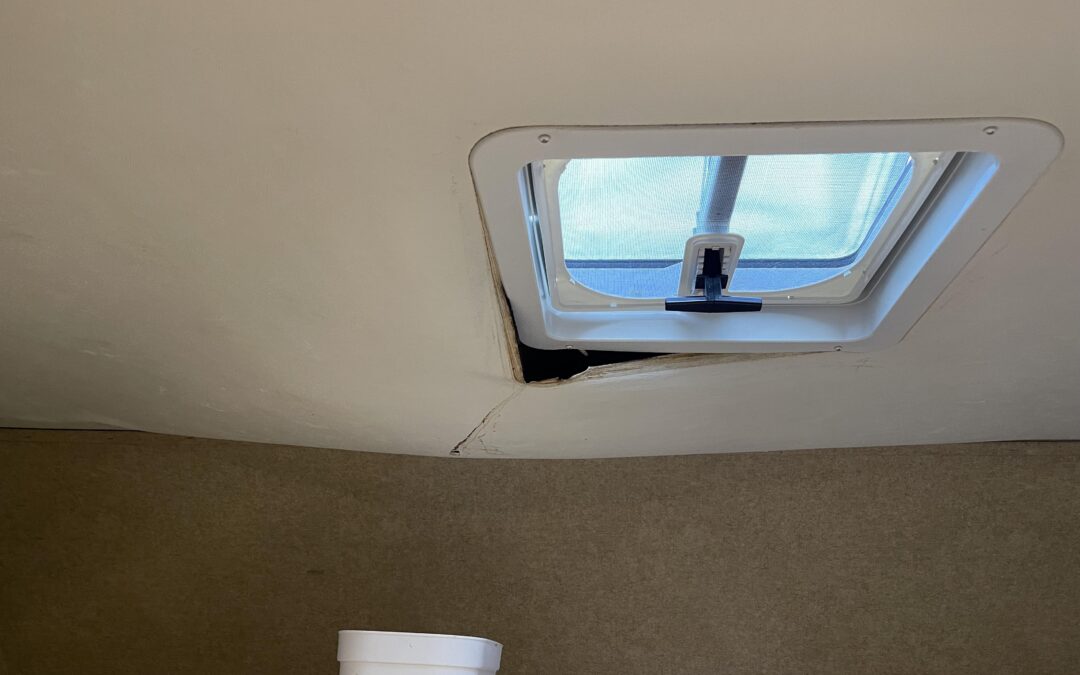
I’m a first time RV owner and I have a class c former rental unit. After about 2 years, I discovered all the roof vents leak in heavy rain and this front one is the worst. Got two quotes, one is to replace this panel only and the other one is to completely replace the roof. The second option costs 5x more. I don’t want to spend too much money on this unit since it has almost 130k miles on it. What are my options? Any input is appreciated.
I’d probably remove the old sealant and replace it with 4″ or 6″ eternabond tape around the vents, replace the damaged ceiling inside, and hope for the best and ignore it beyond that since you don’t want to put too much into it.
Buy a flat backed moisture meter from Amazon. Find out how much water you are dealing with. Be aware that some metal framing will cause a isolated spike on the meter. You are looking for swaths of area that show up as holding water.
Normally I would say it all needs replacing, but with a 130k miles on a class C you are nearing end of life and I 100% understand not wanting to dump that kind of money or effort in.
Realistically if they all leak, and have been leaking for a while you have a large amount of water damage, mold and rot. Water from the roof eventually goes down the walls, and sometimes hits the floor on the way down. The vinyl wallpaper stuff holds in the moisture. Perhaps you got lucky and stuff ran straight down and out the bottom, but even then you likely have some serious issues, just in more isolated areas.
The real question here is what is your level of comfort not fixing this, knowing that even sealing the roof from new leaks, will leave trapped water to continue the damage. There isn’t a wrong answer on an RV with that kind of mileage, but you should be prepared for what it will mean either way.
Well, can’t really tell you the options from this picture. You need to determine the actual source of the leak and extend of the damage – you may well have rot and mold in your ceiling and walls.
The roof and all sealants needs to be checked twice a year to catch stuff like this from happening.
130 k miles is nothing depending on the motor and upkeep n such. One of your buddies can do this….plywood screws and wallpaper. Ha. Seal it up after installing and your good to go. If if is in the walls and such, and I’m sure it is, but hey…it’s not bulging, that will be the next project. Most important is your engine and tranny and wheel bearings and brakes and ….on and on.
You get to decide how much effort to put in and how handy you are. Remove the whole section in the roof, cut out an area and get to unaffected wood. Minimum… set up a fan and leave pointed at that area for a day or two. Dry it out as much as possible. Remove the old sealant from the roof. Oscillating tool with a scraper attachment works great. The Dicor self levelling sealant is easy to apply. The Dicor stuff seeps down into the crevices to seal everything. I’ve a lot of mixed reviews on stuff like Eternabond. In my area I found the local rv dealer was reasonable priced (cheaper than some for some products) and they were really helpful with advice. I had a leak in one roof vent. Replaced the sealant on everything that poked thru the roof. My class A RV is an 83 I just bought. The drivers window had a serious leak. I removed the inside paneling. Ripped out most of the damaged wood. Left a blower used for flooded flooring for a day. It dried up the area really well. I was able to replace the plywood on both sides, rebuild the framing and then pulled the window out to install new butyl tape. It’s rained a few times since the repairs and no leaks. Good luck.
Source: Roof leakage